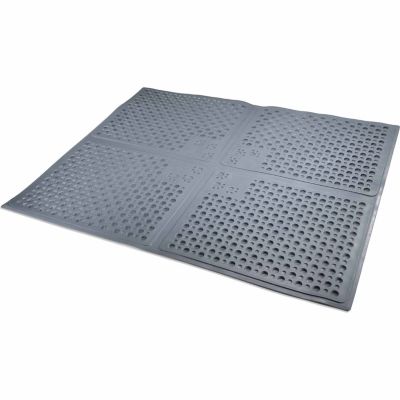
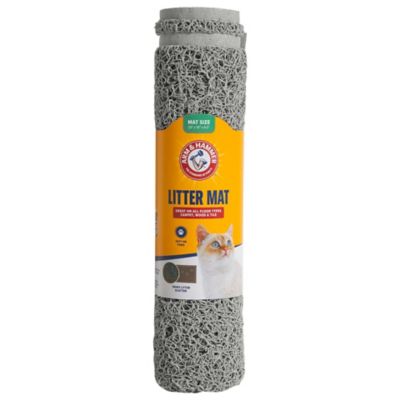
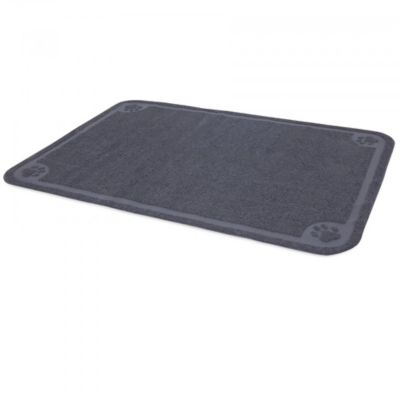
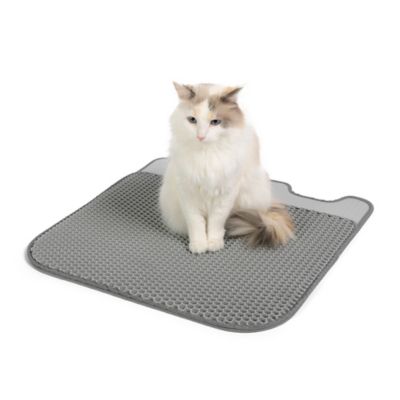
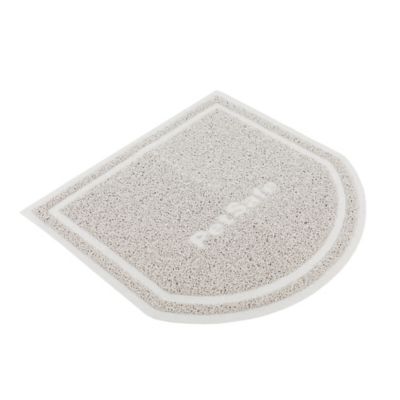
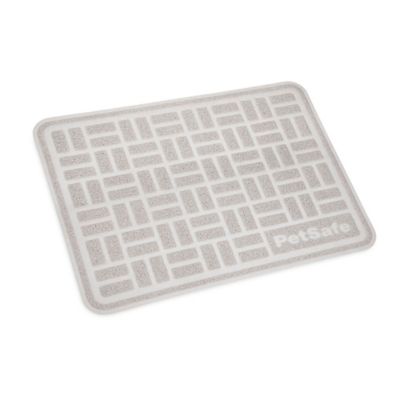
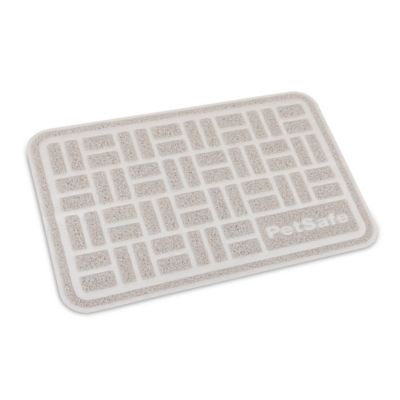
Rubber cat litter mats help catch stray litter around the box so fewer granules travel across the floor on paws and feet. Their textured surfaces give loose particles a place to settle, while a solid backing can help keep those particles from reaching the floor underneath. Protection against liquid depends on the mat’s construction: a litter-catching surface is not necessarily waterproof, and openings, seams, or exposed edges can let moisture through. That distinction matters in a busy litter area, where scattered litter, tipped water, and an occasional accident call for different kinds of protection. Raised ridges, small pockets, and flexible nubs can all help collect granules, but the best texture for a household also needs to feel comfortable under the cat’s paws. Fine litter may settle into shallow grooves, while larger grains need enough space to collect without sitting right on top. Lightweight particles can still travel beyond the mat, especially when a cat leaves the box in a hurry. A mat helps contain the mess; it does not replace sweeping or regular litter box cleaning. Material descriptions deserve a close look, too. Rubber, silicone, foam, and plastic mesh can look similar in a photo, yet feel different underfoot and call for different cleaning methods. A mat with rubber backing may have a fabric or mesh surface rather than rubber throughout. Flexible rubber can lie close to the floor and bend for emptying, while some silicone designs have smooth, washable surfaces and raised edges. Weight, thickness, surface pattern, and backing all affect how a mat handles everyday traffic. For a cat that digs like it has a job to finish, coverage beside the box can matter just as much as coverage in front. For a tidy cat that carries only a few grains out on its paws, a smaller landing area may be enough.
Fit starts with the litter box, but the cat’s exit route tells the rest of the story. A mat that barely extends past the opening may miss the first full step, letting litter land on the floor just beyond its edge. More room in front gives paws a longer path across the textured surface. Open litter pans may need coverage along several sides, while an enclosed box with one doorway often concentrates traffic in a smaller area. A top-entry box creates a different landing pattern, since the cat may jump down beside it instead of walking straight out. Measuring the floor space around the box helps account for cabinet doors, nearby walls, and the path people take through a utility room or bathroom. A broad mat should still leave room to open doors and move around without catching a toe on an edge. Low-profile edges are worth considering where children, older adults, or anyone carrying a laundry basket passes nearby. The cat’s movement matters just as much. A stiff, curled edge or deep texture may be awkward for a kitten, a senior cat, or a cat that favors a tender paw. A flat approach and a stable surface can make the litter station easier to navigate without adding another obstacle. Some cats step willingly onto soft nubs but avoid a coarse mesh, so paw comfort belongs alongside measurements when comparing designs. In a home with several cats or more than one litter station, each box may call for a different shape or amount of coverage. Where liquid protection is a priority,
Waterproof Cat Litter Mats are another category to consider, with attention to solid backing, seams, and edge design. Even a waterproof mat only protects the area it covers, and a raised border has limits if liquid reaches an opening or runs past the edge.
Everyday care is where a litter mat’s design really earns its place. A shallow, open surface makes scattered grains easy to see and may be simpler to empty, while deeper grooves can hold more litter between cleanups but take more effort to rinse thoroughly. Layered designs may collect granules beneath the walking surface, though their openings and inner spaces also need attention when a spill occurs. Before choosing a mat, consider where it will be emptied and washed. A large, flexible mat can be awkward to carry through a narrow hallway if loose litter shifts toward the edges. A smaller mat may be easier to handle, but it also offers less room for catching scatter. For routine cleanup, lift carefully and empty trapped litter into a trash container; avoid washing granules down a sink or tub drain, particularly clumping litter that swells when wet. Follow the mat’s care label for rinsing, soap, and drying, since not every material belongs in a washing machine or tolerates strong cleaners. Removing urine or other mess promptly helps limit lingering smells, and cleaning the floor beneath the mat matters, too. Let both surfaces dry fully before putting the mat back so moisture does not stay trapped underneath. On wood, vinyl, or other finished flooring, check the flooring manufacturer’s guidance about rubber contact and backing materials, which can affect some finishes. Long-term wear often shows up first at the edges or in areas a cat scratches repeatedly. Look for curling, splits, loose pieces, or a backing that no longer grips as expected, especially if the cat likes to chew. A mat that slides, bunches, or sheds pieces needs attention rather than another layer placed over it. For households with indoor cats, from a small apartment to a farmhouse utility room, the right balance is straightforward: enough coverage to catch the everyday scatter, a surface the cat will cross comfortably, and a cleanup routine that fits the household. A well-matched rubber litter mat keeps the litter station more contained without making the cat’s daily routine harder.