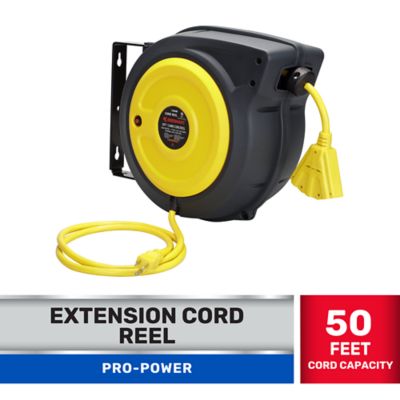
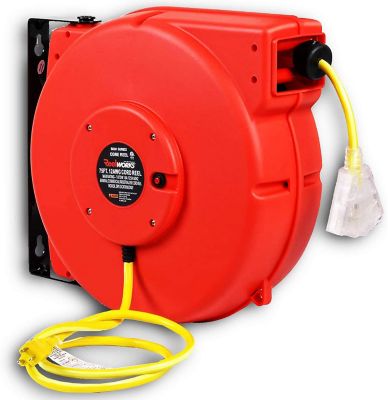
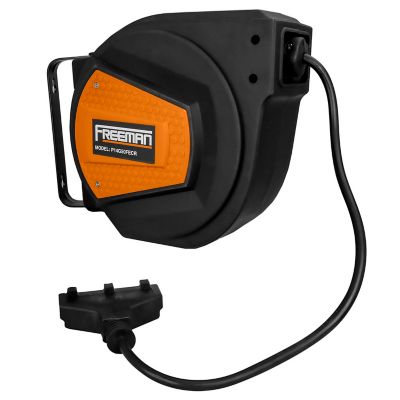
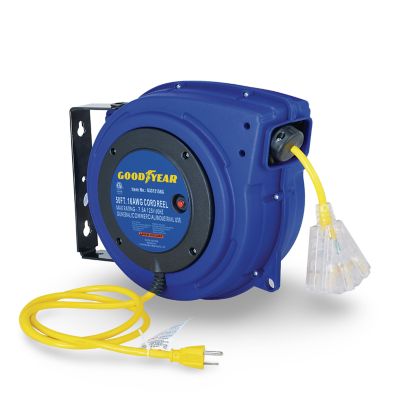
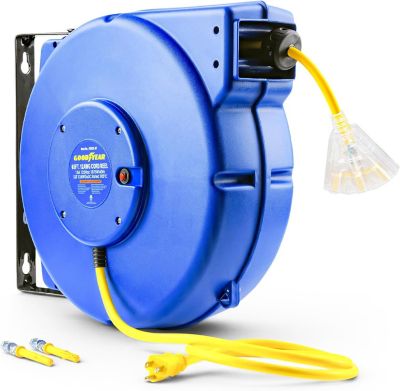
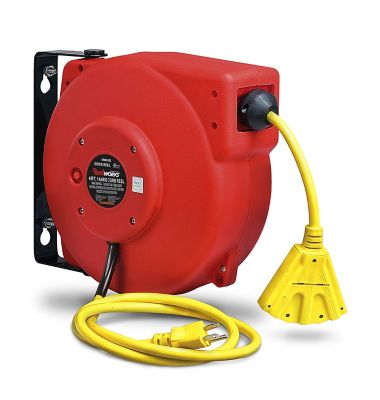
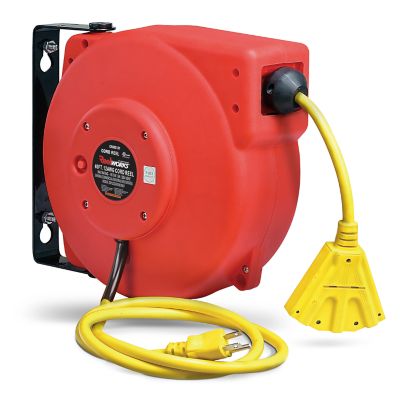
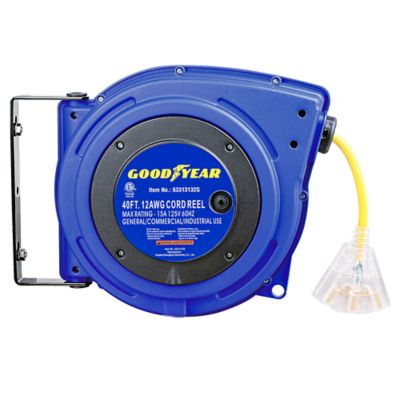
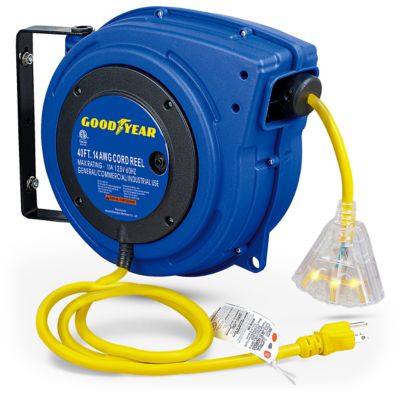
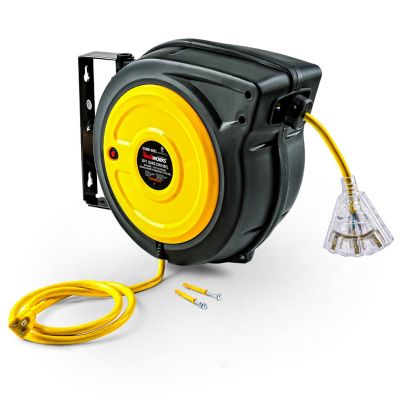
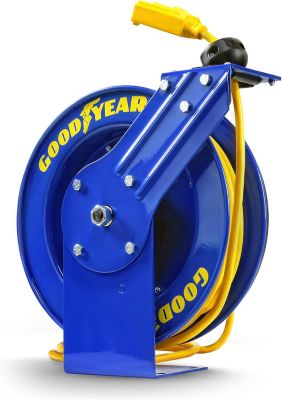
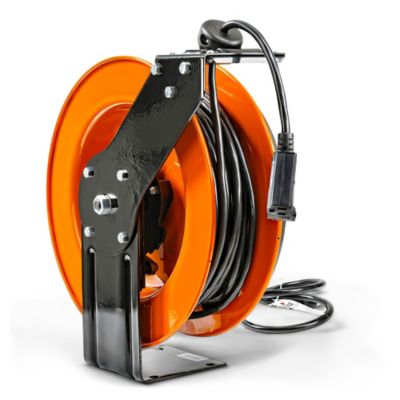
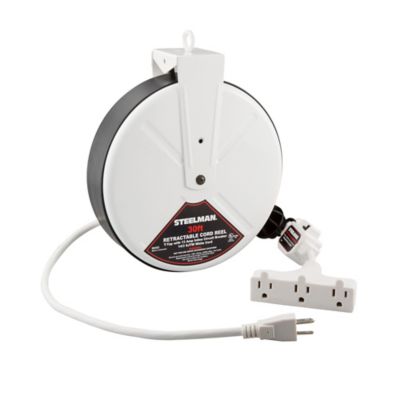
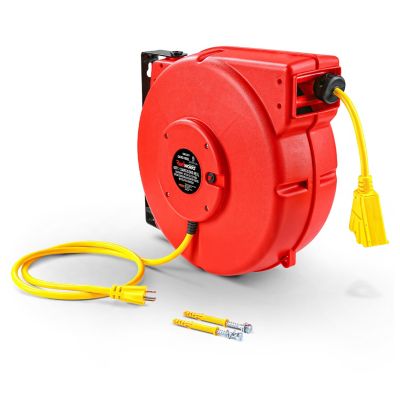
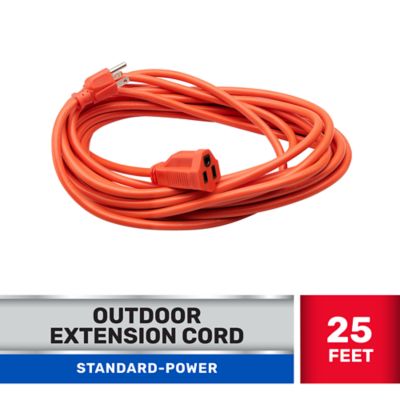
Retractable extension cord reels keep power within reach without leaving a loose coil across the shop floor. A cord stores inside a housing, pulls out to the working area and winds back in through a spring-driven mechanism. On models with a locking function, the cord stays extended at designated points until the release mechanism is engaged. That setup makes sense above a garage workbench, beside a repair bay or along a farm shop wall where portable tools move from one job to the next. Instead of carrying a separate extension cord between the bench and a piece of equipment, the working end travels to the task while the remaining cord stays contained. Wall-mounted and ceiling-mounted configurations suit different layouts, and some brackets swivel to follow the direction of the pull. The permitted mounting position and swivel range depend on the reel, so a bracket meant for a wall should not automatically be treated as an overhead mount. Common cord lengths fall around 30 to 80 feet, with longer configurations also part of the category. The useful reach depends on the whole route, including the drop from the ceiling, the distance around a parked tractor and enough slack to work without pulling against the outlet connection. Outlet arrangements may include a single receptacle or a triple-tap end with three receptacles. Multiple outlets can serve a work light and other equipment at the same station, but they share the cord’s electrical capacity rather than each receiving a separate allowance. Some outlet ends have an indicator light that shows power is present. Adjustable cord stops can keep the receptacle hanging at a convenient height instead of retracting all the way to the housing. Together, these features help keep a busy workspace manageable, whether the job involves sharpening mower blades at the bench, lighting an equipment repair or reaching a project near the garage door. The reel holds the stored cord, though the extended section still needs a clear path away from feet, tires and moving machinery.
Electrical ratings matter just as much as reach when comparing retractable extension cord reels. Common cord sizes include 16/3, 14/3 and 12/3, with the first number indicating American Wire Gauge and the second indicating three conductors, including a grounding conductor. A lower gauge number means a thicker conductor, which generally supports a greater electrical load under comparable conditions. Gauge alone, however, does not establish the capacity of the complete reel. The amperage and wattage ratings on the reel, the cord length, the connected equipment and the supply circuit all affect suitability. Longer cords can create more voltage drop, making an unnecessarily long run a poor match for equipment with substantial power demands. A work light and a battery charger place different demands on a cord than a motor-driven tool, and equipment with a motor may draw extra current when starting. Where several devices share an outlet block, their combined load counts toward the stated limit. Some appliances and shop equipment require a direct connection to a wall receptacle, so the equipment instructions remain part of the fit. Reels with a built-in resettable circuit breaker add protection against excessive current, but that breaker does not replace grounding or ground-fault circuit-interrupter protection where required. Cord payout can also affect the load rating because cable left wound inside a housing can retain heat. Manufacturer instructions establish whether the cord must be fully extended for a particular load and whether separate wound and unwound ratings apply. For indoor benches, covered work areas or tasks beyond the shop, the reel and cord both need ratings that match the location. An outdoor-rated cord does not automatically make its reel housing suitable for exposure to water. Clear electrical markings and a recognized independent safety listing provide useful information beyond cord thickness or housing size. These details help distinguish a reel suited to occasional bench work from one intended for more demanding shop duties without relying on appearance alone.
Housing construction, mounting hardware and cord care all influence how a retractable extension cord reel fits into everyday work. Steel housings can suit busy shop settings, while impact-resistant polymer housings offer another approach to enclosing the reel mechanism. The cord jacket deserves equal attention: abrasion resistance, flexibility and resistance to oil depend on its material and stated ratings. A cord crossing rough concrete or passing near a greasy workbench faces different wear than one hanging beside a clean assembly table. Neither jacket thickness nor a sturdy-looking case makes contact with sharp edges, hot exhaust parts or moving equipment acceptable. Mounting support needs to carry the reel’s weight and the force of normal operation, with fasteners and brackets appropriate for the structure. Ceiling clearance matters around tall equipment, overhead doors and lighting, while wall placement needs room for the housing to swivel without striking shelves. An accessible connection to the supply receptacle also helps avoid stretching the reel’s lead cord. In a shared garage or farm shop, the best position is often the one that reaches the main working area without drawing the cord across an entrance or vehicle lane. A separate wash area can benefit from
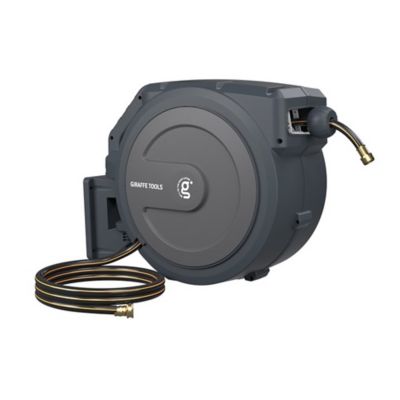
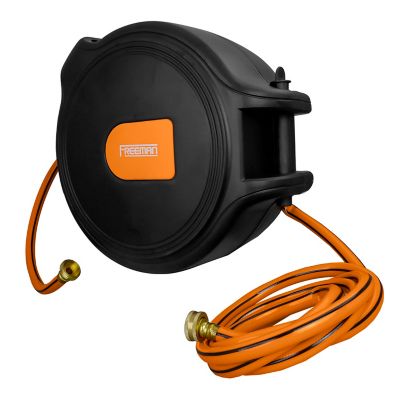
Wall Mounted Retractable Hose Reels, with electrical reels and connections kept away from spray and standing water. Routine care centers on a clean cord, sound connections and controlled retraction. Guiding the cord back by hand, as directed by the manufacturer, helps prevent the outlet end from whipping toward the housing. The cord should not support a hanging tool or serve as a handle for moving equipment. Checks for cuts, flattened sections, loose plugs or a sticking latch can catch trouble before the next task; damaged equipment belongs out of service until properly addressed. For homeowners, mechanics and folks tending equipment around an acreage, a well-matched reel puts power where work happens and gives the cord a designated place when the job is done.