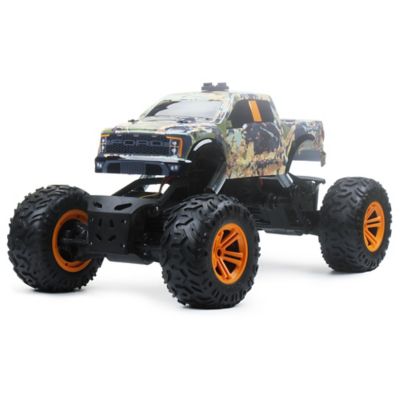
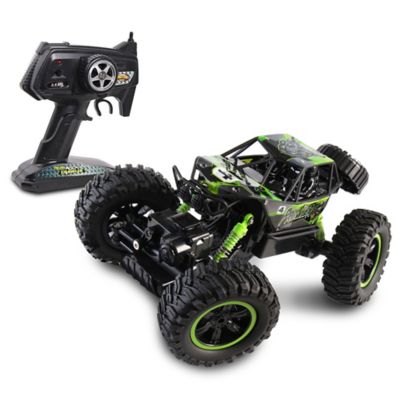
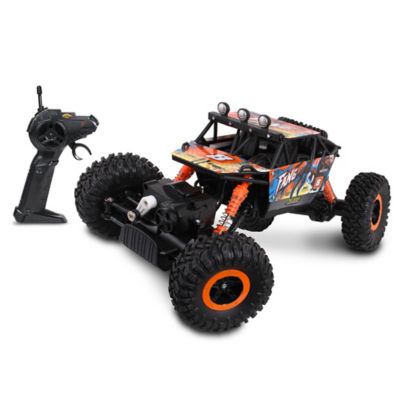
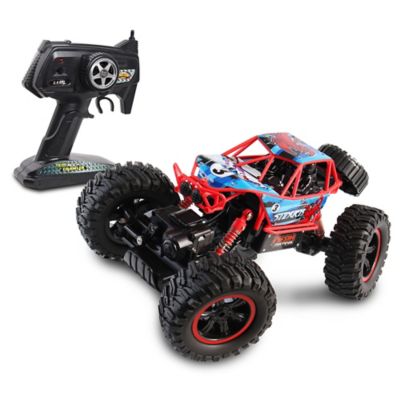
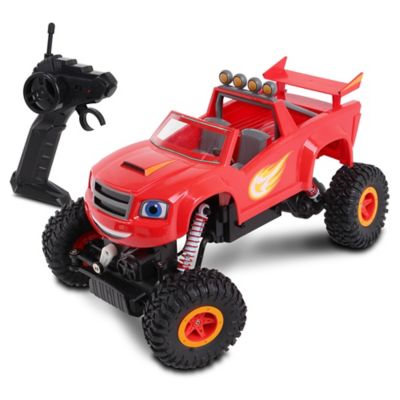
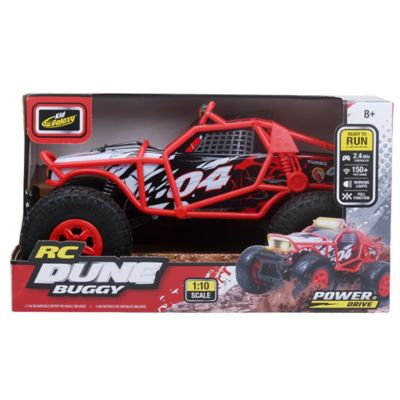
Remote control rock crawlers are radio-controlled vehicles built to climb rocks, cross uneven ground, and work through obstacles at low speeds. Unlike RC vehicles made mainly for racing, crawlers put the emphasis on torque, tire grip, suspension movement, and steady throttle control. The fun comes from picking a line across a rock pile, easing a front tire onto a ledge, and watching the chassis follow without tipping over. They suit kids learning careful vehicle control, adults who enjoy hands-on hobbies, and families looking for something to run together in the yard. Size makes a big difference in where that driving happens. Small-scale crawlers, including many 1/24- and 1/18-scale designs, can turn a few clean stones and low wooden blocks into an indoor course. A 1/10-scale crawler generally needs more room and can handle larger obstacles, making it a common choice for backyard rock beds and permitted trail areas. Larger-scale vehicles need still more space, along with room for storage and transport. Scale describes a vehicle’s proportions relative to a full-size counterpart, but actual dimensions vary, so overall length, width, and tire size give a better picture of how a crawler will fit a particular space. Ground clearance helps the underside pass over obstacles, while approach and departure angles affect whether the front or rear bodywork catches on a ledge. Wheelbase matters, too: a longer truck can bridge some gaps more easily, while a shorter one may turn through tighter spaces. Four-wheel drive is common in this category, and locked differentials on some designs help maintain drive when one tire loses traction. These features work together rather than guaranteeing that every obstacle is passable. A modest rock step can be a satisfying challenge when the goal is a clean climb instead of a fast lap.
The parts underneath a remote control rock crawler explain much of how it behaves. Low gearing allows the motor to turn the wheels slowly with plenty of pulling force, helping the vehicle creep forward rather than lurch at the first touch of the trigger. Brushed motors are common in straightforward crawler setups, while crawler-focused brushless systems can offer smooth low-speed operation and a broader speed range. Motor type alone does not determine climbing performance; gearing, electronics, vehicle weight, and throttle response all play a part. Some designs have two-speed transmissions for a choice between slow obstacle work and faster travel along an open path. Suspension articulation lets the axles move relative to the chassis, helping tires stay in contact when one wheel climbs a stone and another drops into a hollow. Shock travel is only part of the picture, since a tall stance and heavy body can also make a truck easier to tip on a side slope. Rubber tires with flexible tread can conform to irregular rock surfaces, and internal tire supports help control how much the tires compress. Tread pattern and tire diameter should match the intended ground rather than simply looking aggressive. Chassis construction may combine metal rails or plates with molded plastic components, balancing weight, stiffness, and resistance to everyday knocks. Body shells may be lightweight polycarbonate or a more rigid molded material, with different trade-offs in weight, detail, and impact behavior. A low-mounted battery and sensible weight distribution can help keep the vehicle settled through an awkward climb. For anyone considering replacement parts, fit involves more than scale alone: wheel mounting dimensions, body clearances, axle width, connector type, and battery compartment measurements all matter. A tire that is too large may rub during steering, while a battery that fits electrically may still be too tall for its tray.
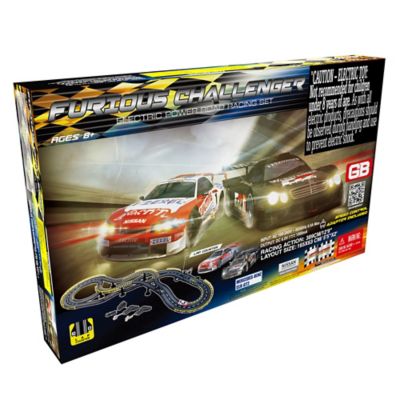
Ownership also includes setup, upkeep, and finding the right match for the person holding the transmitter. Ready-to-run generally means the crawler arrives assembled with its radio equipment, but it does not always mean every battery or charging accessory is included. Kit versions involve assembly and may call for separately selected electronics, making them a better match for someone who enjoys building as much as driving. Battery chemistry, voltage, dimensions, and connectors need to match the vehicle and charging equipment, and rechargeable packs require care according to their instructions. Charging belongs in an appropriate location with supervision, not beneath a pile of hobby gear or beside loose flammable materials. The transmitter deserves a close look as well, especially for younger drivers: a comfortable grip, manageable trigger reach, and any available throttle-limiting function can make learning less frustrating. Manufacturer age recommendations and adult supervision matter, particularly around small parts, moving drivetrains, and rechargeable batteries. For a birthday gift, the most useful match is a crawler suited to the recipient’s space, experience, and interest in maintenance. A small crawler can make sense for someone with room for a tabletop course, while a larger trail-oriented truck suits someone with access to an appropriate outdoor driving area. Crawler play rewards patience, whether a driver is threading between two stones or backing up for a better approach. Shoppers drawn more to track-based racing can also explore
Remote Control Slot Cars for a different style of vehicle play. Between crawling sessions, removing grit from the steering and suspension, checking loose fasteners, and inspecting tires can help limit wear. Hair and string wrapped around axles deserve attention before the next run. Water-resistance claims apply only to the components and conditions specified by the manufacturer, not automatically to the entire vehicle. A clean storage spot, a disconnected drive battery, and battery storage that follows the pack’s instructions help keep the setup ready for its next slow climb over the rocks.