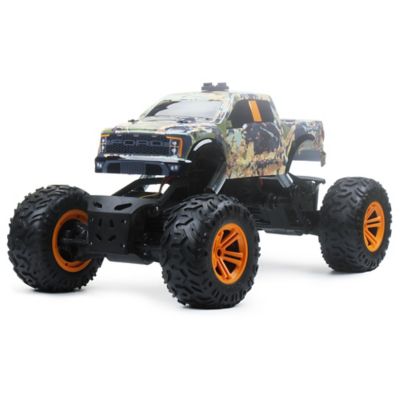
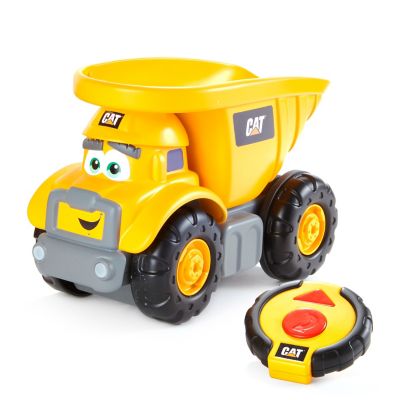
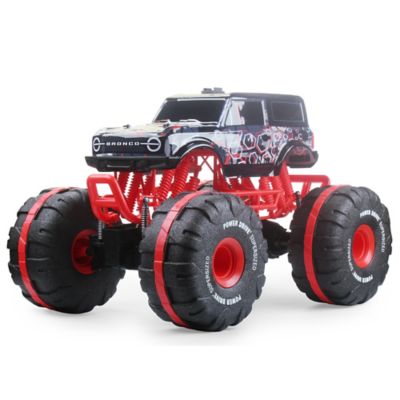
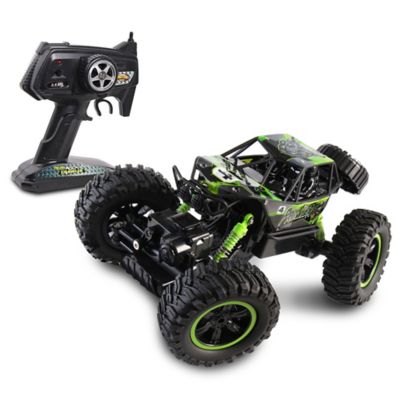
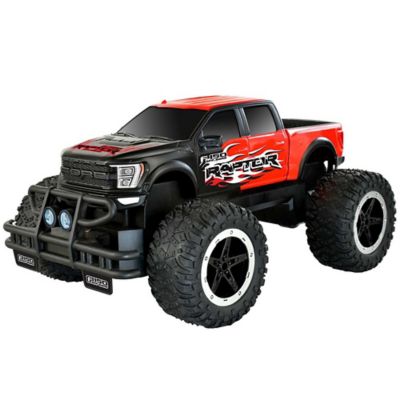
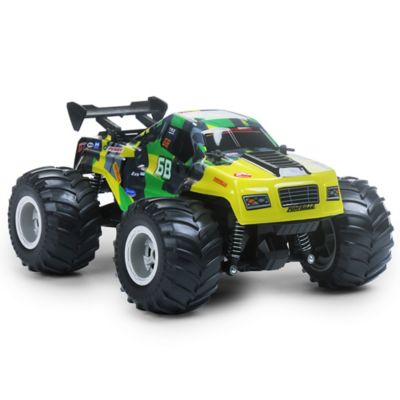
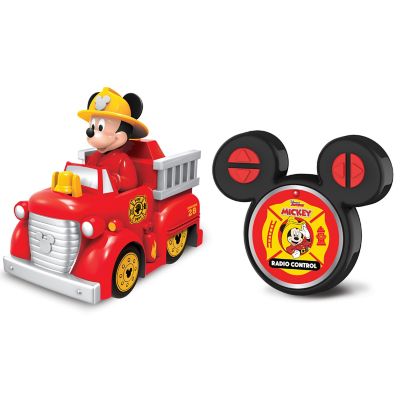
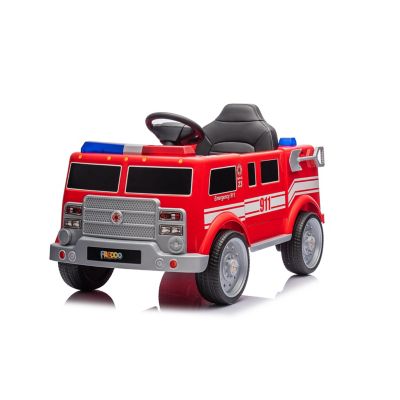
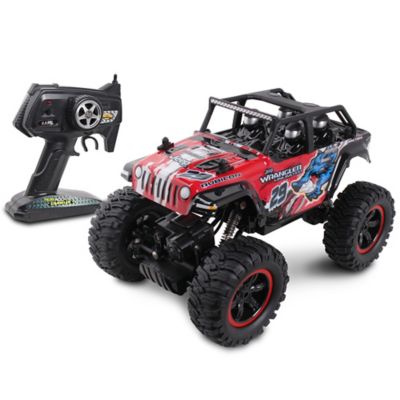
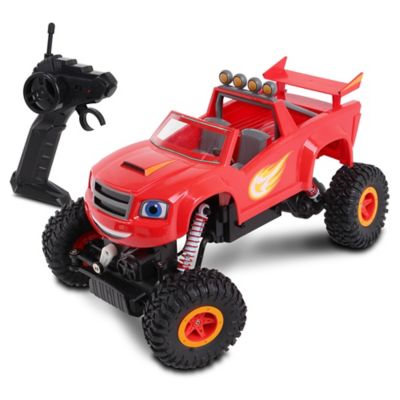
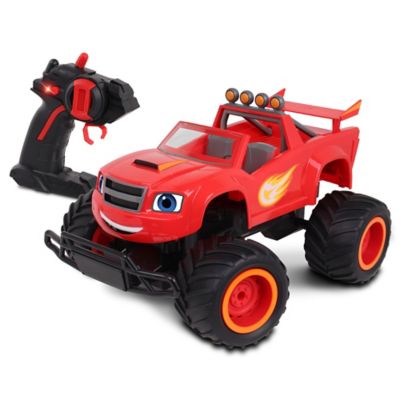
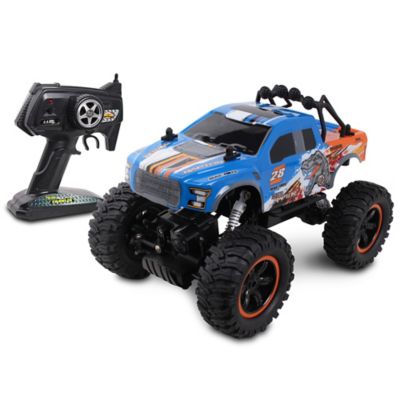
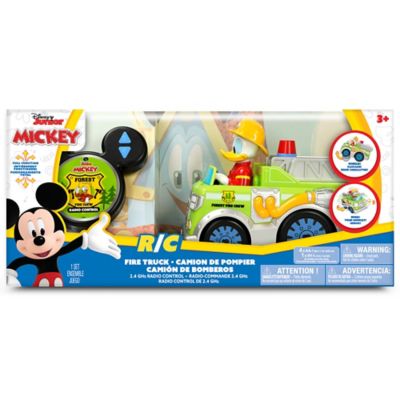
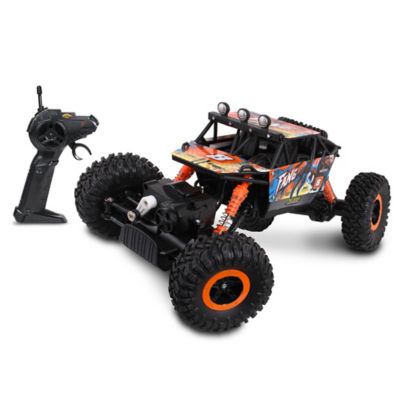
Remote control toy trucks put steering, acceleration, and a little backyard adventure right in the driver’s hands. The category includes pickup-style trucks, big-tire monster trucks, off-road racers, stunt trucks, and slower rigs built for climbing over obstacles. Each style brings a different kind of fun: a pickup body has the familiar look of a working truck, a monster truck emphasizes tall tires and ground clearance, and a crawler favors careful wheel placement over straight-line speed. The right match depends on the driver’s age and experience, the space available for play, and the surface beneath the tires. A small truck can feel right at home weaving around cardboard boxes on a clear floor, while a larger off-road model needs more room to turn and stop. Scale describes a truck’s size compared with the full-size vehicle it represents; a 1:10-scale truck is generally larger than a 1:24-scale truck, though actual dimensions still matter because body styles vary. Tire diameter, tread, and ground clearance help determine whether a truck is better suited to smooth flooring, packed dirt, short grass, or loose gravel. Deep carpet and thick grass can create more resistance than a small truck can handle, even when its body looks ready for rough ground. Four-wheel drive supplies power to both front and rear axles, which can help with traction, but tires, weight distribution, and gearing also influence how a truck moves. For drivers who would rather pick a careful line over stones than race across an open stretch,
Remote Control Rock Crawlers focus on the low-speed side of RC driving. Crawling rewards patience as the front tires climb, the suspension flexes, and the driver eases the rear wheels over the same obstacle. Faster truck styles bring a different challenge, with more attention on steering smoothly and leaving enough room to slow down. Neither approach requires a complicated course; a clear, suitable play area gives the truck room to do what it was built for.
Controls and power arrangements make a big difference in how a remote control truck feels from the first run onward. A pistol-grip transmitter typically pairs a steering wheel with a trigger for forward motion and braking or reverse, while other controllers use sticks or buttons. The shape should sit comfortably in the driver’s hands, with controls that are easy to reach without shifting grip. Proportional steering and throttle allow smaller inputs to produce smaller movements, giving drivers more control than a simple full-on or full-off response. That can help when backing between two cones or easing around a chair leg instead of bumping into it. Where offered, a reduced-speed setting gives beginners more time to react before moving to a faster setting. Steering trim, when included, helps correct a truck that pulls to one side while the steering control is centered. Many radio-controlled trucks operate on 2.4 GHz systems, and compatible transmitters and vehicles may pair individually so more than one driver can play nearby; the manufacturer’s directions explain pairing and any limits. Radio range is separate from driving space, and keeping the truck clearly in sight matters more than reaching the far edge of its stated range. Battery details deserve just as much attention as speed or tire size. Some trucks take replaceable batteries, while others run on rechargeable packs, and the transmitter may need its own batteries. Listed run time varies with driving style, terrain, battery condition, and the demands of the motor. Repeated hard acceleration or pushing through dense grass can shorten a session compared with steady driving on a smooth surface. Charging time, battery access, and whether charging equipment is included all affect the routine between runs. A screw-secured compartment may require an adult’s help, especially for younger drivers. Rechargeable packs need the charger and charging method specified by the manufacturer, adult oversight where directed, and a safe place to charge away from play. Damaged batteries or wiring call for stopping play rather than trying another lap.
Construction, upkeep, and the truck’s intended use help separate a good match from one that simply looks the part. Molded plastic bodies can keep weight down and give a truck its pickup, racing, or monster-truck shape, while metal parts may reinforce selected areas such as axles, suspension links, or chassis components. More metal does not automatically make a truck better for every driver; weight, balance, and how the parts work together matter, too. Flexible body panels, bumpers, and suspension can help a truck manage ordinary bumps, but a toy truck should not be treated as indestructible. Rubber or rubber-like tires provide the contact with the ground, and their tread and firmness influence grip on different surfaces. Suspension helps the wheels follow uneven ground, although tall tires and visible springs alone do not establish how much rough play a model can take. Age recommendations, operating directions, and stated use are better reference points than appearance. After a run, removing loose dirt with a soft brush and checking for grass or string around the axles can keep small problems from becoming bigger ones. Electronics should not be rinsed unless the manufacturer specifically permits it, and battery storage should follow the supplied directions. A dry storage spot with room for the truck, transmitter, and charging gear makes the next session easier to organize. For a birthday gift or a family get-together, a remote control toy truck can suit a child learning basic steering, an older kid interested in mechanical parts, or an adult who enjoys a few laps around a simple course. Manufacturer age ratings still apply, and small parts need to stay away from younger children. Play areas should remain clear of roads, operating equipment, livestock, and pets. A few cones on an open floor or a supervised obstacle course in a clear section of the yard can turn ordinary space into a satisfying driving challenge, with plenty of room to practice without putting feet, animals, or belongings in the truck’s path.