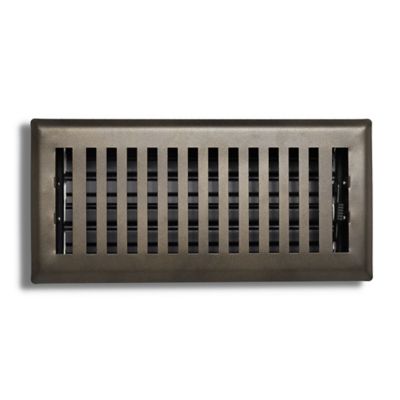
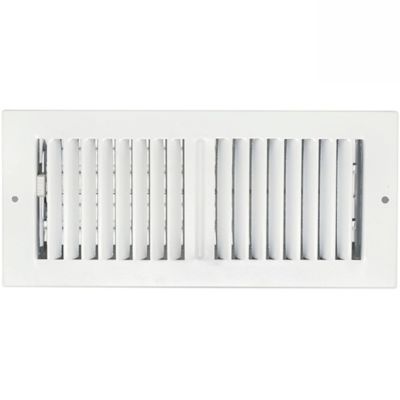
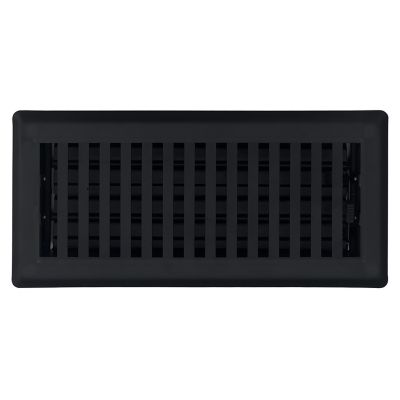
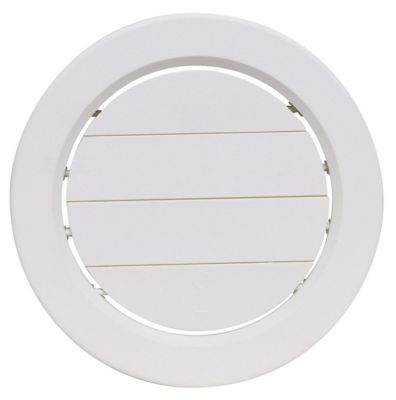
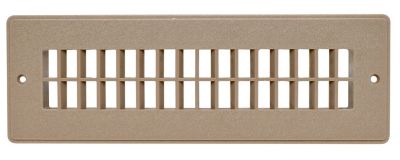
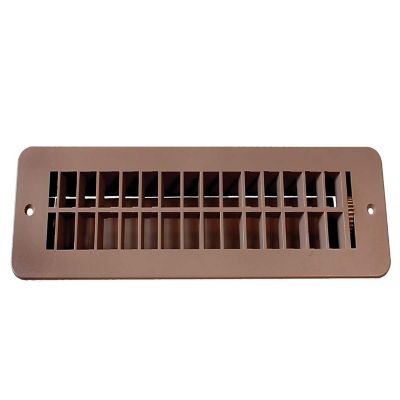
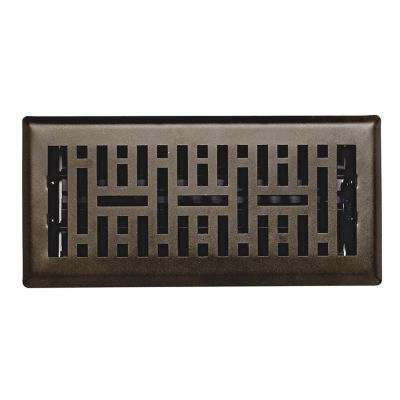
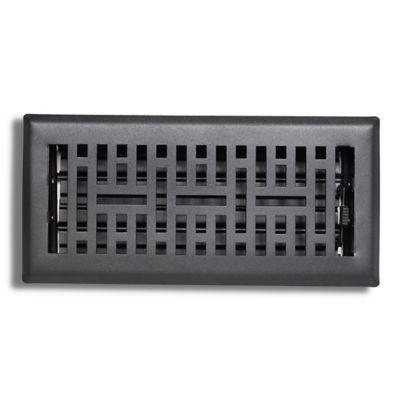
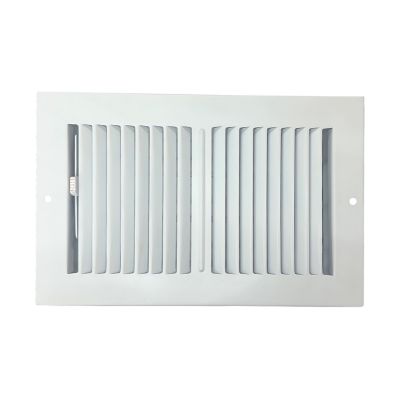
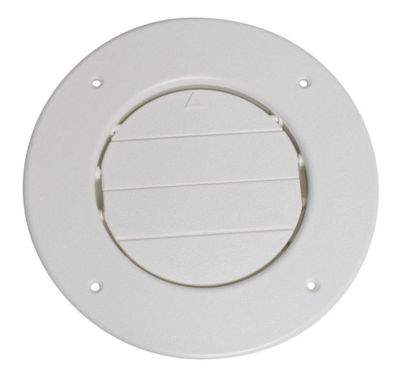
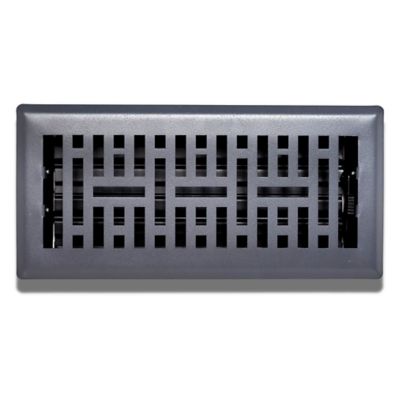
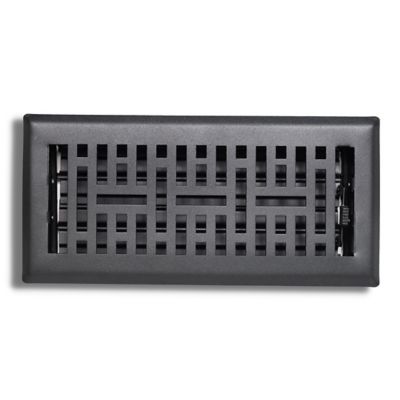
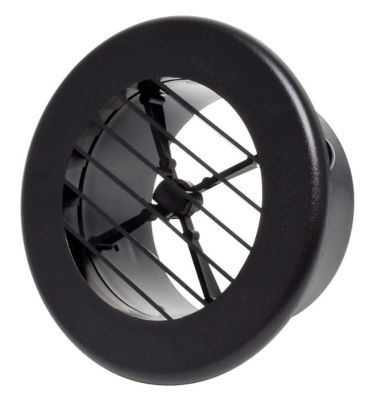
Register grilles cover duct openings while allowing air to move between a room and its heating, ventilation, and air conditioning system. They give an open duct a finished face and help keep larger objects from falling inside, whether the opening sits along a farmhouse baseboard, beneath a living room window, or high on an office wall. Although the names sometimes get mixed together, a grille and a register do different jobs. A grille has an open face, usually with bars or louvers, and generally has no built-in damper for controlling airflow. A register combines that face with an adjustable damper behind it, giving you some control over how much air comes through. Depending on the design, movable louvers can also direct the air. A diffuser is another type of outlet, shaped to distribute supply air in a particular pattern across a room. These differences matter more than appearance alone. Supply openings deliver conditioned air, while return openings carry room air back toward the equipment. Return grilles generally stay open rather than providing a shutoff adjustment, and some have hinged faces that hold a filter. A plain return grille does not hold a filter unless it is built for that purpose. For spaces that need adjustable supply outlets,
Air Registers offer a related category to consider alongside fixed grilles. Homeowners replacing a bent vent cover, property managers freshening up a rental, and contractors finishing a room all have reason to pay attention to these small but noticeable fittings. The right style depends on the opening’s job, its location, and the space around it. A return near the hallway floor has different needs from a supply outlet above a desk, even when both faces share the same finish. Matching the cover to the duct’s intended function helps keep a replacement from becoming an airflow restriction or an awkward fit.
Fit starts with the duct opening rather than the outside edges of the existing faceplate. Register and grille dimensions commonly refer to the opening they fit, with the face extending beyond that opening to overlap the surrounding floor or wall. A nominal 4-by-10-inch floor register, for example, generally fits a duct opening of that size; its visible face will be larger. Manufacturer sizing details still matter, especially with older ductwork, uneven openings, or trim that leaves little room for overlap. The overall face dimensions, depth of the section that slips into the duct, and mounting-hole locations all affect how a cover sits. A damper needs clearance behind the face, so a shallow boot or a nearby obstruction can interfere even when the width and length match. Floor, wall, and ceiling placement also call for different construction and mounting arrangements. Many floor registers drop into an opening, while wall and ceiling covers commonly attach with screws or another specified fastening system. An overhead opening needs a cover and mounting method intended for that position, not a loose-fitting floor register turned sideways. At floor level, a low-profile face can reduce raised edges that catch a broom or stand out beside the flooring, but a flush appearance alone does not establish a load rating. Covers within walking paths need to be intended for floor placement and any expected foot traffic. Baseboard outlets have their own shapes and clearances, particularly where the duct meets the wall at an angle. In a room with a couch along one wall or a cabinet beside a return, the usable space around the opening matters as much as the opening itself. Furniture, rugs, and curtains can block airflow or interfere with adjustment levers. Louver direction is worth considering, too: a fixed pattern may send air toward a seating area, while an adjustable pattern may offer more flexibility. Face size alone does not tell the whole story about air passage; bar spacing, blade angle, and the damper assembly also affect the open area.
Materials and finishes influence how register grilles look, how they hold up, and how much attention they need. Steel is common for its rigidity, with painted or powder-coated surfaces that help protect the metal when the finish remains intact. Aluminum is lighter and resists rust, although strength still depends on the design and thickness. Cast metal faces can have a substantial feel, while plastic options avoid metal rust but need to suit the location and expected wear. Wood faces can blend with flooring or trim, though moisture exposure and the maker’s care directions deserve consideration. No material should be judged by its name alone; mounting points, frame stiffness, blade construction, and the stated application tell more about whether a cover belongs beside a busy doorway or on a wall away from boots and furniture. A smooth face with accessible louvers is easier to wipe down in a mudroom where tracked-in dust settles along the edges. In a house with pets, hair can collect across return openings, making access for cleaning especially useful. Routine care generally means removing surface dust with a vacuum brush and wiping suitable finishes with a soft cloth, following the manufacturer’s directions. Excess water, abrasive pads, and harsh cleaners can harm some finishes, and damp components should be dry before going back in place. Painting over a cover can gum up a damper, bridge narrow openings, or seal the face to the surrounding trim. A bent blade, loose frame, or stiff adjustment lever can make replacement more practical than repeated tinkering. For filter grilles, filter dimensions and compatibility with the system matter separately from the grille’s outer measurements. Registers and grilles can help finish a room neatly, but they cannot fix undersized ducts, an equipment fault, or a poorly balanced system. Closing many supply dampers is not a substitute for addressing those problems. A well-matched cover sits securely, leaves its controls accessible, and lets the opening do its job without getting in the way of everyday life.