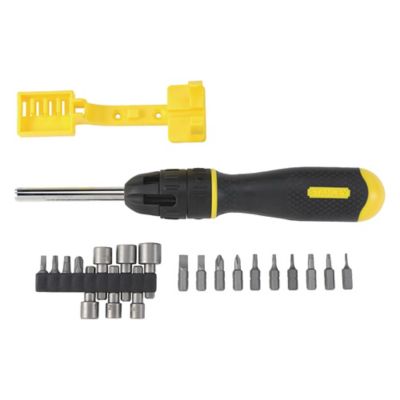
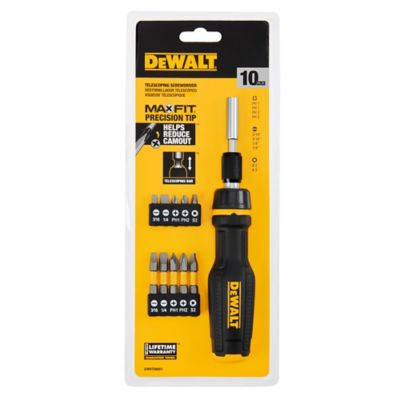
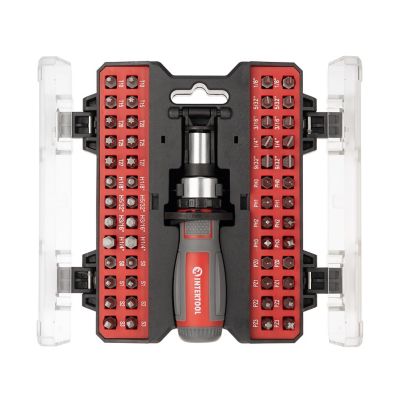
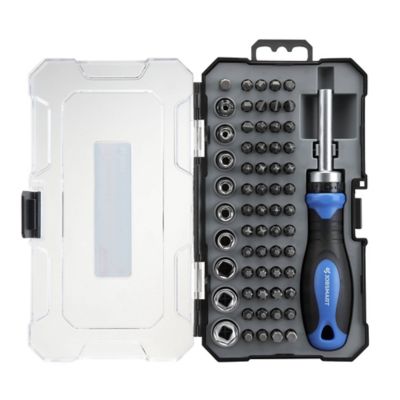
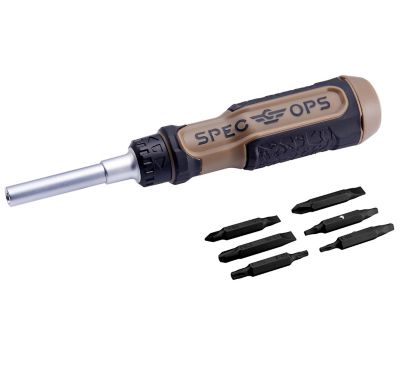
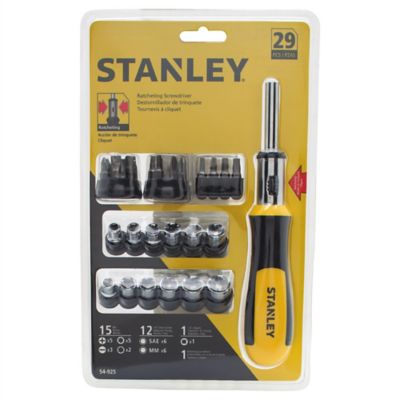
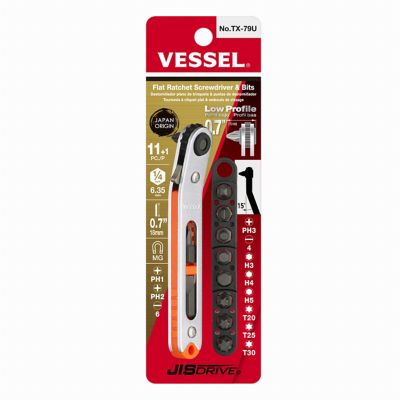
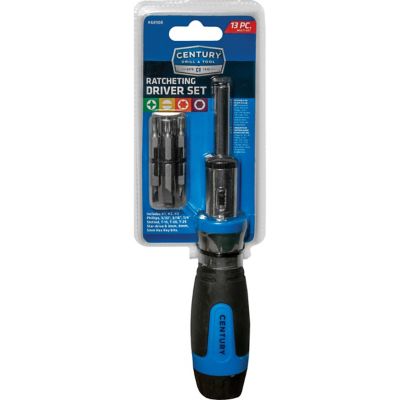
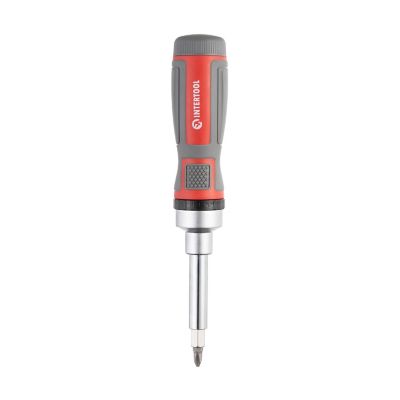
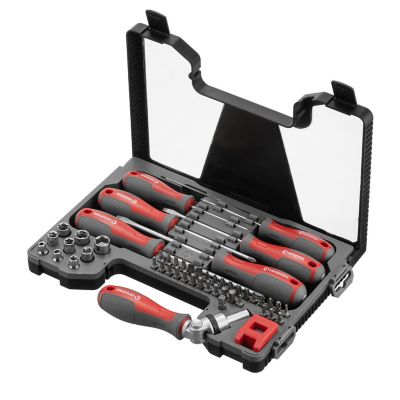
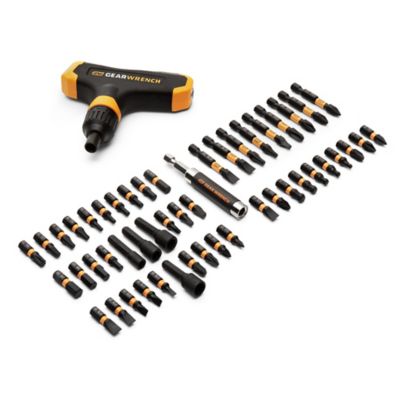
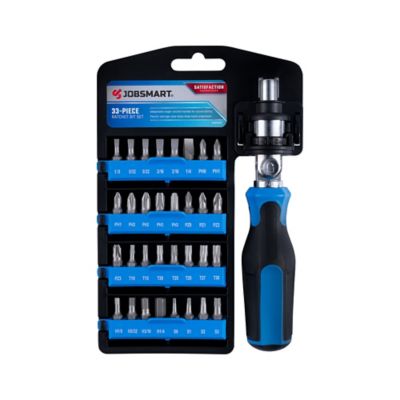
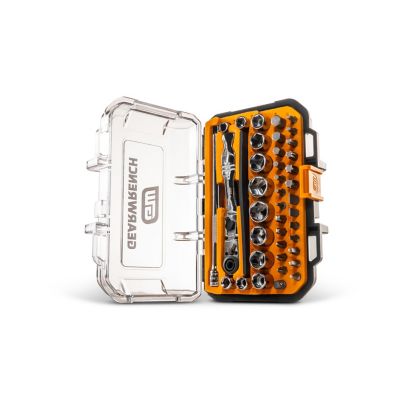
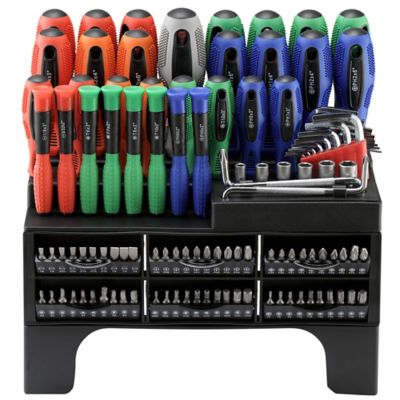
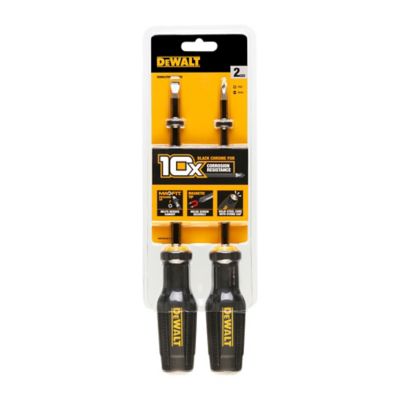
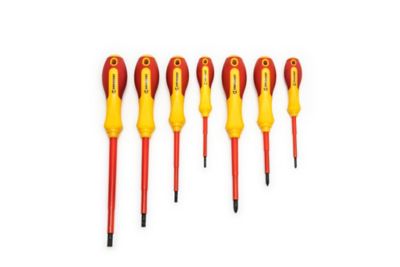
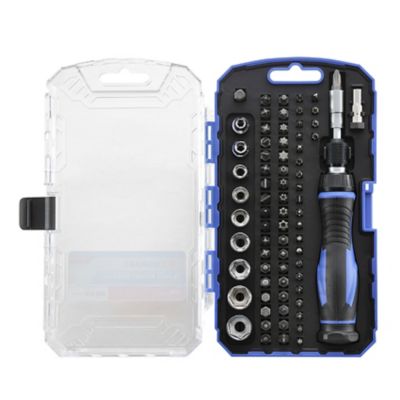
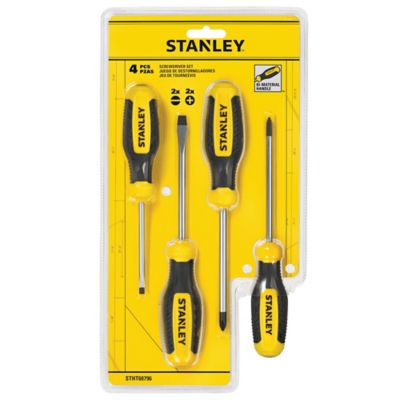
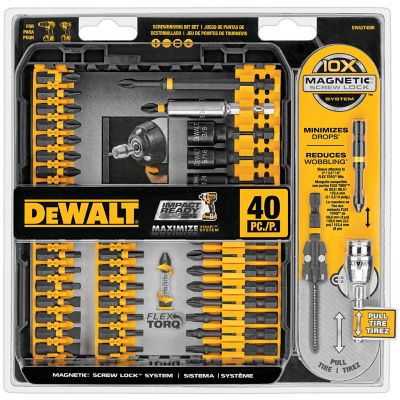
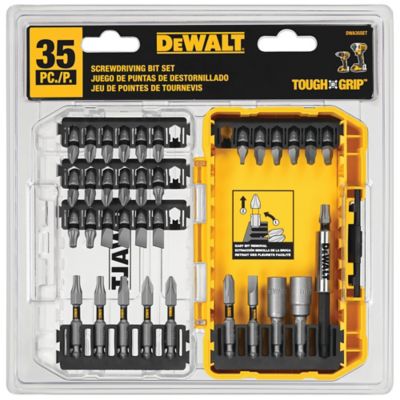
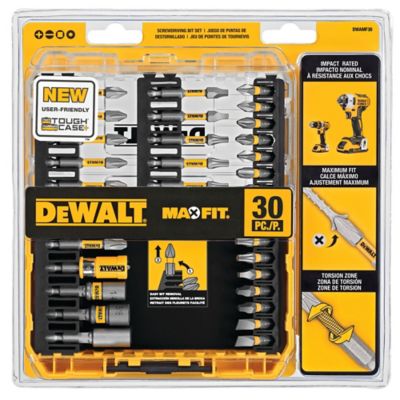
Ratcheting screwdriver sets pair a hand-operated driver with interchangeable bits for tightening and loosening screws without lifting the tip out of the screw head between turns. The ratchet lets the handle swing back while the bit stays seated, so the next stroke can turn the fastener again. That makes these sets handy for hanging a gate latch, adjusting cabinet hinges, assembling shelving or removing a small equipment cover with the machine shut off. Unlike a powered driver, a hand ratchet gives a close feel for how a screw is turning, which helps when working near finished wood, thin sheet metal or plastic housings. A set can also put several drive styles in one case instead of sending someone back to the toolbox for another screwdriver. Phillips, slotted, square, star-shaped and hex bits cover different fastening needs, but the mix and size range matter more than the total piece count. A handful of bits that match the screws around the house, barn or workshop can be more useful than a larger assortment with little overlap. The right bit should seat fully and fit snugly, with as little play as possible. A tip that rocks in the recess or only catches the edges can slip and damage the screw head. For repeated work on hinges or brackets, keeping the matching bit in the driver saves time while leaving the other hand free to steady a part. The ratchet still needs firm, straight pressure to keep that bit engaged; it does not make a poorly matched tip fit better. These sets suit homeowners, farm owners, mechanics and anyone who handles regular repairs, especially jobs with several screws in a row. They also make sense as a practical gift for someone putting together a first toolbox or setting up a workbench, provided the bit assortment matches the projects that person takes on.
Handle shape, shaft length and ratchet action all affect how a screwdriver feels through a job. A broad handle can provide a comfortable grip for turning stubborn screws, while a slimmer profile may fit better between a bracket and a nearby panel. Textured surfaces and cushioned grip sections can help with control, though the handle still needs to sit comfortably in the palm without sharp edges pressing against the fingers. A stubby driver can reach places where a full-length handle runs into a shelf or cabinet wall. Longer bit holders and extensions can reach recessed screws, but the extra reach works best when the shaft stays lined up with the fastener. Ratchets that engage with a smaller handle movement are helpful where there is little room to swing, such as inside a drawer opening or behind a mounted bracket. An easy-to-reach direction selector makes it simpler to switch between tightening and loosening. A locked position, when provided, holds the shaft against movement in either direction for conventional screwdriver action. Hardened alloy-steel bits are common, with materials such as chrome vanadium and S2 steel appearing in tool specifications. Steel type is one consideration; tip shape, heat treatment and fit also influence resistance to wear and twisting. Protective finishes can help limit surface corrosion, but no finish replaces sensible storage. Many full-size sets accept 1/4-inch hex-shank bits, though holder dimensions and retention methods should match any bits already in the toolbox. Magnetic holders can help keep compatible screws on the tip while starting them in an awkward spot, while locking holders secure the bit itself. Those are different functions, so the details matter. Clearly marked bit sizes, a case that holds each piece snugly and onboard storage can make the whole set easier to manage. Onboard compartments keep frequently needed tips close at hand, while a separate case gives a clearer view of a wider assortment.
A ratcheting screwdriver set earns its place through everyday fastening work, not by replacing every tool on the bench. Final tightening calls for a light touch on small screws, particularly in plastic threads or soft wood, where extra force can strip the hole before the handle feels hard to turn. Connections with a specified tightening torque need the appropriate torque tool rather than a guess by hand. Seized screws and heavily tightened fasteners may call for a different removal method instead of forcing a small ratchet mechanism. The screwdriver shaft is not a pry bar, and a standard grip does not provide electrical insulation. For eyeglass frames and other very small fasteners,
Precision Screwdriver Sets provide smaller tips and handles suited to delicate adjustments. Keeping those lighter tasks separate from general repairs helps protect both the screw and the tool. Between jobs, a wipe with a clean cloth removes dust, sawdust and grime before they collect around the selector or bit holder. Bits put away dry are less likely to develop rust, and a closed case helps keep grit out of the working parts. Any cleaning or lubrication inside the ratchet should follow the tool maker’s directions, since the mechanism may not call for extra oil. Rounded tips, cracked handles and a ratchet that skips under normal hand pressure are signs that a tool needs attention before the next repair. Organized storage also makes missing bits easier to spot before heading out to a shed or equipment bay. For someone carrying a small repair kit, a compact case leaves room for pliers, a tape measure and other essentials without loose tips rattling around the bottom. Back at the workbench, a clearly arranged set keeps the right drive style within reach, whether the job is tightening a loose drawer pull or fastening the last bracket on a storage rack.