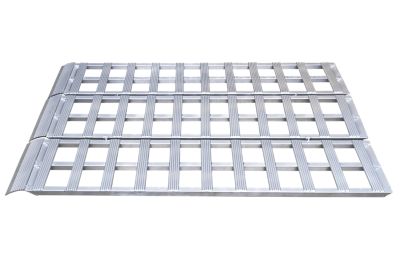
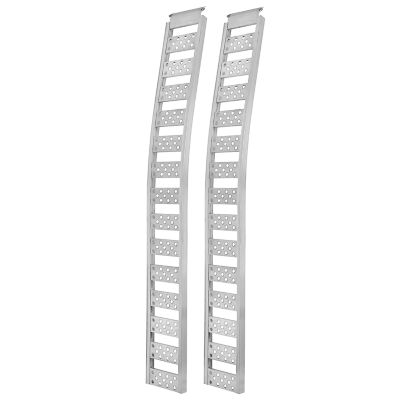
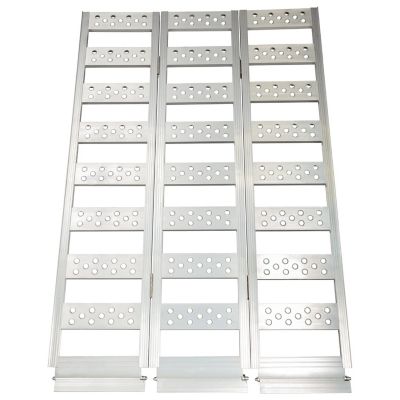
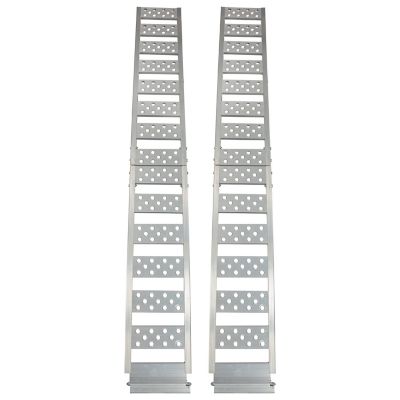
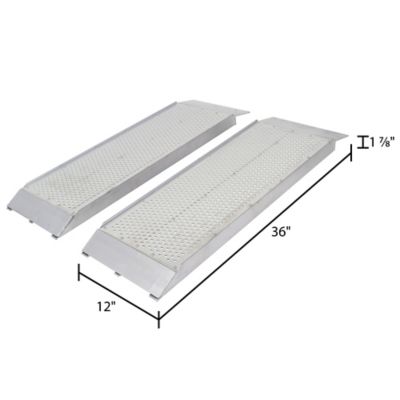
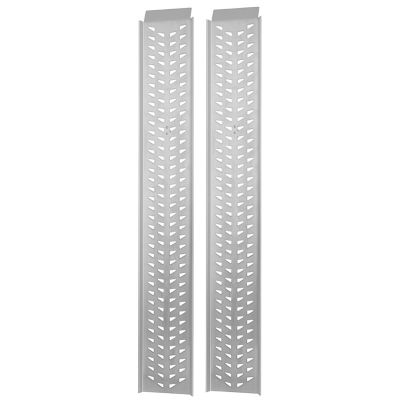
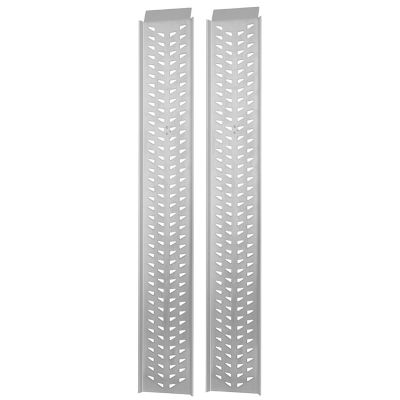
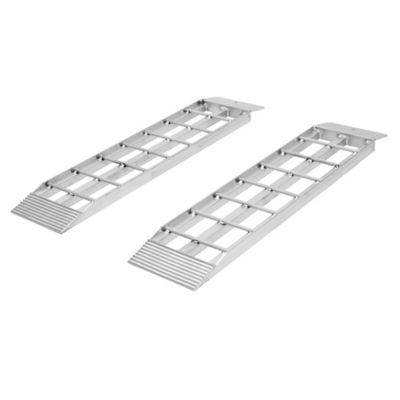
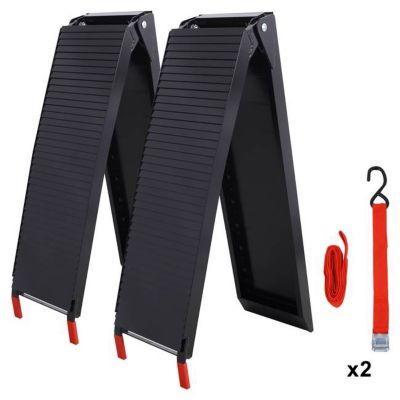
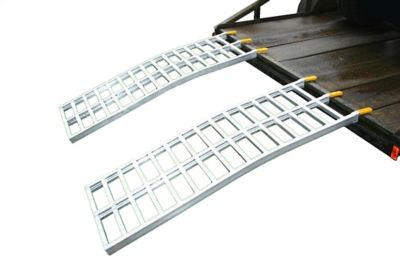
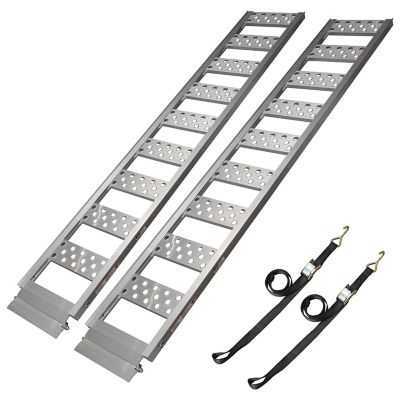
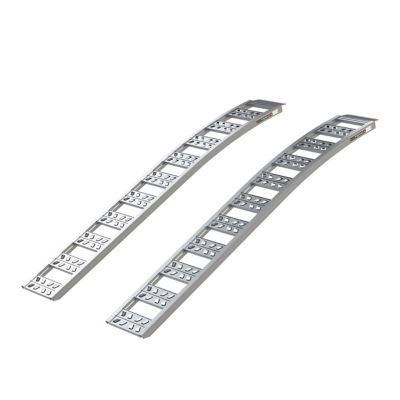
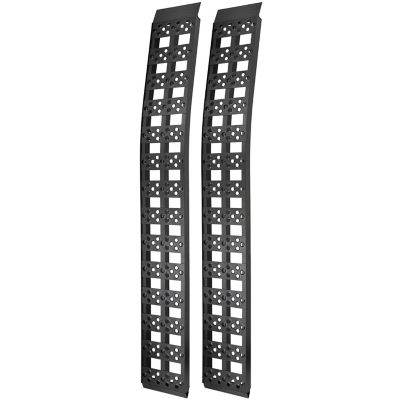
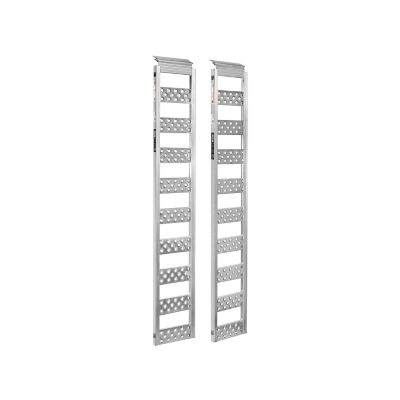
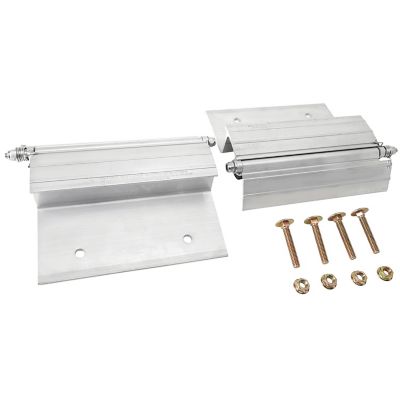
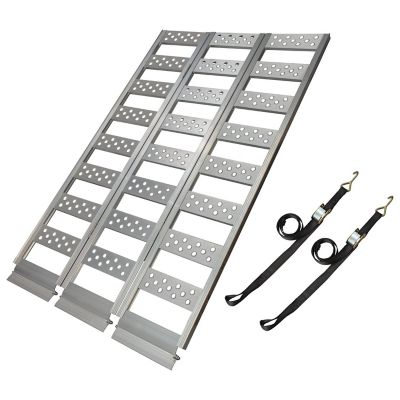
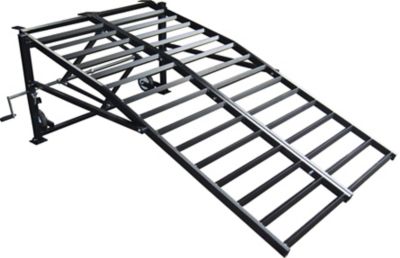
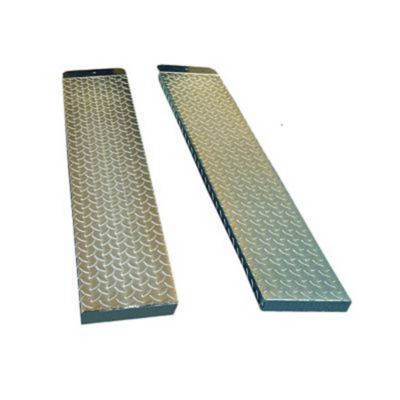
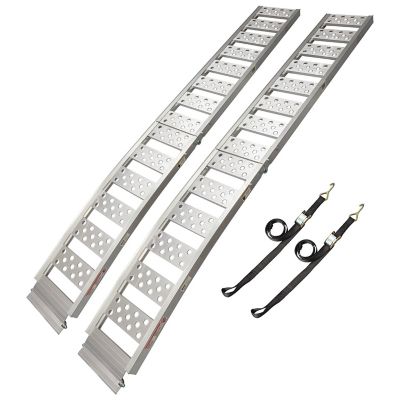
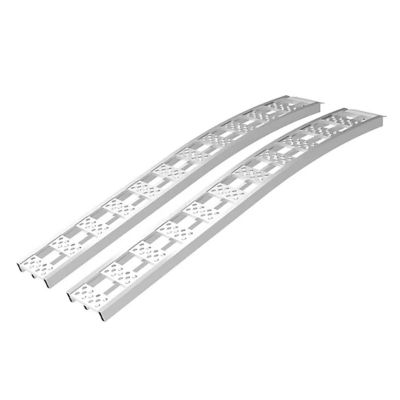
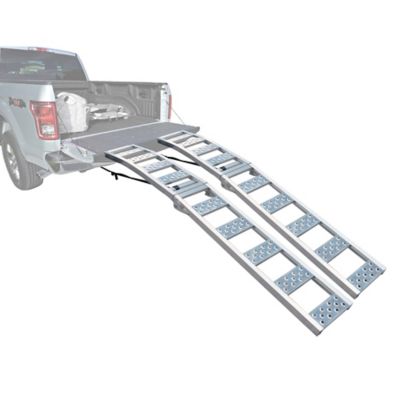
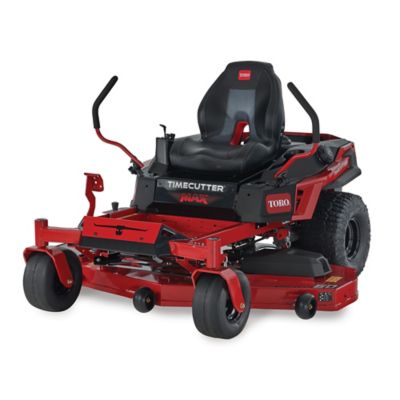
Ramps for zero-turn mowers make it easier to load a mower into a pickup bed, utility trailer, enclosed trailer, or other raised hauling surface when the machine needs to travel between properties, head in for service, or move out of the way during changing seasons. A zero-turn mower is built for a wide stance, heavy rear drive tires, and small front caster wheels, so ordinary loading ramps may not provide the support or wheel coverage you need. Look for ramps made for heavy equipment, with a broad running surface for each tire and a weight rating that exceeds the combined weight of the mower, fuel, attachments, and any added equipment. Many zero-turn mowers weigh anywhere from about 700 to more than 1,500 pounds, depending on the engine, cutting deck, frame, and accessories. Check the mower’s owner’s manual or manufacturer specifications before shopping, then compare that number with the ramps’ total rated capacity and the capacity of each individual ramp. A pair of ramps should work together as a matched set, with both sides carrying their share of the load. Extra width can help keep the rear tires centered and give the narrow front casters a steadier path, especially when the mower is being loaded by one person on a gravel drive or around a busy barnyard. Rung spacing matters, too. Small caster wheels can catch in widely spaced rungs, while closer spacing provides a smoother transition from the ground to the trailer or truck bed. Solid, punched, mesh, or closely spaced rung surfaces may each have a place, but the best choice depends on the mower’s tire size, the ramp angle, and the kind of ground where loading takes place. An arched ramp can be especially useful when the mower deck sits low, helping reduce the chance of scraping or high-centering as the machine crosses the break between the ground and the hauling surface. Folding designs can save room in a truck toolbox, shop corner, or equipment shed, while fixed-length ramps may offer a simple, sturdy setup for regular use. Before placing an order, measure the truck bed or trailer height, available storage space, and the distance between the mower’s tires. Those measurements help you choose a ramp length that creates a manageable approach instead of a steep climb.
Safe setup is just as important as ramp capacity. Park the truck or trailer on firm, level ground whenever possible, set the parking brake, and keep the loading area clear of loose gravel, mud, tools, pets, and bystanders. Ramps should sit square with the hauling surface, with both sides aligned so the mower can travel straight up and down without a sudden turn. Use the included safety straps, chains, pins, or other anchoring hardware to secure the ramps to the truck bed, tailgate, trailer edge, or loading platform. An unsecured ramp can slide or kick out under the weight of a mower, even when the ramp itself has a high capacity rating. Make sure the support lip is fully seated and that the ramp angle is consistent on both sides. Inspect the surface for bent sections, cracked welds, loose fasteners, worn straps, and slippery buildup before every use. Mud, grass clippings, dew, and autumn leaves can reduce traction, so clean the ramps and mower tires when needed. Load at a slow, steady pace with the mower deck raised only as recommended by the mower manufacturer, and avoid sudden acceleration, braking, or sharp steering while the machine is on the ramps. Keep the mower centered between the runners, and do not exceed the ramp maker’s instructions for speed, direction, or use with powered equipment. If the transition into a truck bed is steep, check that the mower deck, anti-scalp wheels, and rear frame clear the top edge before proceeding. A spotter can help the operator judge alignment and clearance, but the spotter should stand to the side rather than directly behind the mower or between the mower and the trailer. After loading, place the mower in the manufacturer-recommended transport position, turn it off, remove the key, and secure it with appropriate tie-downs at the designated frame points. Ramps are for loading and unloading, not for leaving a mower parked on an incline. Taking a few extra minutes to check the footing and tie-downs can protect the machine, the hauling equipment, and everyone working around it.
The right loading ramps can be useful for homeowners caring for a large rural lot, lawn crews moving from one property to another, property managers maintaining shared grounds, and farm families who need to transport equipment between a house, shop, pasture, and cabin. They can also be a practical gift for someone who recently bought a zero-turn mower, added a trailer, or took on regular mowing work for neighbors. A set may come in handy when a mower needs routine maintenance, blade service, winter storage, or repairs that are easier to handle at a well-equipped shop. During the warmer part of the year, ramps can simplify trips between mowing areas, and during the cooler months they can help move equipment out of wet grass, prepare machinery for storage, or bring a mower in for end-of-season service. If the mower is a compact model, explore
Small Zero-turn Lawn Mowers to compare options that may have different weight, deck-width, and clearance requirements. Keep in mind that a smaller mower still needs ramps with suitable traction, wheel coverage, and capacity; never choose solely by the mower’s overall size. Aluminum ramps are often valued for lighter handling and easier storage, while steel ramps may appeal to users who prefer a heavier feel and rugged construction. Textured surfaces can add traction, and folding joints or raised side rails may make storage and alignment more convenient, but every hinge, latch, and rail should be checked before use. Consider how often the ramps will be moved, whether they will ride in rain and dust, and whether one person needs to set them up without help. Measure twice, compare the mower’s actual weight with the full rating, and choose a length and width that match the truck or trailer as well as the machine. With properly sized, securely anchored ramps and a careful loading routine, moving a zero-turn mower can feel less like a risky chore and more like a regular part of keeping the property, equipment, and workday running smoothly.