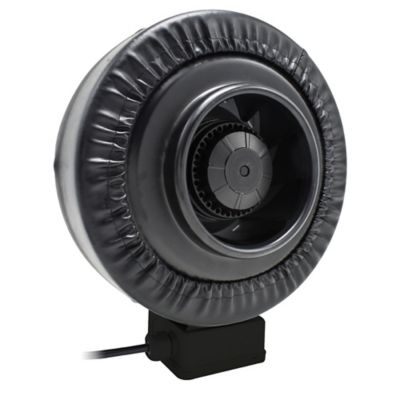
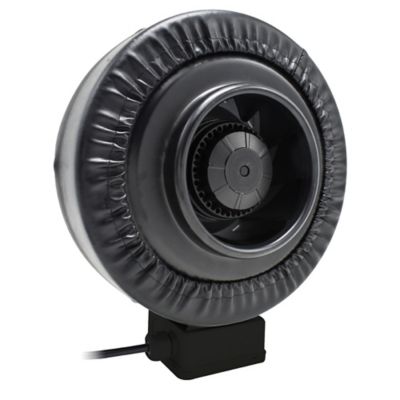
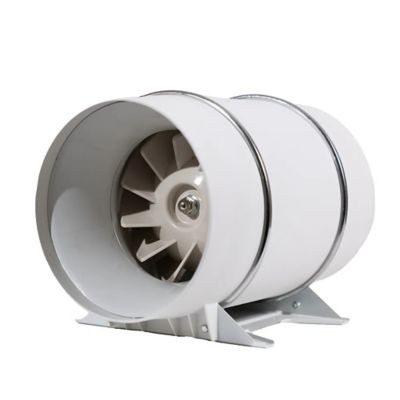
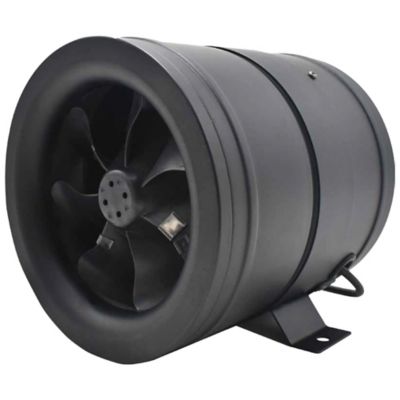
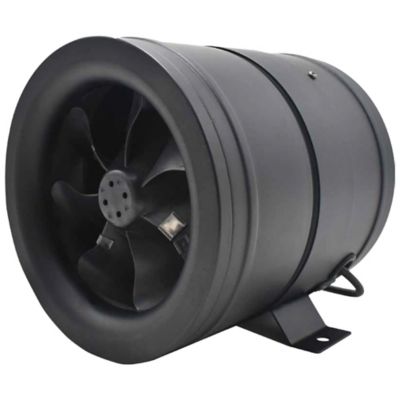
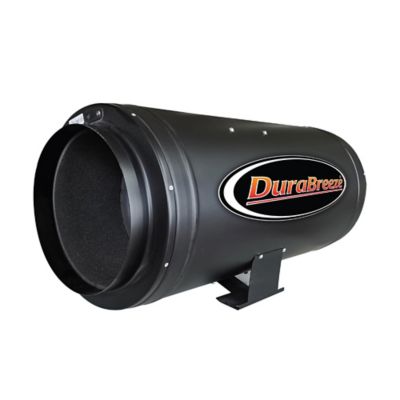
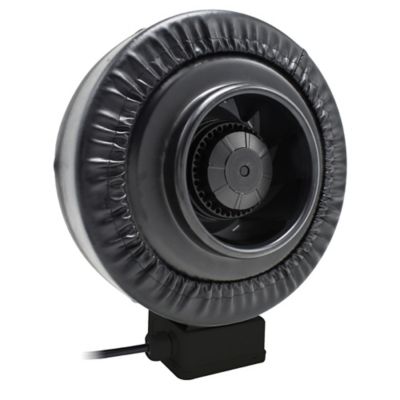
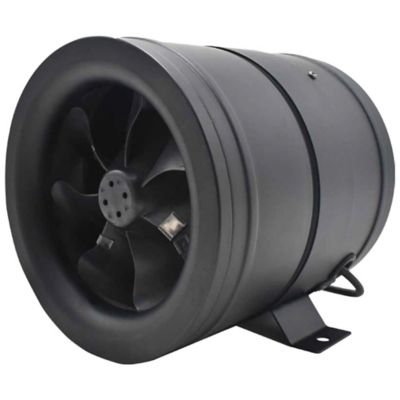
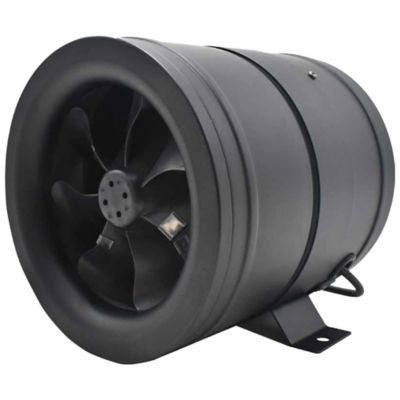
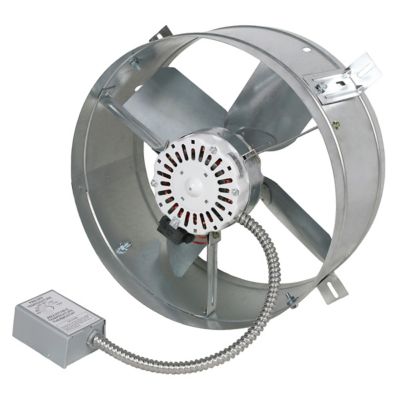
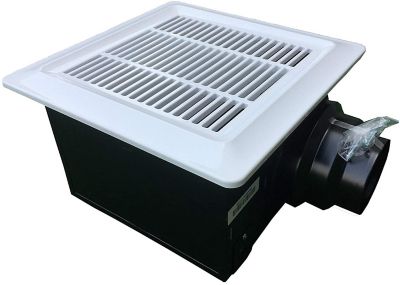
Quiet duct fans are built to move air through a connected duct system without turning every room into a workshop full of motor hum and rushing air. They are commonly used for bathroom exhaust, laundry rooms, workshops, home offices, media closets, greenhouse spaces, attic ventilation and other spots where steady airflow matters but noise is a nuisance. An inline duct fan sits inside the duct run or connects between sections of ductwork, pulling stale, warm or humid air from one area and sending it outdoors or into another part of the ventilation system. Many of the quieter models use a mixed-flow design, which combines the pressure-handling ability of an axial fan with the smoother, more consistent movement of a centrifugal-style fan. An energy-efficient EC motor can also help deliver dependable airflow while using less power and producing less buzzing than older motor designs. Noise ratings are often listed in decibels, with lower numbers generally indicating quieter operation, but the number on the box is only part of the story. The fan’s speed, the length and shape of the duct, the amount of static pressure, the mounting surface and the sound of air moving through grilles or vents all affect what you hear. A fan that runs quietly on an open test bench may sound different once it is working against a long duct run or a restrictive vent cap. For that reason, quiet duct fans are a handy choice for anyone who wants ventilation without giving up the calm of a bedroom, the focus of a home office or the easy conversation in a shop. Browse
Duct Fans to compare options for different duct sizes, airflow needs and installation setups.
Start by matching the fan to the duct diameter already in place, such as 4-inch, 6-inch or another common size, and then look at the airflow rating in cubic feet per minute, or CFM. A larger CFM number does not automatically make a fan the better choice. Oversizing a fan can create unnecessary drafts, increase power use and make airflow louder at the vent, while an undersized fan may run hard without clearing moisture or stale air effectively. Check the fan’s performance at the static pressure your system creates, especially when the duct travels a long distance, passes through a filter, includes a backdraft damper or uses several elbows. Keep the duct route as straight and smooth as practical. Sharp bends, crushed flex duct and sudden changes in diameter make the motor work harder and can create that familiar rushing or whistling sound. If flex duct is part of the installation, stretch it out instead of leaving it bunched up, and support it so low spots do not collect moisture. A short section of insulated duct can help reduce both vibration and sound, while rubber mounts or vibration-isolating straps can keep motor movement from carrying through framing, shelves or metal panels. Some installations benefit from an inline silencer or acoustic muffler, though added components can also affect static pressure, so the complete system should be considered rather than the fan alone. Variable-speed controls are useful when full power is only needed occasionally. EC motors paired with a compatible controller can offer smooth speed adjustment, and PWM controls are often preferred when available because they reduce the humming or motor buzz sometimes caused by basic voltage-drop controls. Always confirm that the controller and fan are designed to work together, and follow the installation instructions for wiring, grounding and outdoor discharge.
A quiet duct fan can be especially helpful during the cooler months, when windows stay closed and moisture, cooking odors, pet smells or workshop fumes can linger indoors. In a bathroom, a properly sized fan helps clear steam after a hot shower and can protect walls, trim and ceilings from lingering dampness. In a garage or hobby space, it can move warm air or odors away from the work area, while a greenhouse setup may use controlled ventilation to help manage heat and humidity. For a home office, music room or entertainment area, quieter operation makes it easier to concentrate without the steady drone associated with ordinary ventilation equipment. These fans can also make a practical gift for a homeowner, do-it-yourselfer, hobby farmer or handy family member who is improving a shop, barn office, storage area or outbuilding. Before buying, measure the duct opening, note the available electrical supply and decide whether the fan will exhaust air outdoors or circulate it within a space. Make sure the discharge point has a suitable exterior cap or grille, and use a backdraft damper where needed to keep outside air, dust and pests from traveling backward through the duct. Fans used in damp locations need to be rated for that environment, and exhaust systems should never be used to handle combustible vapors, flammable fumes or hazardous materials unless the equipment is specifically approved for that job. Clean grilles, filters and fan blades as recommended, since dust buildup can reduce airflow and add noise over time. With the right size, a sensible duct route and solid mounting, a quiet duct fan can keep air moving in the background—much like a good fence gate that does its job without calling attention to itself.