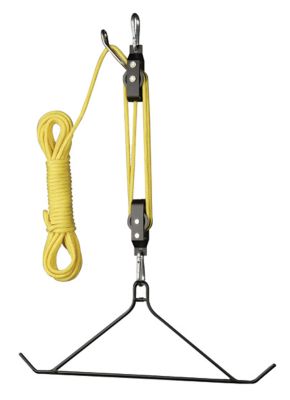
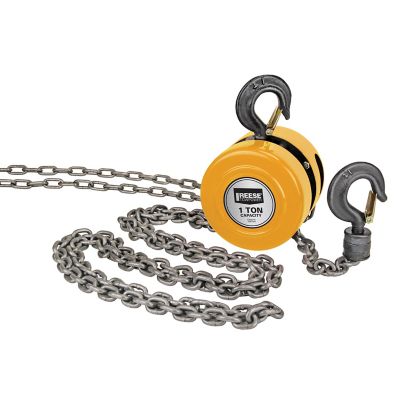
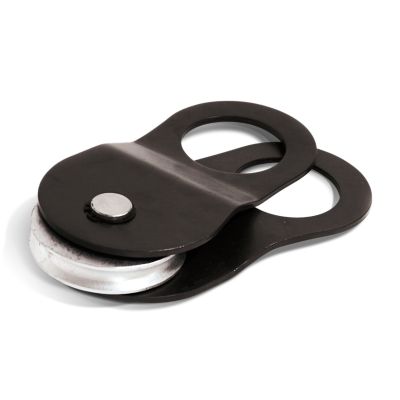
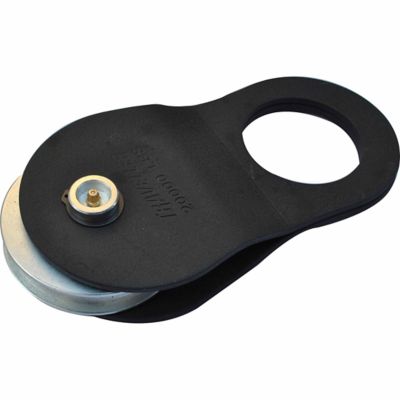
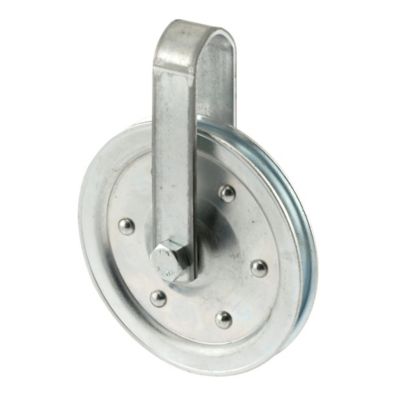
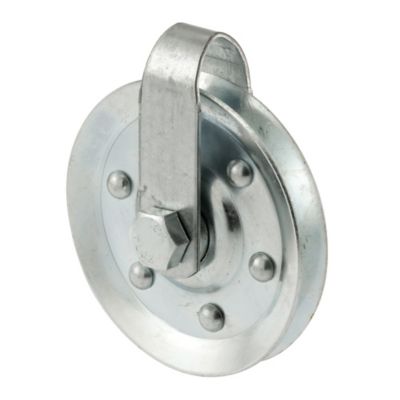
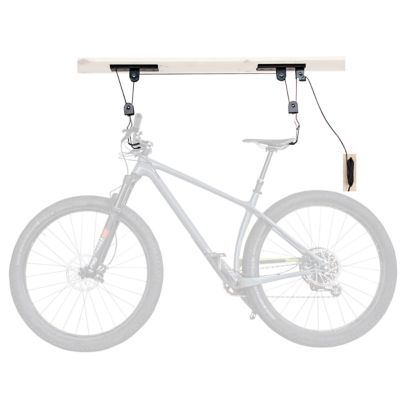
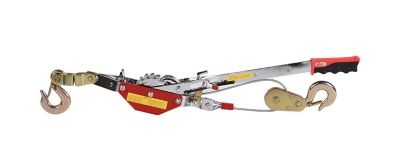
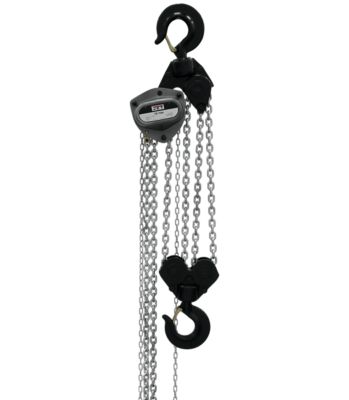
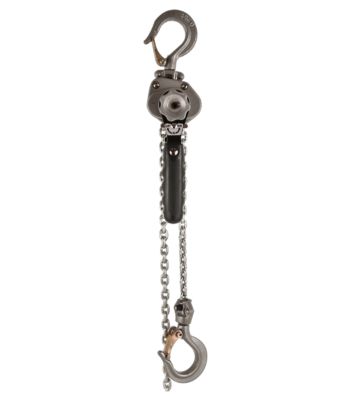
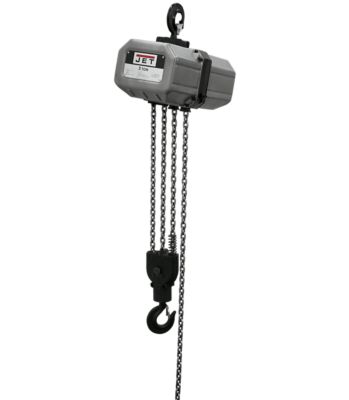
Pulleys for lifting guide a rope or cable over a grooved wheel, called a sheave, to change the direction of a pull or help reduce the force needed to raise a load. A single fixed pulley mainly changes the pulling direction; it does not, by itself, reduce the force required. A movable pulley travels with the load, while a block and tackle combines pulley blocks so multiple sections of line share the load. That arrangement provides mechanical advantage, making a heavier lift possible with less pulling force, though more rope must travel through the system. In an ideal 5:1 arrangement, the pulling force is one-fifth of the load’s weight, and raising the load one foot requires pulling five feet of line. Friction and the weight of moving hardware increase the effort needed in practice. Around a farm shop, equipment shed, or maintenance bay, those differences matter when comparing lifting pulleys for raising a machine component onto a workbench or positioning a part for repair. A direction-changing pulley may suit a setup where the pulling point needs to move away from the load, while a multiple-sheave arrangement may better suit work that calls for greater mechanical advantage. Neither arrangement raises the load rating of the rope, hooks, anchor, or other hardware. Lifting capacity depends on the complete setup, not just the number of wheels or the apparent size of a block. Farmers, ranchers, mechanics, and property owners often need a balance of manageable pulling effort, enough lifting travel, and room to work around the equipment. Compact blocks can fit tighter spaces, but the distance between the overhead attachment and the load still limits lifting height. A pulley also does not automatically hold a load when the operator releases the line. Jobs that require a load to remain in position call for equipment with an appropriate load-holding feature or separate rated support, according to the manufacturer’s instructions.
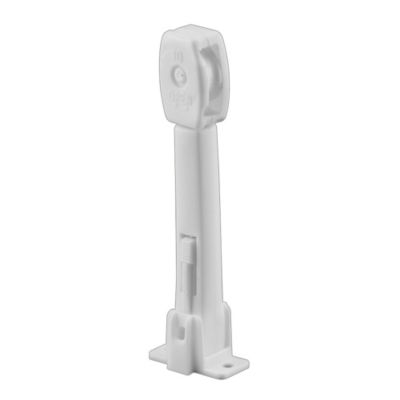
Materials and construction help determine how a lifting pulley fits the job, but the working load limit is the starting point. Steel pulley bodies can provide strength for demanding shop and agricultural work, while aluminum designs can reduce carrying weight when equipment moves between approved lifting locations. Galvanized finishes and stainless steel components can help resist corrosion where moisture is part of the work environment. Those material descriptions alone do not establish lifting capacity or make every pulley suitable for overhead lifting. The manufacturer’s stated application, working load limit, and compatible line type matter more than appearance. Breaking strength is not the same as working load limit and should never serve as the operating limit. Rope pulleys and wire rope pulleys also are not automatically interchangeable. The sheave groove, wheel diameter, and side clearance need to match the specified line material and diameter. A line that sits poorly in the groove can rub, flatten, bind, or wear faster, while an undersized sheave can bend wire rope more sharply than its manufacturer allows. Bushings and bearings affect rolling resistance, service needs, and how smoothly the wheel turns under load. Attachment style matters, too: fixed eyes, swivel eyes, and hooks each have different handling characteristics and alignment requirements. A swivel attachment may help a block align with the line, but it does not make sideways loading acceptable. Side-opening blocks can simplify placing a line into the sheave without feeding the entire line through, provided the block is rated for the lifting application and its closure is properly secured. For a cramped repair bay, overall block length, hook clearance, and access to the moving line can matter as much as weight. Belt-drive components serve a different purpose:
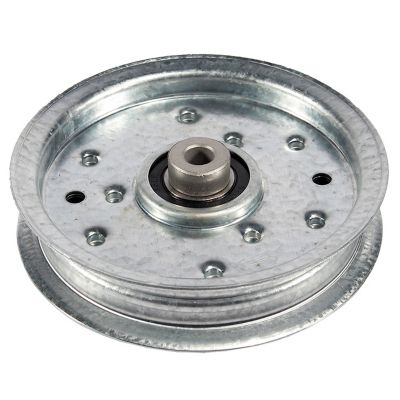
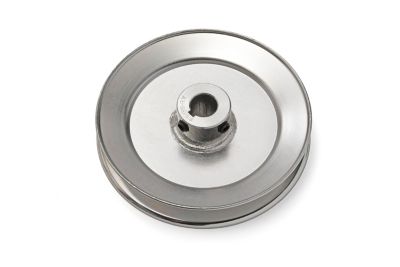
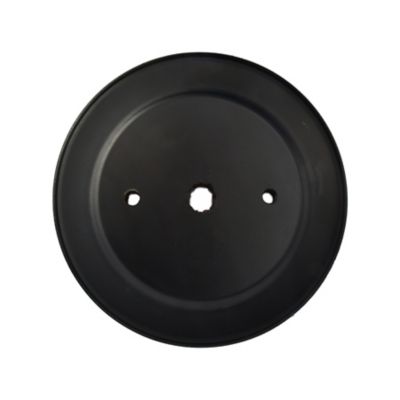
Spindle Pulleys transfer rotary motion in compatible machinery rather than provide a rope-and-block lifting arrangement. Keeping that distinction clear helps match the pulley to the work instead of relying on a shared name.
Long service life depends on proper fit, sensible handling, and regular inspection throughout the lifting system. Barn dust, metal filings, and grit can collect around a sheave or axle, so accessible moving parts and straightforward cleaning requirements are worth considering. A wheel should turn as its design requires without binding, excessive wobble, or rubbing against a bent side plate. Cracks, deep corrosion, distorted hooks, loose fasteners, and damaged closures are reasons to take equipment out of service pending evaluation under the manufacturer’s guidance. The rope or cable deserves the same attention, including checks for cuts, abrasion, crushing, broken wires, or other damage identified in its inspection criteria. Lubrication needs vary by bearing and block design; some assemblies require scheduled attention, while others have sealed components. Following the stated care requirements helps avoid adding lubricant where it can attract grit or affect the line. Clean, dry storage away from corrosive chemicals helps protect both hardware and lifting line between jobs. Just as important, the supporting structure must be suitable for the forces the arrangement creates. A ceiling joist, shed beam, or handy attachment point should never be assumed capable of supporting a lift without verification. Depending on the rope angle, a direction-changing pulley can place a force approaching twice the line tension on its anchor. Mechanical advantage reduces pulling effort, not the need for properly rated connections and support. Load balance also matters when a machine part has most of its weight at one end or an attachment point sits off-center. Suitable lifting points and compatible rigging help control tipping and unwanted movement. Smooth, controlled handling avoids the sudden forces that come from jerking a line or catching a falling load. People should stay clear of suspended loads, and ordinary material-lifting pulleys are not equipment for lifting people. For everyday shop and farm work, the best fit is a pulley arrangement with clear ratings, compatible components, enough travel, and care requirements that suit the job.