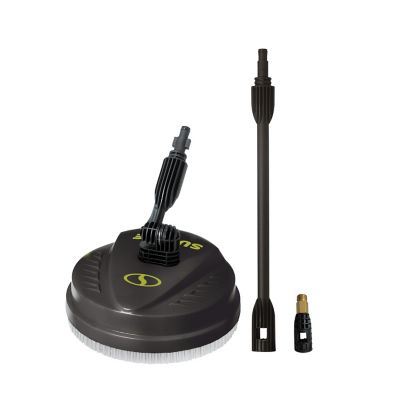
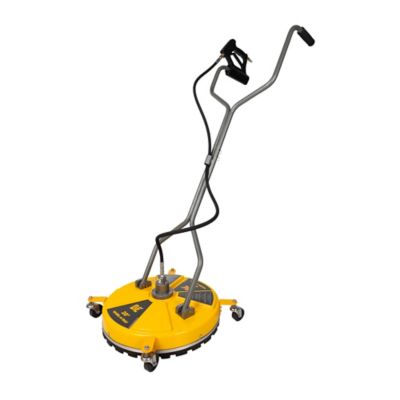
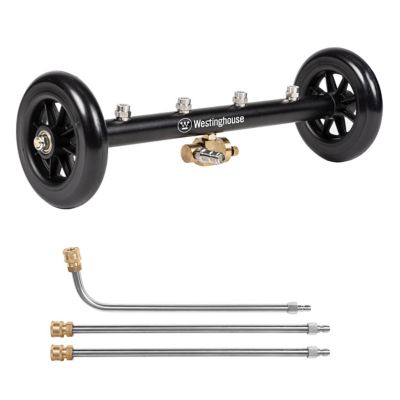
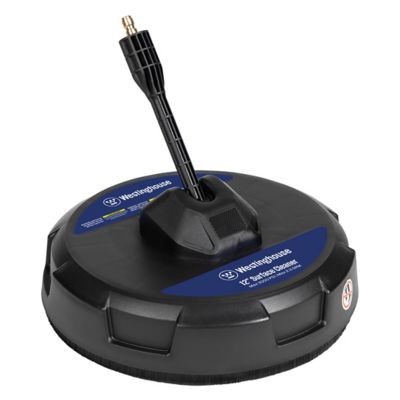
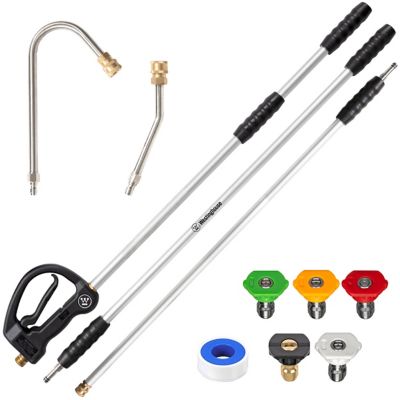
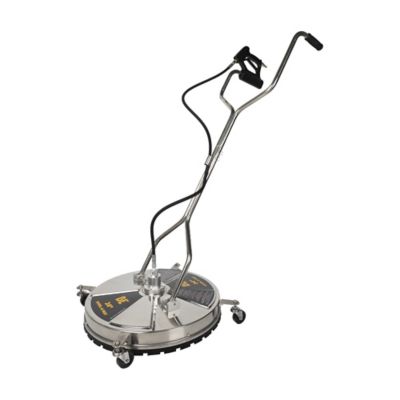
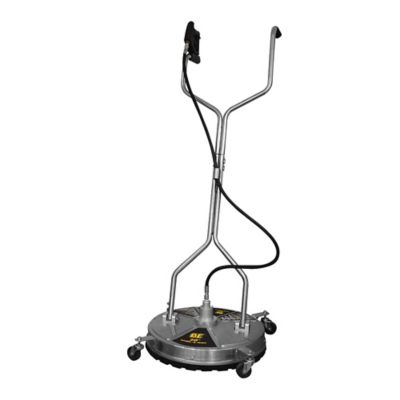
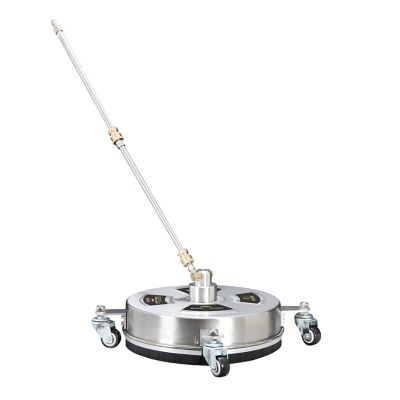
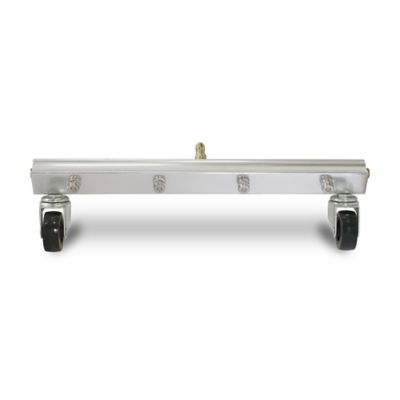
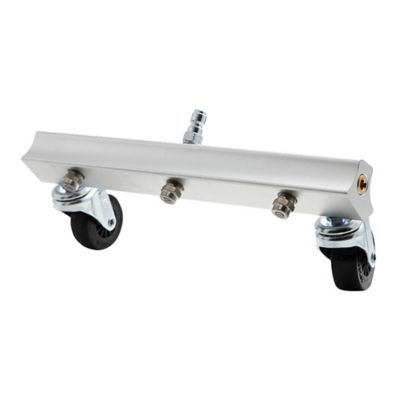
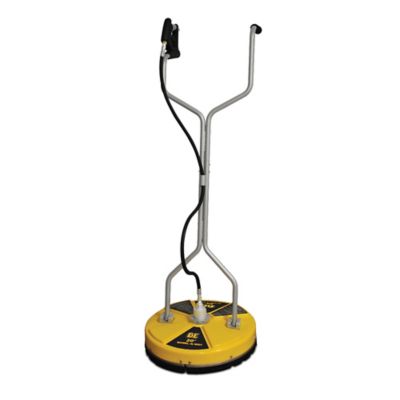
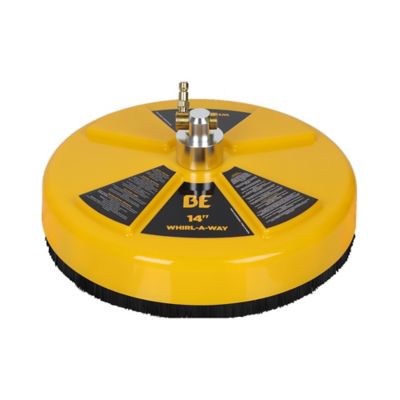
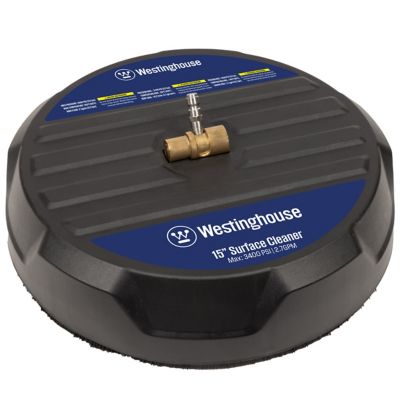
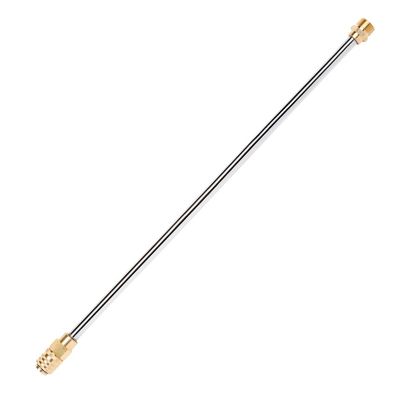
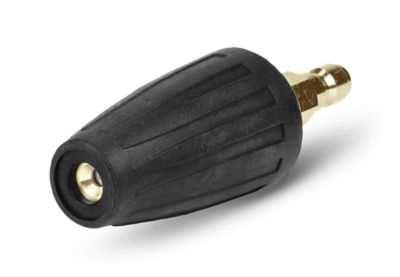
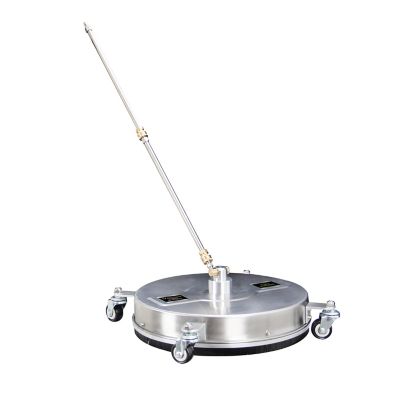
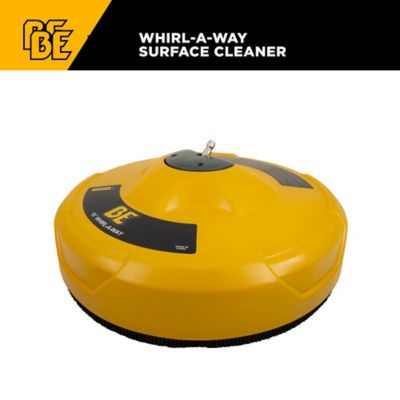
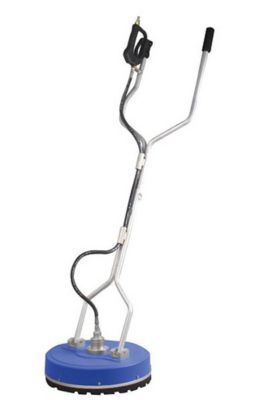
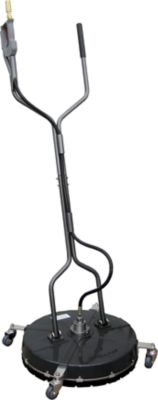
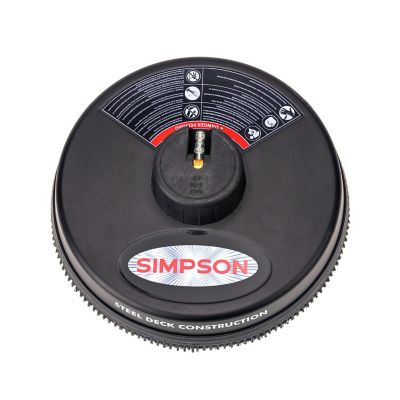
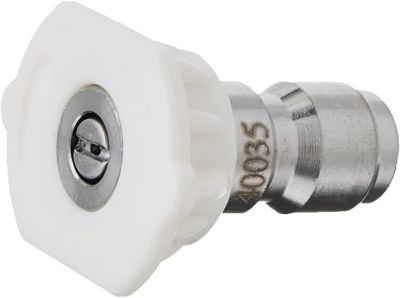
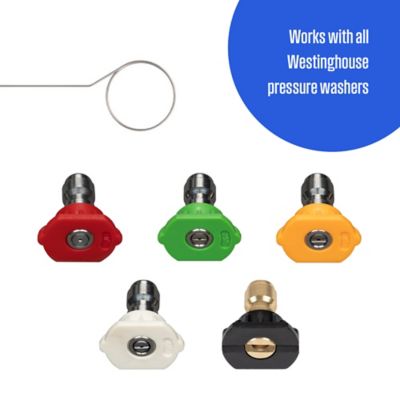
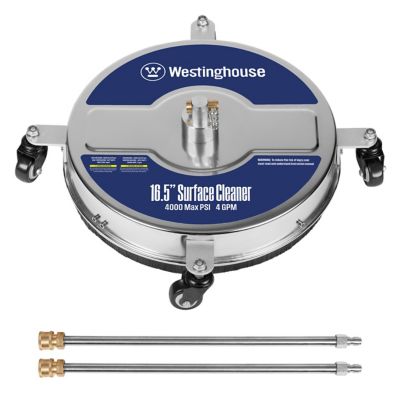
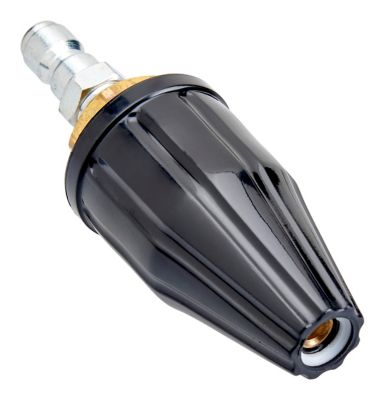
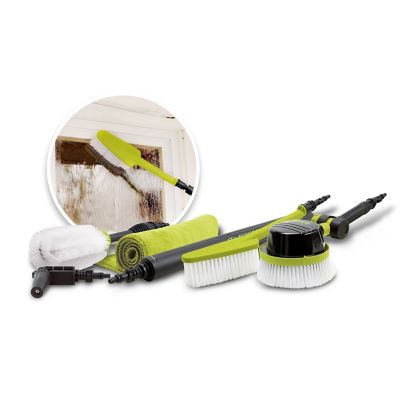
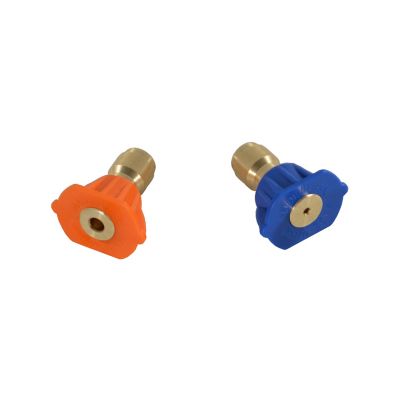
For broad, flat concrete driveways, a compatible surface cleaner is usually the most practical pressure washer attachment. Its rotating spray bar carries matched nozzles beneath a round housing, covering a wider path than a single wand tip and helping produce a more even finish. That enclosed spray pattern also helps limit splash around the work area, although it does not eliminate flying grit or runoff. On a driveway with two long tire tracks, a roomy turnaround or a parking pad beside the shop, the wider cleaning path can mean less time sweeping a narrow jet back and forth. Surface cleaners can reduce the streaks sometimes called tiger stripes, but even coverage still depends on compatible equipment, properly functioning nozzles and steady movement with overlapping passes. A wider housing is not automatically a better match: it needs enough water flow to keep its spray bar working as intended. Smaller housings can be easier to handle around tight corners, while larger ones suit open stretches when the washer meets their requirements. Some designs ride on caster wheels, while others glide close to the pavement; clearance, weight and handle arrangement all affect how they feel across slab joints and uneven spots. Wand attachments remain useful companions for driveway edges, narrow strips beside a garage and areas a round housing cannot reach. Broad fan spray tips offer a different pattern from rotary nozzles, which concentrate cleaning action into a moving jet and require particular care around vulnerable surfaces. Extension wands can change reach and working position, though added length also changes leverage and handling. Together, these attachment types cover different parts of the same job rather than serving as direct substitutes. A surface cleaner handles the open slab, while an appropriate wand setup helps with boundaries and rinsing loose residue toward a suitable collection area. The right combination depends as much on the driveway’s layout and condition as on its square footage.
Matching attachments with compatible equipment in
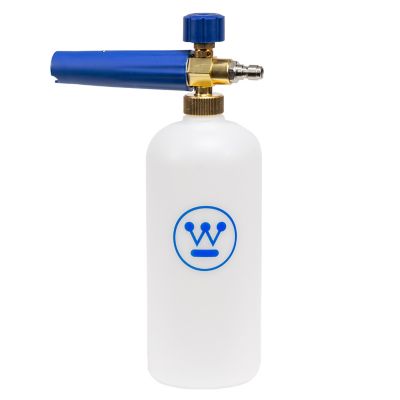
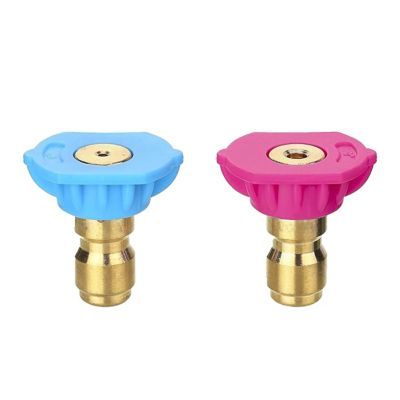
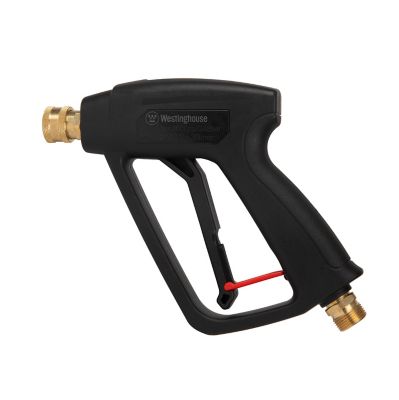
Power Washers for Driveway means looking at both pressure and water flow, not just the biggest number on the machine. Pressure, measured in PSI, and flow, measured in GPM, describe different parts of performance. An attachment needs to accommodate the machine’s rated output, and a surface cleaner may also specify a minimum flow rate for proper operation. A gas-powered or electric washer is not a match simply because its connector looks familiar. Coupler size, thread type, hose connection and nozzle requirements all matter, and an adapter changes a connection rather than adding pumping capacity. Nozzle orifice size is another fit consideration because the openings must suit the washer and the attachment’s design. Matched replacement nozzles help maintain balanced spray across a rotating bar; mixing incompatible tips can leave uneven results or affect operation. The driveway itself deserves equal attention. Sound, fully cured concrete is a different cleaning surface from cracked pavement, exposed aggregate, asphalt or pavers with sand-filled joints. Strong spray can loosen joint material, mark softer surfaces or disturb a failing coating. Even a familiar concrete slab may have patched sections, painted markings or a sealer that calls for gentler treatment. Surface and equipment manufacturer recommendations help define what belongs in the setup. Detergent applicators can also play a part where driveway-safe cleaning solutions are appropriate, especially around oily parking spots or stubborn buildup. Some washer systems draw detergent only through a designated low-pressure nozzle or attachment, so soap compatibility deserves its own check. Ground-in oil may need a suitable treatment and may still leave a shadow; higher pressure alone is not a cure for every stain. Runoff matters around lawns, garden beds, wells and storm drains, particularly when cleaning solutions or vehicle residue are involved. A well-matched driveway setup supports controlled cleaning without treating every patch of pavement as though it can take the same spray.
Materials and serviceable parts help determine how driveway attachments stand up to repeated work. Stainless steel components offer corrosion resistance, while coated metal housings depend partly on the condition of their finish. Composite housings can reduce carrying weight, though their resistance to impacts and abrasion varies by construction. Brass fittings, seals, swivels, bearings and nozzle assemblies all have jobs beyond holding the attachment together: they help manage pressurized water while allowing the moving parts to operate. A sturdy-looking shell does not make up for an incompatible fitting or a worn seal. For someone cleaning a concrete driveway beside a barn, a family parking area or the paved entrance to a small business, practical details can matter more than sheer size. Wheels that move smoothly across joints, a handle that feels manageable and access to replacement wear parts can make repeated cleanup less of a chore. Loose stones and broken concrete remain hazards, and these attachments are not meant to turn a gravel lane into a washable hard surface. Routine care includes clearing trapped grit, checking nozzles for blockage and inspecting hoses, couplers and seals for wear. Any inspection or attachment change calls for shutting down the washer and releasing pressure according to its instructions before disconnecting parts. A spray bar should turn freely without contacting the housing, and missing bristles, damaged wheels or a leaking swivel deserve attention before another pass across the driveway. Cleaning and storage practices specified by the manufacturer help protect the housing, fittings and internal parts between jobs. Eye protection, firm footing and keeping people and animals away from the spray remain important even with an enclosed surface cleaner. For homeowners and property caretakers alike, the most useful pressure washer attachments for driveways bring together the right cleaning pattern, a comfortable working setup and a sound match between machine, attachment and pavement.