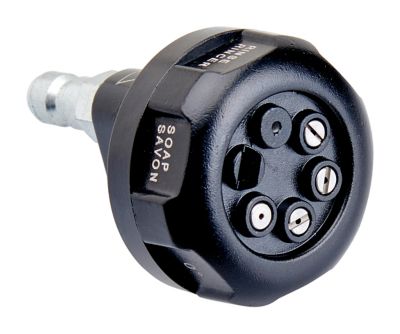
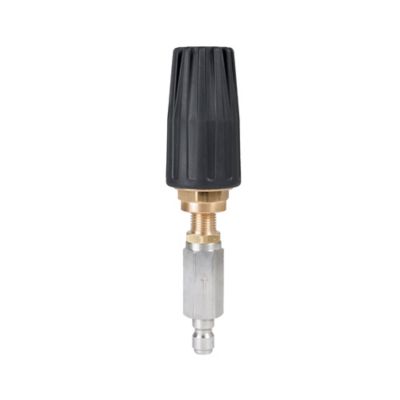
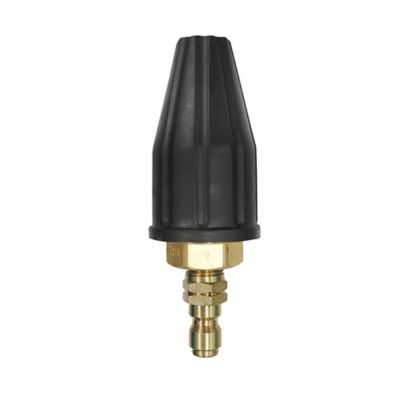
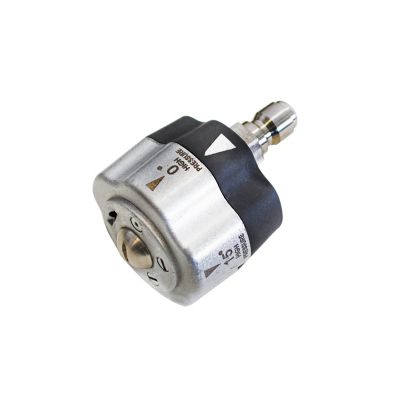
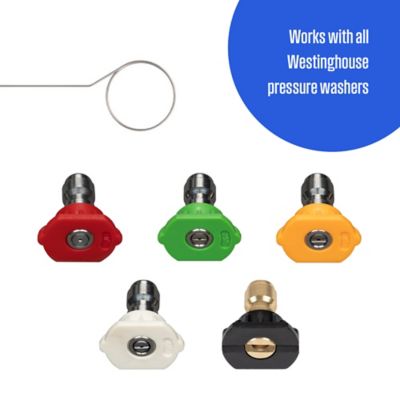
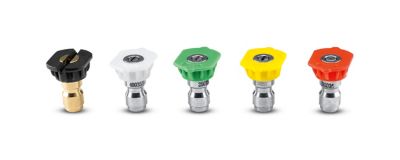
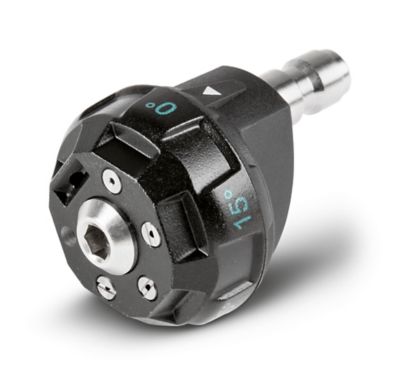
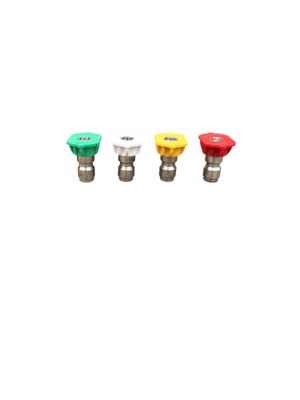
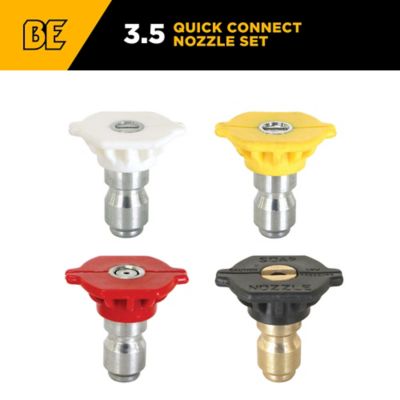
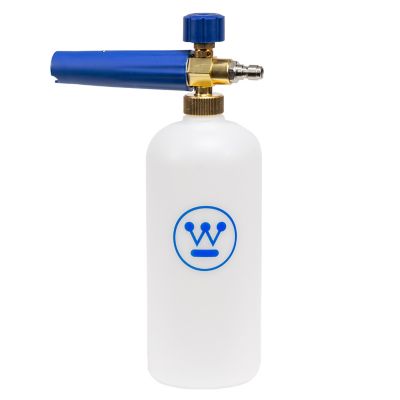
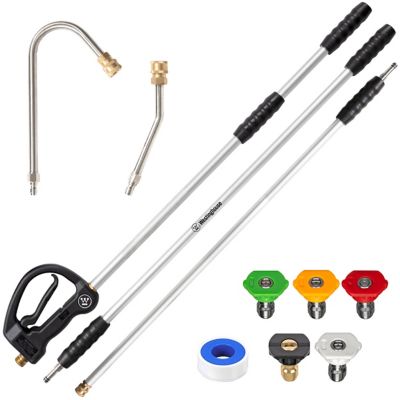
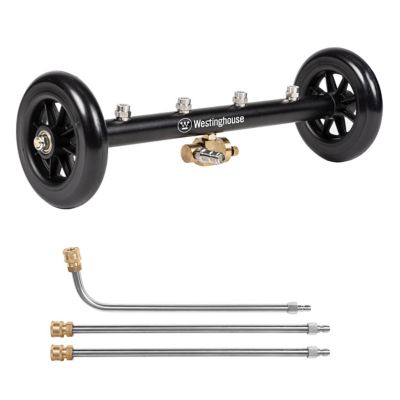
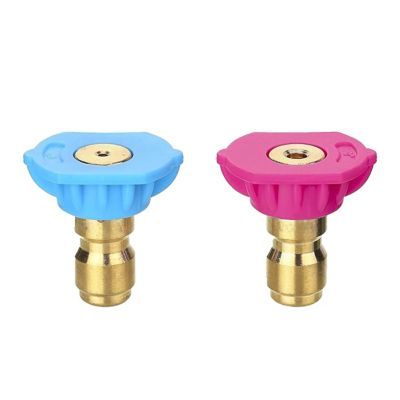
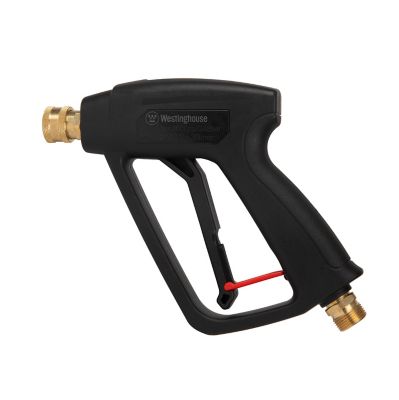
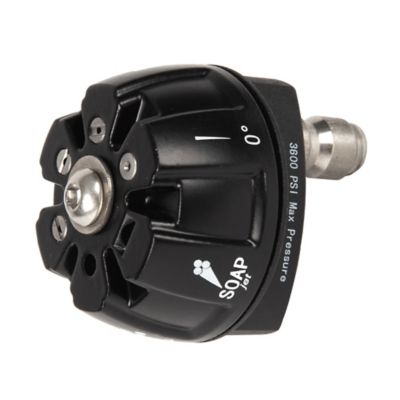
Pressure washer nozzles shape the spray that comes out of the wand, and that little tip can make a big difference in how a cleanup goes. The same washer might spend part of the day knocking dirt off a concrete equipment pad and the rest rinsing soap off a utility trailer. A narrower fan puts more force into a smaller strip, which can help loosen stubborn grime on sound concrete. A wider fan spreads the spray over more of the surface, making it a better match for rinsing loose dirt off a broad panel or washing suds down a slab. Fan tips are often marked by spray angle, so a 40-degree tip gives a wider pattern than a 15-degree tip at the same distance. Color can help tell tips apart at a glance, but the markings are a better reference when tips from different sets end up in the same drawer. A straight jet concentrates force in one spot and can leave a mark before the rest of the surface looks clean. Rotary nozzles sweep a concentrated stream in a circle to cover more ground, but they’re better suited to hard surfaces that can take the force than to wood, painted panels or siding. Detergent nozzles serve a different purpose: On washers set up to draw soap at low pressure, the soap tip lets the detergent flow without the force of a wash tip. For jobs that move from a concrete apron to the painted door beside it, the nozzle that works on the first surface may be too aggressive for the next. A wider pattern and more distance give a gentler starting point, especially around chipped paint, soft wood or seams where water can work its way behind a panel.
A nozzle needs to fit the wand and match the washer. Quick-connect tips make sense when a job calls for switching patterns, while threaded nozzles fit wands or attachments built for that style of connection. Two fittings can look alike on the workbench without seating or locking the same way, so the connection listed in the washer or wand manual matters more than a close visual match. The washer’s pressure, measured in pounds per square inch (PSI), and water flow, measured in gallons per minute (GPM), help determine the right nozzle. A tip’s maximum pressure rating tells how much pressure it can handle, not whether its opening is sized for the machine. The opening, sometimes called the orifice, has to suit the washer’s output. One that’s too large can leave a fan too weak to lift the dirt, while one that’s too small can restrict flow and strain the equipment. The washer’s nozzle sizing chart can help sort out tips with the same spray angle but different openings. Materials matter, too, especially when a wand gets hooked up several times a week. Stainless steel resists corrosion, and brass is common in fittings where the nozzle meets the wand. A molded collar can make tips easier to spot in a tray full of small parts, but the fit of the metal connection is what keeps a tip seated. On a washer shared by several people, clear angle and size markings help keep a narrow tip from getting mistaken for a rinse tip. A handful of distinct patterns makes sense for a machine that goes from shop floors to machinery, while a single matching replacement may be all that’s needed when a familiar spray pattern starts to go uneven.
Around a farm or a home shop, the better match often comes down to what’s left on the surface. Grit tracked across the shop apron doesn’t need the same spray as mud packed around a wheel or dried along the underside of a trailer fender. For a wide rinse, an even fan helps carry loosened dirt away instead of scattering it back across the part just washed. On equipment, nearby seals, wiring and bearings are good reasons to leave the concentrated stream for a surface that can take it. A rinse around a feed area also calls for some thought about where the runoff will go, especially near open feed bins or water tubs. Pressure washer tips are made for washing with a pressurized stream. For equipment that applies liquids across a field, along a fence line or over a garden bed,
Sprayer Nozzles are a separate category built around spray coverage and droplet size rather than cleaning force. A little care can help pressure washer tips hold their pattern through repeated jobs. After the washer is shut off and the pressure is released according to the manual, a rinse can clear grit from the fitting, and a dry holder keeps small tips from rolling around in the bottom of a toolbox. A fan that starts spraying off to one side can point to a bit of debris in the opening or wear that’s changed its shape. The maker’s cleaning instructions are a better bet than scraping at the hole and accidentally widening it. For the homeowner rinsing a walk, the farm crew washing equipment or the shop hand clearing dirt from a work pad, a tip that fits securely and throws an even pattern helps put the spray where it belongs.