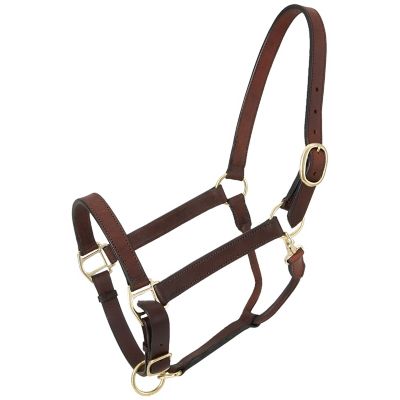
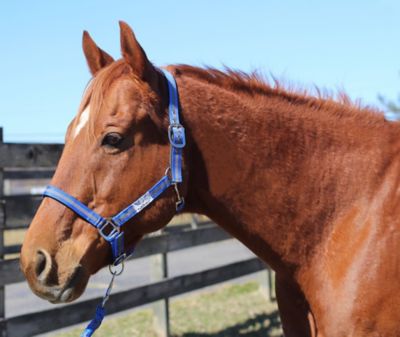
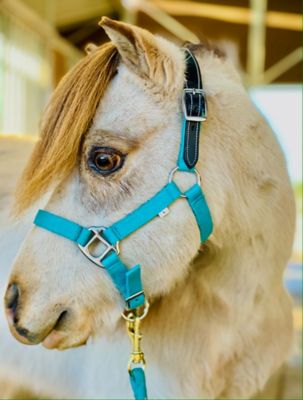
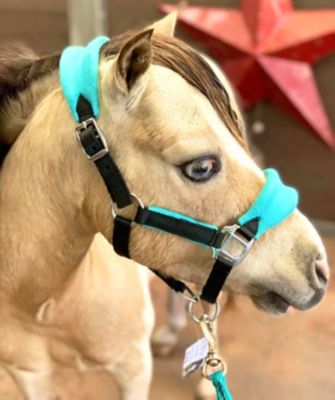
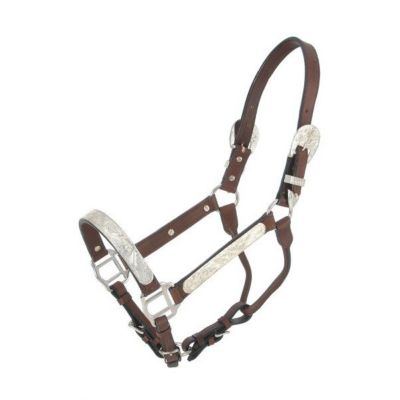
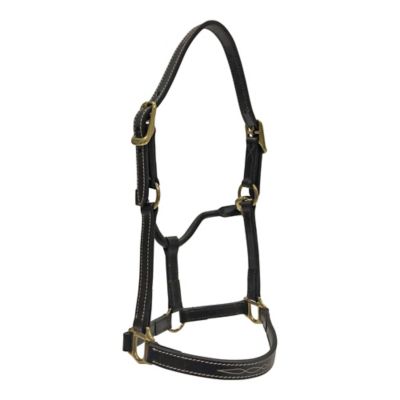
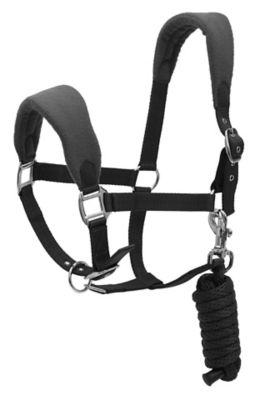
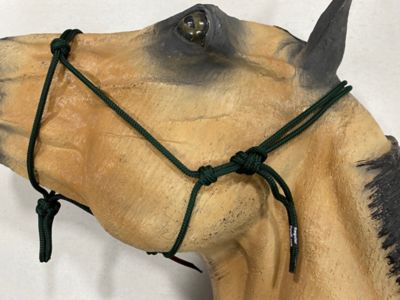
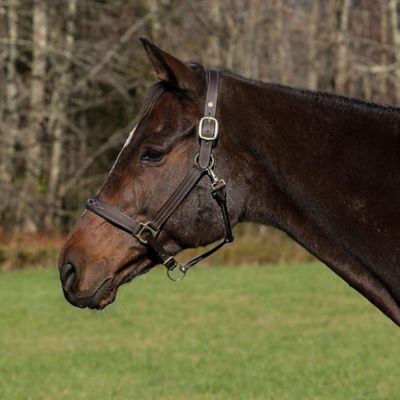
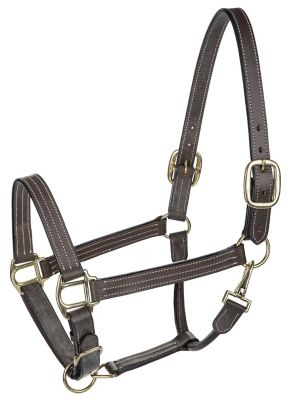
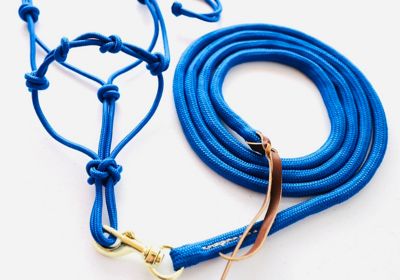
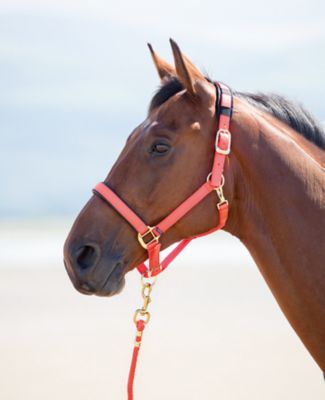
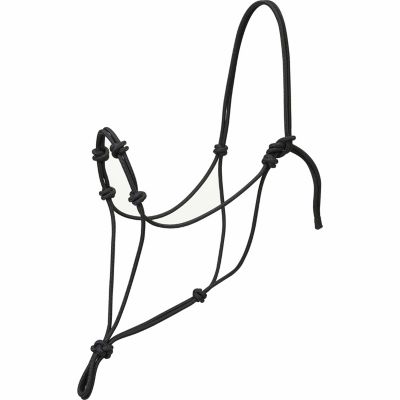
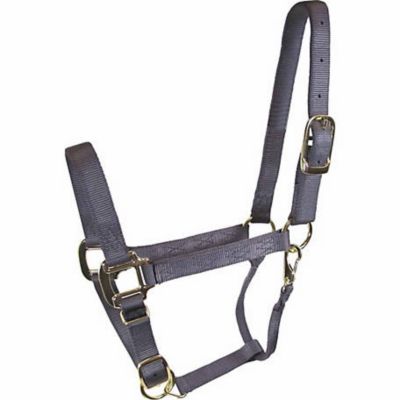
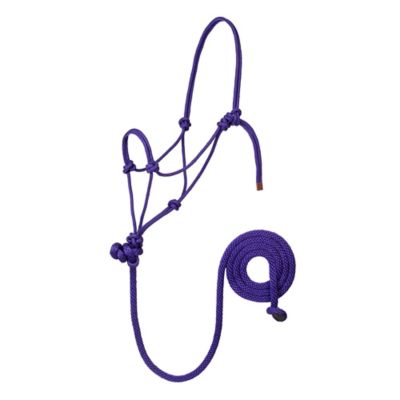
Pony halters are headgear for leading, catching and handling ponies, with a noseband, crownpiece and straps that help keep the halter in place. They provide an attachment point for a lead rope during everyday barn chores, grooming and groundwork. Unlike a bridle, a halter generally does not have a bit and is not a substitute for riding tack. Common choices include flat nylon or polyester webbing, leather and knotted rope, with each construction offering a different feel and level of care. Flat webbing is practical for routine handling because it is lightweight, easy to clean and offered in a range of colors that can help keep one pony’s tack separate from another’s. Leather has a traditional barn look and softens with proper conditioning, though it needs attention to prevent stiffness and cracking. Rope halters have a narrower profile, and their knots and thin contact areas can concentrate pressure, making knowledgeable handling especially important. A pony standing quietly for a brushing session has different handling needs from one learning to walk politely beside a handler, so the halter’s design should suit both the task and the person holding the lead. Hardware matters, too: smooth buckles, sound stitching and securely attached rings all contribute to how the halter handles daily wear. Some designs include padding across the nose or poll, while others keep those areas simple and easy to wipe clean. Breakaway halters have a component intended to release under sufficient force, which can reduce some risks if a pony gets caught. That feature does not make any halter snag-proof, and turnout suitability depends on the design, fit and surroundings. Rope halters should not be left on unattended ponies. Around a busy barn, the right halter is less about extra features and more about a comfortable fit, suitable construction and straightforward handling, whether the next stop is the grooming area, an appointment with the farrier or a short walk from the paddock.
Pony halter sizing deserves a closer look because height alone does not tell the whole story. A short, broad-headed pony may need a different shape from a taller pony with a fine muzzle, and a miniature horse size is not automatically interchangeable with a pony size. Measurements around the nose and over the poll, taken according to the maker’s sizing directions, offer a better starting point than a size name alone. An adjustable crownpiece helps position the halter on the head, while an adjustable noseband gives more room to accommodate differences in muzzle shape. The noseband should rest on the bony part of the nose rather than low over the softer cartilage near the nostrils. There should be room for comfortable chewing and jaw movement without so much slack that the halter twists, slips toward an eye or leaves a large opening that could catch a hoof. Cheek straps should lie clear of the eyes, and buckles should not press into tender spots. Padding can soften contact, but it cannot correct a halter that is the wrong size or sitting in the wrong place. For a pony that lowers its head into a feed tub or reaches down for grass during a supervised pause, that balance between clearance and excess slack becomes easy to appreciate. A throatlatch snap can make putting on and taking off a halter simpler, particularly when reaching over the ears is awkward, though the snap still needs to close fully and sit comfortably. The lead attachment should match the intended connection point, generally the lower ring beneath the jaw, rather than a side adjustment ring. Growing ponies and ponies whose body condition changes need their fit checked again rather than simply moving to the next buckle hole without a closer look. A well-fitting halter should stay settled through ordinary movement without rubbing hair away or leaving pressure marks.
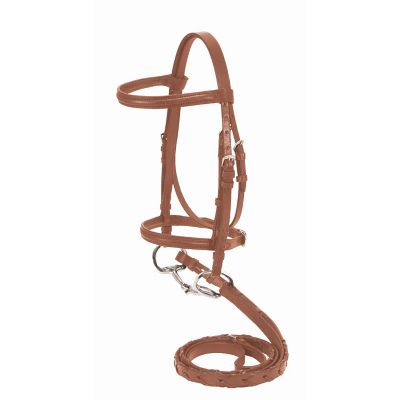
Care habits help pony halters stay comfortable and make wear easier to spot before a strap or fastening gives way. Webbing often benefits from brushing away loose dirt before washing with a mild cleaner, following the maker’s care directions and rinsing thoroughly. Soap residue and trapped grit can irritate the skin, especially along the noseband and behind the ears. Leather calls for leather-appropriate cleaning and conditioning rather than a long soak, with enough drying time before it goes back on the pony. Rope needs attention around the knots, where dirt can collect and changes in shape may affect fit. Across all materials, routine checks should include stitching, buckle holes, snaps, rings and any area that bends or rubs repeatedly. Frayed fibers, split leather, sharp metal edges and snaps that no longer close properly are reasons to take a halter out of service. Breakaway components also need inspection and replacement according to the maker’s directions; substituting a stronger strap can defeat the intended release function. Keeping tack clean and stored away from chewing animals helps protect it between handling sessions. For families, lesson barns and small acreage owners, a pony halter is part of the routine that surrounds feeding, hoof care, grooming and time together outside the stall. A child helping brush a steady pony still needs a capable adult nearby, and no piece of tack replaces good handling or patient training. For riding,
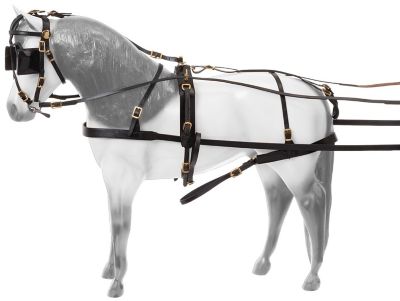
pony bridles serve a different purpose, with designs that carry reins and, in many cases, a bit for communication from the saddle. Keeping that distinction clear helps match equipment to the job rather than expecting one piece of headgear to cover every activity. A halter can also make a thoughtful gift for a pony owner when the pony’s measurements and the owner’s preferred style are known. Whether it hangs beside a grooming tote or comes along for trips away from the barn, its value comes down to sensible fit, manageable care and construction suited to everyday pony handling.