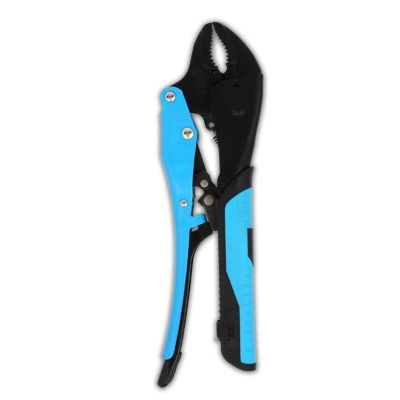
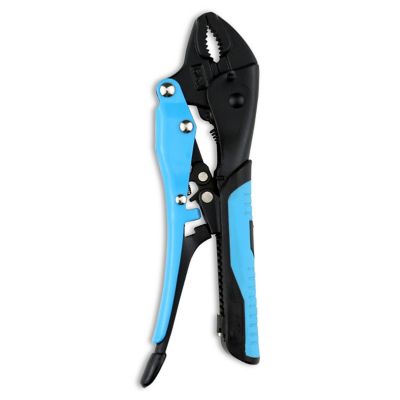
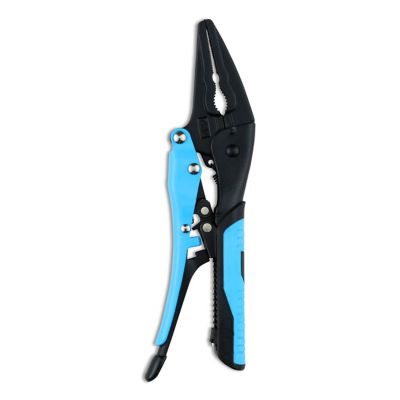
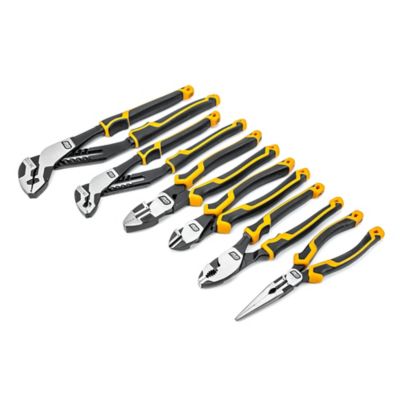
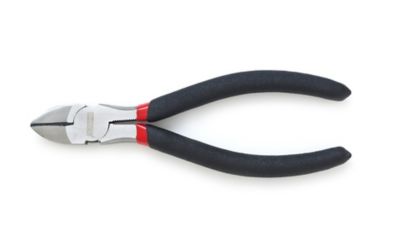
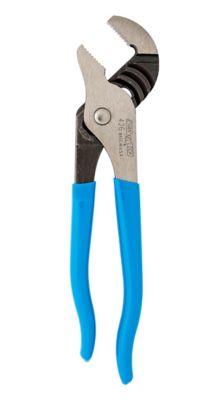
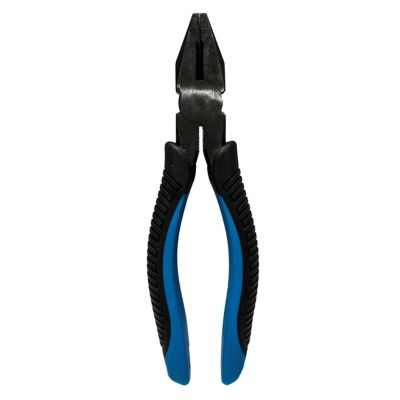
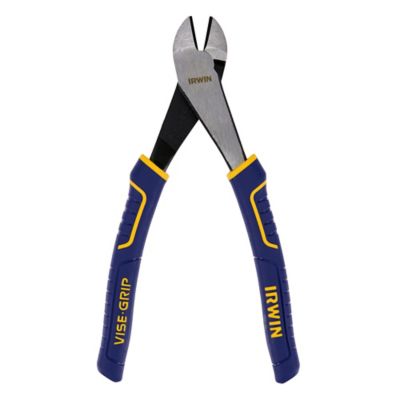
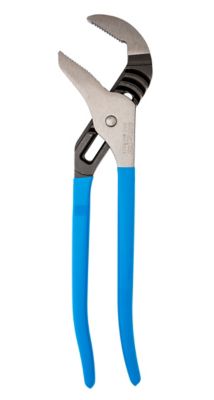
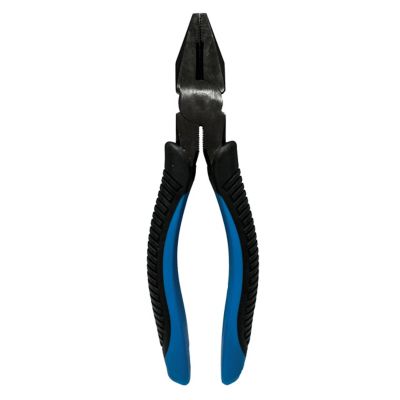
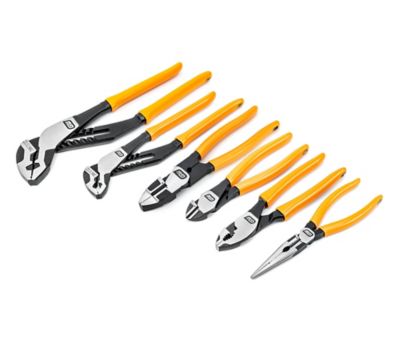
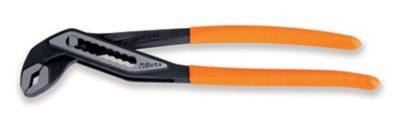
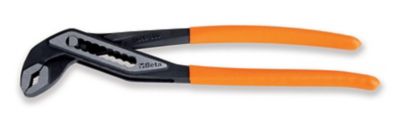
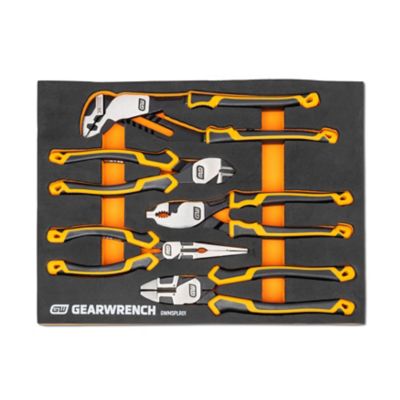
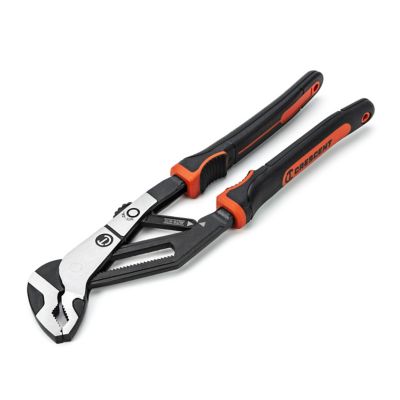
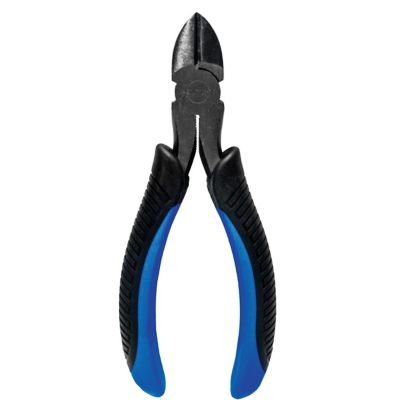
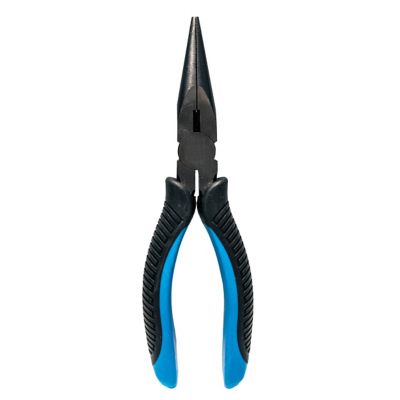
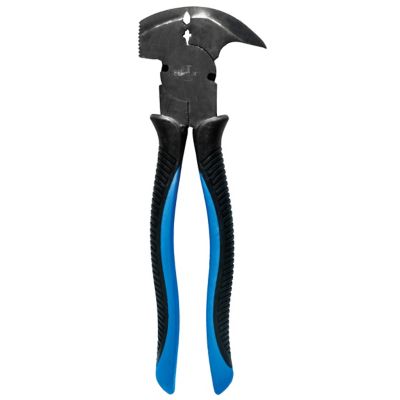
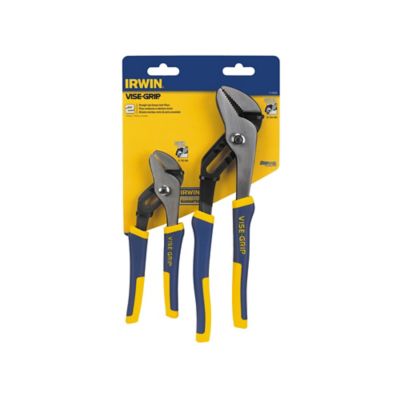
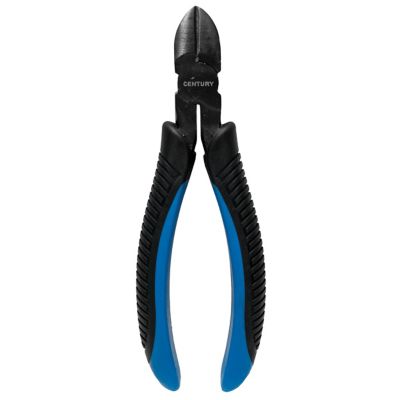
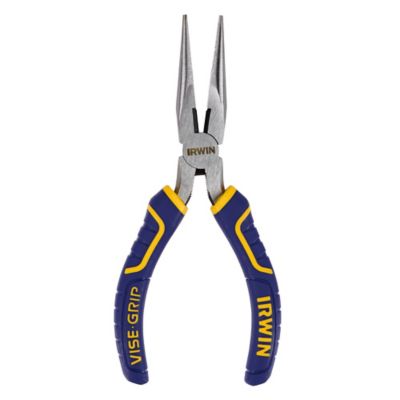
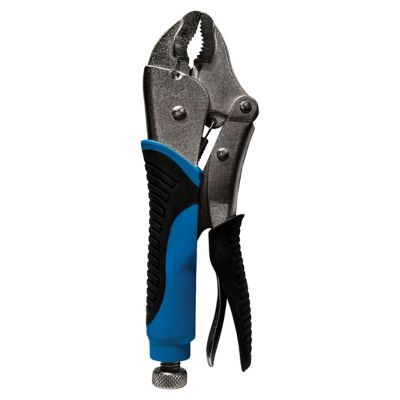
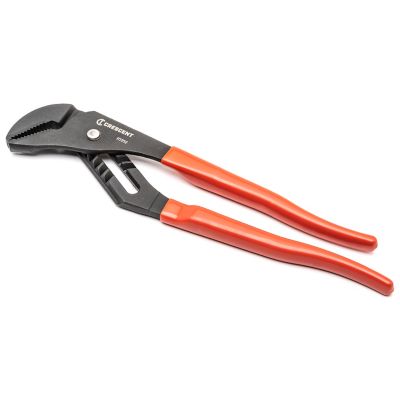
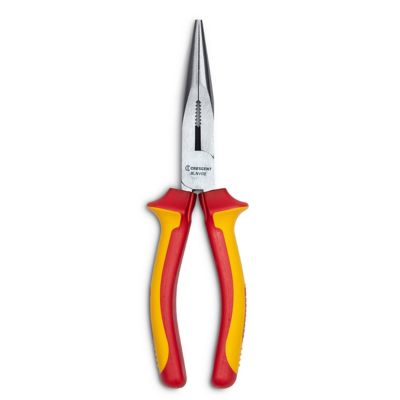
Pliers with grip bring two practical benefits to the toolbox: a firm hold on the workpiece and a comfortable hold in the hand. The term can describe pliers with cushioned or textured handles, as well as locking pliers that clamp onto an object without continuous squeezing. Those features serve different purposes, and some tools combine both. Gripped handles help with control during repeated bending, pulling, and turning, while a locking mechanism keeps the jaws closed when a part needs to stay put. On most locking pliers, an adjusting screw at the end of a handle sets the jaw opening and clamping pressure. Squeezing the handles engages an over-center toggle mechanism, and a release lever opens the jaws when the hold is no longer needed. That arrangement comes in handy when a weathered gate fastener will not budge, a small bracket needs steadying on the workbench, or a bolt turns along with its nut. Jaw shape makes a difference, too. Curved jaws cradle round stock and can bite onto damaged fasteners, while straight jaws offer broad contact against flat material. Long-nose jaws reach past nearby parts or into narrow spaces, although their slender tips are better suited to lighter work than heavy twisting. Locking clamp styles provide extra throat clearance for holding pieces together during fabrication. For farmers, mechanics, property owners, and anyone keeping a barn or garage in working order, the right combination of jaw shape and handle grip makes these tools useful well beyond a single repair. A snug-fitting wrench or socket is still the better starting point for an undamaged nut or bolt; toothed pliers can leave marks. Where a firm bite matters more than the finish, gripping pliers earn their place beside the rest of the everyday hand tools. They are especially useful for awkward holds that would otherwise tie up one hand while the other lines up a part or starts a fastener.
Materials and fit affect how pliers feel through a long stretch of shop work. Forged steel bodies and alloy steel construction are common choices for strength under load, while hardened jaw teeth help resist wear at the gripping surfaces. Rust-resistant finishes can slow corrosion, but no finish replaces keeping tools clean and dry. Handle coverings range from slim dipped coatings to thicker molded grips, sometimes with a softer outer layer or a textured surface. A thinner covering takes up less room in a crowded pouch and may suit smaller hands; a fuller grip can spread pressure across the palm during repeated squeezing. Neither style is best for every job. The useful fit is one that lets the fingers wrap securely around the handles without stretching, crowding, or pinching. During the cooler months, that fit matters with work gloves on, especially when reaching for tools beside a drafty barn door or an open truck bed. Overall length, jaw capacity, and handle span are separate measurements worth considering. A longer tool generally offers more leverage, but it also needs room to swing and can put more force into the workpiece. A shorter pair fits tighter spaces, though it may not provide enough capacity for larger pipe or heavy brackets. Adjustable joints broaden the range of material a pair can hold, while a well-fitted pivot helps the jaws meet consistently. For work that calls for greater squeezing or cutting force,
High Leverage Pliers offer another approach through pivot placement and handle geometry, rather than necessarily locking onto the material. Cutting edges, when present, also have their own limits: suitability for soft wire does not mean a tool can cut hardened wire, cable, or fasteners. Rubberlike or plastic handle coverings should never be taken as proof of electrical protection. Only tools specifically rated for electrical insulation provide that designated protection, and ordinary grip handles belong on tasks where electrical hazards have been removed.
Intended use is what ties all those details together. Around the farm, gripping pliers can hold a small metal tab during a repair, pull a stubborn cotter pin, or keep a loose fastener from spinning while a matching tool turns the other end. In the garage, long-nose shapes help reach small parts tucked behind brackets, while wider jaws suit larger pieces of stock. At the workbench, locking jaws can steady a part for fitting, provided the clamping force will not crush or distort it. Thin tubing, soft metal, and finished surfaces need particular care because aggressive teeth and high pressure can dent or scar them. Smooth jaws or suitable protective pads may be a better match when preserving the surface matters, though pads can reduce the bite and must suit the task. Locking pliers are holding tools, not a substitute for properly rated lifting equipment, a vehicle support, or a fixture meant to carry a load safely. Welding and other hot work also call for attention to handle materials, since heat and sparks can damage grip coverings. Everyday care is straightforward: wiping off moisture, grit, and oily residue helps keep the handles manageable and the moving parts working freely. Light lubrication at the pivot or locking linkage, following the tool maker’s directions, helps prevent stiffness; excess oil on the gripping surfaces can make a hold less secure. Storage in a dry toolbox or cabinet protects both the steel and the handle covering between jobs. Loose pivots, cracked grips, badly worn teeth, and a locking mechanism that slips are signs a tool needs attention before another hard pull. For someone setting up a first workshop, taking on property maintenance, or spending weekends repairing equipment, pliers with a comfortable grip can also make a practical gift. Matching the size and style to the recipient’s usual work is more useful than choosing the largest pair. A tool that fits the hand, reaches the work, and holds without slipping is the one most likely to stay close by when the next repair comes along.