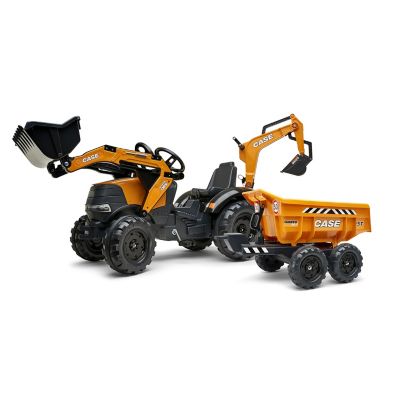
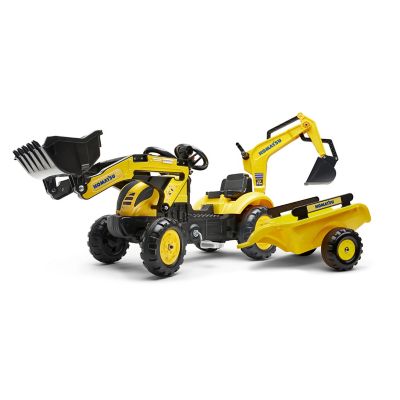
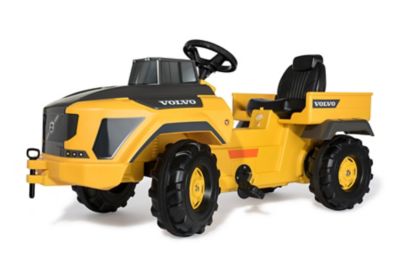
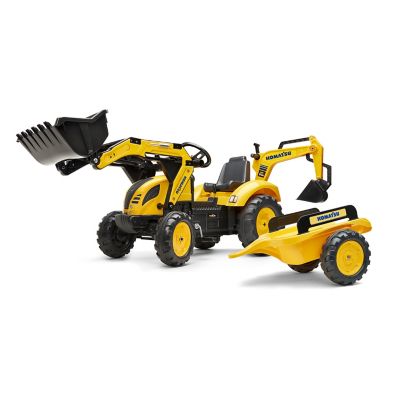
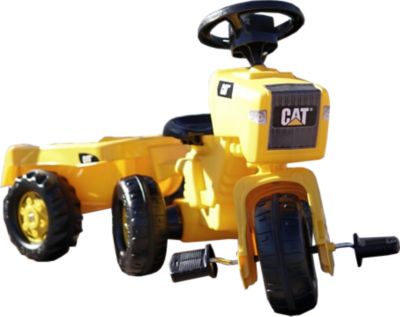
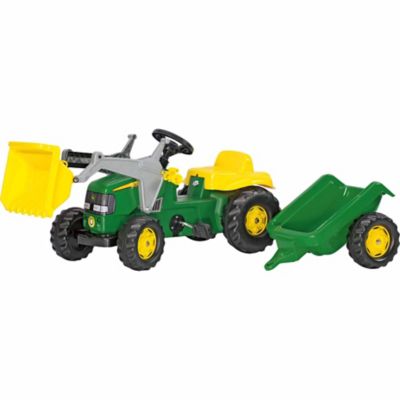
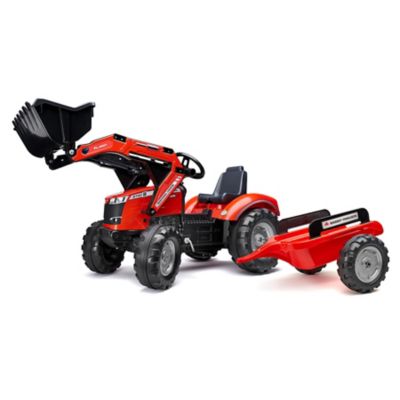
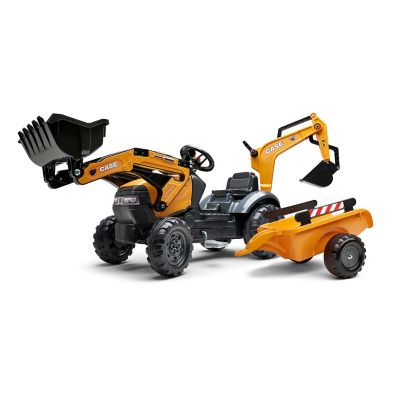
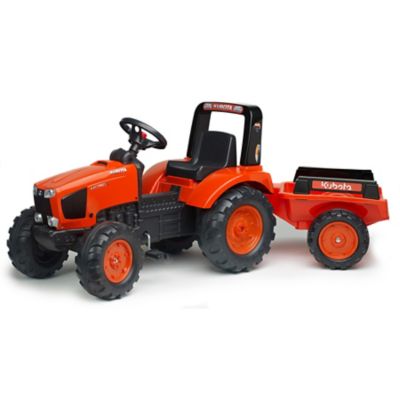
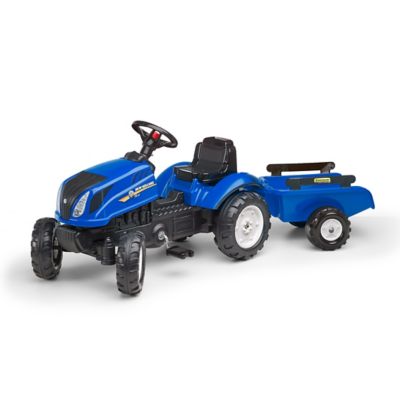
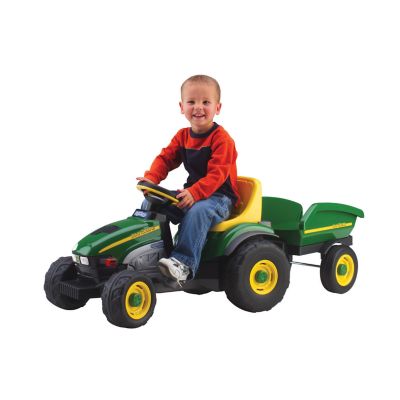
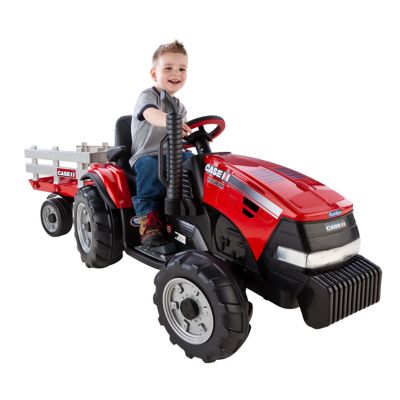
Pedal tractors for kids bring a little of the farmyard into everyday play, giving young riders a tractor that moves with their own two feet instead of a battery or motor. These child-powered ride-on toys pair familiar farm-equipment styling with pedals, a steering wheel, and a seat sized for smaller riders. For a child who watches planting, hauling, or chores from the sidelines, a pedal tractor offers a chance to take the driver’s seat in a make-believe operation of their own. A trip across the patio becomes a morning field check, while a few pine cones in a toy trailer become a load headed back to the barn. Many pedal tractors are intended for preschool and early elementary-age children, though the recommended age, rider weight limit, and dimensions vary by design. Fit matters more than the tractor’s appearance: a child needs to reach the pedals through a full rotation, hold the steering wheel comfortably, and get on and off without a struggle. An adjustable seat can provide more room as legs grow, provided the rider remains within the manufacturer’s limits. These toys can encourage active play, steering practice, and coordination as children learn how pedaling effort affects movement. They also leave plenty of room for imagination without requiring a screen or a charging break. Pedal tractors make thoughtful birthday or holiday gifts for children who enjoy farm animals, big equipment, and outdoor adventures, especially when there is a suitable place to ride close to home. For families building out a farm-themed play space,
John Deere Toys offers another way to explore that interest alongside a child-sized tractor. The appeal is easy to picture: boots lined up by the door, a small tractor waiting nearby, and a youngster ready to head out for a pretend day’s work under an adult’s watchful eye.
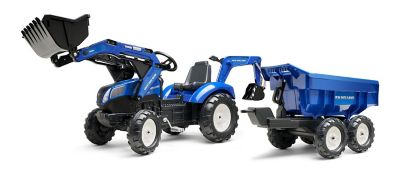
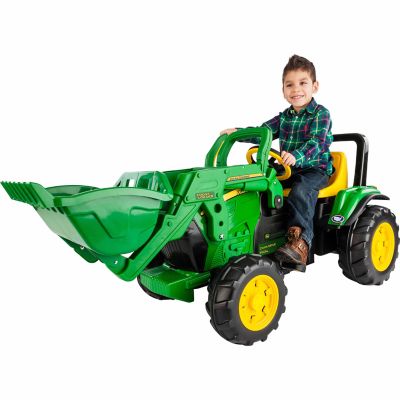
Construction helps shape how a kids’ pedal tractor feels to ride, move, and maintain. Molded plastic or resin bodies can keep overall weight lower and allow for rounded shapes, while steel frames and metal body parts add weight and a different feel in the driver’s seat. Neither material alone tells the whole story. Frame design, axle support, pedal attachment, steering connections, and the way parts fit together all affect how well a toy stands up to repeated riding. A heavier tractor may take more effort to pedal or carry into storage, which matters when a younger child is learning or an adult needs to lift it over a threshold. Some designs have a chain-drive mechanism that transfers pedal motion to the wheels; an enclosed drive helps keep hands and clothing away from moving components. Guards should remain in place, and loose drawstrings, dangling straps, or untied laces have no place near the pedals. Wheel construction also makes a difference. Plastic wheels, rubber tread strips, and other tire designs can behave differently on hard surfaces, with traction and rolling effort depending on the tractor and the ground beneath it. A level paved play area may be much easier to cross than thick grass, soft dirt, or loose gravel. Even a tractor with a farm-ready look is a toy, not equipment for rough terrain, slopes, or pulling heavy loads. Turning room is another practical consideration: a compact patio can feel much smaller once a tractor and trailer need to swing around. Some pedal tractors include or accept play attachments such as front buckets and detachable trailers, adding ways to scoop, carry, and unload light materials permitted by the manufacturer. Attachment compatibility, operating controls, and load limits differ, so those details matter as much as the tractor’s overall size. A working toy bucket can turn a pile of permitted play material into an afternoon project, while a trailer gives pretend feed sacks or stuffed farm animals a ride. Trailers and buckets are for their stated purpose, not extra passengers, and attachments can change both the space needed and the effort required to move.
Everyday enjoyment depends on matching a pedal-powered tractor to the child’s abilities and the family’s play space. A new rider may be happiest making short, straight trips between two familiar spots, with an adult nearby to help with starting, stopping, and turning. A more confident child might enjoy backing into a pretend equipment shed or following a simple route around cones, as long as the toy supports that movement and the area stays clear. A designated riding spot away from roads, vehicle traffic, operating machinery, livestock, water, steps, and steep ground keeps farm-themed play separate from real farm hazards. Adult supervision remains important even for children who have mastered the pedals, and footwear and any protective gear should follow the manufacturer’s guidance. During the cooler months, wet leaves, frost, and slick pavement can change the footing in a familiar play area, making a dry, level surface especially important. Basic care helps a pedal tractor stay ready for the next outing. Mud and grit around pedals, axles, and steering parts deserve attention before they build up, and cleaning methods should suit the materials and the owner’s manual. A soft cloth or brush can handle many routine messes; washing, lubrication, and chain adjustments should follow the maker’s directions rather than the maintenance habits for full-size equipment. Periodic checks for loose fasteners, cracked parts, worn wheels, and missing guards can catch problems before the next ride. Any damaged component needs attention before play resumes. Covered, dry storage helps protect metal parts from moisture and limits weather exposure on plastic surfaces, seats, and wheels. Space for parking the tractor with its attachments also makes cleanup easier at the end of the day. For gift giving, the most useful details are often the least flashy: the child’s reach, the available riding surface, assembly requirements, and whether an adult can move and store the toy comfortably. When those pieces line up, a pedal tractor can become a familiar part of outdoor play, ready for another round of little chores and big farm stories.