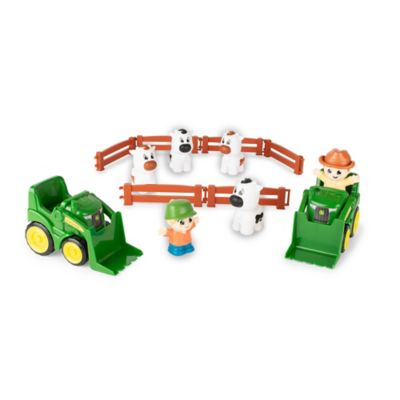
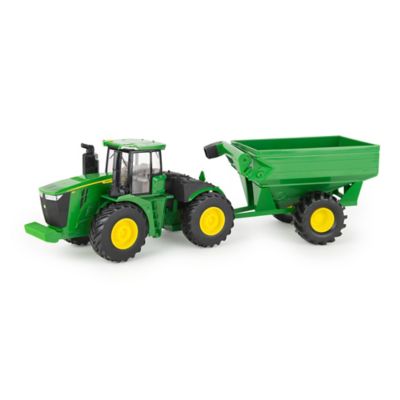
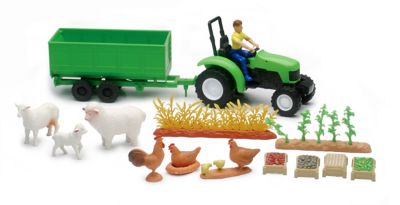
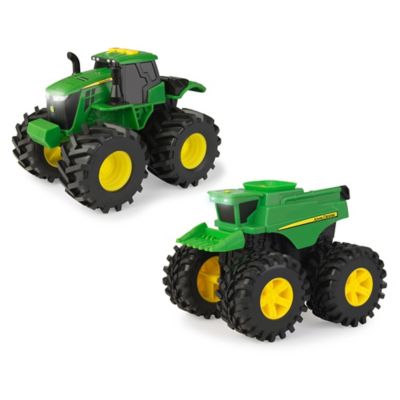
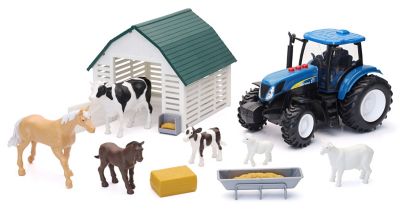
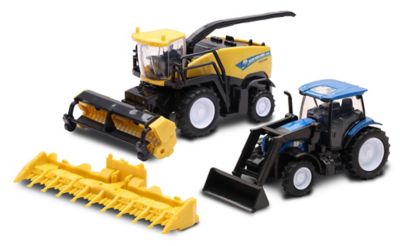
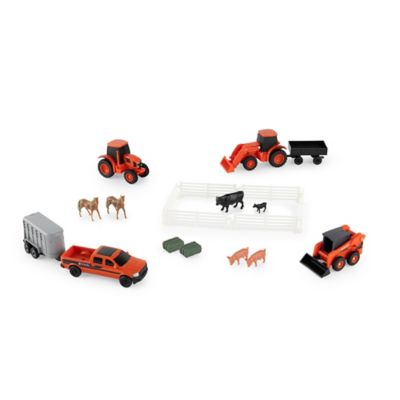
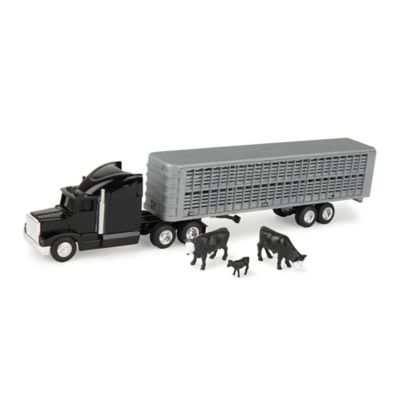
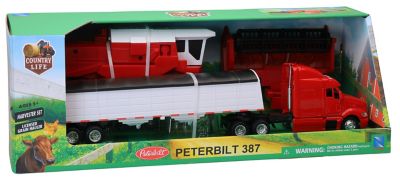
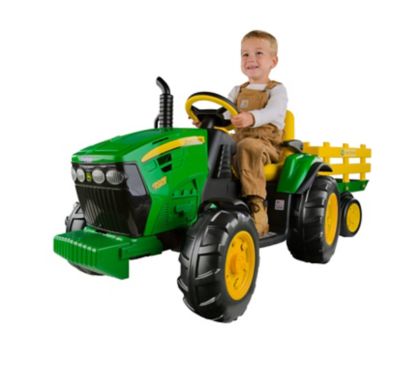
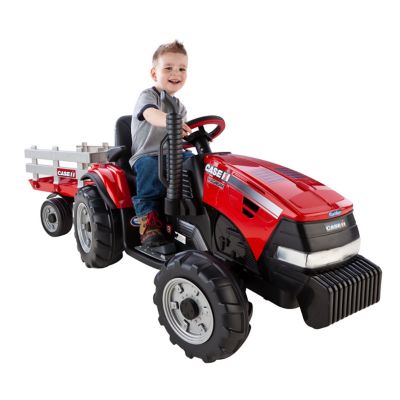
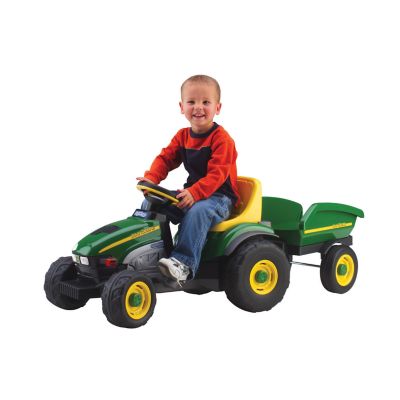
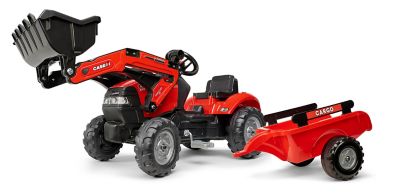
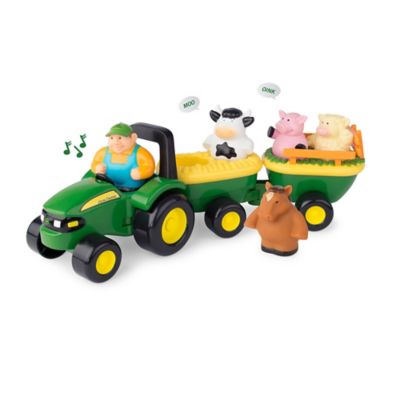
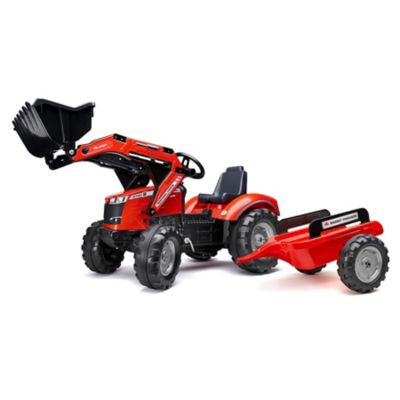
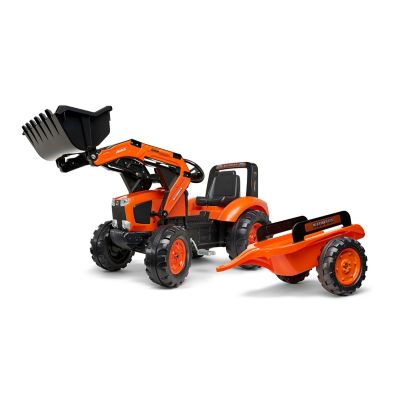
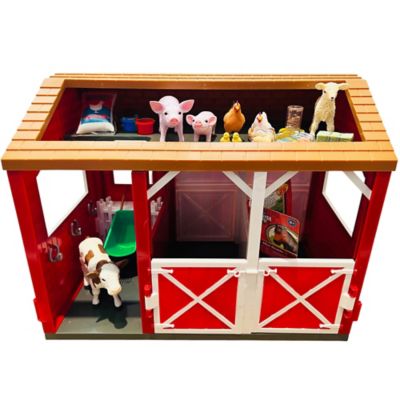
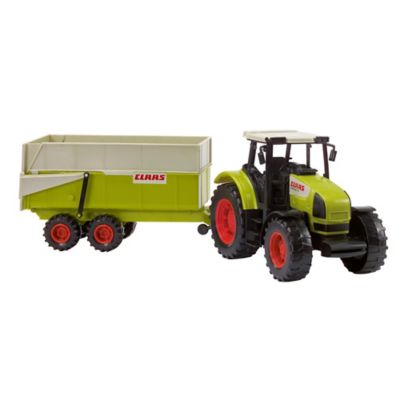
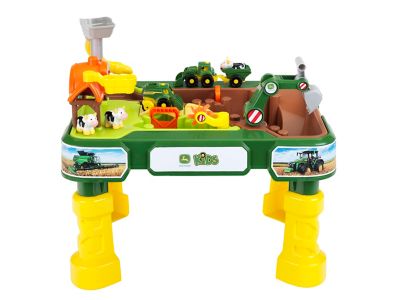
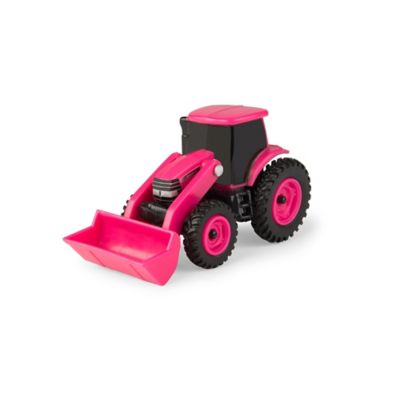
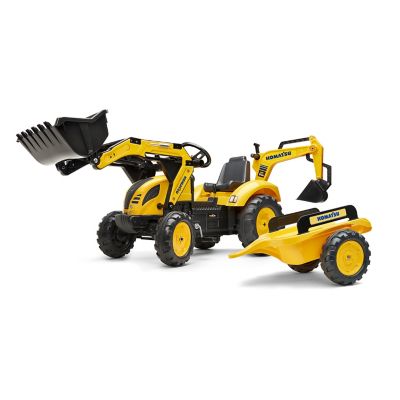
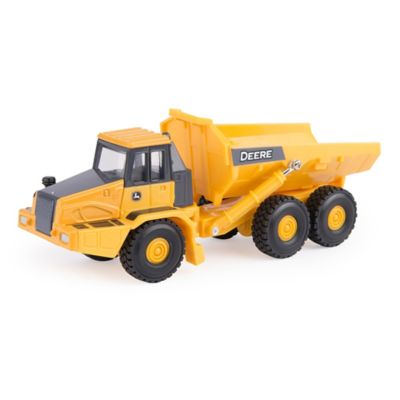
Toy farm equipment sets for kids bring the work of a farm down to a size that fits on a playroom floor or tabletop. These playsets often combine tractors, trailers, harvesting machines, and smaller accessories so children can act out more than a single trip across the carpet. A tractor can pull an empty wagon out to a pretend field, then haul a load back to the barn. A combine can work through rows of make-believe grain while another vehicle waits alongside to carry the harvest away. Sets centered on haying give kids a different round of chores, with equipment for mowing, raking, baling, and moving bales. Those connections between machines are part of the appeal: each piece has a job, and the jobs fit together into a busy day. For children who recognize equipment from a family farm or a neighbor’s field, familiar shapes help connect play with things they have seen firsthand. Children without that background can still enjoy loading, hauling, parking, and figuring out what comes next. The best fit depends on how a child likes to play. A simple tractor-and-trailer setup leaves plenty of room for open-ended hauling, while a broader farm equipment playset gives a child more jobs to organize and more vehicles to share. Push-along toys keep the action in little hands, and features such as opening gates, tipping trailers, or movable loader buckets can add another step to a pretend chore. Check the listed features rather than assuming every part moves. Some models focus on recognizable details, while others put the emphasis on easy handling. A child who wants to scoop and dump will likely get more from a working bucket than from fine detail on a tractor hood. Room to turn, hitch up, and unload matters, too, especially when the farm shares floor space with blocks, toy roads, and the rest of the day’s play.
Size, materials, and attachment fit make a real difference in how toy farm machinery handles. Common model scales include 1:64, 1:32, and 1:16; the smaller the second number, the larger the model of the same real machine. A 1:64 layout generally takes less room, while larger scales can make individual vehicles easier to grasp and give moving features more room to work. Scale alone does not tell the whole story, though. Actual dimensions, weight, age labeling, and the size of loose parts all deserve a look before choosing a set. A larger toy is not automatically suitable for a younger child, and small parts can present a choking hazard for children under 3. Follow the manufacturer’s age recommendation and warnings for every set, including accessories added later. Plastic construction can keep a vehicle lighter for carrying and pushing, while die-cast metal components add heft. Mixed-material designs may pair a metal body with plastic wheels, cabs, or implements, so the way those pieces connect matters as much as the main body material. Secure wheels, well-supported axles, and hinges that move freely are useful details to check. Hitch compatibility deserves special attention when expanding a play farm: matching scales do not guarantee that a tractor and implement will connect. Hitch height, connector shape, and clearance around the wheels can all affect the fit. A trailer should also have enough turning room behind its tow vehicle. For care, follow the maker’s cleaning directions and check whether the toy is intended for indoor play, outdoor play, or both. A sandbox is not a suitable setting for every model. Grit can work into axles and joints, and electronic features may need extra protection from moisture. After play, remove loose dirt as directed, let cleaned pieces dry, and check moving parts for damage before putting the set away. Keeping track of detachable parts helps the next round of chores start without a search under the couch.
Farm play can stay simple or spread into a whole little operation, depending on the child’s interests and the space at hand. A few blocks can mark the edges of a field, an empty box can serve as a machine shed, and a clear patch of floor can become the lane between them. Leaving enough space around buildings and fences makes it easier to back a trailer into place without knocking everything over. Children who enjoy livestock chores can pair equipment play with
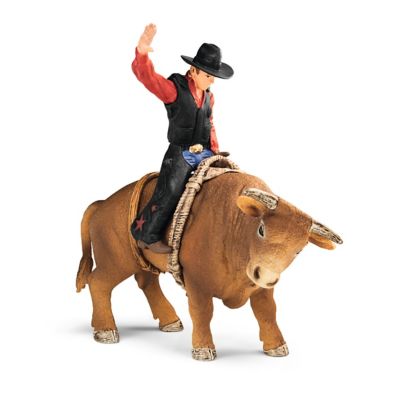
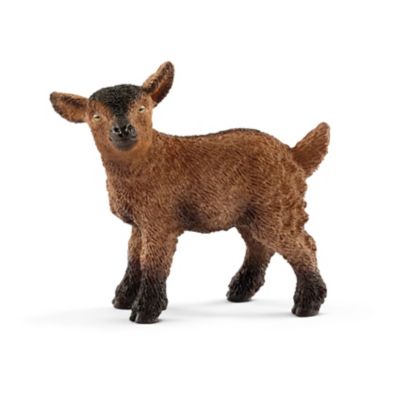
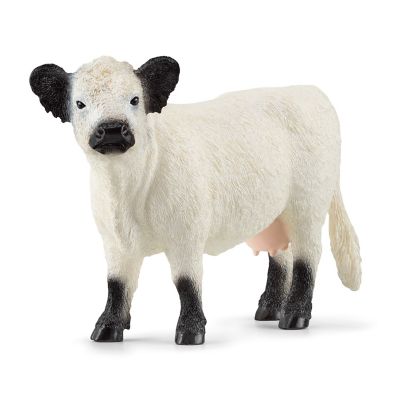
Farm Animal Toys for Kids, giving feed wagons, bale trailers, and farm lanes a purpose in the story. Check the sizes together if a consistent layout matters; an animal figure that towers over a tractor may not suit a child who likes everything to look in proportion. Other children care more about the story than the scale, and a mixed-size farm can work just fine for that kind of play. With siblings or friends, separate vehicles let one child handle fieldwork while another takes care of hauling or unloading. Taking turns at a shared loading spot can encourage conversation and cooperation without turning playtime into a lesson. Equipment sets also make thoughtful birthday gifts for kids who stop to watch tractors working or enjoy anything with wheels and a hitch. For a gift, the child’s age, favorite farm jobs, and existing toys offer better direction than the number of pieces alone. A manageable set with connections the child can operate independently may see more play than a crowded assortment with fiddly parts. Storage helps keep the farm running between play sessions: a divided container can separate small accessories from heavier vehicles, while an open shelf can give larger machines their own parking spots. Leave attachments where they will not bend under other toys. With a little room to roam and equipment suited to the child, an ordinary stretch of floor becomes a place for hauling the last load, closing the gate, and lining up the tractors for another day.