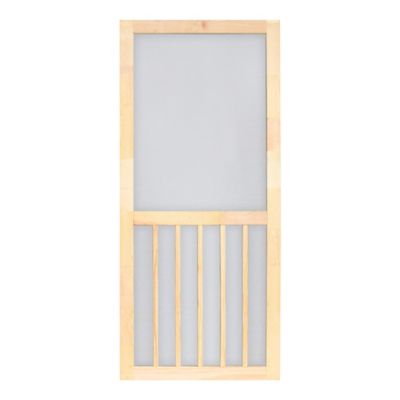
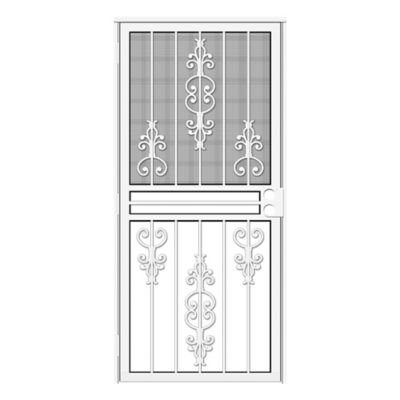
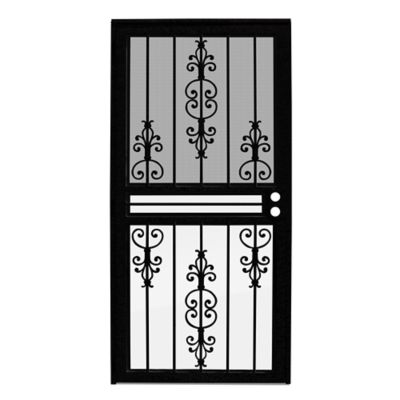
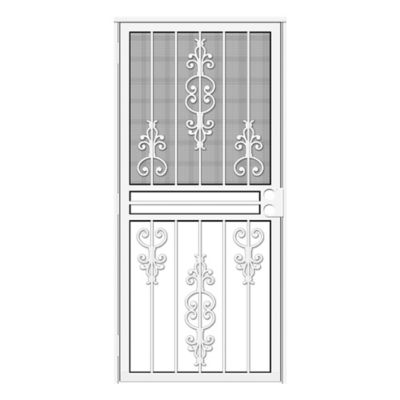
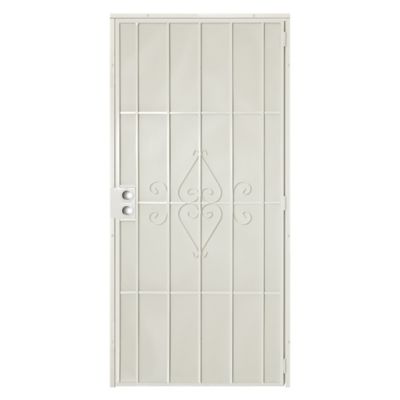
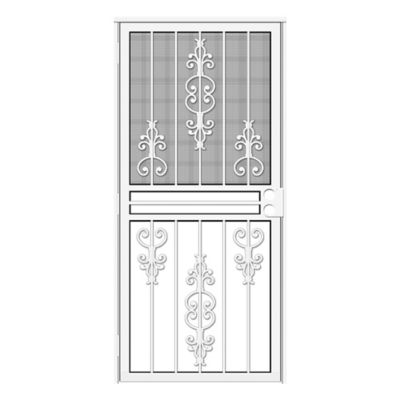
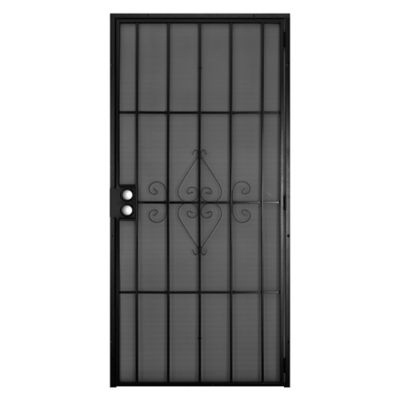
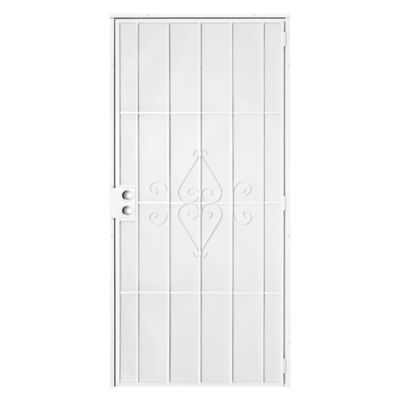
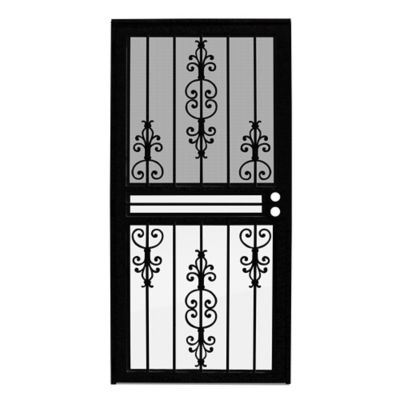
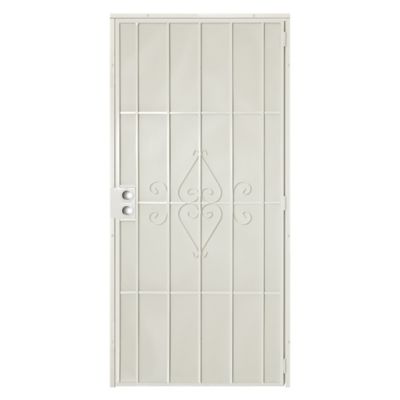
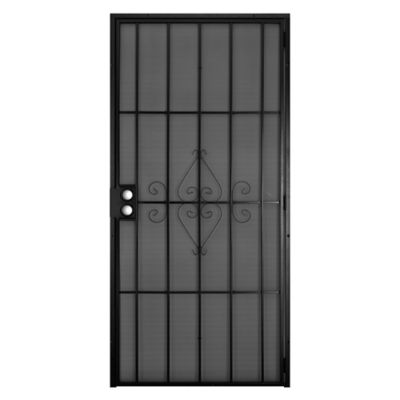
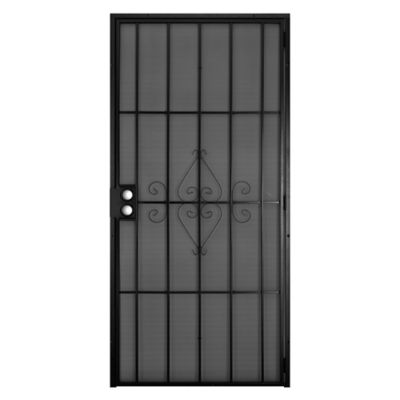
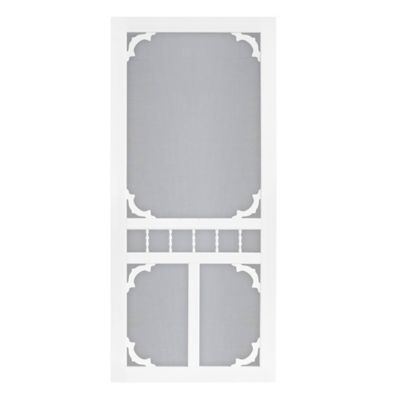
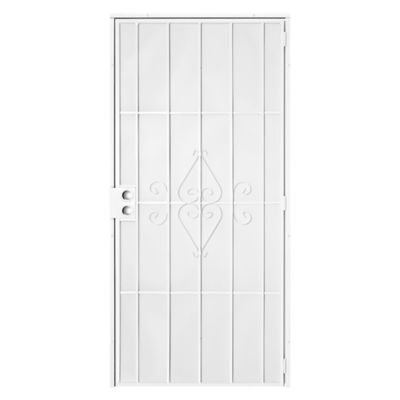
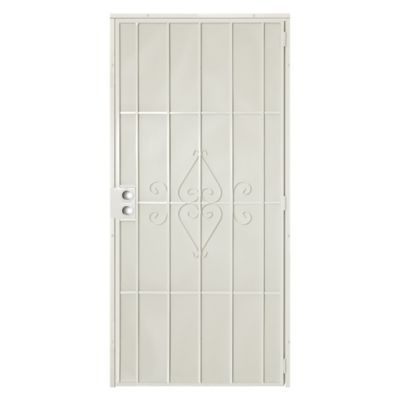
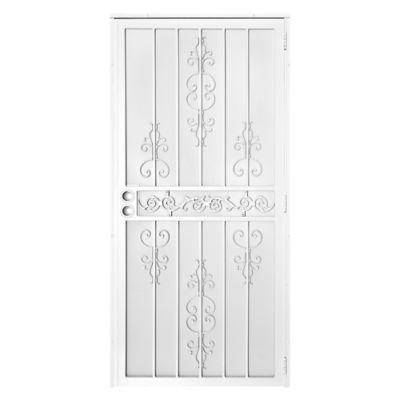
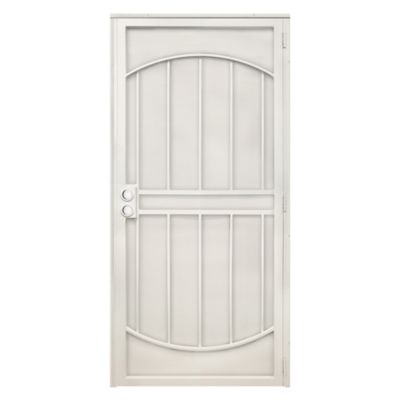
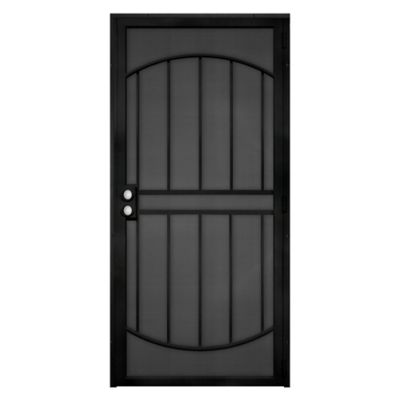
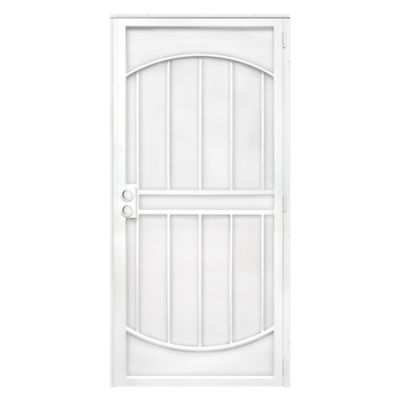
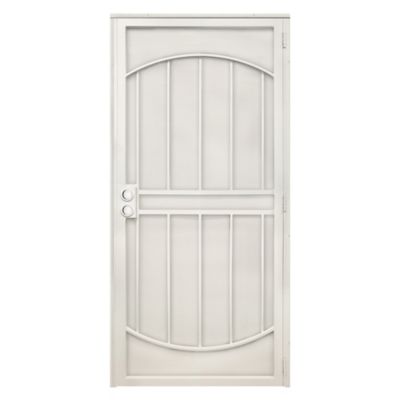
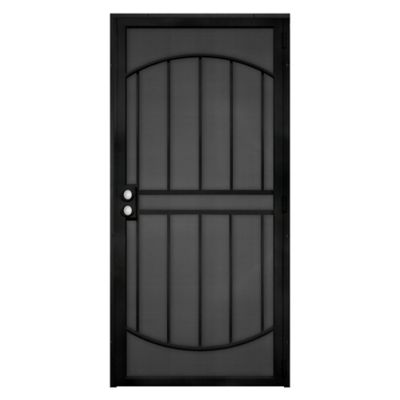
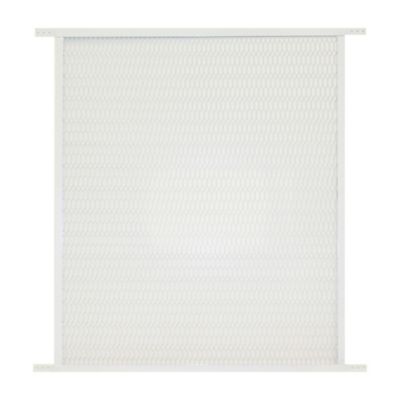
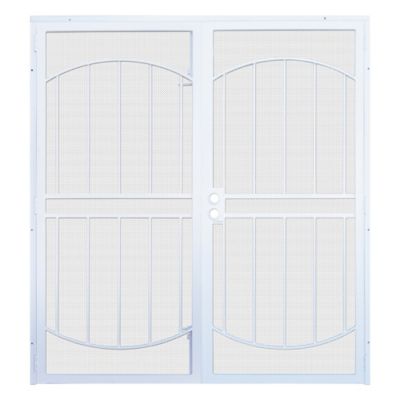
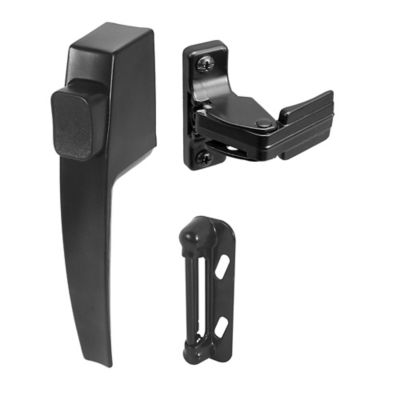
Patio security screen doors add a lockable barrier at a patio entrance while allowing airflow and a view through the opening. A true security screen door combines reinforced screening, a sturdy frame, secure screen attachment, and locking hardware designed to work together. That construction sets it apart from an ordinary insect screen, which is meant primarily to keep bugs out rather than resist forced entry. High-tensile stainless steel mesh is a common material for security screening because its tightly woven wires provide strength without closing off the view like a solid panel. Some designs feature metal grilles or other reinforced panels, though the amount of open viewing space varies. Aluminum frames offer a lighter structure with corrosion resistance, while steel frames provide a substantial feel and need an intact protective finish to help prevent rust. The mesh-to-frame connection matters just as much as the visible metal: strong screening needs secure retention around its edges to perform as part of the assembly. For a home with a back patio, a farmhouse entrance, or a door opening onto a fenced yard, this added layer can make the doorway more practical for everyday comings and goings. It can also help households keep the main patio door open for ventilation without leaving the entrance completely open. Closely fitted mesh and perimeter seals help limit insect entry, although performance depends on the mesh openings and gaps around the frame. Visibility and airflow vary with mesh density, finish, and surrounding light, so neither should be assumed identical across every design. Security performance varies, too. Documented forced-entry testing gives a clearer picture than appearance alone, and any rating should apply to the complete door assembly rather than just the mesh. No screen door makes an entrance break-in proof, and a patio security screen is an added layer rather than a replacement for sound primary-door locks and sensible household security habits.
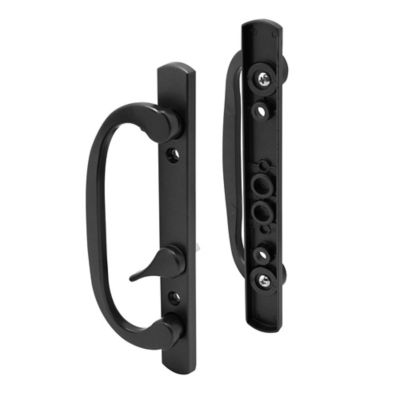
The right patio security screen door also needs to suit the way the entrance opens. Sliding configurations travel along a track beside the main patio door, while hinged designs swing inward or outward where the surrounding space allows. Paired doors need hardware that secures both leaves, including the panel that normally stays closed. A wide opening does not automatically accept a standard sliding screen, and a sturdy-looking door can still perform poorly if its dimensions or mounting arrangement do not match the doorway. Fit involves more than the opening’s width and height. Frame depth, track profile, threshold shape, handle clearance, and the condition of the surrounding structure all affect how the door sits and operates. Openings that are slightly out of square need particular attention because uneven gaps can interfere with latching and leave room for insects. On a sliding entrance, the screen panel needs enough clearance to pass the main door’s handle without rubbing, while appropriate anti-lift features can help keep the panel seated in its track. A hinged entrance needs room for its swing without striking a railing, patio chair, or nearby wall. Locking arrangements may include a single locking point or multiple points along the frame. Multipoint systems engage in more than one location, helping distribute resistance, but their performance still depends on correct alignment and secure attachment to sound framing. Fasteners and mounting surfaces carry the load when someone pulls or pushes against the door; attaching a heavy frame to loose trim does not create a strong entrance. Professional installation may make sense where the opening needs structural repairs or the hardware requires precise fitting. Everyday access matters alongside security. A handle that is comfortable with full hands, a latch that catches without slamming, and a track that rolls smoothly all contribute to a door that fits daily life. Where the patio entrance serves as an emergency exit, the locking arrangement must meet applicable local requirements and allow the necessary exit operation from inside.
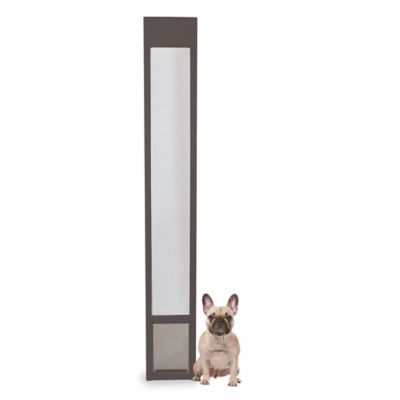
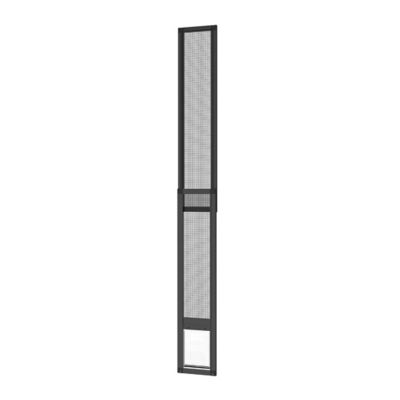
Care and intended use help narrow the choice further, especially at a busy back door where boots, pets, and trips to the yard are part of the routine. Stainless steel mesh and coated metal frames still benefit from regular cleaning; fingerprints, grit, and residue can collect on surfaces and around hardware. Manufacturer-approved cleaning methods help protect finishes, while harsh abrasives or unsuitable chemicals can damage coatings and exposed components. Sliding tracks need attention because small stones, tracked-in soil, and pet hair can interfere with rollers or prevent the latch from lining up. Hinges, rollers, closers, and locks may need periodic adjustment or lubrication according to the manufacturer’s directions. Scratches that expose steel deserve prompt attention, and loose fasteners or a shifting frame should not be overlooked. A door that starts dragging, rattling, or requiring an extra shove is signaling a fit or hardware issue rather than something to solve by repeatedly slamming it shut. Homes with animals have a few more considerations. Reinforced mesh may stand up to everyday contact better than lightweight insect screening, but resistance to scratching, chewing, and impact depends on the complete design. A determined dog leaning against the screen puts stress on the frame, latch, and attachment points as well as the mesh. Households comparing pet-access options can also explore
Dog Doors for Sliding Screen Doors, keeping in mind that a screen-mounted pet flap is not automatically compatible with a security-rated door. Cutting security mesh or changing the frame can affect tested performance and warranty coverage, so any pet opening needs the door manufacturer’s approval. For families, clear household habits matter as well: children need an exit they can operate safely, and a latched screen is no substitute for supervision. The best match balances a secure assembly with smooth operation, manageable upkeep, and a fit that respects how the patio entrance actually gets traffic, from carrying groceries inside to letting the dog back in after a run around the yard.