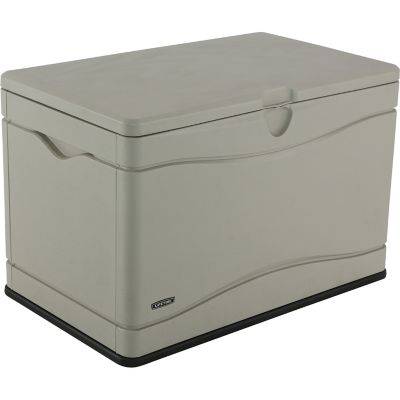
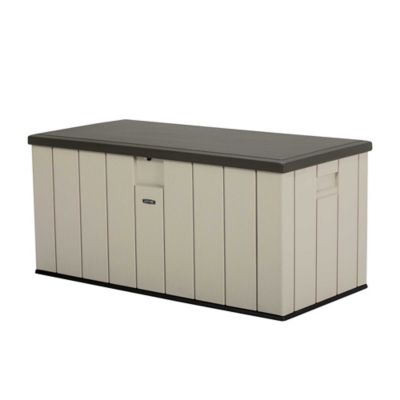
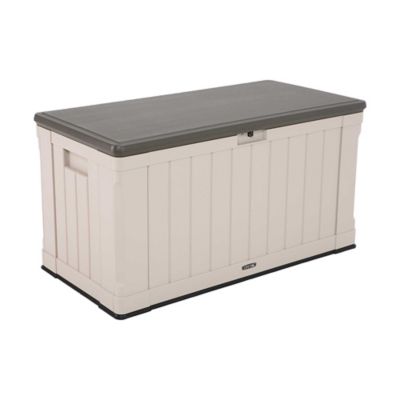
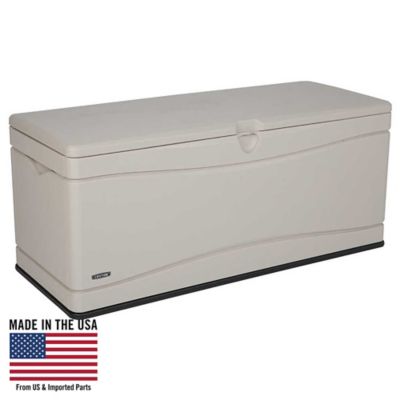
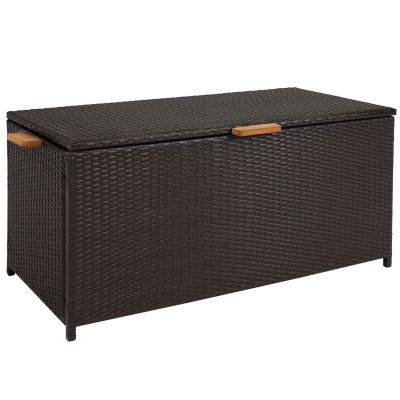
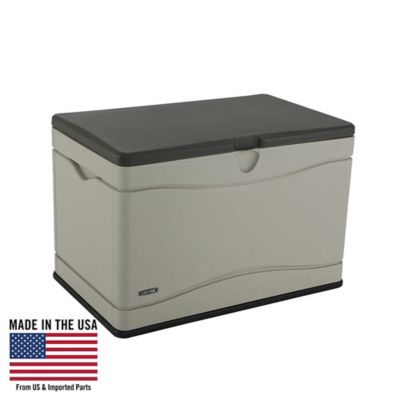
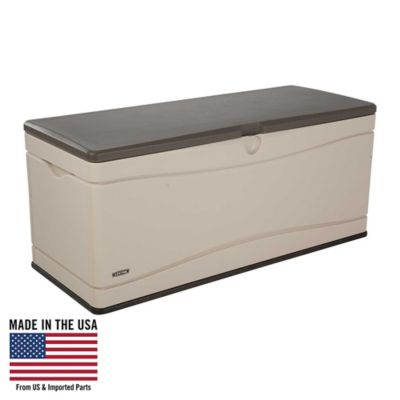
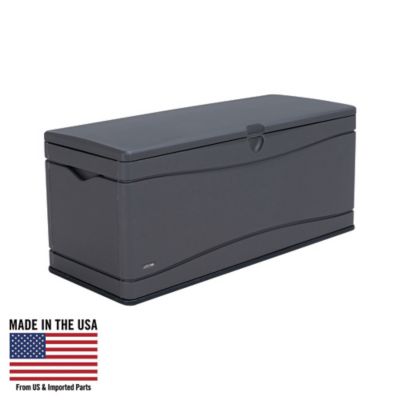
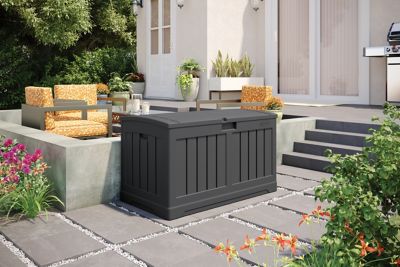
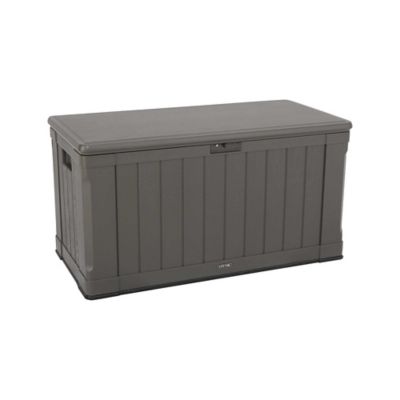
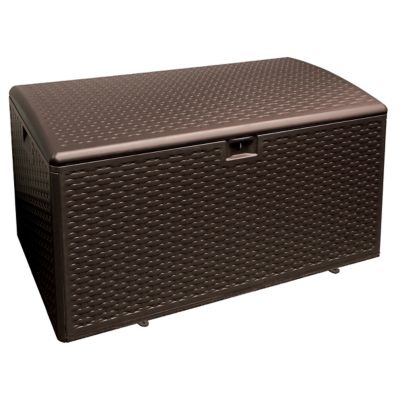
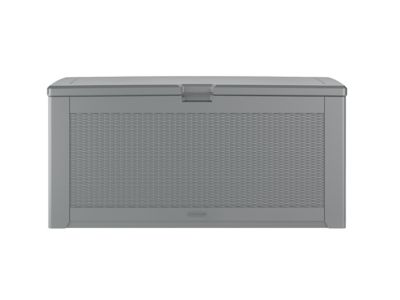
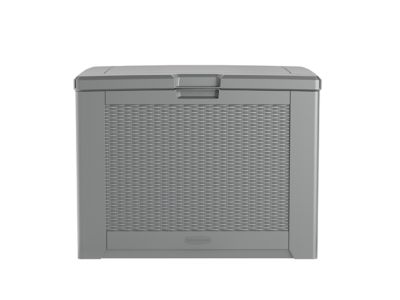
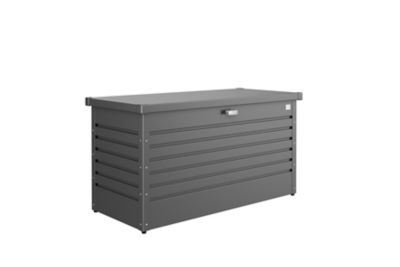
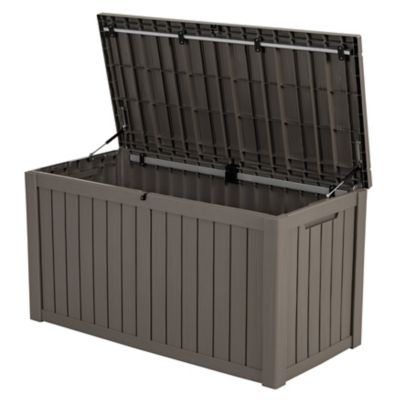
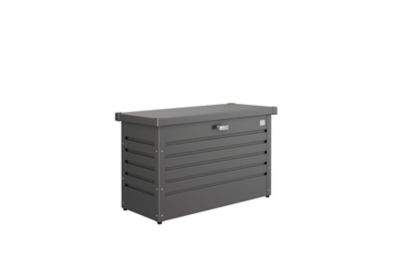
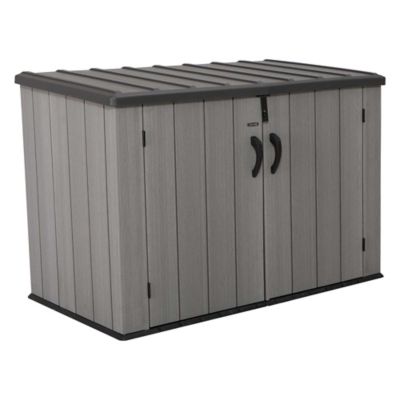
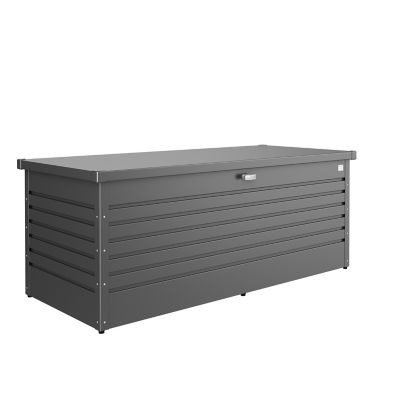
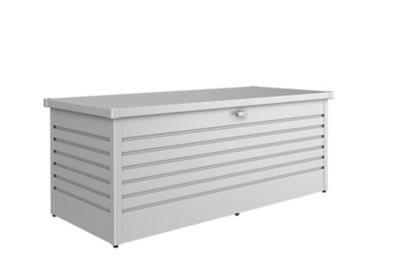
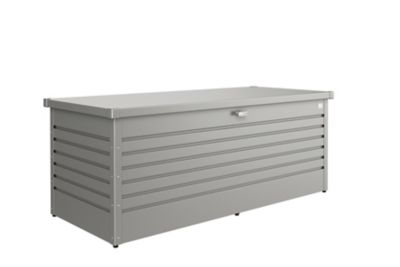
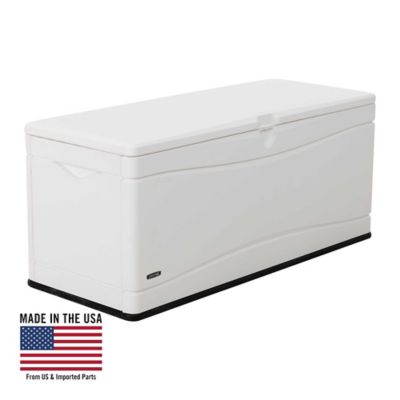
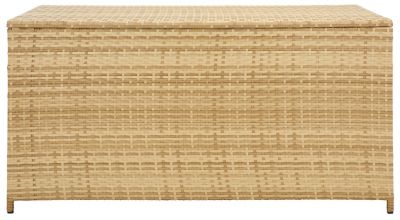
Outdoor storage boxes with lids give patio cushions, garden tools and pool gear a place to stay close at hand without leaving them out in the open. Often called deck boxes, they work just as well beside a potting bench, near the back steps or along the wall of a shed. The lid keeps leaves and dirt from settling on the contents, and a design made to shed water can help shield what’s inside from rain. A lid that overhangs the sides directs runoff away from the opening, while a close fit leaves fewer gaps for windblown grit. Weather resistance varies by design, though. A box that sheds rain from above may still let water in at the hinges or seams, and a raised bottom helps with shallow puddles but won’t make up for a spot where water regularly collects. UV-resistant materials can help slow fading and surface wear where a box sits in direct sun. Resin is common because it doesn’t rust and generally cleans up with a damp cloth, a handy trait where muddy gloves and garden gear go in and out. Wood has the look of porch furniture and can sit comfortably alongside a bench or railing, though exposed wood may need its finish refreshed to keep moisture from working into the grain. Metal offers a firm shell for gear that gets knocked around, and a coated finish helps protect the surface as long as scratches and chipped edges don’t go untended. How the box is put together matters as much as the material. A rim that holds its shape, hinges that move without binding and a base that sits flat all help the lid keep closing squarely through repeated trips to grab a kneeling pad or put away an armful of cushions. A good fit between the lid and rim is especially noticeable on a box that gets opened several times a day.
The best fit comes down to what goes inside and how much room there is to open the lid. A low box under a porch window can hold gloves, hand tools and a coiled hose without blocking the view, while deep chair cushions may call for a box with more room from front to back. Capacity tells only part of the story. Two boxes can hold the same volume, but the longer one may take a bench cushion laid flat, while the taller one is better for standing up pool toys. Inside dimensions matter for those long or awkward pieces, and the opening itself can be narrower than the body of the box. Outside, a hinged lid needs room to swing, especially when the box sits against siding or under a projecting windowsill.
Outdoor Storage Boxes For Patio can keep cushions beside the chairs they belong to, so they’re easy to put away without carrying them through the house. In a tight spot, there’s a difference between a box that fits neatly against the wall and one that still leaves room to walk past when someone is standing at it with an armload of gear. A level spot helps the box sit steady and keeps the latch from twisting out of line. A lid support comes in handy when both hands are needed to lift something out, and a grip along the front edge makes a broad lid easier to raise. On a small porch, a box rated for seating can do double duty as a bench, but the weight the bottom can hold isn’t the same as what the lid can support. For heavier loads such as bags of potting mix or a pile of tools, the floor’s weight rating matters more than the volume. A roomy box is easier to live with when the things that come out most often can sit on top rather than getting wedged at the bottom.
What goes into an outdoor storage box makes a difference in how well the space works. A gardener might keep a brush and a pair of gloves near the top, where they’re easy to reach before heading out to the beds, with a small tray underneath to catch soil from hand tools. By the pool, a box gives floats and toys a place to go once they’ve drained and dried. Closing damp gear or cushions inside can trap moisture against the bottom and leave fabrics smelling musty, even if the lid does a fine job of keeping rain out. Separating clean cushions from hoses and tools also saves a round of wiping down the seats before company comes over. On a deep box, a shallow bin near the top keeps hose fittings and other small pieces from disappearing into the corners. A little upkeep goes a long way toward keeping the lid easy to open and close. Grit tends to collect along the rim, where a quick wipe can clear it before it works into the seam. Mud on the floor is easier to clear out before it dries hard, and a box that’s been wiped down can air out with the lid open before fabrics go back in. Checking the hinge screws and latch from time to time can catch a bit of looseness before the lid starts to sit crooked. For a household that spends plenty of time in the yard, a box by the back door can keep everyday gear from piling up on the steps. It can also make a practical housewarming gift for someone setting up a porch or patio, provided there’s a level spot with room to lift the lid. Whether it’s holding a full set of seat cushions or the tools that make the rounds of the garden, a lidded box earns its spot when the contents are easy to reach and just as easy to put away.