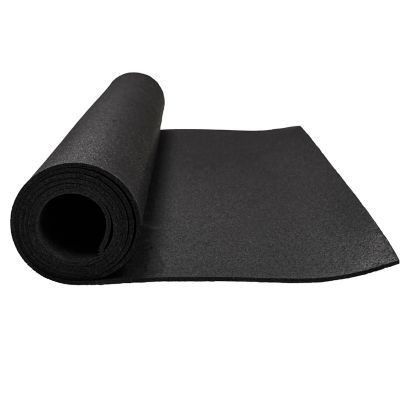
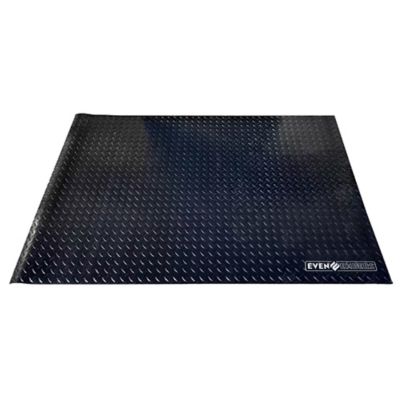
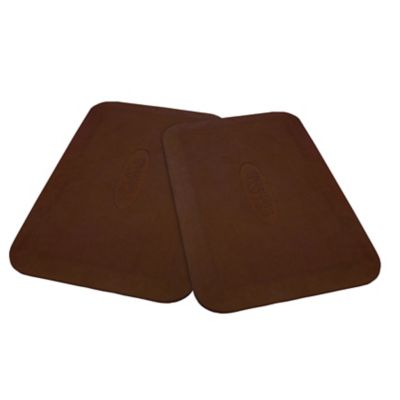
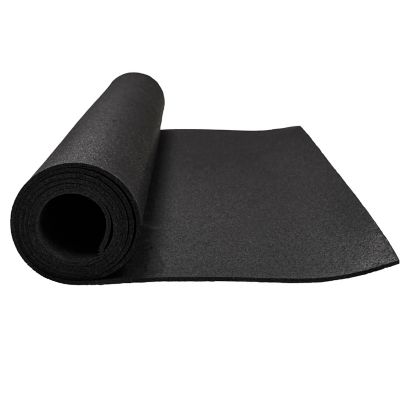
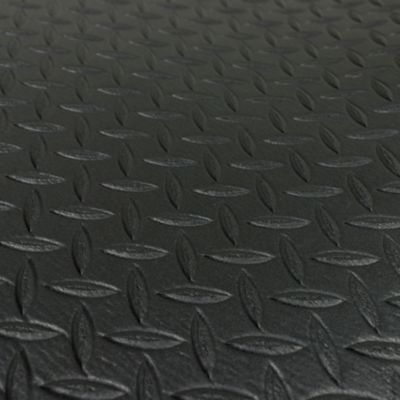
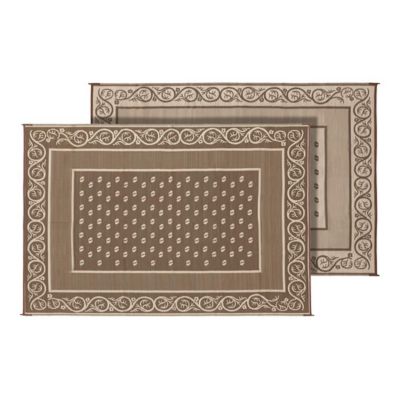
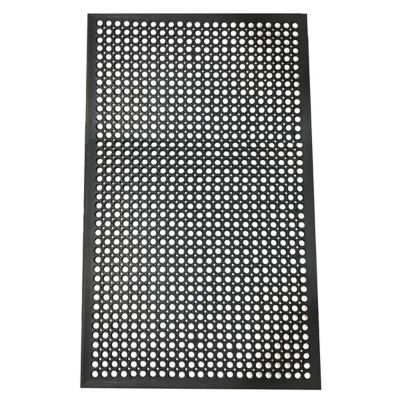
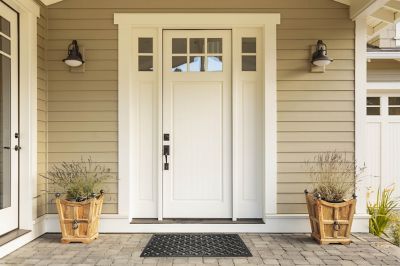
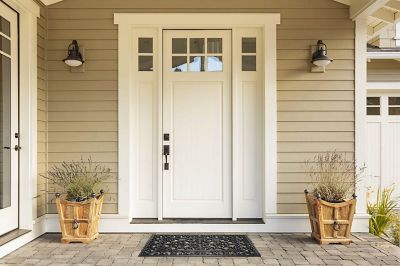
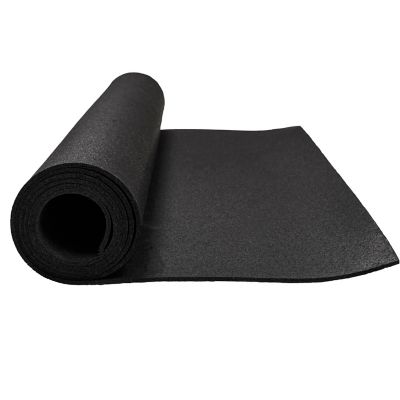
An outdoor mat is a floor covering placed outside an entrance to scrape dirt from shoes and help keep tracked-in debris off indoor floors. It gives work boots, chore shoes and everyday sneakers a place to shed grit before anybody reaches the kitchen, mudroom or hallway. Around a busy home, that can mean catching loose soil after garden work, bits of grass after mowing or the dust that follows a trip out to the barn. Outdoor door mats come in several materials, and each handles that job a little differently. Rubber mats often have raised ribs, nubs or open patterns that loosen dirt from boot treads, while openings let water and small debris pass through rather than collect on the surface. Their weight can help them stay put, though grip still depends on the backing, the ground underneath and how clean both surfaces are. Coir mats, made from coconut husk fibers, have a coarse, brushlike surface that works well for scraping off dry soil. A sheltered porch generally suits coir better than an exposed doorstep because the fibers can hold moisture and take time to dry. Outdoor-rated polypropylene mats offer another approach, with synthetic fibers that catch loose dirt and a range of woven or textured finishes. Some designs combine a fiber face with a rubber backing or border, pairing a scraping surface with a more structured base. Flexible thermoplastic materials also appear in outdoor mats, with performance depending on the particular construction. Material alone does not tell the whole story: surface texture, drainage, backing and placement all affect how a mat handles daily foot traffic. A front entry that mostly sees sneakers has different needs from a back door where boots arrive packed with soil. For either spot, an outdoor-rated design matched to the mess makes more sense than choosing by appearance alone. An open scraper mat releases debris beneath it, while a close-textured mat holds more of that dirt at the surface until cleaning time.
Fit matters just as much as material, especially at entrances that get steady traffic. A small outdoor doormat may suit a narrow side door, while a wider mat can better match double doors or give several people room to wipe their feet without crowding the threshold. Enough front-to-back depth allows more of a boot sole to contact the surface, instead of leaving the heel or toe hanging over an edge. Measuring the landing and checking the door’s swing helps narrow down a sensible size and thickness. An outward-opening storm door needs clearance above the mat, and a thick fiber surface can catch even when its backing looks fairly thin. Low-profile edges are worth considering along a busy walkway, particularly where folks roll carts, push strollers or move between the house and garage with their hands full. The mat should lie flat without bunching, curling or blocking the threshold. Its backing also needs to suit the porch or landing beneath it; compatibility can vary across painted wood, composite decking, concrete and other surfaces. Manufacturer guidance matters here, since some backing materials may leave marks or affect certain finishes. On an exposed entry, drainage helps keep water from pooling within the mat, but the surface underneath still needs a path for runoff. A solid-backed mat may hold moisture against the landing if nobody lifts it for cleaning and drying. Around a workshop or utility entrance, a pronounced scraping texture can make sense for deeply treaded footwear. At the main front door, a less aggressive surface may feel better under everyday shoes. Some households pair an outdoor scraper with an indoor entry mat, giving footwear a second stop for remaining grit and moisture. Those two placements serve different purposes, and neither takes the place of wiping boots thoroughly. A mat that fits the doorway, stays flat and matches the traffic is easier to make part of the daily routine, whether that routine involves feeding animals before breakfast or carrying groceries through the side door.
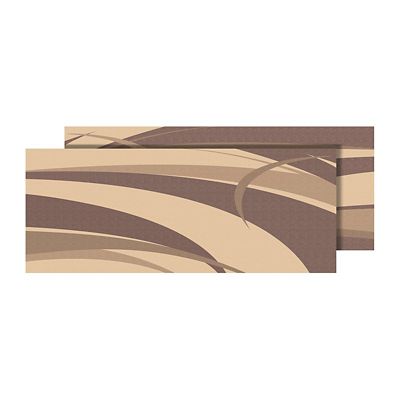
Regular care keeps an outdoor mat ready for the next trip across the yard and helps limit the grit collecting underneath it. Loose debris can often be shaken or brushed free, depending on the material and the care directions. Many rubber and synthetic mats allow rinsing with a garden hose, but the label should determine whether washing, soap or other cleaners are appropriate. Coir generally benefits from shaking and brushing rather than soaking, since trapped moisture can be hard to clear from a thick fiber surface. Letting both the mat and the landing dry before putting everything back helps avoid leaving a damp patch against the floor. Dirt trapped beneath a mat can also act like grit under moving footwear, so the underside deserves attention along with the top. Periodic checks for cracked backing, flattened scraping ribs, loose fibers and lifted corners help show when a mat is no longer doing its job well. For a household with dogs, a textured entry mat can catch some loose dirt from paws, although a towel nearby is still handy after a muddy run. Appearance has a place, too. Plain black rubber blends easily with a working entry, natural coir adds a warm, earthy look, and patterned fiber surfaces can tie in with a painted door, porch bench or planters. A darker or mixed-color surface may make everyday dirt less noticeable between cleanings, but it still needs the same attention underneath. For another take on front-door color and patterns, explore
spring outdoor doormats. An outdoor mat can also make a practical housewarming gift when its dimensions and care needs suit the recipient’s entrance. Whether the goal is a tidier farmhouse porch, a cleaner mudroom or a better landing outside the garage, the right combination of scraping texture, manageable care and proper fit helps keep the mess closer to the doorstep.