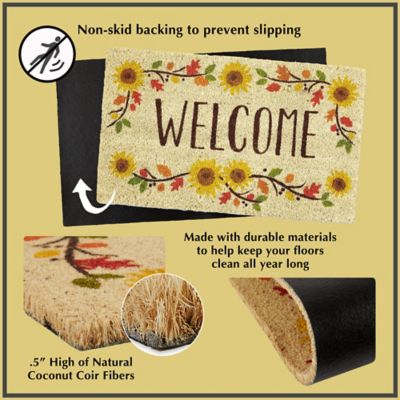
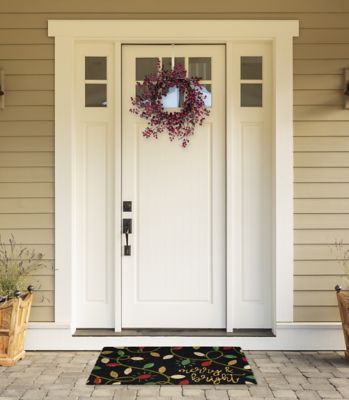
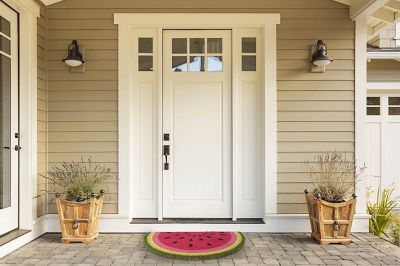
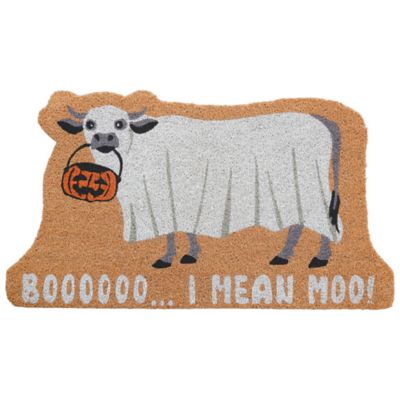
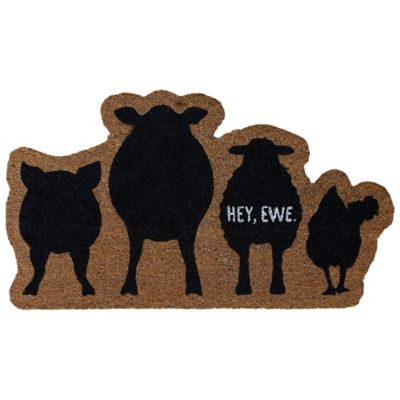
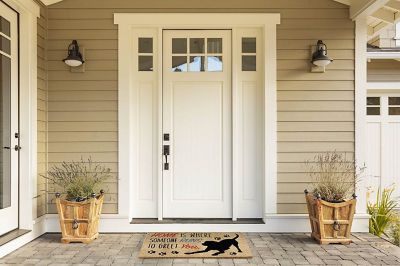
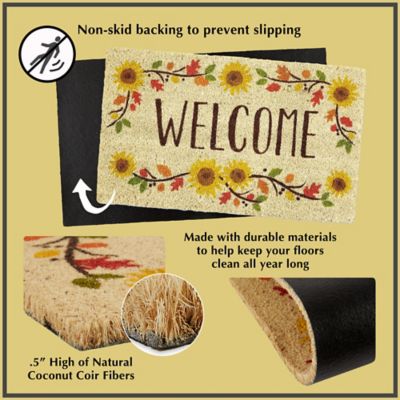
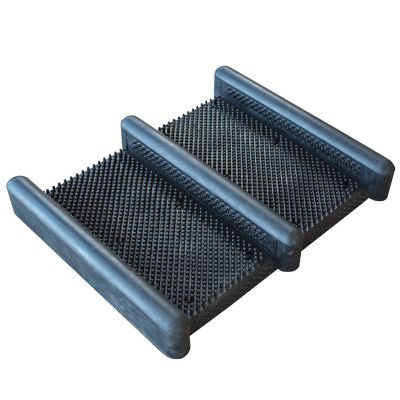
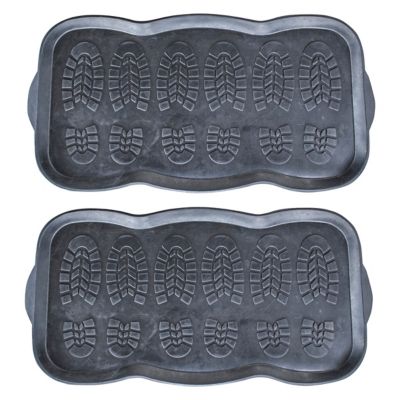
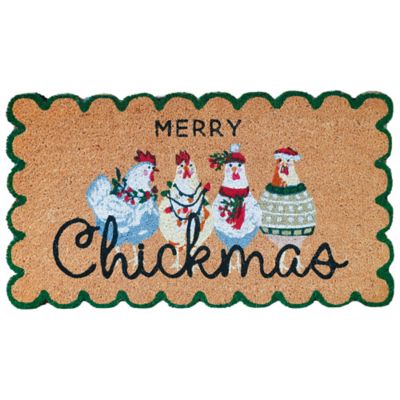
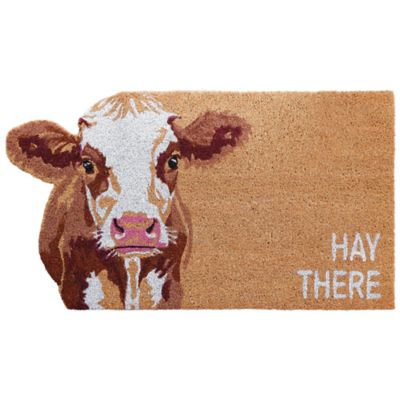
Patterned doormats give an entrance a little personality while providing a handy place to wipe boots, shoes, and paws. Materials make a big difference in how a mat feels underfoot, what it catches, and where it belongs. Natural coir, made from coconut husk fibers, has a coarse, bristly surface that helps scrape loose dirt and grit from shoe soles. Its texture suits a farmhouse porch, a side entrance, or the doorway between the yard and the house, though the care label should confirm the right placement. Some loose fibers are normal with coir, especially early on, and a sheltered spot can help limit prolonged moisture exposure. Rubber mats offer a different feel, with molded ridges, open patterns, or raised textures that help loosen debris. Openwork designs let dirt fall through, so the surface underneath needs attention along with the mat itself. Synthetic fibers such as polypropylene, polyester, and nylon can support crisp patterns and a lower-profile surface, with performance depending on the weave, backing, and intended setting. Fabric-topped mats may feel softer beneath shoes and paws, and some are machine washable, but that feature needs to be confirmed on the label rather than assumed. For a busy household, the best match often comes down to what crosses the threshold: work boots carrying grit from the feed shed, sneakers after a walk around the property, or a dog coming back from the yard. A coarse scraper outside and an absorbent mat inside can handle different parts of that routine. Neither takes the place of cleaning footwear when it is heavily soiled, but together they can help keep tracked-in mess closer to the entrance. Look at the whole construction, not just the picture on top. Fiber density, edge finishing, backing, and cleaning requirements all matter when choosing a welcome mat that fits daily life. A bold greeting might catch the eye first, but the material should suit the doorway before the design gets the final vote.
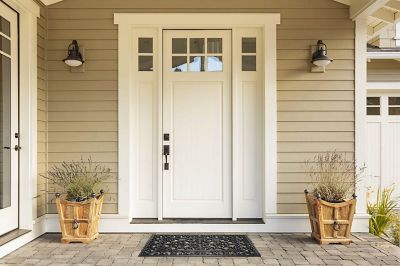
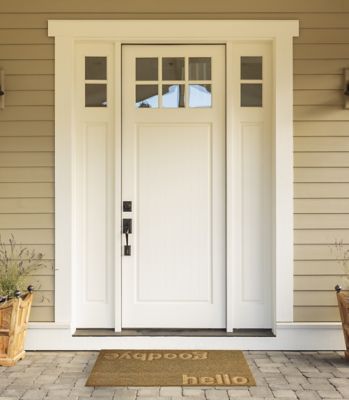
Size and placement deserve just as much thought as color or lettering. Measure the clear floor space at the entrance, then check how the door swings across it. A thick coir mat may work well on an open porch yet catch beneath a door with very little clearance. A low-profile mat can be a better fit near a tight threshold, provided it lies flat and does not interfere with opening or closing the door. Give visitors enough room to plant both feet and wipe their soles without stepping off the edges. A narrow mat in front of a broad doorway can look undersized and leave little working space, while an oversized mat can crowd a small landing. Rectangular shapes fit many entrances, half-round mats can soften the look of a compact doorstep, and wider formats can visually balance double doors. Keep edges away from steps and make sure nearby furniture, planters, or porch posts do not force people to step awkwardly around the mat. Backing matters, too: a textured underside may help limit movement, but compatibility with the floor surface still needs checking. No backing can make up for a curled edge, uneven landing, or a mat that shifts underfoot. Layering a printed welcome mat over a larger woven rug can add color and pattern, but both pieces need to sit securely without creating a raised edge in the walking path. For the design itself, think about what is visible from the approach to the house. Large lettering and simple borders tend to read clearly from a few steps away, while smaller patterns reveal their detail closer to the door. Animal motifs, botanical prints, geometric shapes, and friendly greetings can all bring character without requiring changes to the rest of the entryway. Earth tones blend easily with wood, brick, and stone; stronger colors can pick up the shade of a front door or porch chair. A side-door mat can be more playful, while the main entrance may call for a simpler welcome.
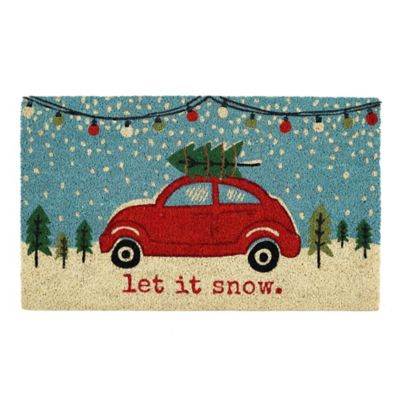
Regular care helps a welcome mat keep doing its job instead of becoming another source of tracked-in dirt. Shake out loose debris where appropriate, sweep beneath the mat, and check the underside for trapped grit that could rub against the floor. Coir generally benefits from shaking and gentle brushing; soaking or aggressive scrubbing can be hard on the fibers and printed surface, so follow the care directions. Rubber mats may allow rinsing, while fabric styles may call for spot cleaning or laundering. Even when a mat is labeled machine washable, washer capacity, cycle settings, detergent guidance, and drying instructions still matter. Let both the mat and the surface beneath it dry fully before putting it back in place. Leaving moisture trapped underneath can affect the backing or the floor finish. At a frequently traveled doorway, check for flattened fibers, loose edging, cracks, or corners that no longer lie flat. Those changes can reduce scraping performance or create a catch point for feet. Homes with pets may also need more frequent hair removal, especially on softer surfaces that hold onto fur. A practical cleaning routine is often easier to maintain than a complicated one, so choose a material that fits the household's habits. Someone coming and going through a mudroom all day may prefer a straightforward scrub-and-rinse routine, while a quieter front entry may suit a printed fiber mat that needs occasional shaking and spot treatment. Welcome mats also make thoughtful housewarming or host gifts when the recipient's space and taste are familiar. A simple greeting, a favorite farm animal, or a restrained border can feel personal without making a big statement. For households that enjoy a holiday welcome,
Christmas Doormats offer another way to dress up the doorstep, with the same attention to fit, footing, and care. Whether the entrance leads to a farmhouse kitchen, an apartment hallway, or a well-traveled back porch, a well-chosen mat brings together a friendly first impression and a useful place to leave a little dirt behind.