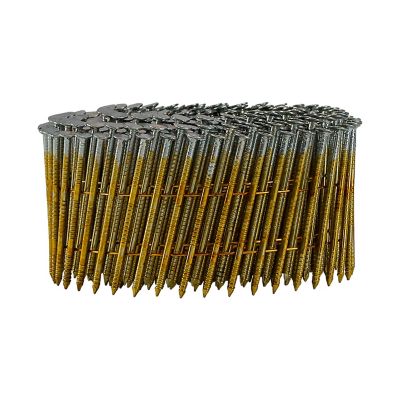
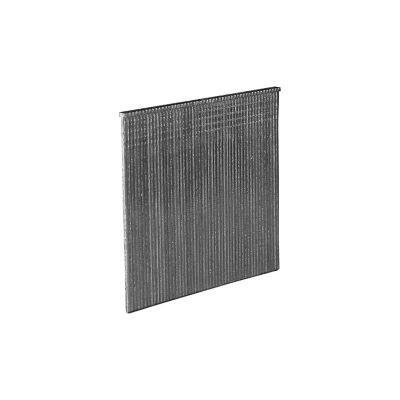
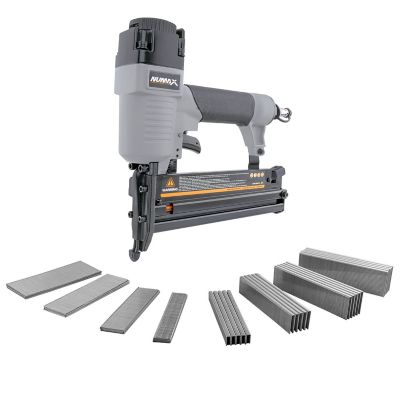
Nails for a nail gun make quick work of jobs that would take much longer with a hammer and a handful of loose fasteners. Whether you are repairing a fence, hanging trim in the house, building a chicken coop, or putting together a set of shelves for the barn, the right collated nails help keep your work moving with steady, dependable fastening. These nails are joined together in strips or coils so a compatible nail gun can feed them automatically, saving time and helping create more even spacing. Nail gun nails are generally sorted by gauge, length, head style, collation angle, and the type of material they are made from. Gauge describes the thickness of the nail, with a higher gauge usually meaning a thinner nail. Length is just as important, since the fastener needs to pass through the material being attached and sink securely into the surface behind it without breaking through or coming up short. Before loading a new box, check the specifications stamped on the tool or listed in its manual. Nail guns are designed for particular fastener sizes and loading styles, and a nail that looks close enough may still jam, misfire, or fail to hold properly. A few minutes spent matching the nail to the tool can prevent a frustrating afternoon of clearing jams and redoing loose work.
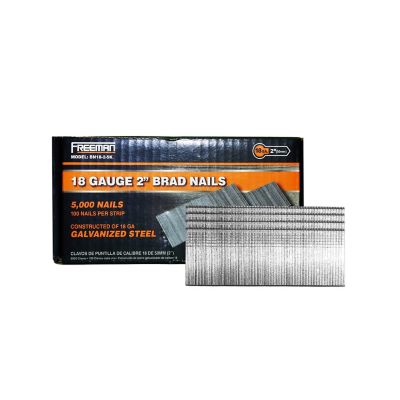
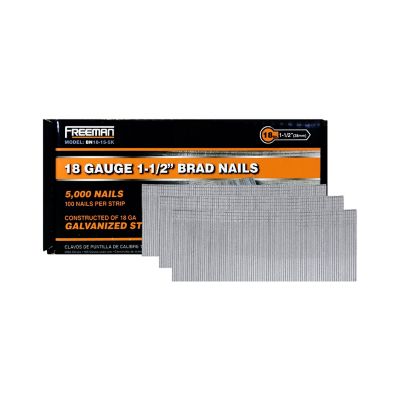
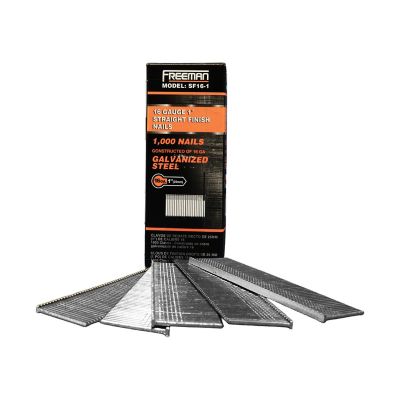
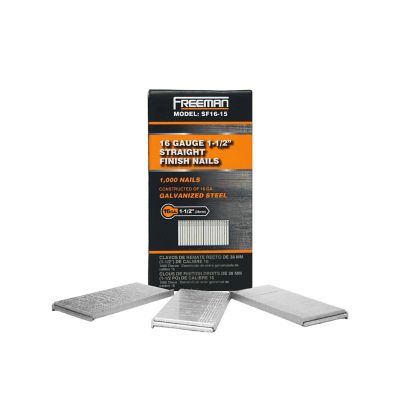
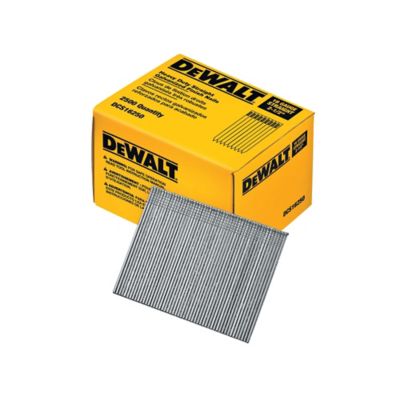
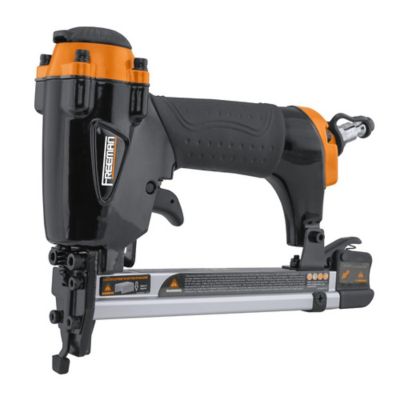
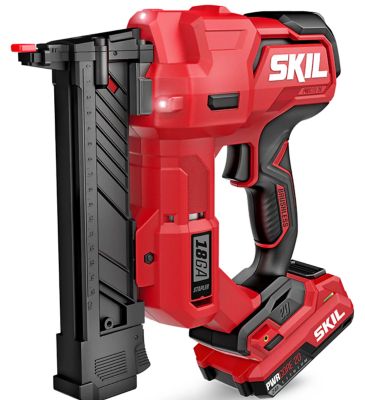
Brad nails are typically slender 18-gauge fasteners with small heads, making them a practical choice for light trim, small molding, cabinet parts, craft projects, and other finish work where you want the nail holes to stay subtle. They are especially handy when working with narrow boards or softer wood that could split under a heavier fastener. For more holding power on baseboards, door casings, window trim, and thicker pieces of finish lumber, 15- or 16-gauge finish nails provide a larger shaft and head. The extra strength can make a difference when trim needs to stay tight against a wall through changes in temperature and humidity. A
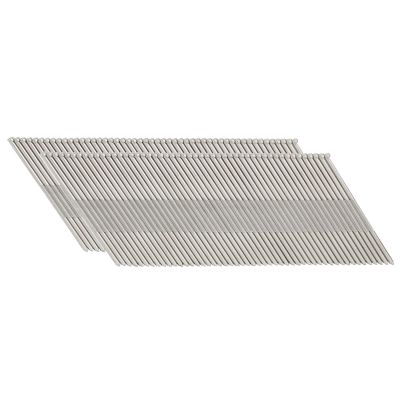
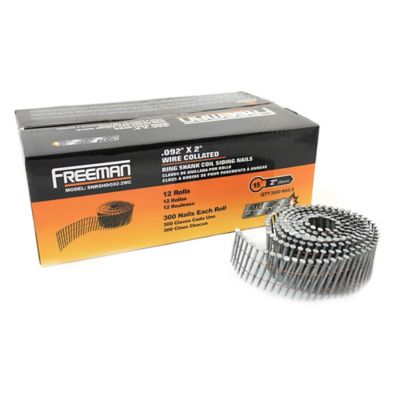
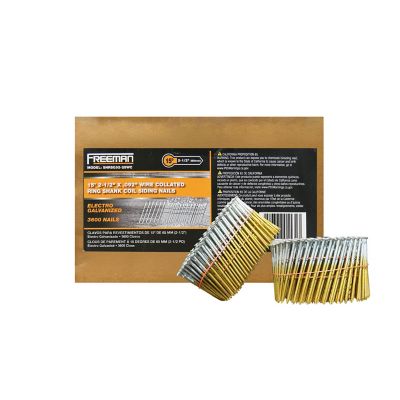
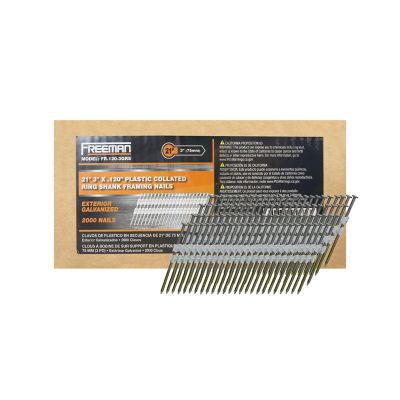
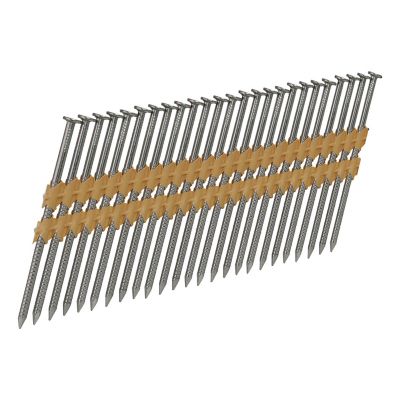
Brad Nailers category can help shoppers compare compatible fastening options for detailed indoor work. Framing nails are built for heavier jobs such as wall framing, subfloors, roof decking, sheds, outbuildings, and other structural projects. They are commonly available in longer lengths and may be arranged at different angles, such as 21 or 30 degrees, or supplied in coils for tools made to handle high-volume work. Roofing nails are a separate choice, with a wider head that helps hold roofing materials in place. They should be selected for the roofing application and used only in a tool made for that style of fastener. Because nail-gun nails are not universal, the gauge and length alone do not tell the whole story. The fastener also needs to match the nail gun’s angle, collation type, drive system, and magazine capacity. A nail that fits the chamber but uses the wrong paper, plastic, or wire collation can cause feeding problems, while the wrong angle may not load at all.
The job site and the material being fastened also help determine which nails make sense. For dry indoor projects, standard steel fasteners are often suitable, while outdoor work, livestock areas, damp workshops, and places exposed to rain or changing weather call for added attention to corrosion resistance. Galvanized or stainless options can help protect against rust, but the best choice depends on the material, local conditions, and how long the finished project is expected to last. When fastening treated lumber, follow the recommendations for the wood and fastener coating, since some combinations can lead to premature corrosion. Nail length should generally provide enough penetration into the supporting material for a solid grip, but it should not be so long that it punches through the back of a board or creates a hazard on the other side. For trim, test on a scrap piece first to make sure the nail sinks cleanly without leaving a large divot or splitting the edge. On framing work, use the fastener size and spacing called for by the project plans or building requirements rather than relying on appearance alone. Keep nails dry and stored in their original packaging, especially during the cooler months when condensation can collect in an unheated shed or trailer. Wear eye and hearing protection, keep hands clear of the nose of the tool, and disconnect the air supply or remove the battery before clearing a jam. Nail gun nails are useful for homeowners, farmers, ranchers, contractors, maintenance crews, and handy relatives who enjoy keeping a property in good shape. A well-matched supply of fasteners is a practical addition to a workshop, making a thoughtful gift for someone who spends weekends repairing gates, building nesting boxes, finishing a basement, or tackling improvements around the homestead. With the proper nail, the right tool, and a little care in setup, everything from delicate trim to sturdy framing can come together cleanly and hold tight.