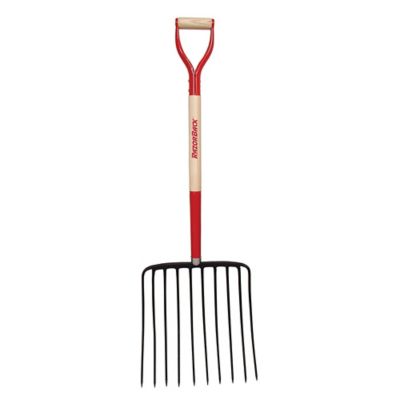
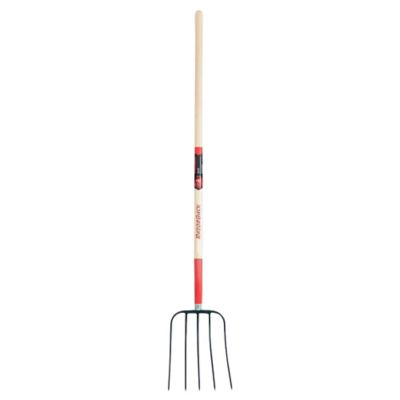
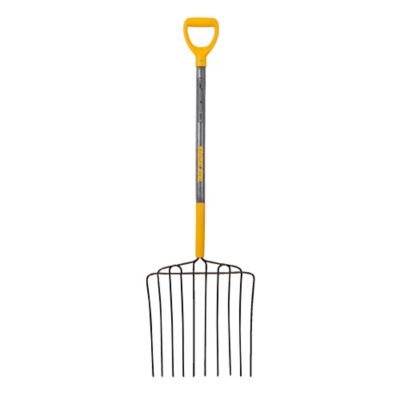
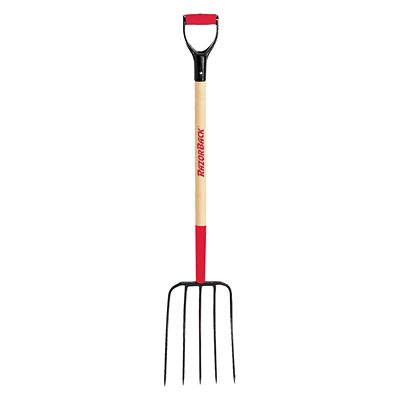
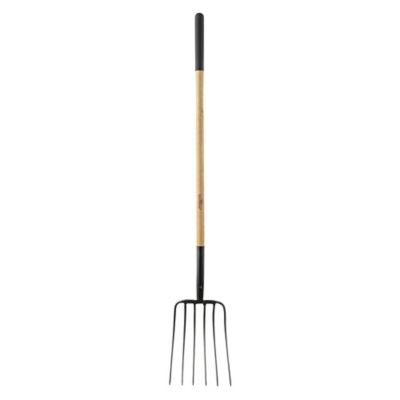
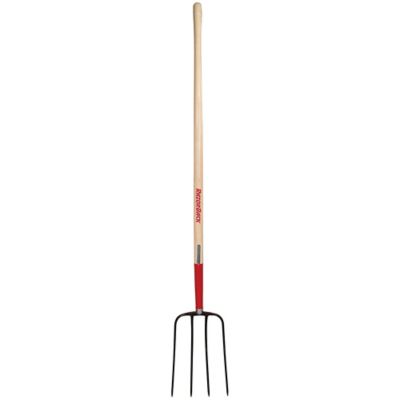
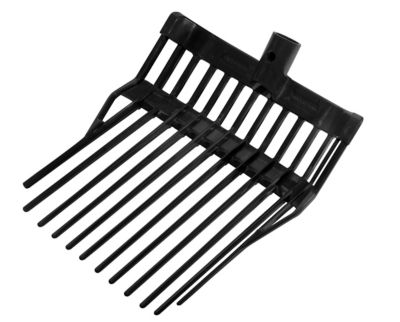
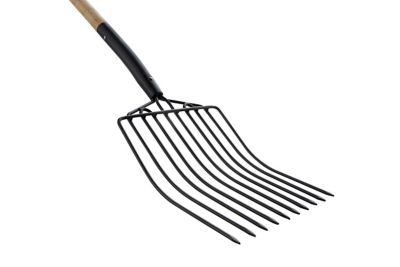
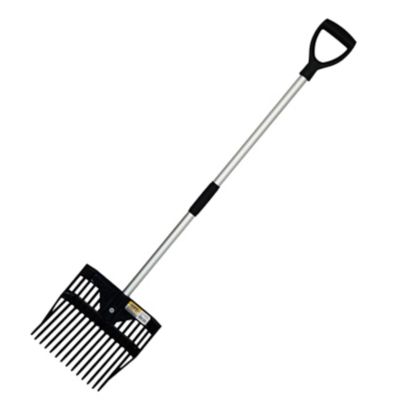
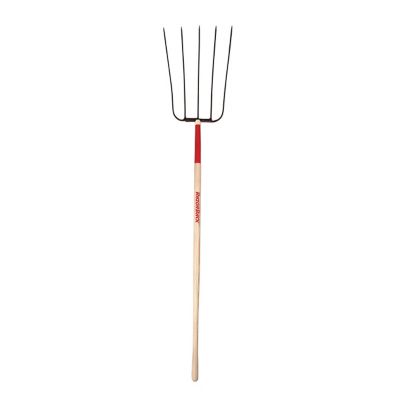
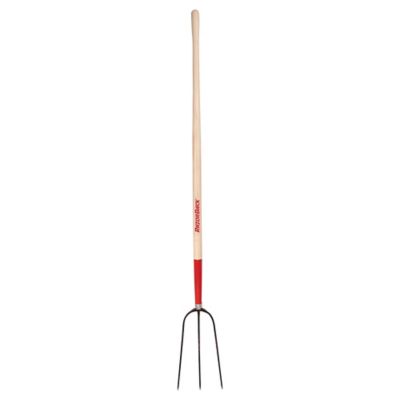
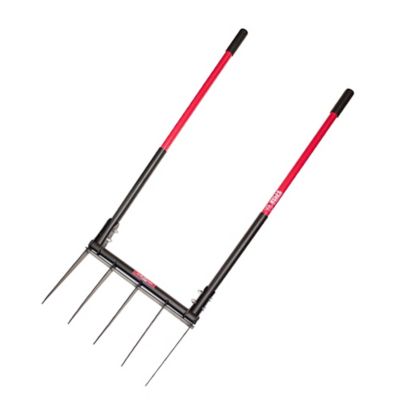
Mulch forks are long-handled tools made to scoop, lift and spread loose materials such as wood chips, shredded bark, straw and coarse compost. Their open, curved heads let the tines slide into a pile while helping hold material through the lift and carry. Compared with a shovel’s solid blade, a fork can move through loose, tangled material with less resistance, making it a practical choice for filling a wheelbarrow, unloading a cart or placing mulch around established plantings. Many mulch forks have 10 tines, though tine counts, spacing and head shapes vary by design. Closely spaced tines help catch smaller bark pieces and chips, while wider spacing lets finer particles sift through. A broad head carries more material across its width, and a deeper curve helps cradle the load rather than letting it roll off the front. These details matter when the pile contains a mix of long bark strips, chunky chips and smaller pieces. A mulch fork is meant for moving material that is already loose, not breaking hard ground, prying out roots or lifting rocks. Digging forks have a different job, with heavier tines intended to penetrate soil. Bedding, manure and ensilage forks can share features with mulch forks, but their tine arrangements and head shapes are not always interchangeable. The material being handled is a better starting point than the tool’s name alone. Around a garden, a mulch fork can help place chips between shrubs without dumping a whole wheelbarrow into a tight space. Around a barn or small acreage, a suitable fork can also handle loose straw or bedding, provided its design matches the task. Gardeners, grounds crews and property owners often reach for this style of fork when the work calls for repeated scooping and spreading rather than digging. For fine, crumbly compost that slips between the tines, a shovel may carry more per pass; for coarse mulch that catches on a solid blade, a fork often makes more sense.
Head construction has a lot to do with how a mulch fork feels once it meets a pile. Steel tines provide the stiffness needed to push beneath chips and lift a load, while the shape of the tine tips affects how readily the head enters loose material. Pointed tips can work into interwoven bark or straw, but they also call for care near irrigation tubing, landscape fabric and plant roots. A head that looks roomy when empty can become heavy when packed, so head width and depth belong in the same conversation as handle length and overall tool weight. Welded and forged construction are both found among material-handling forks, and the connections between the tines, head and handle deserve attention. A secure head-to-handle connection helps the tool feel steady through repeated lifts. Handle materials bring their own tradeoffs. Hardwood offers a familiar feel and some natural give, while fiberglass provides an alternative with different weight and stiffness characteristics. Metal handles add another construction option, though the balance of the entire fork matters more than the handle material by itself. A long, straight handle provides reach across a pile or into a cart and allows different hand positions along the shaft. A D-grip gives the upper hand a defined place to hold, which can help with controlling a scoop as it is tipped into a wheelbarrow. Grip size matters when work gloves are part of the job; there should be enough room for a comfortable hold without crowding the fingers. Handle length should suit both the person and the work area. A taller person moving mulch from an open pile may favor more reach, while someone working beside closely spaced shrubs may find a shorter setup easier to manage. Neither a longer handle nor a bigger head automatically makes the work easier. A balanced fork that carries a manageable scoop is often a better match for a long stretch of chores than one that encourages oversized loads.
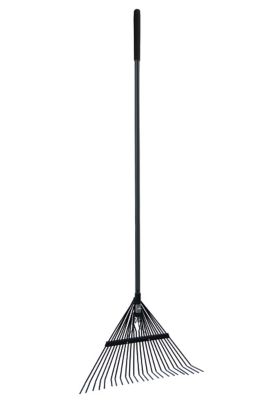
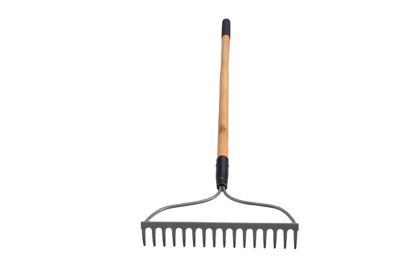
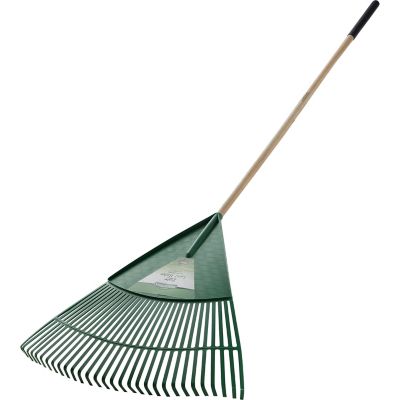
The way mulch is moved around a property also helps narrow the choice. A fork headed mostly from a pile to a nearby wheelbarrow benefits from a head that enters easily and holds material through a short lift. Carrying mulch farther on the fork puts more emphasis on balance, grip comfort and keeping the load close enough to control. For placing mulch around a tree or along a fence, a head that releases its contents without much shaking can make the work less awkward. Forks handle the lifting portion of the job, while rakes help finish the surface and shovels collect fine material left underneath the pile. That makes mulch forks a useful companion to other
Mulching Tools, rather than a replacement for every tool in the shed. Care is straightforward, but it matters for a tool that spends time in contact with damp organic material. Bark, stringy fibers and packed debris can collect around the tine roots and handle socket. Clearing that buildup and drying the head before storage helps limit corrosion and keeps connections easier to inspect. A light protective coating on bare steel, applied according to the maker’s directions, can help protect exposed surfaces. Wood handles benefit from keeping splinters and rough spots in check and following the recommended handle-care routine. Fiberglass handles deserve inspection for cracks or exposed fibers, and any loose grip, bent tine or shifting head needs attention before another load is lifted. Hanging a fork securely with its tines out of walkways keeps the tool off the ground and the work area easier to navigate. For someone who spends plenty of time tending beds, maintaining paths or managing a small property, a well-matched mulch fork can also make a practical gift. The best fit comes down to familiar details: the material in the pile, the space around the job and how the fork feels through an ordinary day’s work.