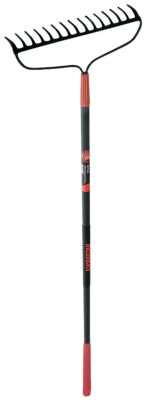
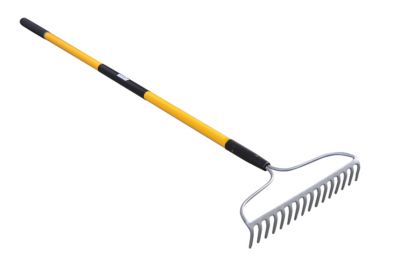
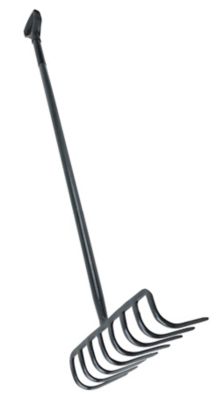
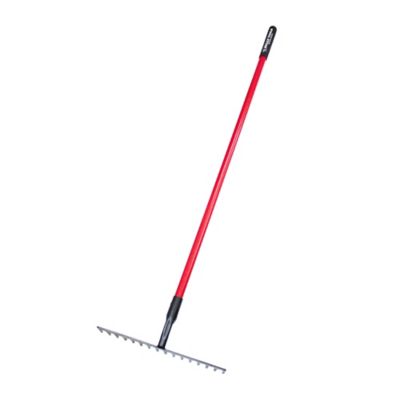
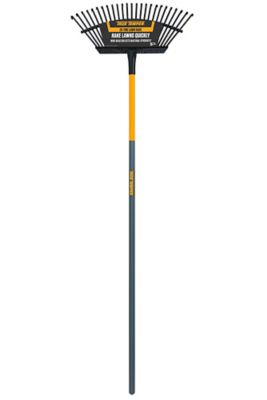
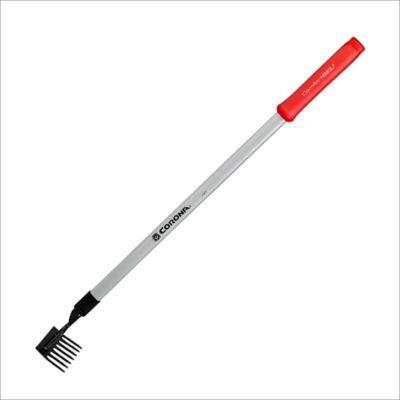
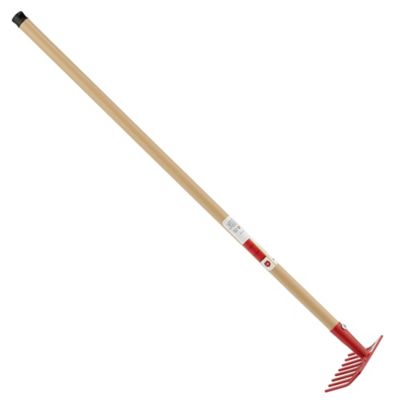
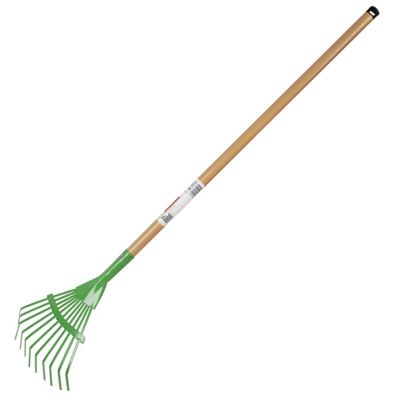
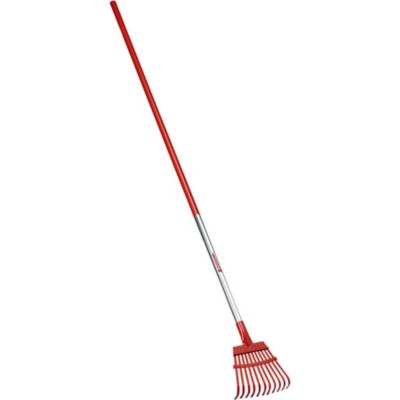
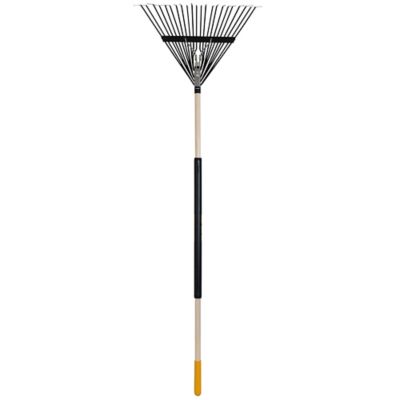
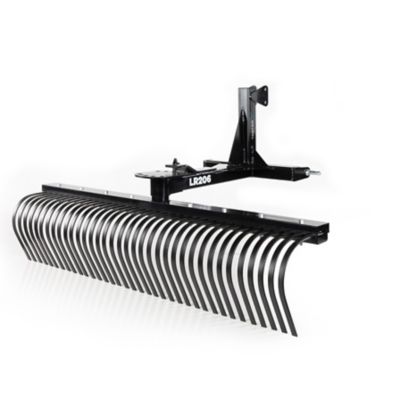
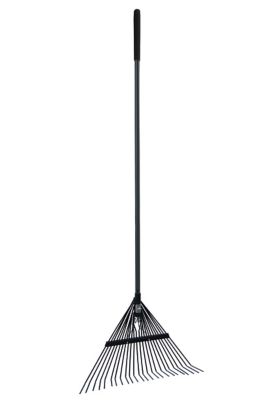
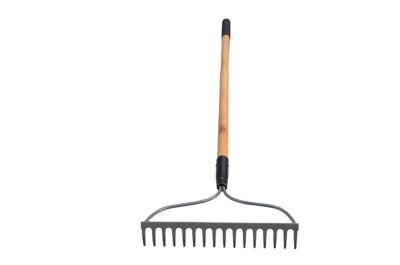
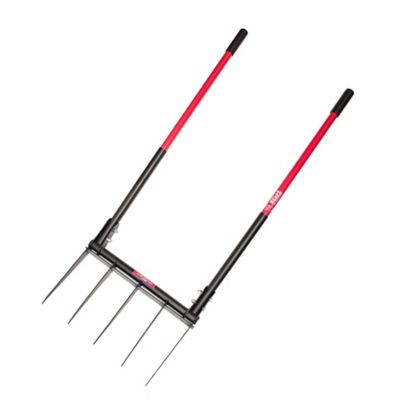
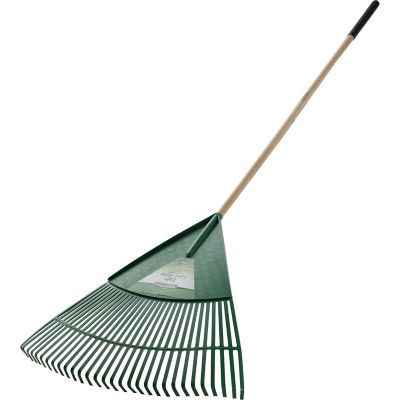
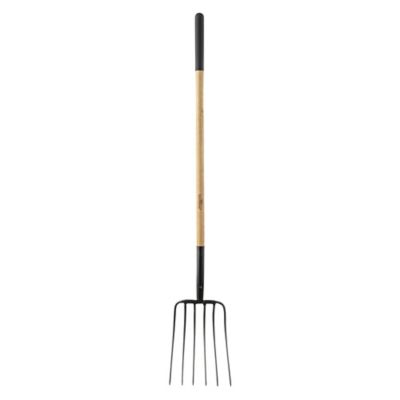
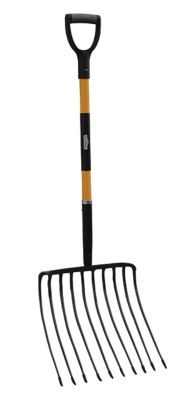
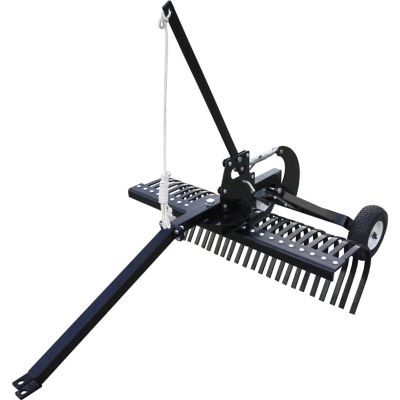
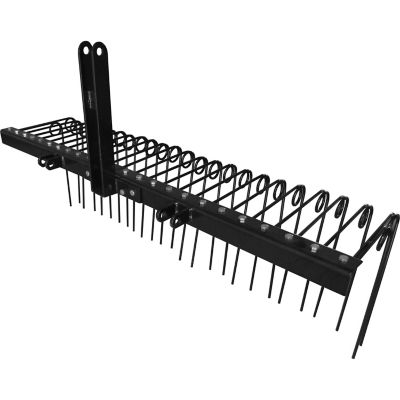
Mulch rakes are built for the tough jobs that call for more muscle than a lightweight leaf rake can provide. Also called bow rakes or hard rakes, they typically have a wide metal head with rigid steel tines that can pull, push, spread, and level heavy materials such as wood chips, shredded bark, compost, gravel, and packed soil. Those stiff tines are especially useful when mulch has settled into dense clumps or been matted down by rain and foot traffic. A mulch rake can break those chunks apart, move material back into bare spots, and help create a more even layer around trees, shrubs, garden beds, and walkways. Many rake heads also have a flat back edge that works like a small leveling bar, letting you smooth the surface after the bulk of the material has been spread. That combination of strong tines and a flat back makes a mulch rake handy for both rough work and finishing touches. Unlike flexible plastic or wire leaf rakes, which are made to gather lighter yard debris, a sturdy mulch rake is designed to handle resistance without folding over or skimming across the top. It can help refresh a tired-looking bed, pull mulch away from plant stems, and restore a clean edge along a path or lawn. During the cooler months, it can also help with general bed cleanup, light soil preparation, and moving settled material before winter weather arrives. For more ways to gather the right tools for spreading, moving, and maintaining landscape materials, browse
Mulching Tools.
Choosing among mulch rakes usually starts with the size of the area and the kind of material being moved. A narrow head can be easier to control in tight planting beds, between shrubs, or around raised planters, while a wider head can cover more ground across a long border or open section of landscaping. Rigid metal tines are a good fit for dense mulch, gravel, and compacted soil, but the shape and spacing of those tines still matter. Closely spaced teeth can help break apart clumps and leave a smoother finish, while more open spacing may allow loose bark or larger wood chips to move through without packing tightly into the head. Handle construction is another practical consideration. Wood handles have a familiar feel and can be comfortable for many outdoor chores, while fiberglass handles are valued for their durability and resistance to weather-related wear. Look for a handle length that lets you work with a mostly upright stance, since repeated bending can make a simple bed-refreshing job hard on your back and shoulders. A secure connection between the handle and rake head is important as well, especially when you are pulling against packed mulch or scraping along firm ground. For a smaller homeowner project, balance and maneuverability may matter more than maximum reach. For larger properties, community gardens, rental homes, or farmstead landscaping, a wider, heavy-duty rake can help finish the job with fewer passes. It is also worth considering storage space, handle grip, overall weight, and whether the rake feels comfortable after several minutes of steady work. A well-balanced tool should give you enough leverage to move material without feeling awkward when you lift, turn, or pull it back into place.
Mulch rakes are useful for homeowners, gardeners, grounds crews, property managers, and anyone who takes pride in keeping outdoor spaces neat and healthy. They are a practical choice for spreading a fresh layer of mulch around young trees, helping protect soil from drying out during warm weather and reducing the need for frequent hand leveling. They can also be used to pull old mulch away from foundations, redistribute material that has washed downhill, and smooth a bed after edging or planting. When working around living plants, use controlled strokes and keep the tines clear of trunks, crowns, and shallow roots; the goal is to move the mulch, not dig into the root zone. Keeping mulch a few inches away from tree trunks and plant stems helps reduce excess moisture and discourages rot and pest problems. A mulch rake can make a thoughtful gift for a new homeowner, a gardener setting up a first landscape, or someone who enjoys improving a family property one bed at a time. It is the kind of useful outdoor tool that may spend part of the season spreading bark and part of the season breaking up soil or cleaning up after storms. For bigger jobs, work in manageable sections and move material with short, steady pulls instead of trying to drag an entire pile in one pass. Start by loosening compacted areas, then distribute the mulch evenly and use the flat back of the rake head to smooth the surface. With proper storage out of standing water and a quick rinse or brush-off after muddy work, a dependable mulch rake can be ready for many seasons of landscaping, garden maintenance, and everyday yard work.