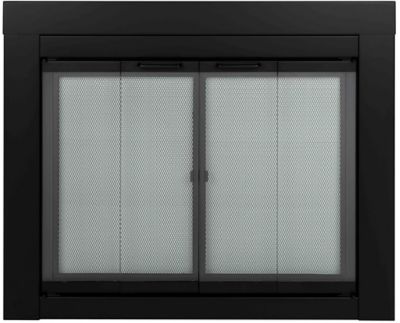
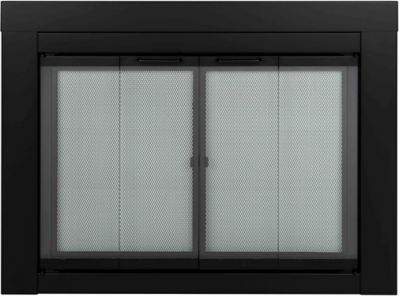
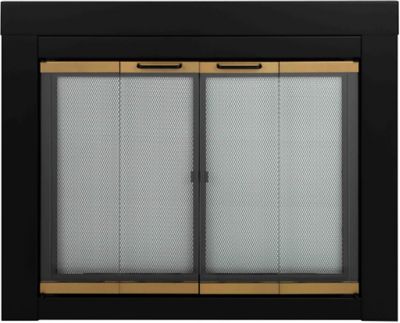
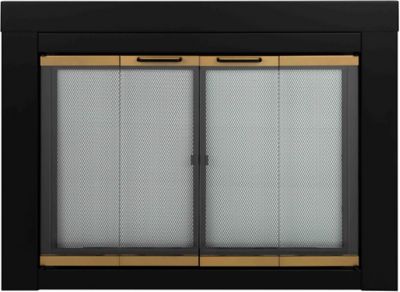
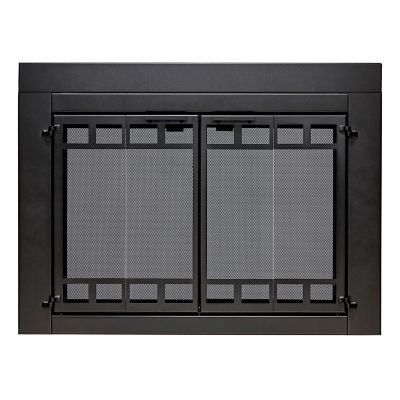
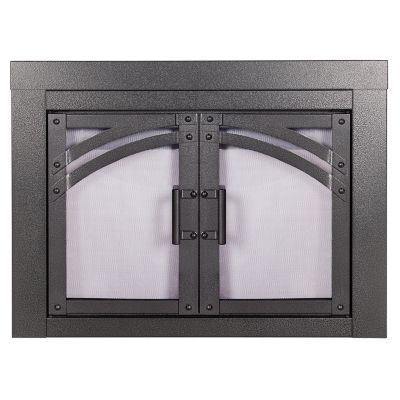
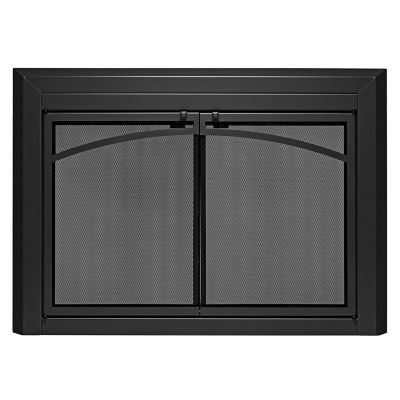
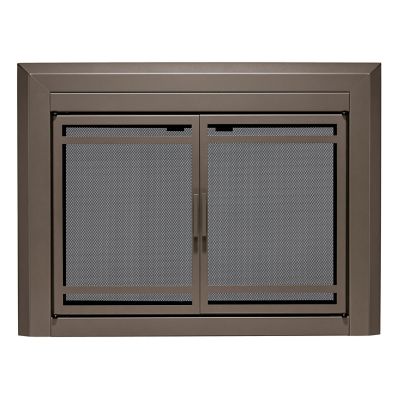
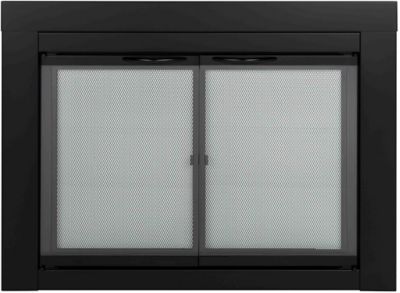
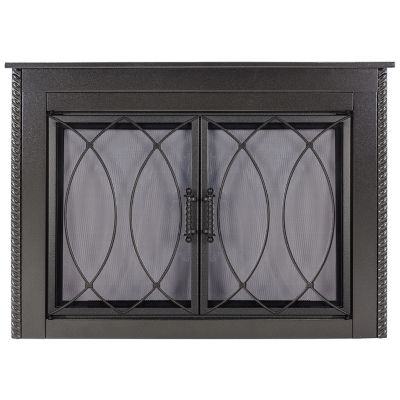
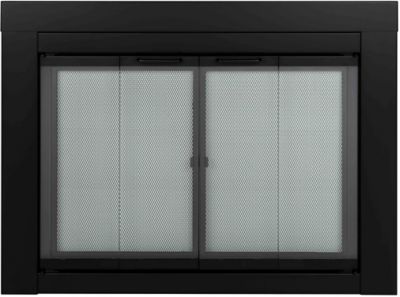
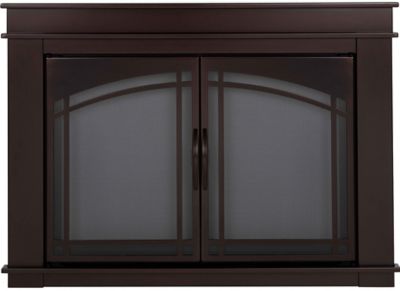
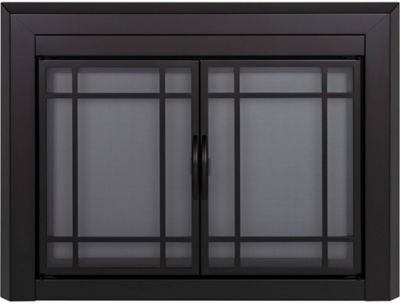
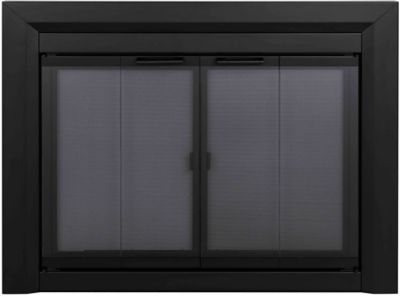
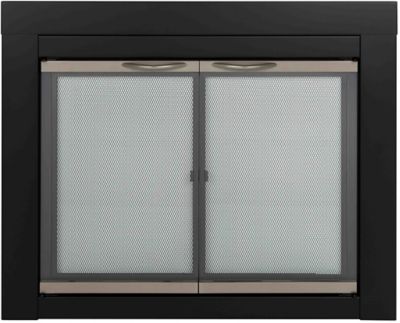
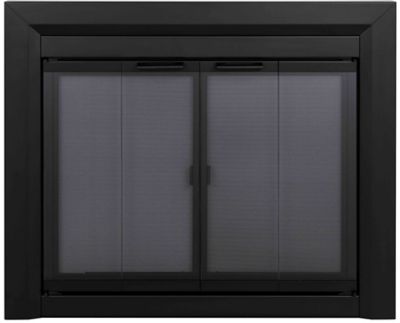
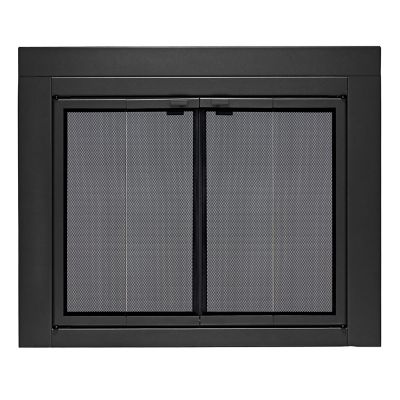
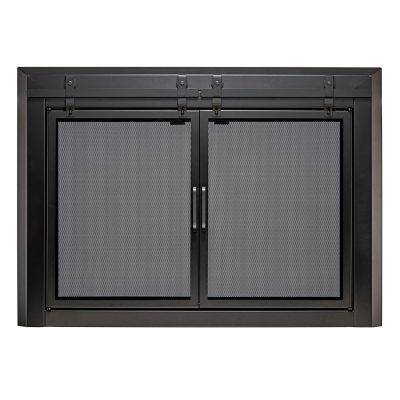
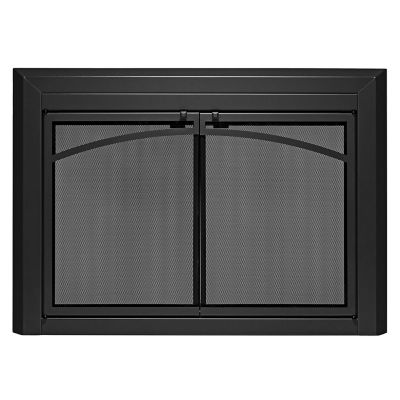
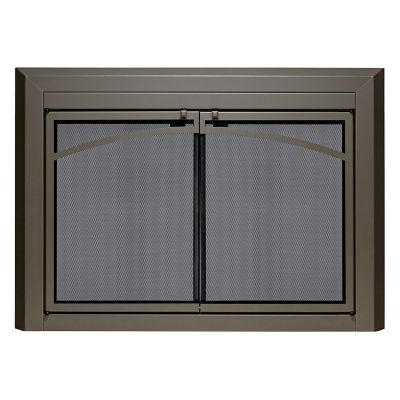
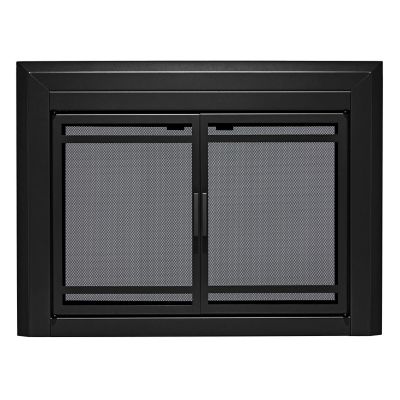
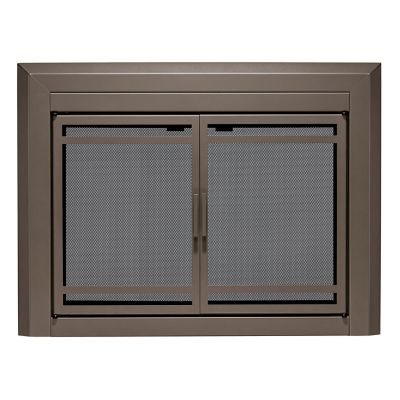
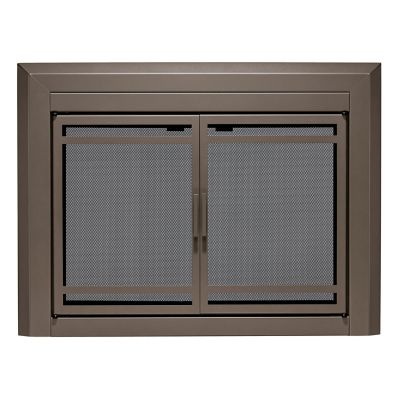
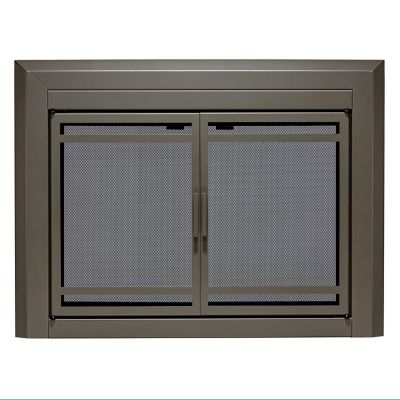
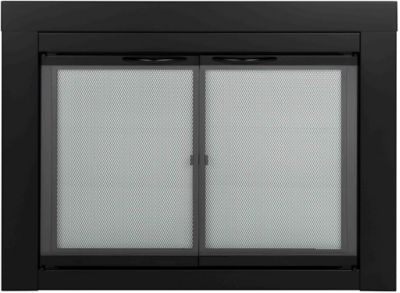
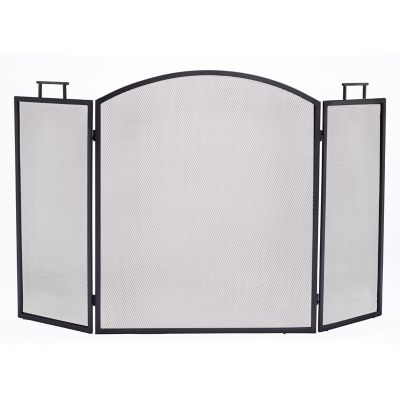
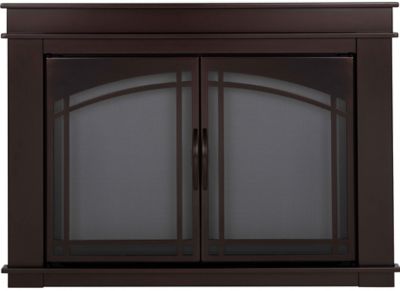
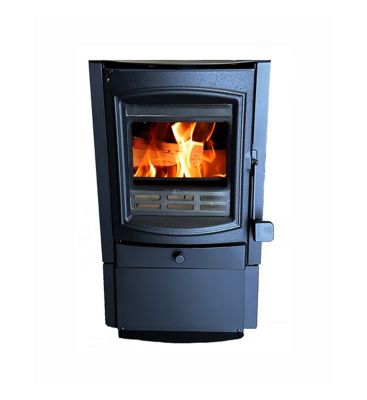
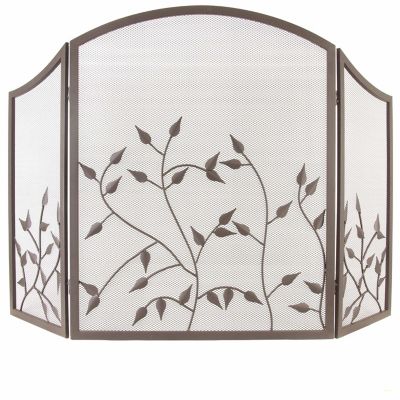
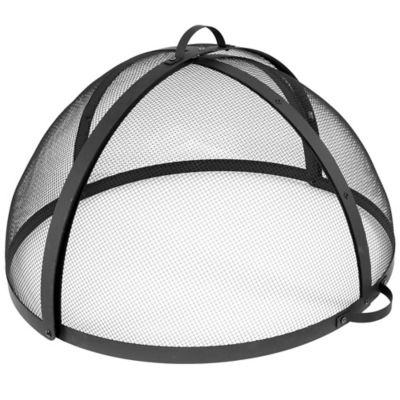
Modern fireplace glass doors give a hearth a clean, finished look while keeping the fire in view. Slim frames, straightforward lines, and broad glass panels can sit comfortably against rough stone, painted brick, or a smooth tile surround. That balance works just as well in a farmhouse living room as it does in a ranch house den, especially when the goal is to freshen up the fireplace without changing the character of the room. A dark frame can echo nearby iron hardware, while a brushed metal finish can tie in with lighting and other room details. The glass keeps attention on the hearth rather than covering it with a solid barrier. Depending on the design, bifold panels fold toward the sides, while cabinet-style doors swing outward for access to the firebox. Those differences matter in everyday spaces: a deep hearth may leave plenty of room for swinging panels, but a nearby chair or wood rack can make the door’s opening path worth a closer look. Handles also affect both appearance and ease of operation, with simple pulls offering a different feel than larger, more prominent hardware. For households that gather around the fireplace after chores, read beside the hearth, or make it the focal point of a family room, the best match is about more than looks. It should suit the fireplace’s construction, leave room for tending the fire, and work with the way the room is arranged. Glass doors are a finishing component for a compatible fireplace, not a replacement for a sound firebox, chimney, or properly functioning damper. They also are not interchangeable with the door assemblies on freestanding heating appliances. Shoppers considering a separate appliance rather than a fireplace front can explore
Wood Stoves With Glass Doors, where the glass door is part of the stove’s operating design. Keeping that distinction clear helps narrow the choice to equipment that belongs with the hearth already in the home.
Materials and fit play a big part in how modern fireplace glass doors look and function over time. Steel and aluminum frames offer different profiles, weights, and finish options, but the complete assembly’s approval for the fireplace matters more than the metal alone. A substantial frame can look right at home against a wide brick opening, while a narrower profile may better suit a simple tile surround. Glass specifications deserve the same attention. Tempered glass is common in fireplace door assemblies, while ceramic glass appears in certain applications with different heat requirements; neither should be substituted for the other without the equipment manufacturer’s approval. Many doors intended for masonry fireplaces must remain fully open while a fire is burning, with an appropriate mesh screen closed to help contain sparks. Only an assembly and fireplace specifically approved for closed-door burning should operate that way. A factory-built fireplace, often called a zero-clearance fireplace, generally requires a door assembly approved for that exact fireplace model. A masonry door set is not a substitute, even when the opening dimensions look similar. Width and height are only part of the fit. Opening depth, the shape of the lintel, the condition of the mounting surfaces, and the space around the hearth can all affect installation. On an older brick fireplace, a slightly uneven opening may call for measurements in several places rather than a single measurement across the middle. Some frames overlap the face of the opening; others fit within it, changing both the mounting requirements and the amount of brick or stone that remains visible. Existing screens, protruding mortar, and raised hearth edges can also influence how the doors move. The finished assembly should sit as directed without forcing the frame or placing stress on the glass. When the fireplace’s construction or approval information is unclear, a qualified fireplace professional can help confirm compatibility before installation. That extra attention is especially worthwhile in a home where the hearth has been altered over the years.
Day-to-day care is another part of choosing fireplace glass doors that make sense for the household. Smooth frame surfaces and easy-to-reach glass can make routine cleaning less of a chore, while hinges, tracks, and handles need enough clearance for inspection and upkeep. Soot and film may collect on the glass, but cleaning should wait until the fireplace, doors, and ashes are completely cool. A cleaner approved for the particular glass and finish, along with a soft cloth, helps avoid scratching the panels or damaging the frame’s coating. Abrasive pads and harsh chemicals can leave lasting marks, and spraying liquid onto hot glass can cause damage or injury. Ash and grit around moving parts can interfere with smooth operation, so care instructions for hinges and tracks deserve attention along with the glass-cleaning directions. Doors should move without dragging, twisting, or needing a hard shove. Loose hardware, chipped edges, cracked panels, or changes in alignment call for inspection rather than continued operation. Long service life depends on correct installation, suitable materials, and operation within the fireplace’s limits—not simply a heavy frame or thick-looking glass. In a busy household, it also helps to think about who spends time near the hearth. Children and pets need separation from hot glass and metal, and fireplace doors do not replace a properly positioned protective barrier. Furniture, baskets, rugs, and firewood still need the clearances required by the fireplace manufacturer. When the fireplace is out of operation and fully cool, closed doors can give the opening a tidier appearance, though their effect on drafts depends on the assembly and the rest of the fireplace system. Most fireplace doors do not create an airtight seal, and any claims about heating performance should come from the manufacturer rather than appearance alone. For a hearth that sees regular fires or simply anchors the living room, a well-matched door assembly brings together a clear view, practical access, and a finish that feels at home alongside everyday furniture and well-worn boots by the door.