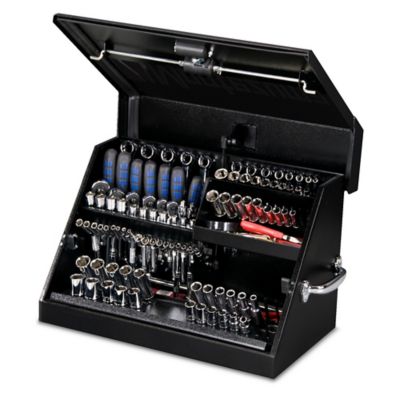
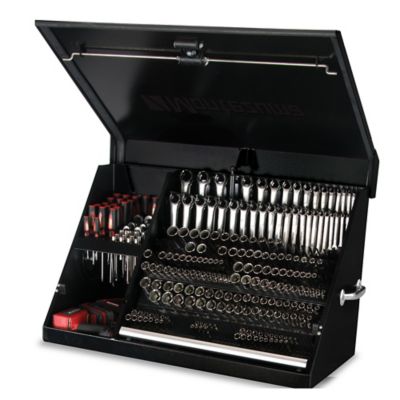
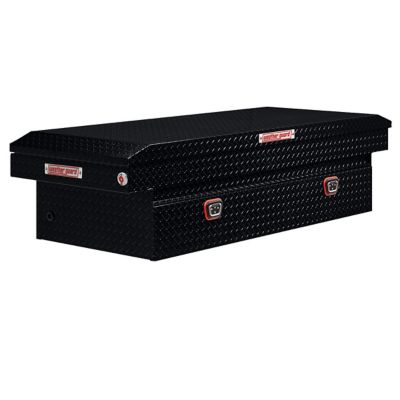
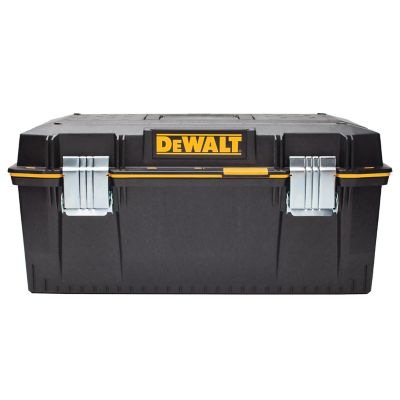
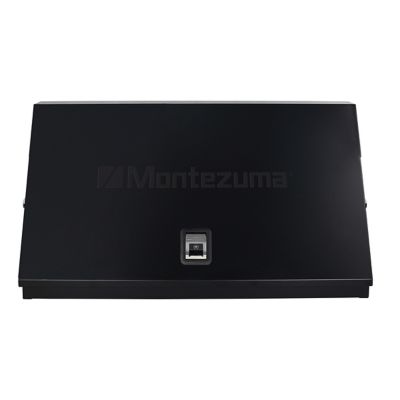
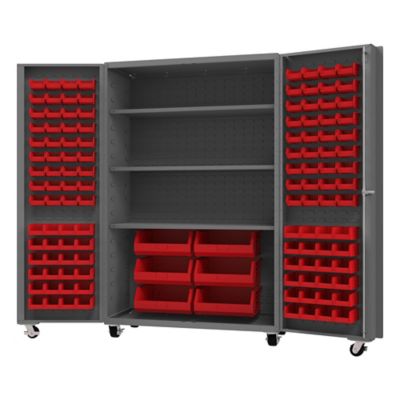
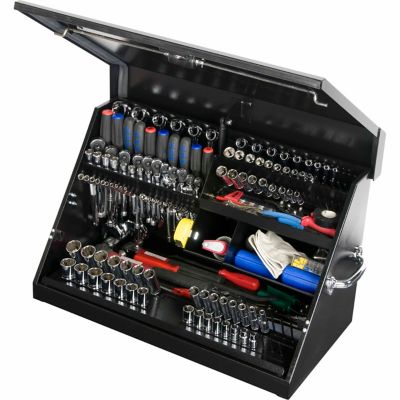
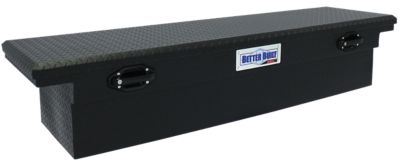
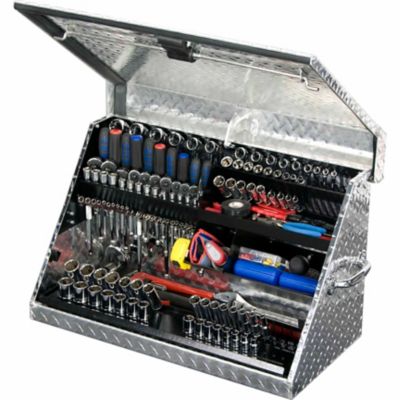
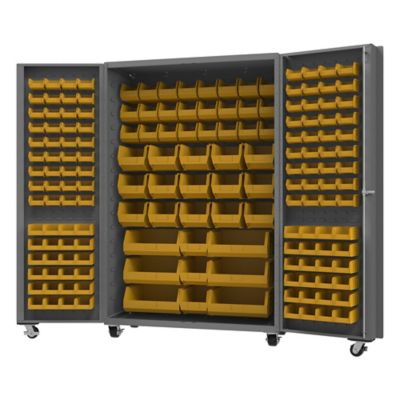
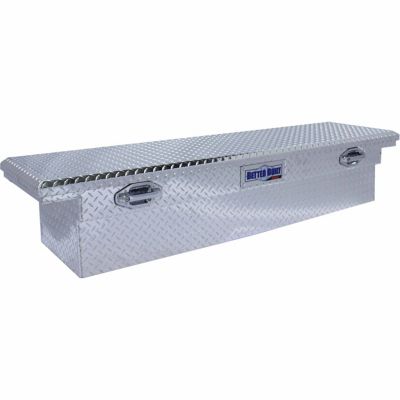
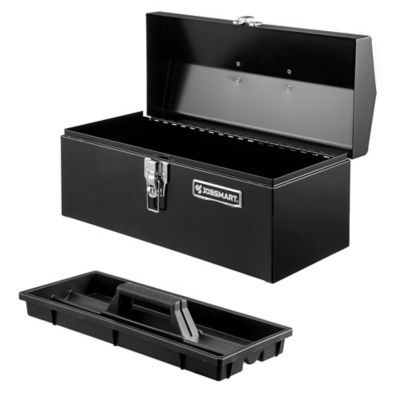
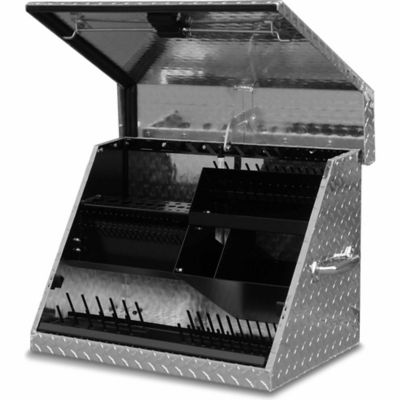
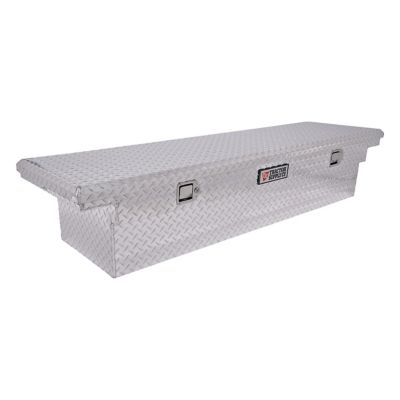
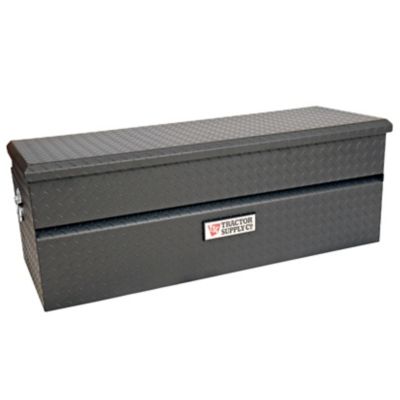
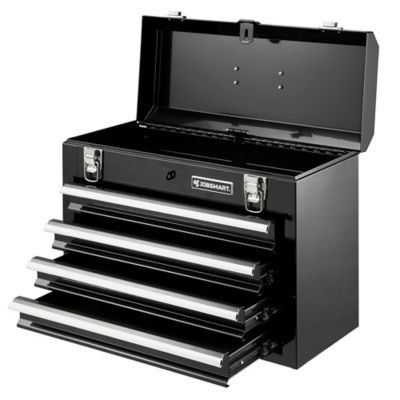
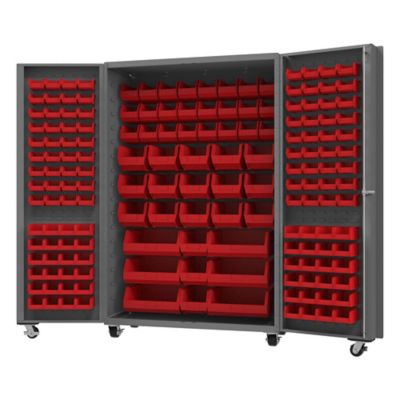
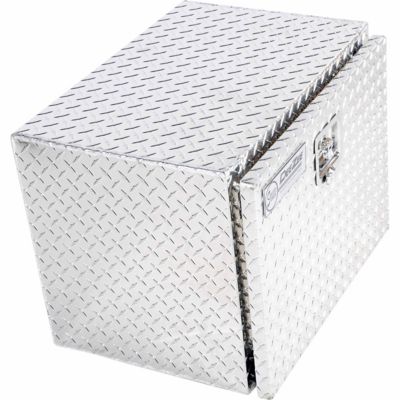
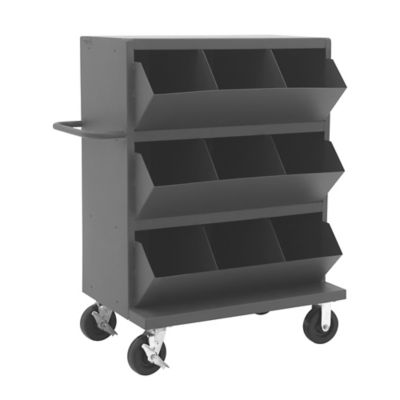
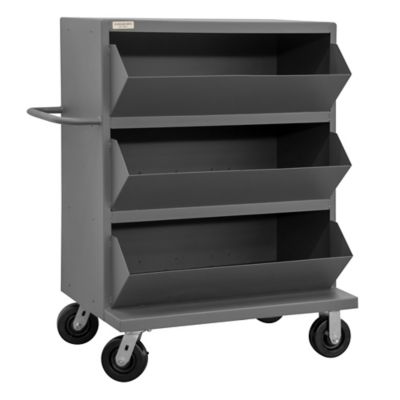
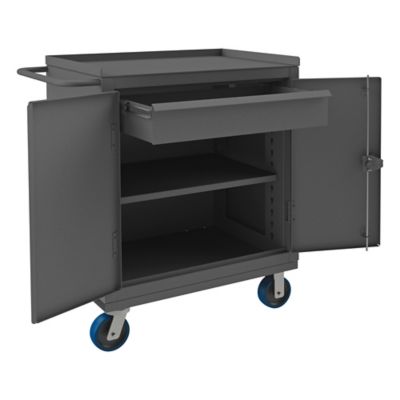
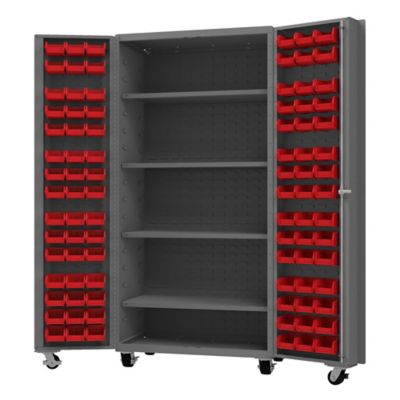
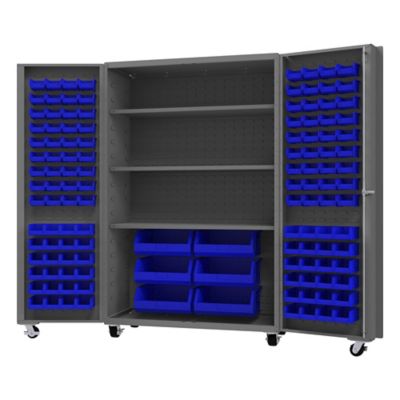
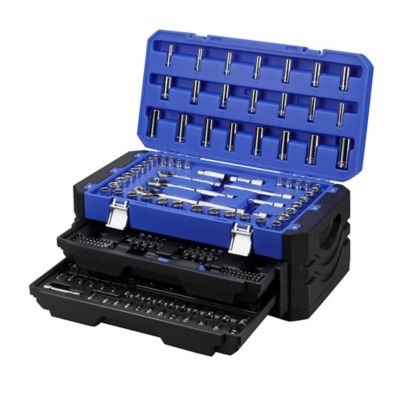
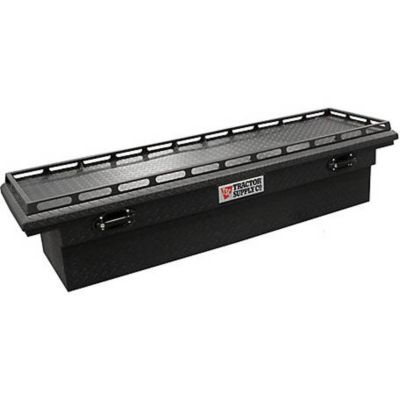
Mobile tool boxes are portable storage containers designed to organize tools, protect them between jobs, and make a loaded kit easier to move. Many have wheels and a pull handle, while others combine a rolling base with removable storage sections. They serve a different purpose than a stationary shop cabinet: instead of bringing every repair back to the bench, they help bring the tools to the work. That might mean rolling sockets across a concrete barn floor, taking a drill and fasteners out to a gate, or keeping repair supplies together for a day away from the shop. Rolling tool boxes, wheeled tool chests, and stackable tool storage systems all fit this category, though their layouts suit different routines. A deep chest makes room for larger equipment, while a drawer-style box keeps smaller tools within reach without requiring the whole top compartment to be unpacked. Removable trays give pliers, tape measures, and other everyday tools a place above the heavier gear. Small-parts compartments can separate screws, washers, and fittings that would otherwise settle into the bottom. For mechanics, farm owners, tradespeople, and folks tackling repairs around the house, that organization means less digging when a job is already underway. The best fit depends on what needs to travel together and where the box will go. A kit for fence and gate repairs has different storage needs than one for small-engine work or finish carpentry. Interior dimensions matter more than the outside footprint when fitting long tools or equipment with bulky handles. Drawer depth, lid clearance, and the space taken up by dividers all affect usable room. For storage centered on drills, saws, batteries, and chargers,
Tool Boxes for Power Tools offers a related category to explore. Keeping those larger pieces separate from loose hardware can also make a mobile setup easier to sort at the end of a long workday. A little open space leaves room for the extra socket set or specialty tool that the next job calls for.
Materials and construction affect how a mobile tool box handles the trip from storage to the work area. Molded plastic and resin bodies generally keep empty weight down and do not rust, which can be helpful when the box needs to come out of a truck bed or cross a damp barn aisle. Their resistance to impacts, sunlight, and cold depends on the material and construction, so those conditions deserve attention when comparing designs. Steel bodies bring stiffness and can stand up well to demanding shop work, but they also add weight before the first wrench goes inside. Protective finishes help limit corrosion, though exposed metal at scratches and worn edges needs attention. Aluminum offers another balance of weight and corrosion resistance, with strength depending on thickness and reinforcement. Hinges, latches, handles, and wheel mounts deserve as much attention as the body itself because those connection points take repeated strain during travel. Wheels make a big difference, too. Larger wheels generally roll over gravel, floor joints, and small obstacles more easily than smaller ones, while swivel casters help a cabinet turn between benches on a smooth shop floor. Even a wheeled box can be awkward in deep mud, loose stone, or tall grass. A comfortable pull handle with enough extension helps keep the load clear of heels, and side handles provide grip points for lifting when the design allows it. Published load limits apply to the complete setup, including the tools inside, and individual drawers or removable sections may have separate limits. Heavy sockets and metal tools belong low in the box to help keep it steady. A tall stack needs secure connections between sections, especially when crossing uneven ground. For drawer-style designs, wheel brakes and drawer retention features matter when parking beside a vehicle or moving across the shop. Brakes help hold a box in place during work, but they are not a substitute for securing it during transport. Truck travel calls for restraint suited to the box, the vehicle, and the load.
Day-to-day fit also comes down to how the compartments work when hands are dirty, daylight is fading, or there is barely room to stand beside a piece of equipment. Wide openings make larger tools easier to retrieve, while drawers keep familiar groups together: sockets in one spot, electrical tools in another, and measuring tools away from heavier gear. Removable bins can carry a small selection right to the repair instead of requiring the whole box to follow. In stackable systems, matching connection points matter; sections from different systems are not necessarily interchangeable. Overall height and width should suit the storage space as well as the job, whether that is a corner of the garage, a truck bed beneath a cover, or a narrow path between shop equipment. A loaded box still needs room for its lid to open, its drawers to extend, and its handle to operate. Lockable compartments can discourage casual access, but portable storage should still be secured appropriately when left unattended. Weather protection varies by design, and a tight-looking lid alone does not establish protection from rain or blowing dust. Any stated water or dust rating, along with the manufacturer's care instructions, is worth checking for work outdoors. During the cooler months, wet tools and condensation can leave moisture trapped inside a closed box. Wiping tools dry, clearing dirt from trays, and letting damp compartments air out before closing helps protect both the contents and the storage body. Wheels and axles benefit from having twine, grit, and other debris cleared away, while hinges, drawer slides, and handle joints need care according to the manufacturer's directions. A mobile tool box can also make a practical gift for someone setting up a first workshop, starting a trade, or spending weekends keeping farm equipment running. Matching the storage style to the recipient's tools and usual work surface matters more than simply picking the largest box. A manageable load, sensible layout, and easy access give mobile tool storage its value from one repair to the next.