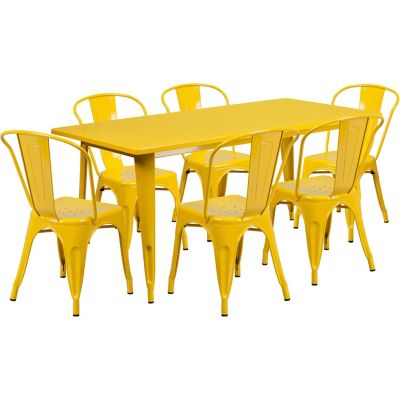
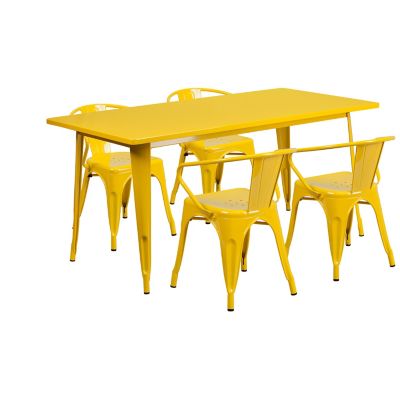
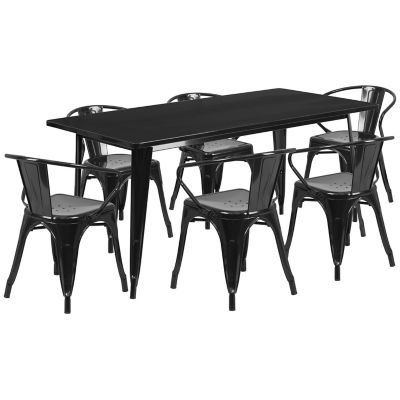
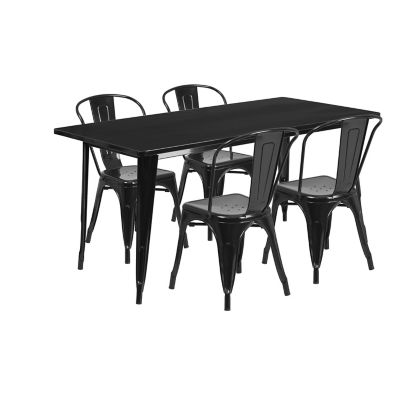
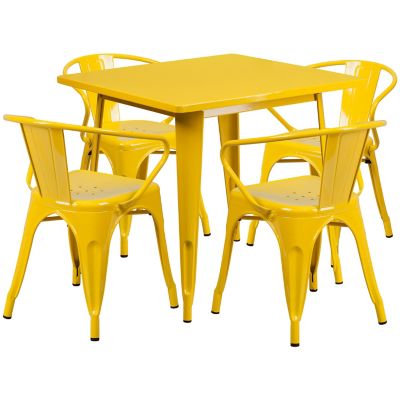
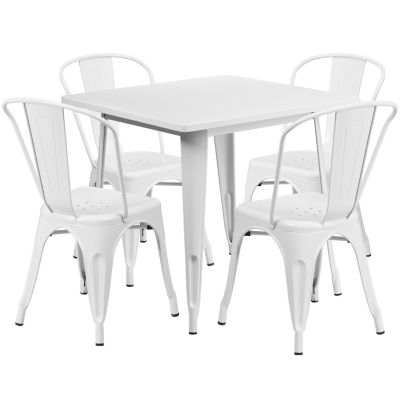
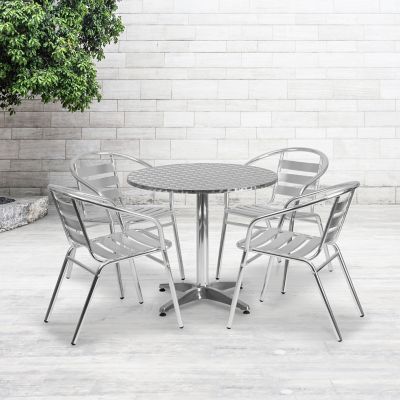
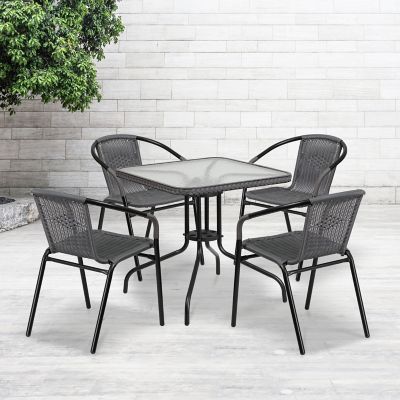
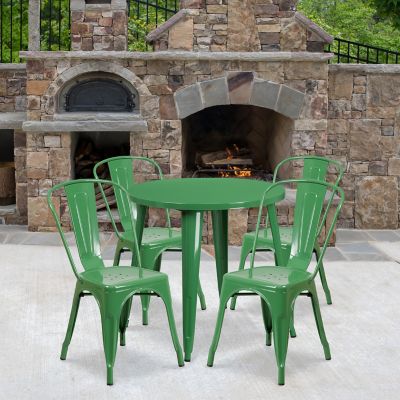
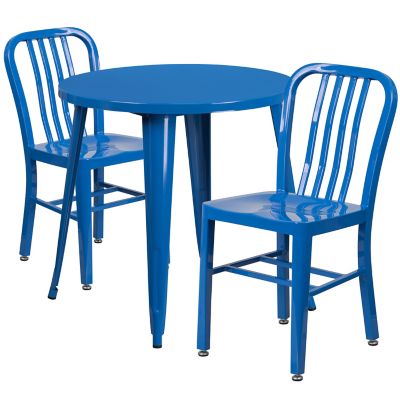
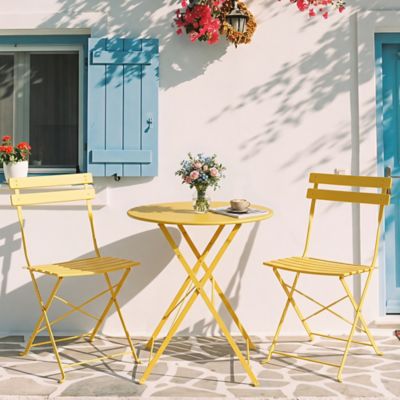
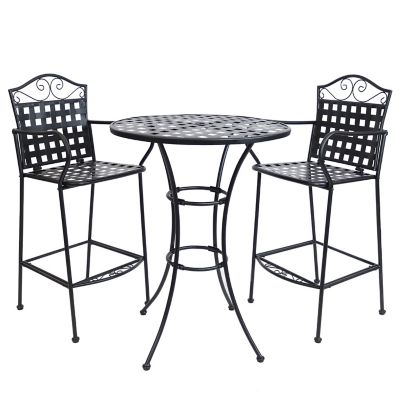
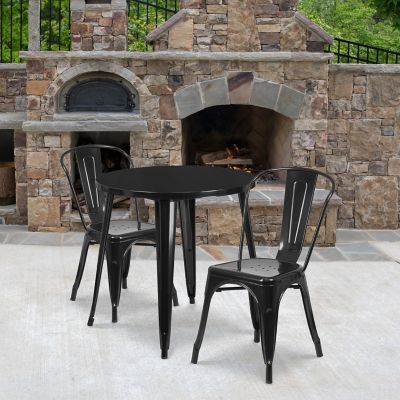
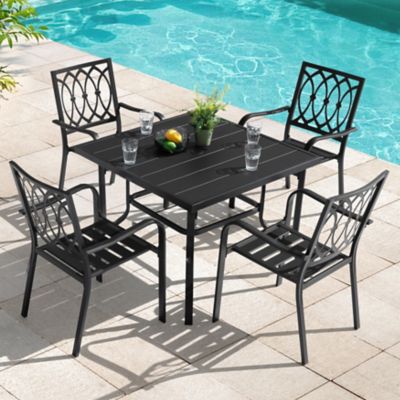
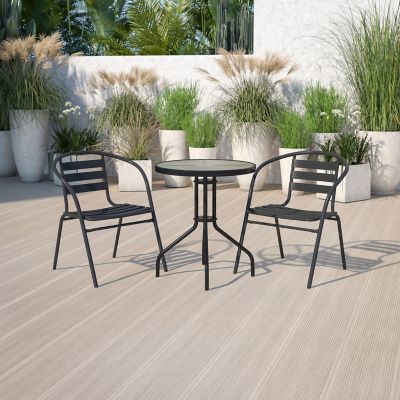
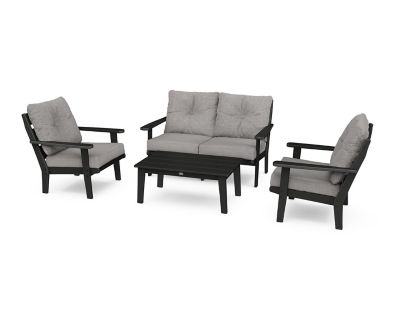
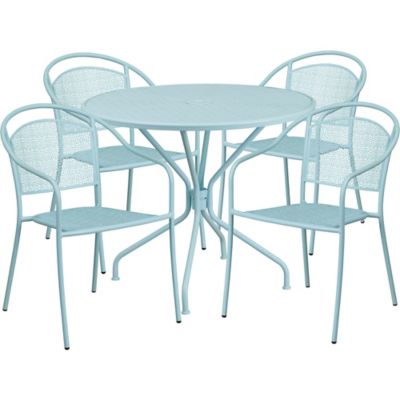
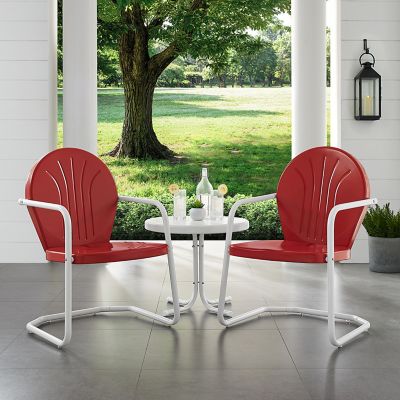
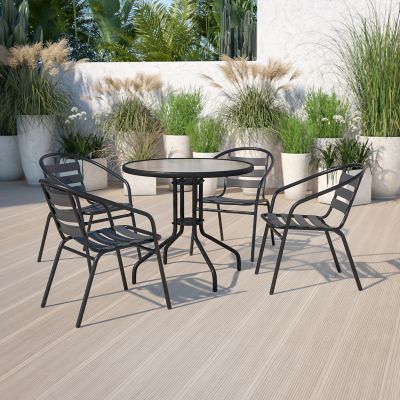
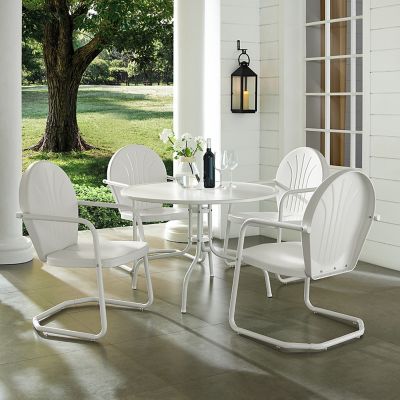
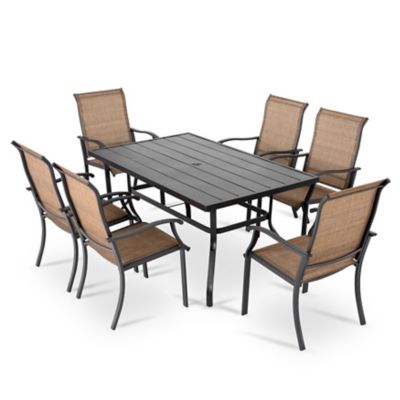
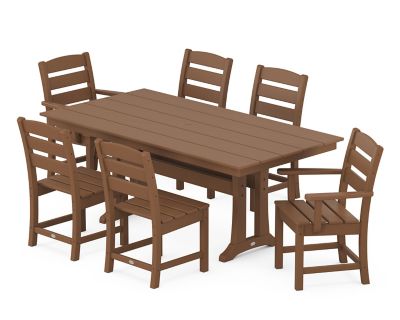
Metal outdoor table and chair sets bring a ready-made gathering spot to a porch, patio, or backyard eating area, whether the plan is coffee before chores or supper with the whole family. A coordinated set takes care of matching the table and seating, with configurations ranging from small bistro arrangements to larger dining layouts. A three-piece set generally includes one table and two chairs, while five-piece and seven-piece dining sets commonly seat four and six people, respectively. The metal matters as much as the number of seats. Aluminum is relatively lightweight, making chairs easier to move when sweeping the porch or making room for company. It does not develop iron rust, although its finish and hardware still need attention, especially around salt or other corrosive substances. Steel generally brings more weight and a firm, substantial feel. Powder coating creates a protective finish, but scratches and exposed edges can leave steel vulnerable to rust. Wrought iron tends to be heavier and often features curved frames or open scrollwork, lending itself to a traditional porch setting. Cast aluminum can offer similarly detailed shapes without the same weight as iron. Actual weight varies with frame thickness and construction, so the material name alone does not tell the whole story. Metal outdoor dining sets may have solid, slatted, or open-pattern tabletops, each with a different feel in everyday use. A relatively smooth top gives plates and glasses an even resting place, while slats and open patterns allow water to pass through. Wider openings may call for placemats beneath narrow glasses or small dishes. Metal-framed chairs can also incorporate sling seats or cushions, which change both comfort and upkeep. For households that want a straightforward place to eat, visit, and take a break, the best fit comes down to how the furniture feels and functions, not just how it looks from the back door.
The right proportions make a metal patio dining set feel at home rather than crowded into a corner. Round tables keep conversation easy across a small group and eliminate projecting corners, while rectangular tables often work well along a long porch or beside an outdoor cooking area. Square tables suit compact dining spots where seating can be spread evenly around the edges. The shapes and dimensions of
outdoor metal dining tables also affect how comfortably serving dishes, place settings, and extra guests fit into the space. A table that holds four dinner plates may feel much smaller once a pitcher, a basket of rolls, and a serving platter join them. Around 36 inches between the table edge and a wall or railing is a common planning allowance for pulling chairs back, with more room helpful where people need to walk behind seated diners. Door swings, grill lids, porch posts, and steps all deserve a place in that measurement. Standard dining tables are commonly about 28 to 30 inches high; counter-height and bar-height arrangements require taller seating matched to the tabletop. Seat height, arm height, and the space beneath the table matter together, especially when chairs need to tuck in neatly. A broad seat and supportive back can make a long visit more comfortable, while armrests provide a place to settle in between bites. Chairs without arms can be easier to slide beneath a table or arrange in tighter quarters. Listed seat weight limits and overall chair dimensions help households account for different body sizes rather than judging fit from a photo. An umbrella opening can add another option for the dining area, but the opening does not replace a properly sized umbrella base. On decks and paved patios, broad feet or suitable glides can help protect the surface beneath the set. Small feet may settle into gravel or soft ground, so the intended spot matters as much as the furniture’s footprint.
Long-term performance depends on construction, finish, placement, and regular care. Tight joints, well-supported seats, and a table that sits level all contribute to a comfortable setup, whether the set is holding a quick lunch or a full family meal. Adjustable feet, where included, can help compensate for minor unevenness on a patio, but they cannot make an unstable surface suitable for dining furniture. Most routine cleanup starts with a soft cloth, mild soap, and water, followed by rinsing and drying as directed by the manufacturer. Abrasive pads and harsh cleaners can damage protective finishes, and grit trapped beneath plates or planters can leave scratches. Spilled food, fertilizer residue, and damp leaves are worth clearing away promptly rather than letting them sit against the metal. For painted steel and iron, checking joints, edges, and screw holes makes it easier to spot a finish chip before rust spreads. Manufacturer-approved touch-up coatings may help protect exposed areas after proper preparation. Aluminum also benefits from gentle cleaning and attention to fasteners, even though it does not rust like iron. Cushions add softness for lingering over a meal, but removable covers, drying requirements, and storage needs vary by fabric and filling. Breathable furniture covers can limit exposure when the set is not in service, provided they fit properly and allow moisture to escape. Stackable chairs and folding designs can make storage simpler where a shed, garage, or enclosed porch must hold other household gear, too. Metal chairs can scrape when dragged, so lifting them helps protect both the feet and the surface below. For a housewarming gift or a shared family purchase, confirming the recipient’s space and seating needs makes a coordinated set a more practical choice. From a two-seat spot beside the kitchen door to a larger table within reach of the grill, metal outdoor table and chair sets offer a comfortable place for everyday meals, neighborly visits, and a well-earned sit-down.