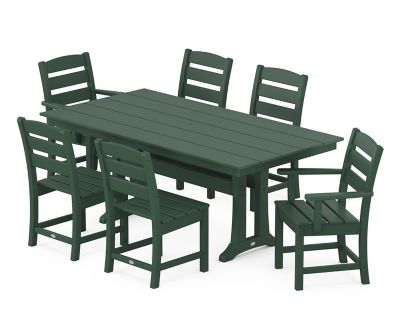
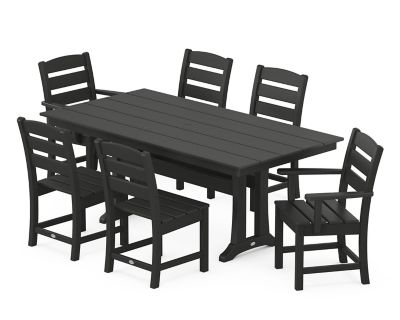
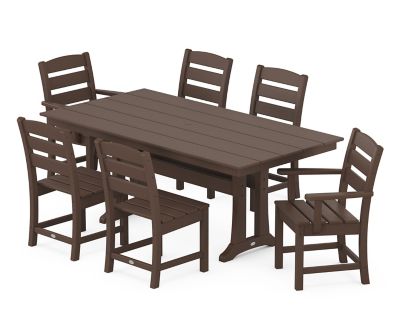
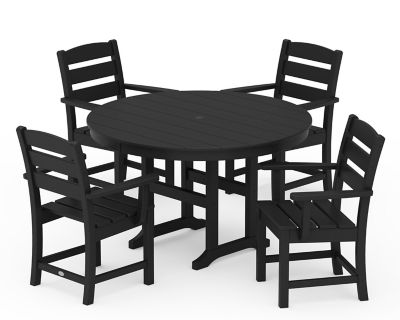
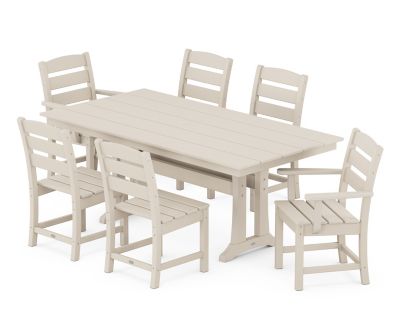
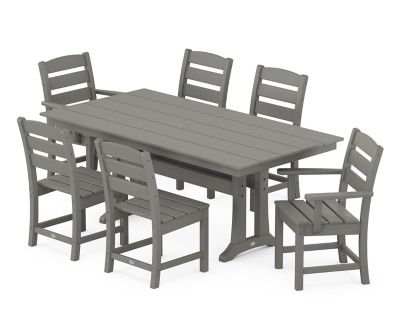
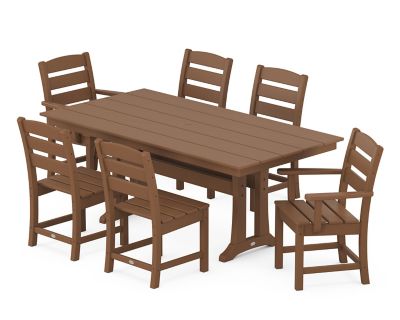
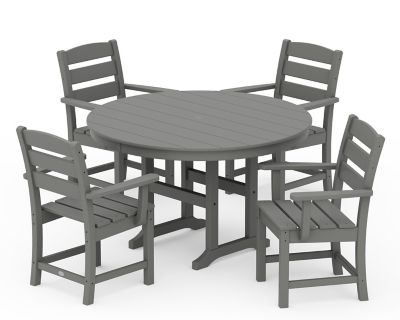
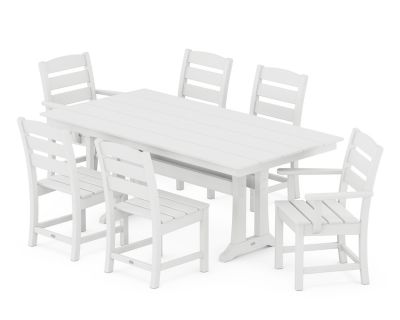
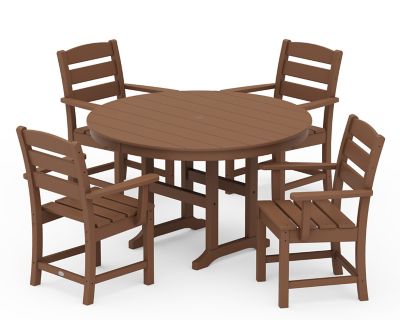
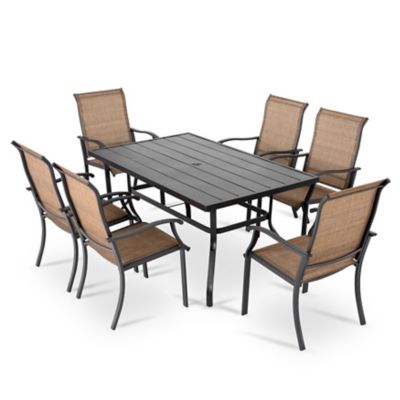
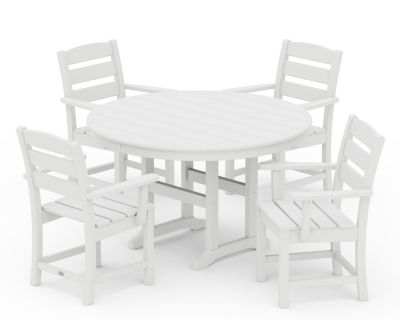
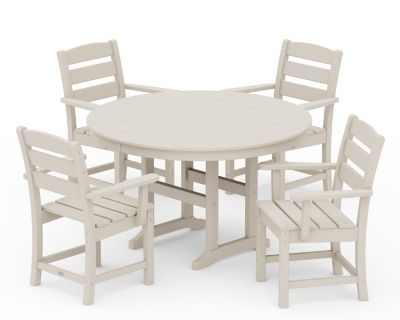
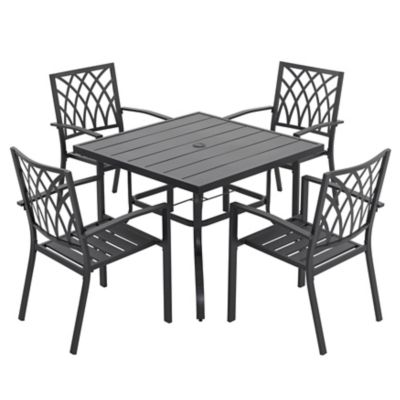
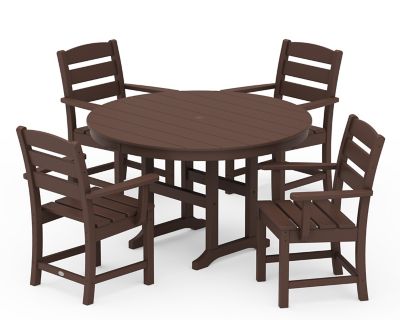
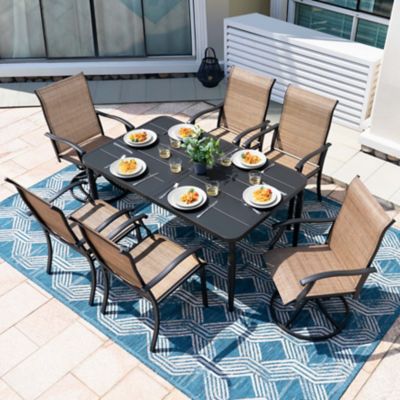
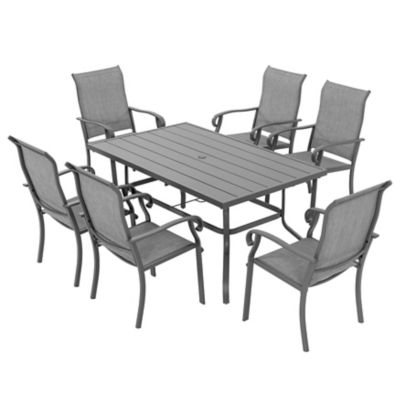
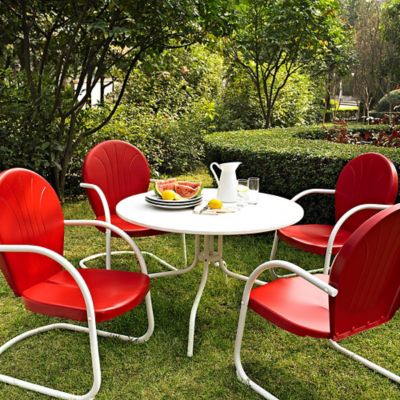
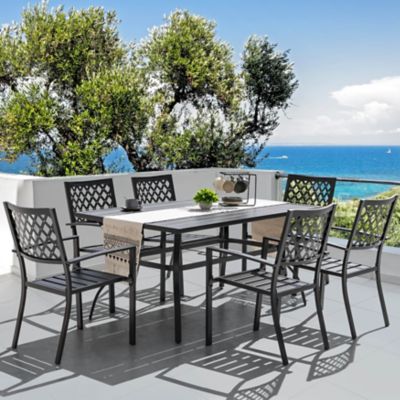
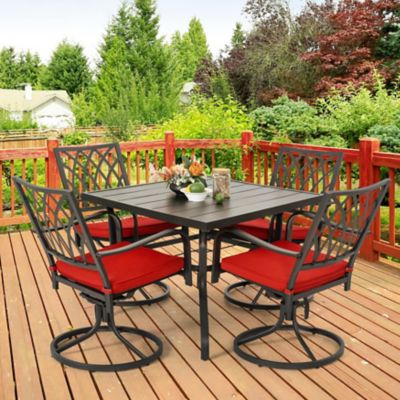
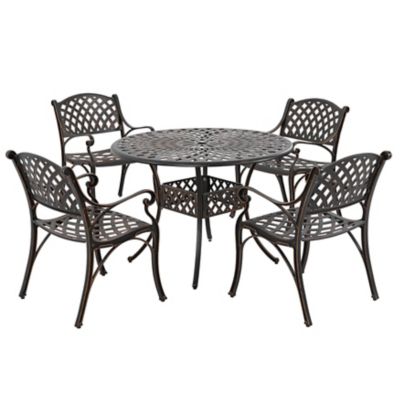
Outdoor dining sets bring a table and coordinating seats together for meals on the porch, backyard cookouts and a place to sit down after chores. Common arrangements include three-piece sets with a table and two chairs, five-piece sets with four chairs, seven-piece sets with six chairs and nine-piece sets with eight chairs. Piece count and seating capacity are not always the same, though, especially when benches are part of the arrangement. A compact bistro set suits a small porch or a quiet breakfast for two, while a larger patio dining set gives family and friends room to pass serving bowls without crowding every plate. The table’s shape matters as much as the number of seats. Round tables keep conversation centered and have no corners to work around; square tables fit neatly into smaller gathering areas; rectangular tables make good use of a long deck or patio. Extension tables can add room for company, provided the expanded tabletop still leaves enough space to move around it. About 24 inches of table edge per person is a useful starting point for comfortable seating, with more room helpful for broad chairs or generous place settings. The overall footprint also includes chairs pulled away from the table, not just the tabletop itself. Roughly 36 inches between the table edge and an obstruction can provide basic chair clearance, while a path behind occupied chairs generally needs more space. Porch posts, railings, door swings and routes to the grill all affect how a set fits. A firm, level surface helps keep chairs steady and prevents a table from rocking when someone reaches for the cornbread. On a narrow porch, folding chairs or chairs that tuck fully beneath the table can make the space easier to navigate. Benches offer flexible seating, but diners need room to get in and out, particularly when a bench sits against a wall.
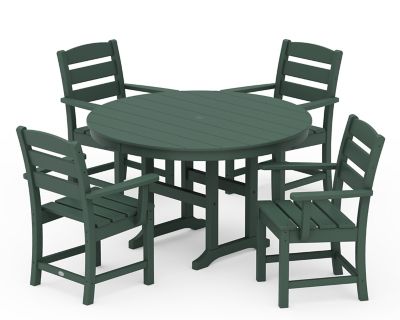
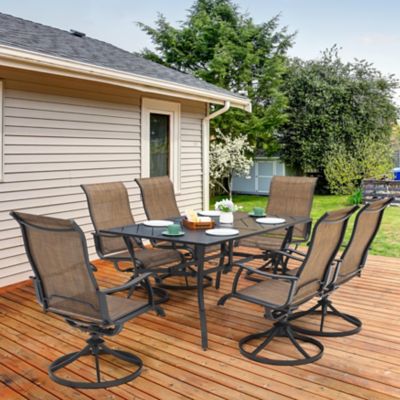
Materials give outdoor dining furniture its character and influence its weight, upkeep and resistance to exposure. Aluminum frames are generally lighter than comparable steel frames and resist rust, making them practical for layouts that get rearranged often. Steel adds heft and strength, though its protective finish needs attention wherever scratches or chips expose the metal beneath. Powder-coated finishes provide a protective layer, but they do not make every frame immune to corrosion. Wood brings visible grain and a familiar look that sits comfortably beside a farmhouse porch or garden path. Teak, acacia and eucalyptus are common outdoor furniture woods, and their appearance can change with exposure. Cleaning, oiling or sealing requirements depend on the wood and finish, so care directions matter more than a blanket rule that all wood needs the same treatment. High-density polyethylene, often called HDPE, is a plastic material made into boards that can resemble painted lumber. It does not need the same refinishing routine as wood, although washing and hardware checks are still part of ownership. Its weight varies with the construction, which matters when moving a large table or storing chairs. Resin wicker brings a woven texture to dining chairs and is often supported by a metal frame. It differs from natural wicker or rattan, and outdoor suitability depends on both the weave and the frame underneath. Sling seats typically use a tensioned mesh fabric that supports the sitter without a separate cushion and allows water to drain through. Tabletops have their own trade-offs: slats allow drainage but leave gaps beneath small objects, while solid surfaces offer an uninterrupted place for dishes. Glass deserves care around hard knocks, and any tabletop benefits from protection against hot cookware. Construction details such as reinforced joints, smooth edges, well-fitting fasteners and replaceable foot glides help explain how a set will handle everyday meals and movement.
Comfort is what turns an outdoor table from a place to set down a plate into a spot where folks linger. Standard dining-height tables are commonly about 28 to 30 inches tall, with chair seats often around 17 to 19 inches high; the relationship between the two matters more than either measurement alone. Thick cushions raise the sitting position, and chair arms need enough clearance beneath the tabletop or apron. Counter-height and bar-height dining sets create a taller gathering space, but higher seats may be less convenient for young children or anyone who has trouble climbing onto a chair. Supportive backs, a comfortable seat depth and room for elbows make a difference during a long meal. Swivel chairs can ease turning toward the conversation, although they need clearance from neighboring seats and railings. Cushions add softness but also bring care considerations, including whether covers can be removed and how the filling should be cleaned and dried. Everyday upkeep usually starts with clearing crumbs, wiping spills promptly and washing surfaces with a cleaner suited to the material. Abrasive tools can damage finishes, while trapped moisture can affect cushions, joints and exposed hardware. Furniture covers should fit properly and allow ventilation rather than holding dampness against the set. Folding or stacking designs can simplify storage, and adjustable feet can help with minor surface irregularities when the manufacturer permits adjustment. An umbrella opening adds another consideration: the opening must match the pole, and the umbrella needs an appropriate base rather than relying on the table alone for support. For gathering spaces inside the house,
Dining Table Sets serve the same everyday purpose around breakfast, supper and family conversation. Outdoors, the right arrangement depends on the way the household gathers, whether that means two mugs on a small porch table or a full spread beside the grill. A set can also make a thoughtful housewarming gift when the recipient’s space, seating needs and care preferences are known. Matching those practical details helps the furniture settle into daily life instead of becoming something everyone has to work around.