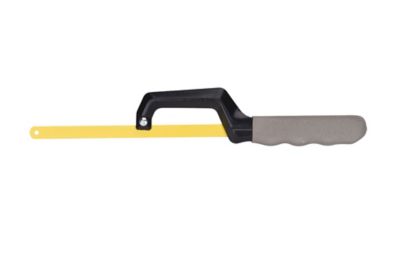
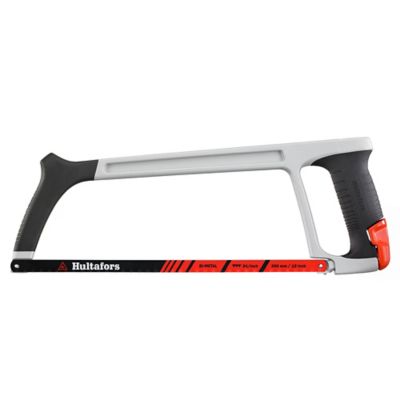
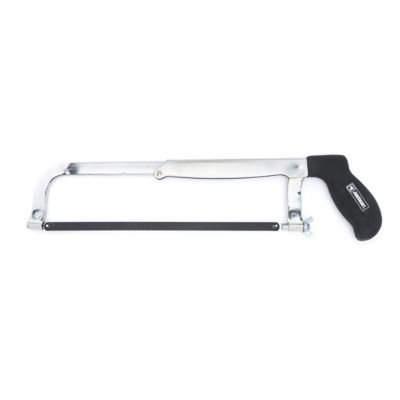
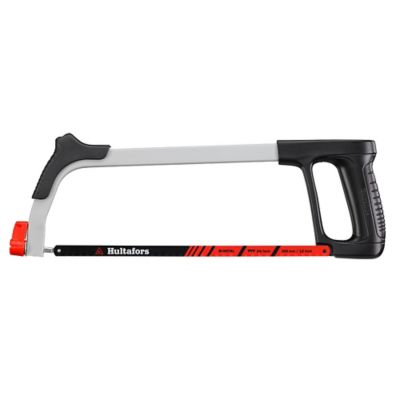
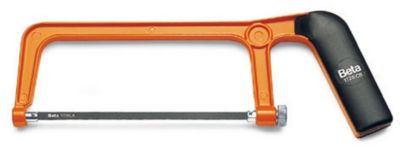
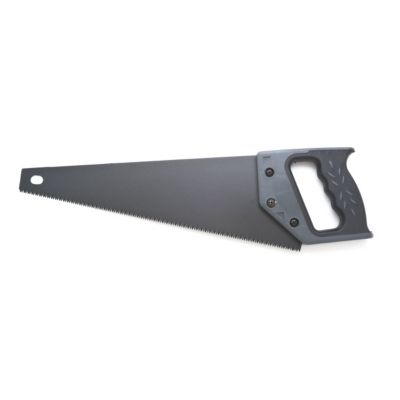
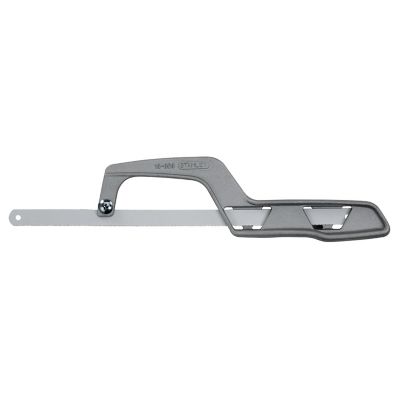
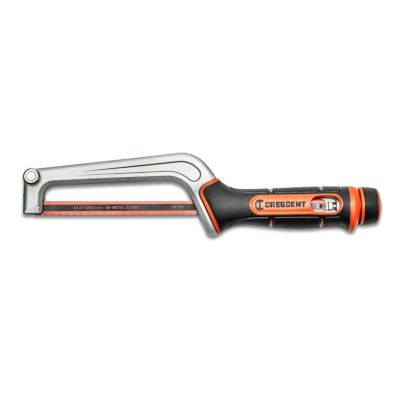
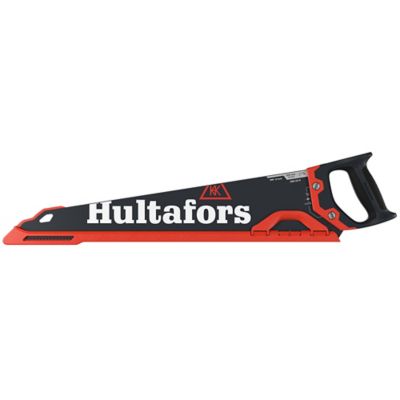
Metal-cutting hacksaws earn their place on a workbench by handling the small cuts that keep a bigger job moving. Shortening a threaded rod, trimming a piece of angle iron or cutting copper tubing for a repair calls for a tool that offers steady control without a battery or power cord. A hand-operated saw makes sense in a farm shop, garage, equipment shed or maintenance area, especially when the work is too small to justify setting up a powered saw. The narrow blade works through metal with a back-and-forth stroke, while the frame holds it under tension. That straightforward design leaves plenty of room for differences in reach, grip and cutting capacity. A full-size frame gives the blade support for regular bench work, while a compact frame can be easier to position around a pipe or bracket with little room nearby. Blade length matters, but so does the depth between the blade and the top of the frame. That space determines how far the saw can reach across a wide piece before the frame gets in the way. For someone who handles both small hardware repairs and larger fabrication tasks, clearance can matter just as much as overall tool size. Metal-cutting hacksaws suit a range of materials, including mild steel, aluminum, brass and copper, with blade selection making a big difference in performance. They also offer a useful level of control near a marked line, where taking off too much material means extra work or a replacement part. A saw-cut edge may still need a file or deburring tool before a part fits neatly or feels smooth to the touch. For mechanics, maintenance workers, fence builders and folks keeping their own equipment running, the appeal is practical: a straightforward hand tool that can tackle plenty of everyday metalwork. Its usefulness comes from matching the frame and blade to the material, the available working space and the kind of cut the job requires.
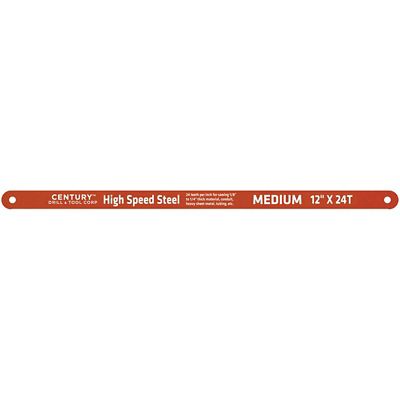
Blade construction and tooth spacing deserve a close look because two blades that fit the same frame can behave quite differently in metal. Teeth per inch, often shortened to TPI, describes how closely the teeth sit along the cutting edge. Coarser tooth patterns leave more room for chips when cutting thicker sections, while finer patterns help keep several teeth engaged in thin tubing, sheet metal and other light sections. A blade that catches on the wall of a thin tube can make the work rougher than it needs to be, while an overly fine blade can make thick stock slow going. The metal itself matters, too. Softer aluminum, ordinary steel and harder alloys do not all place the same demands on a cutting edge. High-carbon steel, high-speed steel and bi-metal construction offer different balances of hardness, flexibility and resistance to wear. Bi-metal blades pair a flexible backing with a harder tooth edge, a combination suited to jobs where cutting performance and some resistance to bending are both important. Very hard or heat-treated stock calls for a blade specifically suited to that material rather than an assumption that any metal-cutting blade will do. Frame compatibility is another consideration, including the required blade length, mounting-hole arrangement and tensioning system. A blade should sit securely without twisting in its mounts, and the frame needs enough stiffness to maintain the intended tension through the stroke. Some frame designs allow the blade to turn to an alternate cutting angle, which can help when a long cut would otherwise bring the frame against the workpiece. Others emphasize a smaller profile for awkward spaces. Those differences are worth weighing against the jobs a saw will handle most often. Someone trimming bolts at a vise has different needs from someone reaching behind a fixed assembly, even though both are cutting metal. Adjustable features are most helpful when they lock firmly and remain easy to operate with ordinary shop gloves.
Comfort and upkeep also affect how well a metal-cutting hacksaw fits into everyday work. A handle with enough room for the fingers, a shape that keeps the wrist comfortable and a grip surface that stays manageable through repeated strokes can make a noticeable difference on a longer cut. Space for a second hand near the front of the frame can help with control, provided the design supports that hold. A heavier frame may feel steady at the bench, while a lighter one may be easier to carry from the shop to an outbuilding. Neither choice replaces a secure setup: a vise or suitable clamp keeps the material from shifting and helps prevent the blade from binding. Eye protection matters around metal chips, and freshly cut edges need care even when the piece looks harmless. For tool storage, protecting the teeth from loose hardware and keeping the frame clean helps prevent needless damage. Metal filings can collect around blade mounts and tensioning parts, so those areas deserve attention during routine care. A dry storage spot helps limit rust, and any protective treatment should follow the tool maker’s recommendations. Bent blades, damaged teeth and mounting parts that no longer hold firmly are signs that something needs attention before another cut. Keeping the saw ready for work also means choosing blades for the actual material rather than treating every cutting job alike. Shops that handle plumbing repairs alongside metalwork may also have a place for
Hacksaw Blades for Plastic, since plastic pipe brings its own cutting considerations. For someone putting together a first serious toolbox or rounding out a well-equipped bench, a metal-cutting hacksaw fills a useful gap between a file and a powered cutting tool. The right combination of frame clearance, comfortable handling and suitable blade helps turn a length of metal into a part that fits the job, whether that means a shorter bolt, a trimmed bracket or a section of tubing ready for the next repair.