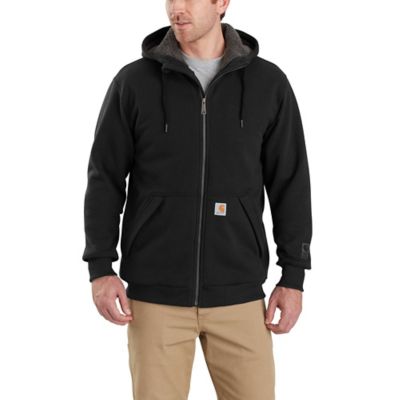
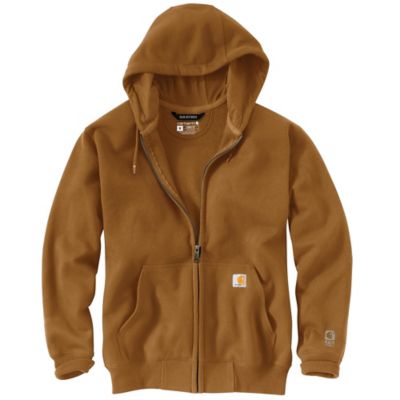
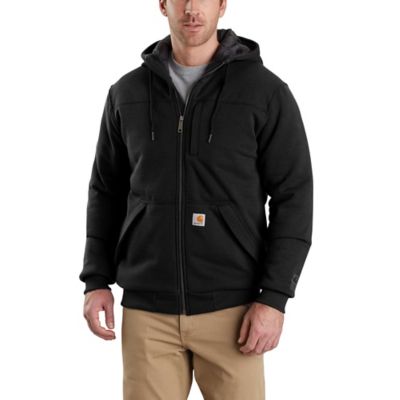
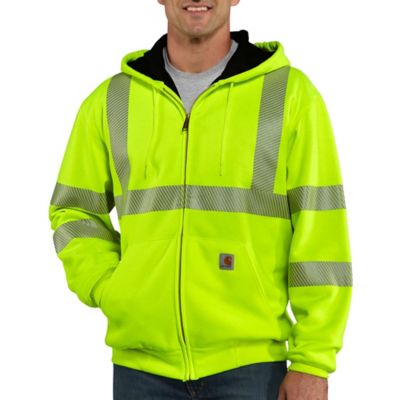
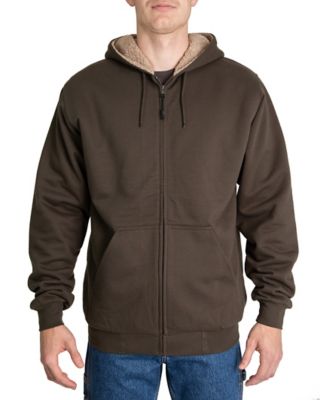
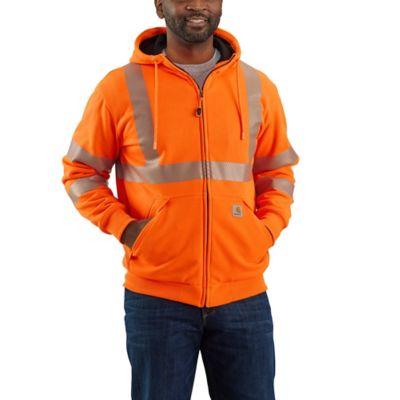
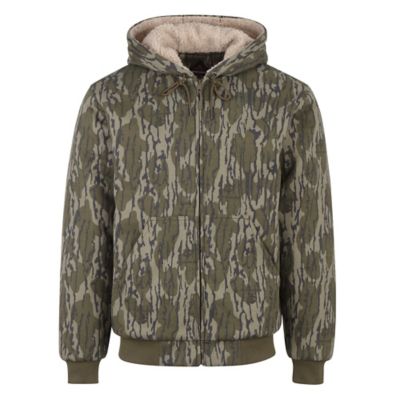
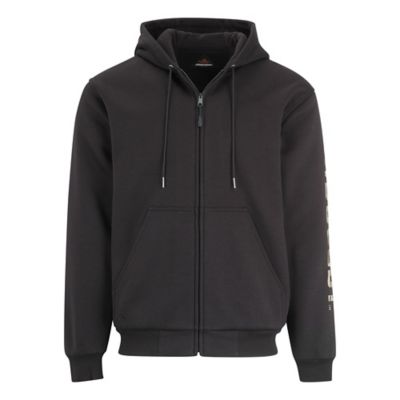
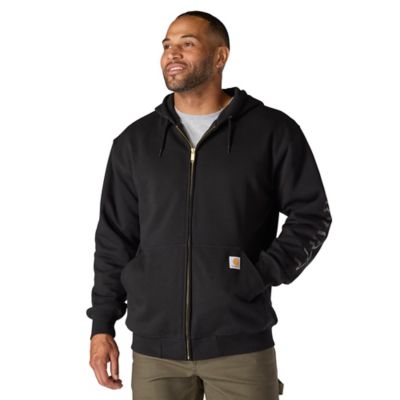
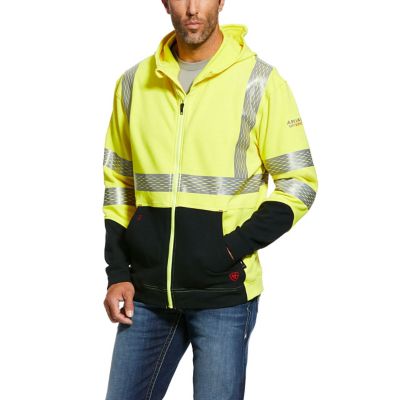
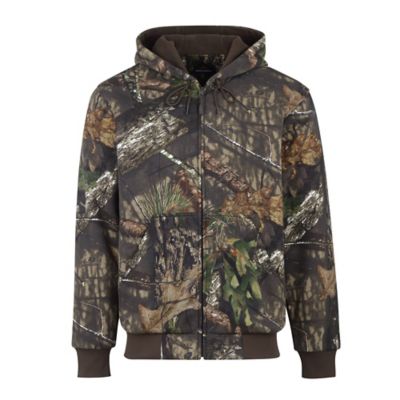
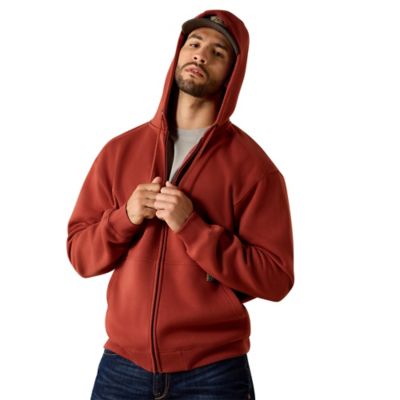
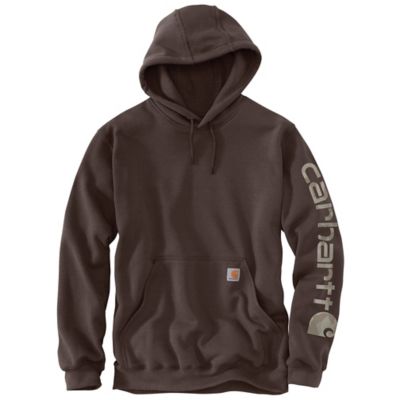
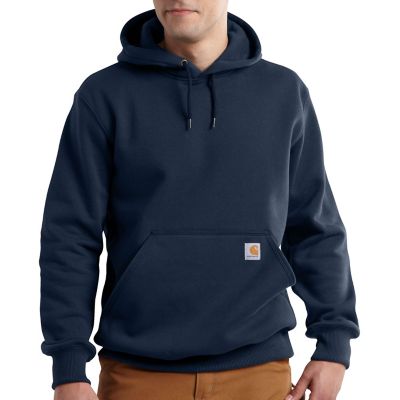
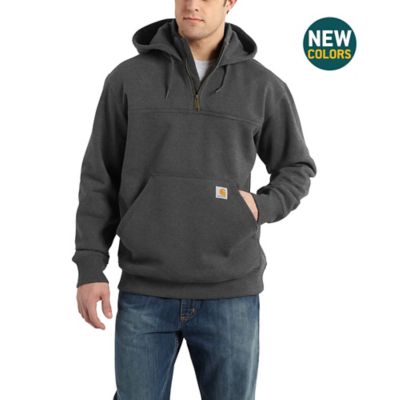
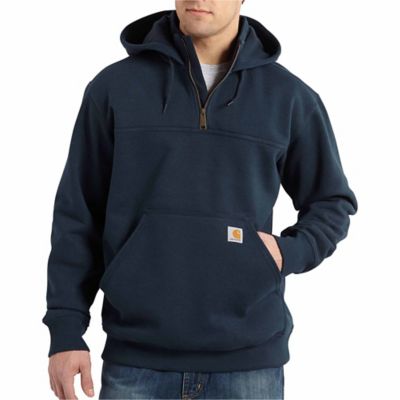
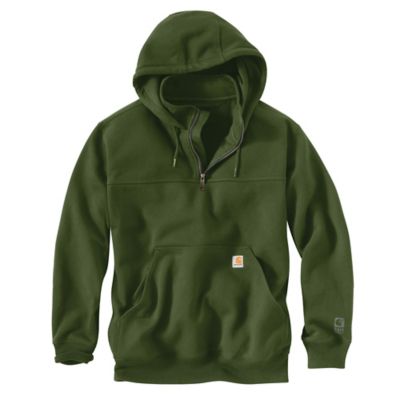
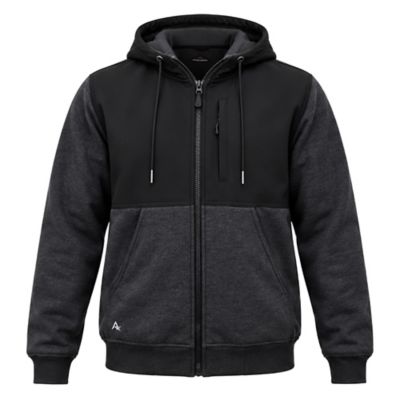
Men's zip up hooded sweatshirts combine the familiar feel of a sweatshirt with a full-length front zipper and an attached hood. That simple setup makes them easy to pull on over a T-shirt, wear open over a henley, or take off without tugging a shirt up underneath. They fit into everyday routines that run from feeding animals and walking the property to working at a bench or heading into town. Fabric makes a big difference in how a hoodie feels through those hours. Cotton-rich fabric generally has a soft, familiar hand, while cotton-polyester blends can help balance softness, shape retention, and drying time. All-polyester fabrics often have a smoother surface and may offer moisture-management features, depending on the construction.
Men's fleece zip up hoodies have a brushed or raised inner surface that adds softness and loft without necessarily making the outside look fuzzy. French terry, by comparison, has small loops on the inside and generally feels less plush against the skin. Fabric weight matters, too: a lightweight zip hoodie folds down easily in a gym bag or behind a truck seat, while a heavyweight sweatshirt has a more substantial feel and can hold its shape differently through the shoulders and body. Midweight fabrics fall between those options, making them a practical match for a range of daily tasks. Weight alone does not tell the whole story, since knit density, fiber blend, lining, and fit all affect the finished garment. A tightly knit sweatshirt may feel firmer than a loftier fleece of similar weight. Some designs have a separate lining, which adds thickness and changes how the sleeves slide over another shirt. The distinction between a sweatshirt and a jacket also matters: a hood and zipper do not automatically make a garment waterproof or suitable as protective workwear. For everyday wear, the appeal is straightforward comfort, easy layering, and a shape that works with jeans, work pants, or joggers.
Fit is where a men's full-zip hoodie starts to feel right for the person wearing it. A regular fit generally follows the body without sitting tight against it, while a relaxed cut leaves more room through the chest, waist, and sleeves. A closer athletic cut can feel less bulky for walking or casual exercise, but the label alone does not explain every measurement. Chest size, body length, and sleeve length give a better picture, especially when the sweatshirt needs to fit over a long-sleeve shirt. Reaching for a feed scoop, bending to latch a gate, and stretching across a workbench all put different demands on the shoulders and hem. Enough room across the upper back helps keep those movements from pulling the whole garment upward. Sleeves should allow the elbows to bend freely without leaving a pile of fabric at the wrists. Tall sizing can add length where simply moving up a size would also add unwanted width. Rib-knit cuffs and waistbands help control the shape, though the amount of stretch and firmness varies by construction. Pocket layout is another everyday consideration. Front pouch pockets give hands a resting place, but on a full-zip sweatshirt they are usually split by the zipper. A phone or set of keys can slide out of an open pocket when the wearer bends over; a pocket with a closure offers more containment. Hood depth affects how comfortably the hood sits, and drawcords allow adjustment when the design includes them. Around moving equipment, loose cords, hanging fabric, and an unsecured hood need particular care and should stay clear of moving parts. Construction details also deserve a look. Reinforced pocket corners, even stitching, and neatly finished seams can help the areas that get tugged and rubbed most often. A zipper that moves smoothly and lies flat is easier to manage than one that catches the surrounding fabric, particularly when opening and closing the sweatshirt several times throughout the day.
Care plays a part in how men's zip up hooded sweatshirts look and feel after repeated wear. The sewn-in care label is the best reference because fiber blends, printed graphics, linings, and fabric treatments can call for different washing methods. Closing the zipper before laundering can help keep the teeth from catching other garments, while turning the sweatshirt inside out reduces rubbing against the outer surface. Empty pockets matter more than they might seem; a forgotten tissue, loose hardware, or a pen can create extra cleanup for the whole load. Excessive dryer heat can contribute to shrinkage or affect elastic fibers, so the label's drying directions are worth following rather than treating every sweatshirt the same. Cotton-rich knits may change in size after laundering, and a preshrunk description does not mean a garment can never shrink. Brushed fleece can also develop small surface pills where fabric rubs against a seat belt, the edge of a table, or another layer. Gentle washing and avoiding unnecessary abrasion can help limit that wear. For daily outfits, solid colors are easy to pair with denim and canvas pants, while a graphic sweatshirt brings a more noticeable look to otherwise simple clothes. Dark shades tend to make some marks less noticeable, although dust, lint, and animal hair may stand out against them. Lighter shades have their own trade-offs, especially around grease or soil. A hoodie for chores may call for a different fit and finish than one mainly worn for travel, errands, or relaxing after a long day. That same distinction helps when choosing a gift for a dad, brother, son, or friend. Matching the recipient's usual sweatshirt measurements, preferred fabric feel, and pocket habits is more useful than guessing from appearance alone. Whether it spends most of its time on the farm, on the road, or around the house, a well-fitting zip up hooded sweatshirt earns its place through the small details that make it comfortable to reach for again.