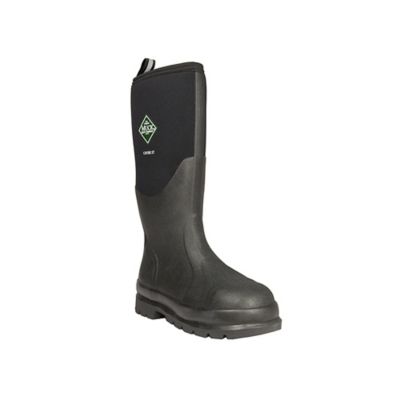
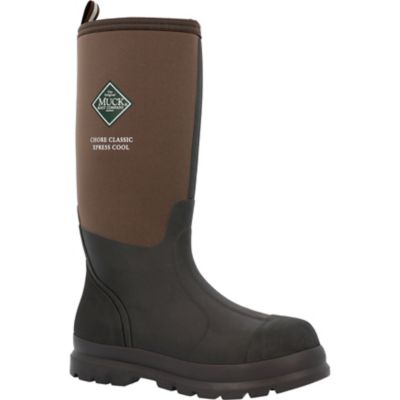
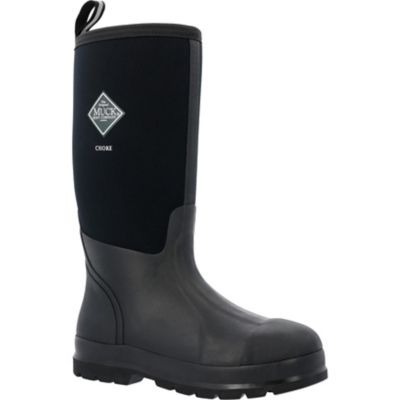
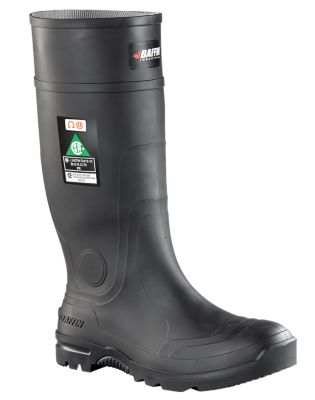
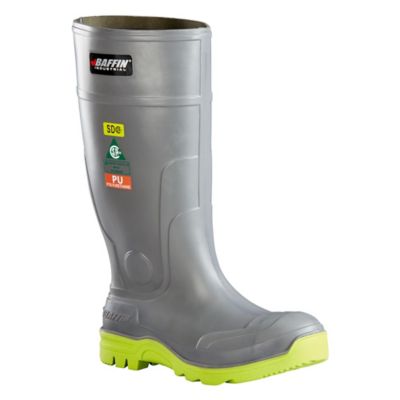
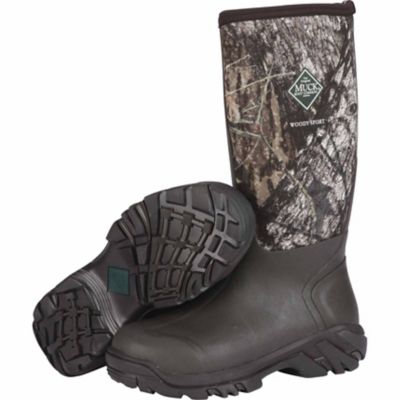
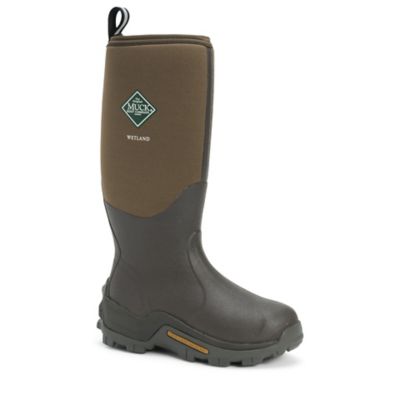
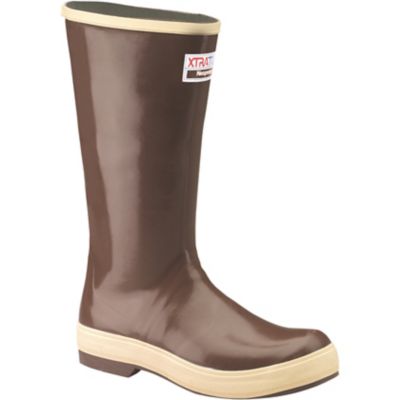
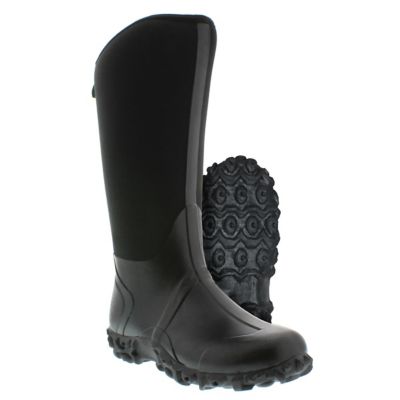
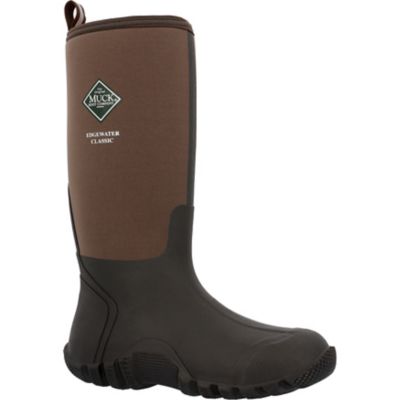
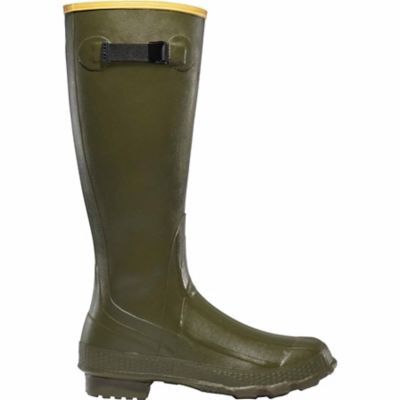
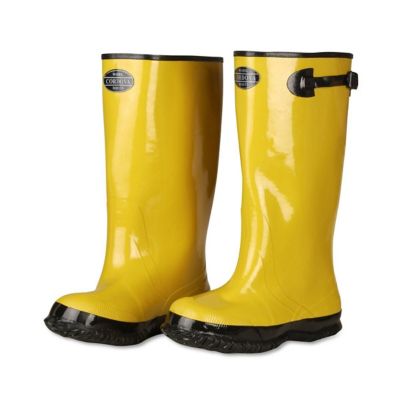
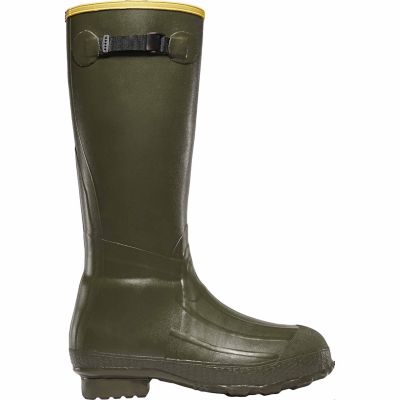
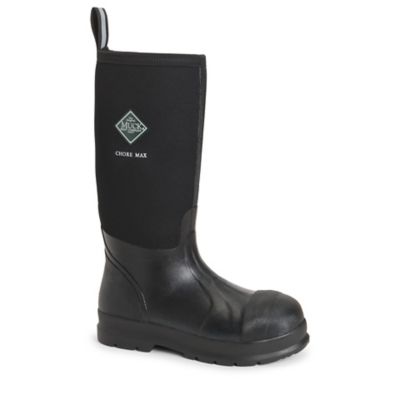
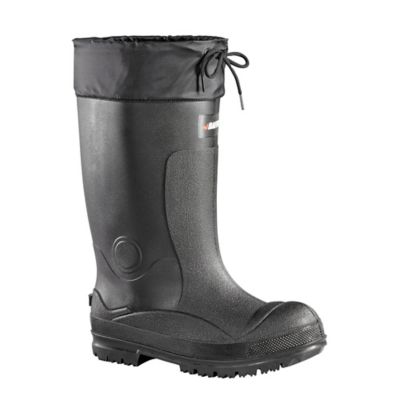
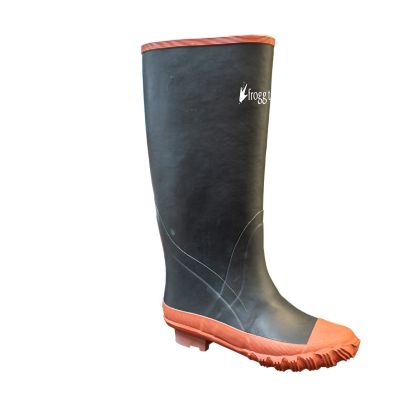
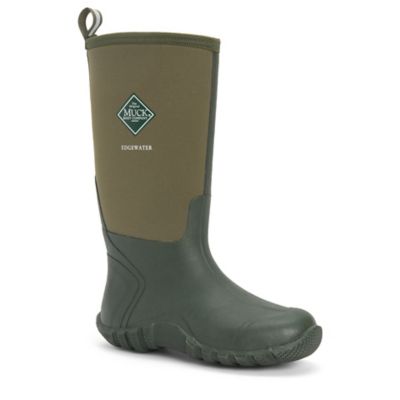
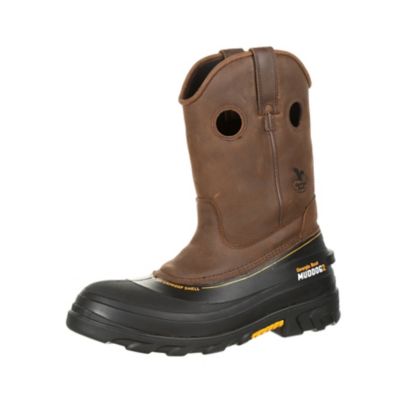
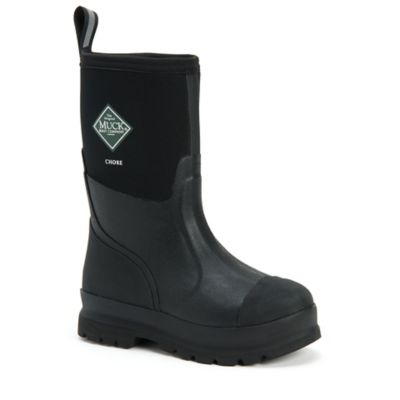
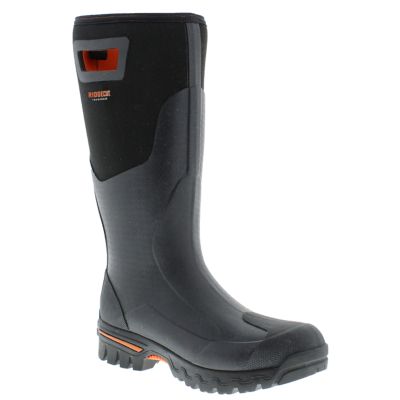
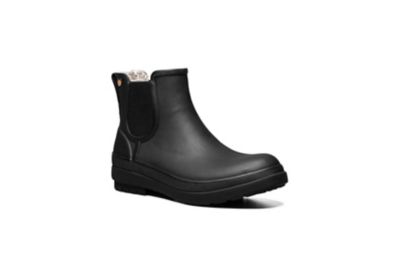
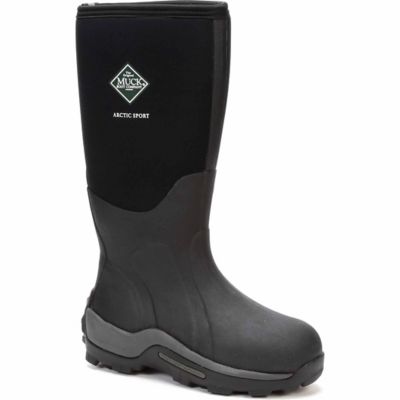
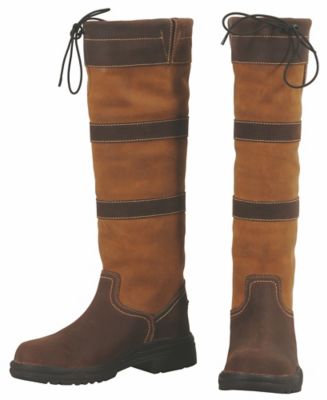
Men's tall rubber chore boots are pull-on work boots built to help keep feet dry through muddy ground, standing water, and everyday farm chores. Their taller shafts extend coverage up the calf, helping keep splashes and muck away from socks and pant legs while feeding livestock, rinsing equipment, or walking a wet pasture. That extra height comes in handy when a shallow puddle turns out to be a deep hoofprint beside the water trough. Coverage varies by shaft height and fit, though, and water can still enter over the top of any boot. Rubber forms a water-blocking outer shell, while the lining, footbed, and shaft construction affect how the boot feels through a full round of chores. Some constructions pair a rubber lower section with a flexible neoprene upper; others carry rubber farther up the leg. A flexible shaft can make kneeling beside a feed pan easier, while reinforcement around the heel and toe can help handle repeated contact with gates, steps, and rough ground. Tall rubber work boots suit livestock owners, groundskeepers, gardeners, and folks who spend plenty of time tending property. The outsole matters as much as the upper when the route runs from a barn aisle to a muddy lot. Deep, spaced lugs can bite into soft ground and give packed mud room to release, while a less aggressive tread may feel more comfortable on firm surfaces. A defined heel may also provide purchase on certain uneven surfaces, depending on the task. No tread pattern grips every surface equally, and wet concrete, algae-covered boards, and smooth flooring can remain slick. Slip-resistance claims belong to the individual boot rather than the category as a whole. For chores that involve both soft footing and hard barn floors, tread shape, sole flexibility, and underfoot cushioning all help determine whether a pair feels right beyond the first trip to the shed. Rubber chore boots fill a practical spot between lightweight rain footwear and work boots intended mainly for dry ground.
Fit makes a real difference in men's tall rubber chore boots, especially when the work involves more walking than standing. A pull-on boot needs enough room for the foot to pass through the ankle area without leaving so much space that the heel lifts excessively with every step. A little heel movement can be normal in this style, but repeated rubbing, toes striking the front, or feet sliding sideways can turn a short feeding round into a long morning. Toe room should accommodate the socks worn for chores without squeezing the forefoot, and the instep should feel secure rather than pinched. Shaft fit deserves the same attention as foot length. Calf circumference, the width of the opening, and any adjustment features affect comfort when pants are tucked inside. A shaft that presses behind the knee can become bothersome when bending, climbing steps, or sitting on equipment, so taller is not automatically better for every build. The right coverage leaves room to move while keeping the opening clear of the bend of the knee. Linings also change the feel of a boot. Uninsulated designs can suit active work when added warmth is unnecessary, while insulated constructions help limit heat loss during cold, wet chores. Insulation levels are not a promise of comfort at a particular temperature; activity, sock choice, circulation, and time spent standing all matter. Moisture-managing socks and a lining that can dry between wearings help address sweat, since waterproof protection from outside moisture does not prevent dampness inside. Removable footbeds can make drying easier and allow room for compatible replacement insoles, although any change underfoot can affect fit. For long stretches on concrete, cushioning and arch support may matter more than an especially tall shaft. Protective features are a separate consideration: safety toes, puncture resistance, and electrical-hazard protection depend on the boot's stated ratings. Rubber construction alone does not establish those protections, and work with livestock or heavy equipment calls for footwear suited to the hazards involved.
Regular care helps rubber chore boots stay ready for the next trip across the lot. Mud left caked around the sole can hide tread wear, and grit caught in folds can rub against the upper as the boot flexes. A rinse with fresh water and a soft brush generally handles ordinary dirt, followed by mild soap when the manufacturer's care directions allow it. Manure, fertilizers, oils, and cleaning solutions call for extra attention because rubber compounds do not all tolerate the same substances. A waterproof boot is not automatically a chemical-resistant boot, so handling agricultural chemicals requires footwear with the appropriate protection. After cleaning, boots need time to air-dry inside and out, away from direct heat and strong sunlight. Setting them beside a heater may seem handy, but excessive heat can damage materials or weaken bonded areas. Removable liners and insoles, when present, can be dried separately according to their care directions. Storage matters, too: keeping shafts upright without sharp folds helps avoid stressing the same crease repeatedly, and a shaded, ventilated spot is better than leaving boots in a hot vehicle. Before heading out, a quick look at the heel, sole edges, and flex points can reveal cracks, separation, or worn tread that deserves attention. Boots that have lost their grip or developed leaks may no longer suit deep mud or splash-heavy chores, even if the uppers still look fine from a distance. For someone receiving a pair as a practical gift, knowing their usual boot size, calf fit, and daily routine is more helpful than choosing by appearance alone. A person cleaning stalls has different needs from someone walking fence lines for hours. Households sharing feeding rounds and barn cleanup can also consider
Women's Waterproof Chore Boots for fit options suited to another member of the crew. The most useful pair matches the ground, the task, and the person doing the work, with enough comfort left for one more stop at the barn.