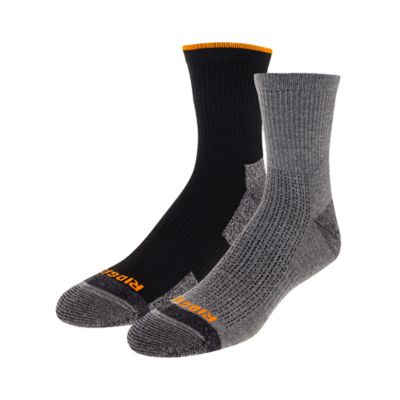
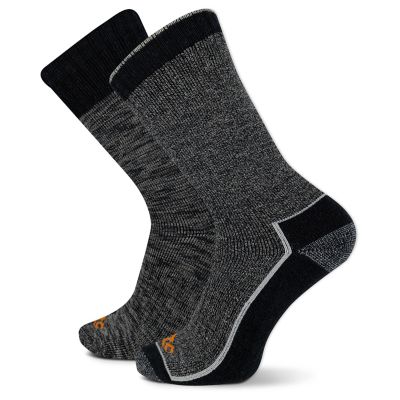
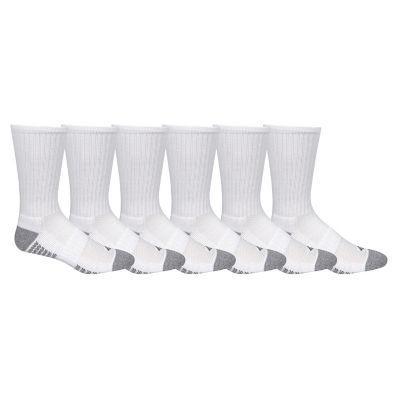
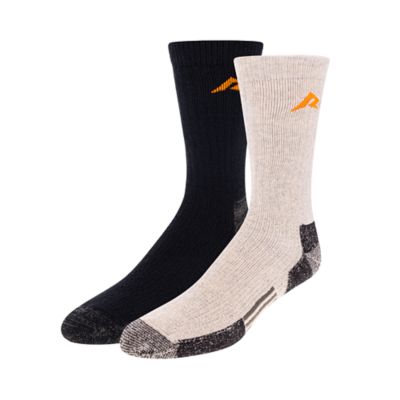
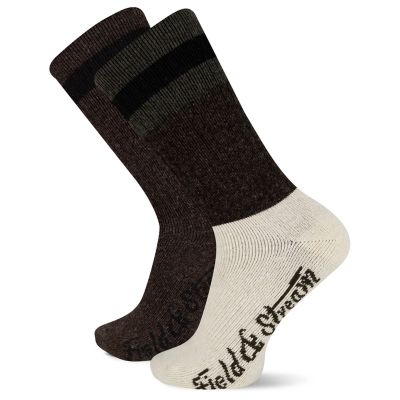
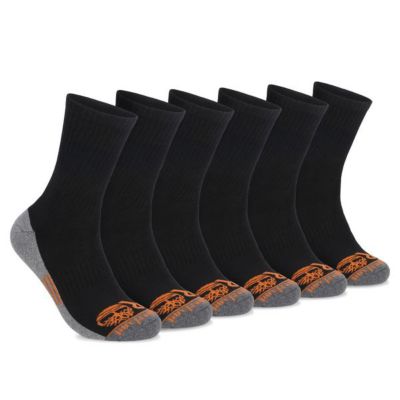
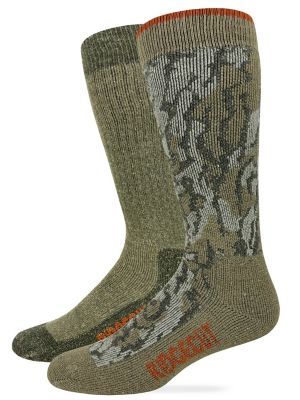
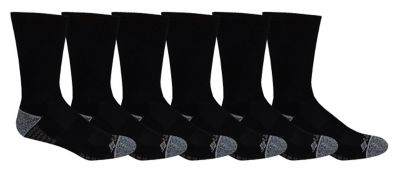
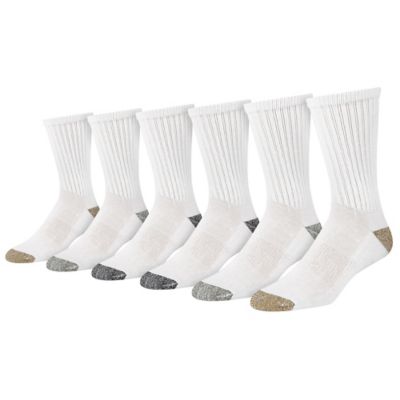
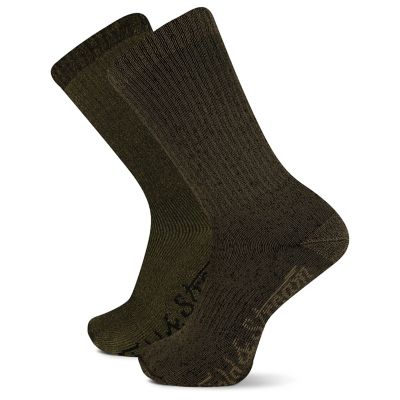
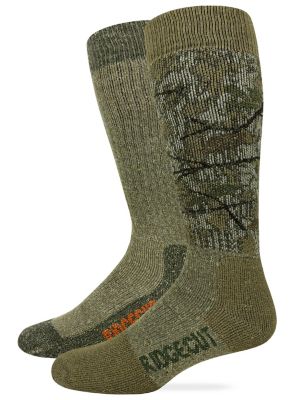
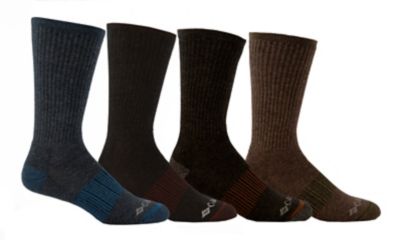
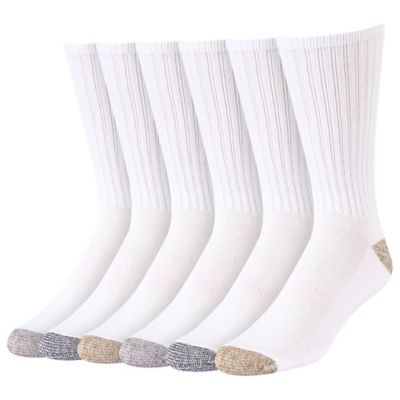
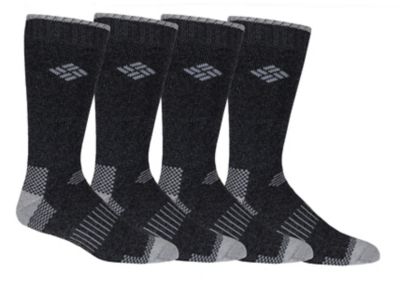
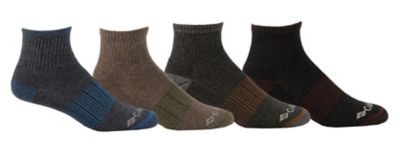
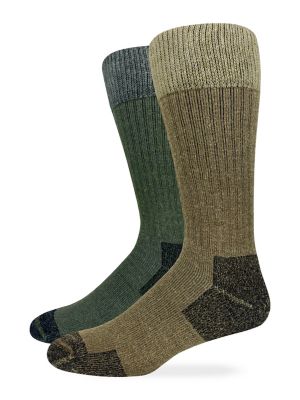
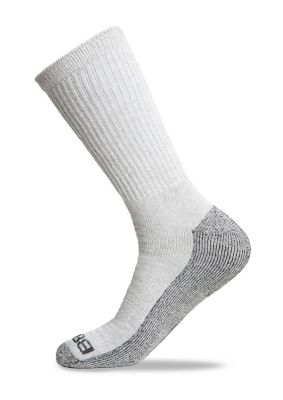
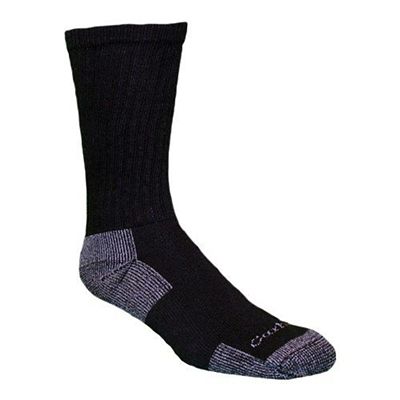
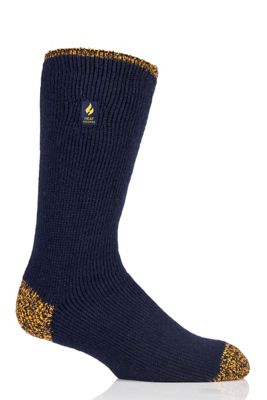
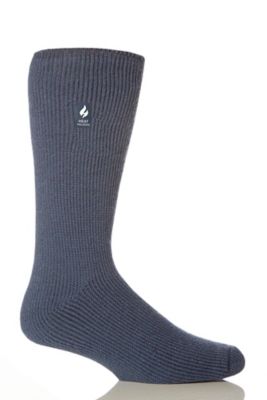
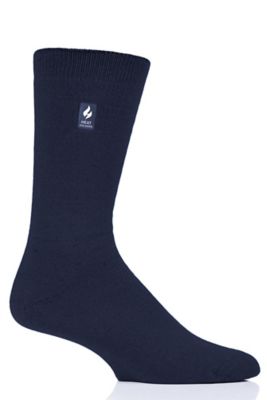
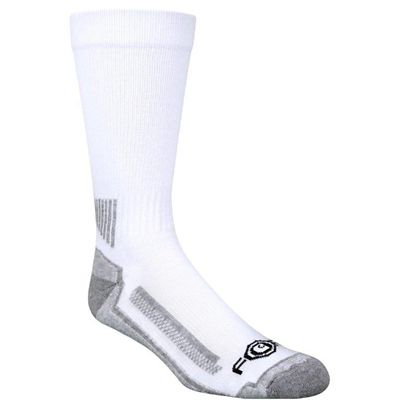
Men's socks with arch support feature a snug band of elastic knit around the midfoot, giving the arch a close, supported feel while helping the sock stay in place. That band may be part of a broader knit pattern with cushioning under the heel and ball of the foot, a more flexible instep, and mesh panels that let moisture escape. The result is a sock built to fit closely through the middle without needing thick padding everywhere. For men who spend hours feeding livestock, walking a warehouse floor, turning wrenches, or moving between a truck cab and a jobsite, less bunching inside a boot can make a welcome difference. Arch support in a sock is different from the shaped support of a boot footbed or an orthotic: the fabric hugs the foot, but it does not provide a rigid platform beneath the arch. These socks can be part of a comfortable footwear setup, though they are not a treatment for foot pain. Material blends play a big role in how that setup feels over a full day. Cotton adds softness and absorbs moisture, while polyester and nylon can help a sock dry faster and hold its shape. Merino wool blends manage moisture and can feel soft against the skin, with the feel depending on the fiber and knit construction. Small amounts of elastane or spandex give the arch band and cuff their stretch and recovery. Fiber percentages matter more than a single material name, since two socks with the same main fiber can feel quite different. A smooth, lightweight knit suits a close-fitting shoe, while a denser knit can add cushioning inside a roomier work boot. Breathable panels across the top of the foot can help manage perspiration without adding more fabric beneath the sole. The right balance comes down to the footwear, the amount of walking or standing involved, and whether a man prefers a barely-there layer or a more substantial feel underfoot.
Fit is where men's arch support socks earn their keep. The heel pocket should sit around the heel rather than creeping under the foot or riding up toward the ankle, and the arch band should line up with the middle of the foot. A band that lands too far forward can feel crowded near the ball of the foot, while one that sits too far back may not provide the intended fit. Shoe size is a starting point, but foot width, instep height, and calf size also affect comfort. Snug should not mean pinching, tingling, numbness, or deep pressure marks. Extra fabric at the toes can fold during a long walk across the property, and a sock stretched beyond its intended size can pull against the toes or heel. A smooth toe seam and enough room for natural toe movement are worth attention, especially inside footwear with a firm toe box. Sock height matters, too. Crew and taller lengths place fabric between the skin and a boot shaft, while lower cuts make more sense with shoes that sit below the ankle. The cuff needs enough stretch to stay put without digging into the leg. Cushioning is a separate consideration from arch support: a close-fitting midfoot band can appear in both thin and heavily padded socks. Padding beneath the heel and forefoot can soften the feel of repeated steps, but extra thickness also takes up space inside footwear. Pairing these socks with
men's boots with arch support means considering the fit of the whole combination, including the footbed and any prescribed insert. A roomy boot may accommodate more cushioning, while a close-fitting boot may feel better with a thinner sock. More padding is not automatically more comfortable if it leaves the toes cramped. Likewise, an arch band is not the same as a graduated compression rating. Men shopping for medically directed compression should follow their clinician's advice rather than judging a sock by how firmly it hugs the foot.
Construction and care help determine how well arch support socks hold up to regular wear. Reinforcement at the heel and toe adds fabric where friction tends to be greatest, while closely knit stitching can help those areas stand up to repeated contact with boot linings. Stretch recovery matters just as much: a sock that returns to shape after washing is better positioned to keep its heel pocket, arch band, and cuff where they belong. Care labels provide the best direction because wool blends, synthetic blends, and different elastic fibers do not all call for the same treatment. Washing with similar fabrics, keeping hook-and-loop fasteners away from knit surfaces, and following the recommended drying method can help protect the fabric. Excessive dryer heat can weaken elastic fibers, and fabric softener may interfere with moisture management in some performance fabrics. Turning socks inside out before washing helps expose the surfaces that collect perspiration and skin oils. Letting each pair dry completely before putting it back into the rotation also keeps damp fabric out of boots. Over time, thinning heels, holes near the toes, stretched cuffs, or a loose arch band signal that a pair is no longer fitting as intended. Keeping several pairs in regular rotation makes it easier to start each day with clean, dry socks and keep up with laundry between chores and shifts. These practical details also make arch support socks a sensible gift for a dad who works on concrete, a brother who walks fence lines, or a friend whose day rarely includes much sitting. Shoe size, preferred sock height, usual footwear, and tolerance for cushioning are more helpful gift details than appearance alone. For everyday wear, chores, travel, and time on foot, the best match is a sock that stays smooth, fits comfortably, and works with the shoes or boots already doing the job. Persistent arch or heel pain calls for attention beyond a change of socks, especially when discomfort alters the way someone walks.