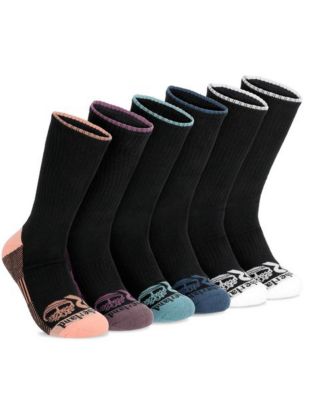
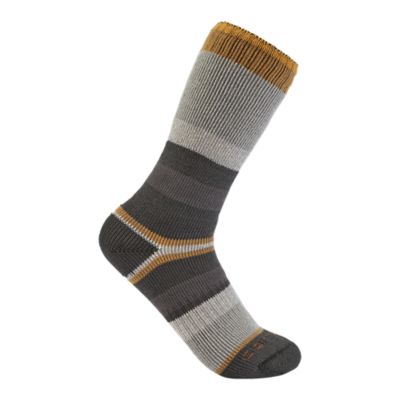
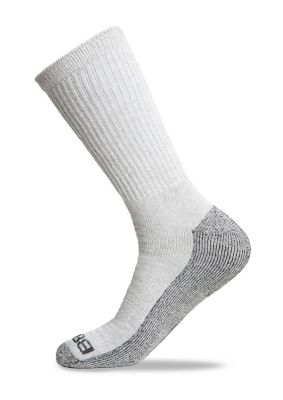
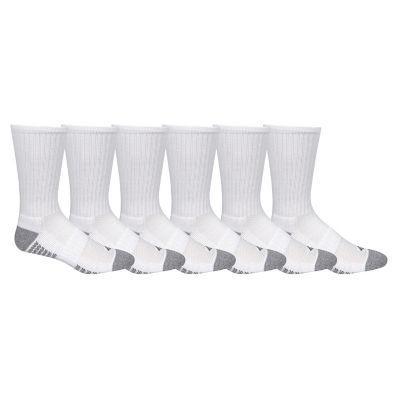
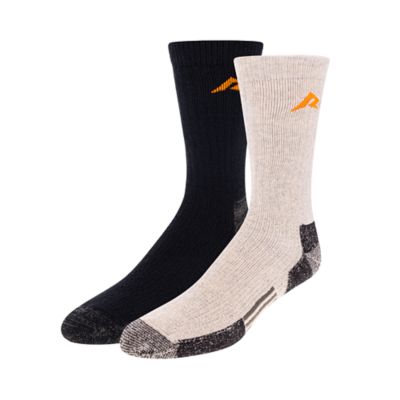
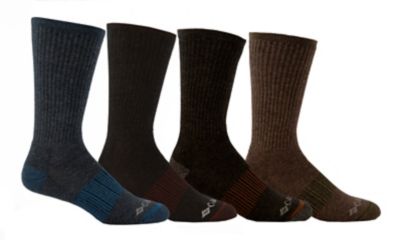
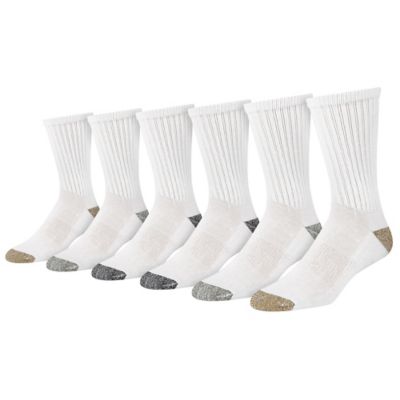
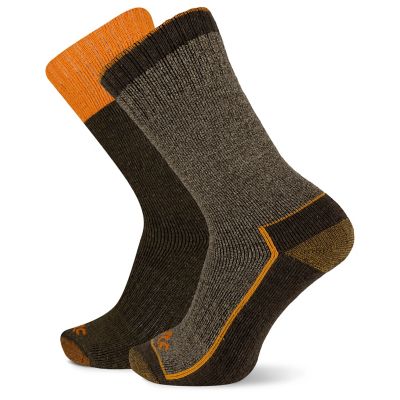
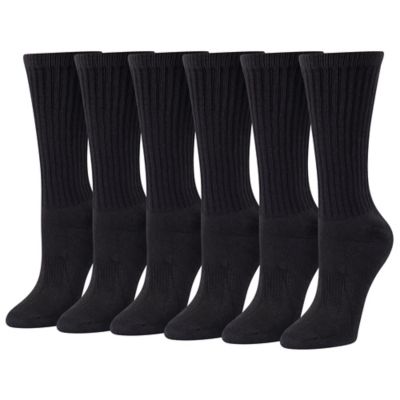
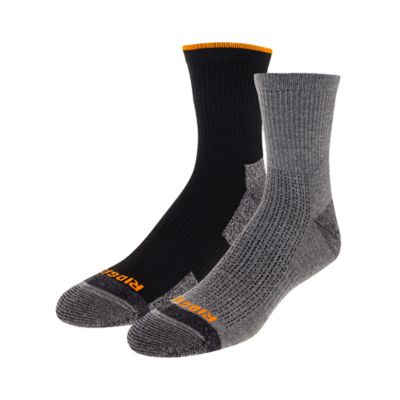
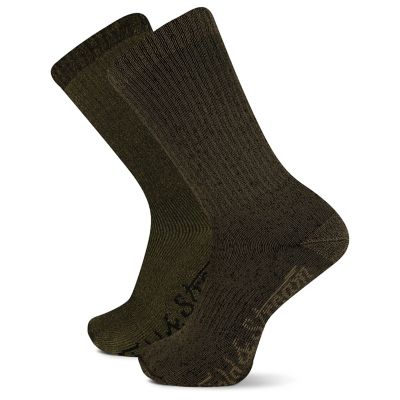
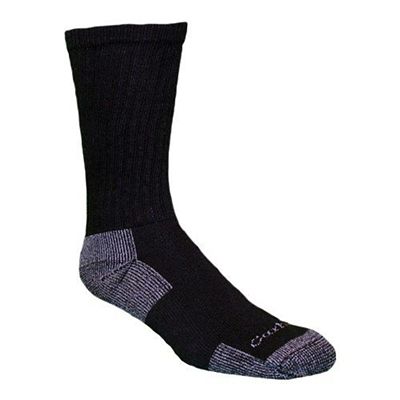
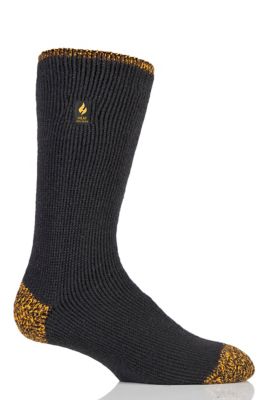
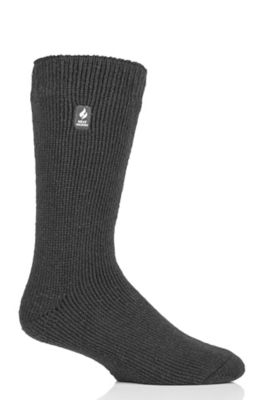
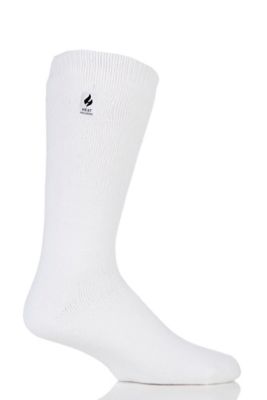
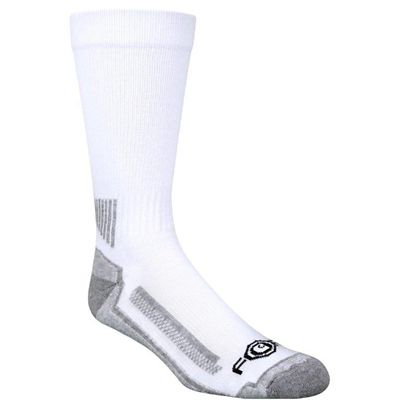
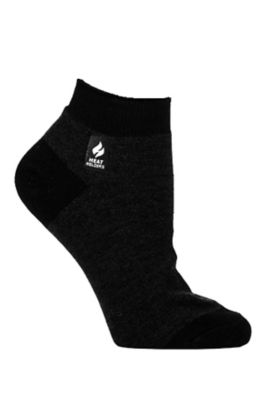
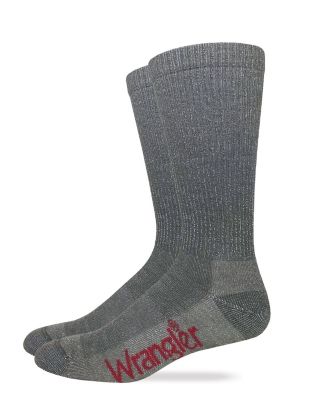
Crew socks with arch support pair coverage above the ankle and along the lower calf with a snug band around the middle of the foot. That band is usually knitted with stretchy fibers to help the sock hug the arch and stay in place inside a shoe or boot. Some designs also add cushioning underfoot, though cushioning and arch support serve different purposes: padding softens contact with the footbed, while the arch band provides a closer fit through the midfoot. These features can make a difference when a day includes carrying feed sacks, walking a fence line, or standing behind a counter. The best fit feels secure without squeezing, bunching, or leaving deep marks. Sock sizing matters just as much as shoe sizing, so check the listed shoe-size range rather than choosing by appearance alone. The heel pocket should sit around the heel, the toe area should leave room to spread the toes, and the arch band should land beneath the midfoot rather than near the ball of the foot. Too much length can gather under the sole, while a sock stretched beyond its intended size may pull tightly across the toes. Crew height also gives boots a layer of fabric between the collar and the leg, but coverage varies by design. Match the sock’s height to the footwear instead of assuming every crew will reach above every boot shaft. For everyday comfort, look at the whole fit: cuff, heel, arch, toe seam, and thickness. Arch-support socks offer a supportive feel, but they do not replace the structure of a well-fitting shoe, a prescribed insert, or care for ongoing foot pain. A firm band alone cannot correct a footwear problem, and stronger pressure is not automatically better. For long stretches on your feet, a smooth fit with no slipping or pinching is a better starting point than the tightest sock in the drawer.
Fiber blends help determine how crew socks with arch support feel from the first chore through the last stop in town. Cotton brings softness and absorbs moisture, but a cotton-heavy fabric may stay damp longer after a busy stretch. Polyester and nylon often appear in blends to help manage moisture, resist abrasion, or hold the sock’s shape. Wool can absorb moisture vapor and help limit odor buildup, while fine wool fibers can feel softer against the skin than a coarse knit. Stretch fibers such as spandex or elastane allow the arch band and cuff to flex and recover. The percentages matter, but so do the knit structure and placement of each material; two socks with similar fiber lists can fit quite differently. Mesh sections may allow more airflow across the top of the foot, while cushioning can be concentrated at the heel, forefoot, or along the full sole. A lightly cushioned sock leaves more room in a close-fitting work shoe. A thicker sole takes up more space, which can be helpful in some footwear but restrictive in a boot that already fits snugly. Try the thickness with the shoes or boots intended for the job, especially if an insole is already taking up room. For walking across gravel, climbing equipment steps, or spending hours on a concrete floor, pay attention to padding placement as well as the arch band. Smooth toe seams can also help limit rubbing where toes meet the front of a boot. For areas that take repeated friction,
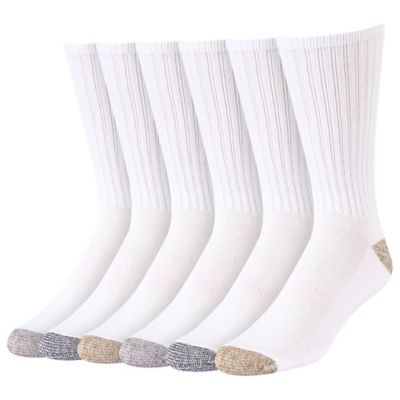
Reinforced Heel And Toe Socks are another option to consider alongside arch support. Extra yarn or a denser knit in those contact points can help resist wear without requiring heavy cushioning everywhere. Reinforcement, padding, and stretch each do a separate job, so choose the combination that suits the footwear and the amount of walking, standing, or climbing on the day’s list.
Care habits help socks keep their shape, stretch, and comfortable feel through repeated wear. Start with the care label, since a wool blend may call for different handling than a cotton or synthetic blend. Turning socks inside out before washing can help release sweat and skin buildup from the fabric that sits against the foot. Keep them away from exposed hook-and-loop fasteners, rough hardware, and open zippers that can snag the knit; a mesh laundry bag can help keep pairs together and limit contact with those surfaces. Follow the recommended wash and drying settings, and avoid excessive dryer heat that may shrink fibers or weaken elastic over time. Bleach and fabric softener are not suitable for every blend, so check before adding either. Let socks dry completely before putting them back in a boot, and change into a fresh pair after heavy perspiration rather than leaving damp fabric against the skin for the rest of the day. When folding, pair socks without stretching one cuff tightly around the other. A quick look at the heel, toe, and arch band can show when a pair is nearing the end of its working life. Thin spots, persistent slipping, stretched-out cuffs, or a band that no longer springs back are reasons to reassess the fit. Crew socks with arch support can suit farm chores, warehouse shifts, dog walks, shop work, and everyday errands, provided their thickness and coverage match the footwear. They can also make a practical gift for someone who spends plenty of time on their feet. Knowing the recipient’s shoe size, usual boot height, preferred cushioning, and any fiber sensitivities makes that choice more thoughtful. Whether dressing for a full shift or a few hours of chores, the goal stays simple: enough coverage, room for the toes, a steady fit through the arch, and fabric that holds up to the routine. Those details matter more than a sock that merely feels thick or tight when first pulled on.