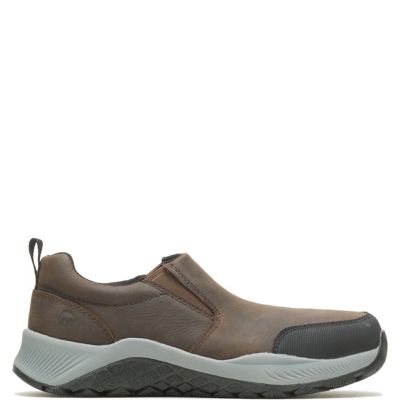
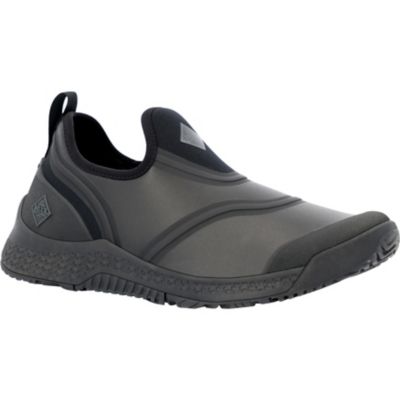
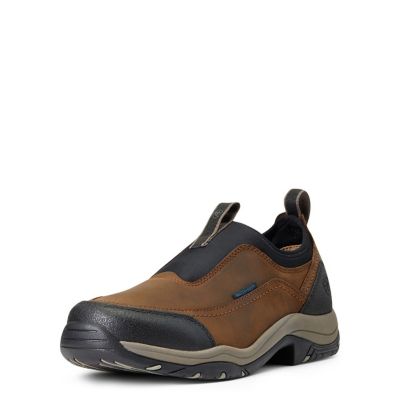
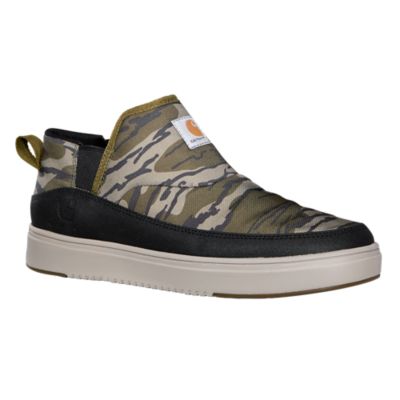
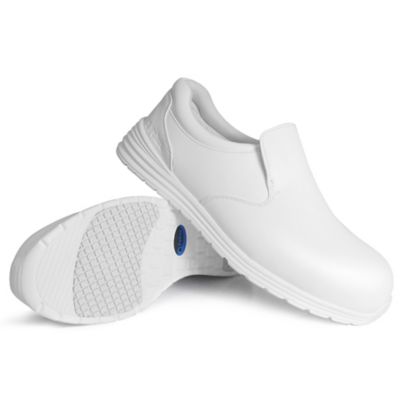
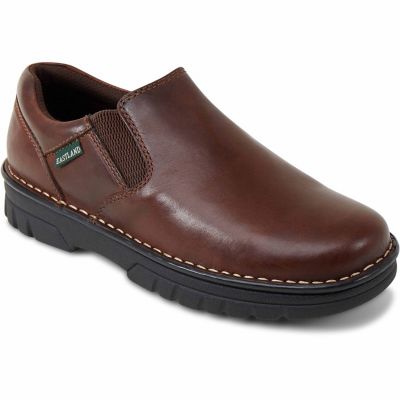
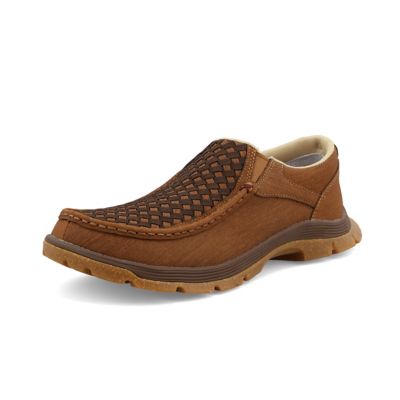
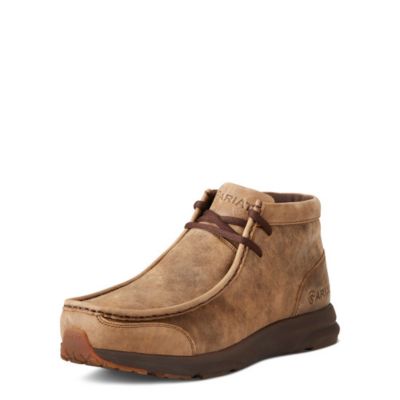
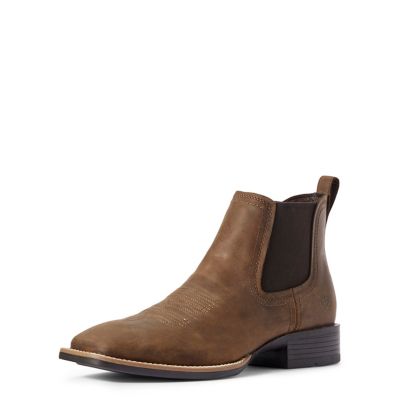
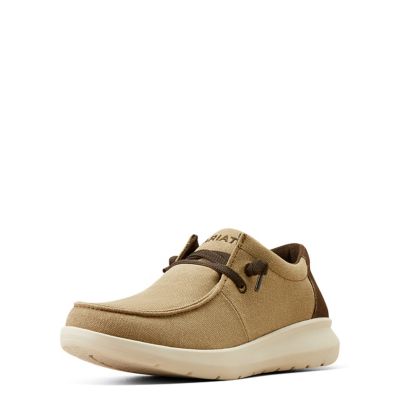
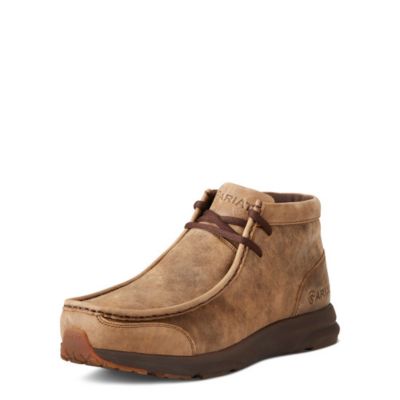
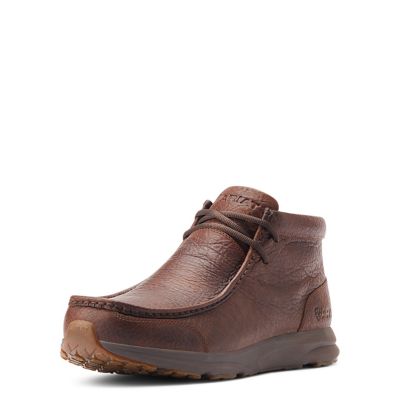
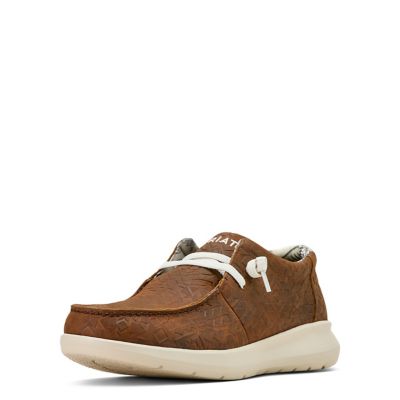
Men’s slip-on work shoes fit the kind of day that starts with chores and keeps moving through the shop, barn or jobsite. Their pull-on design cuts out laces without taking away the need for a secure fit, making them a practical choice for folks who step into their work footwear several times a day. Depending on the construction, stretch panels, padded collars or flexible openings help the foot slide in while keeping the shoe settled around the heel. That balance matters when carrying a sack of feed, pushing a loaded cart or bending down beside a workbench. A shoe that goes on easily should still stay put when walking, turning and kneeling. Leather uppers are common in work footwear because they offer structure and can develop a comfortable feel with wear, though different finishes call for different care. Synthetic materials may offer a lighter feel or surfaces that wipe clean easily, while fabric panels can add flexibility and airflow. Reinforced stitching and protective overlays can help in spots that rub against equipment or take repeated bending. The right combination depends on the work, not just the appearance. Fit deserves the same attention as the upper material. Toes need room to spread without bumping the front, the instep should feel supported rather than squeezed, and the heel should not lift noticeably with every step. For someone with a wider forefoot or higher instep, width and opening shape can matter as much as the number on the size label. Work socks also affect fit, particularly when they have cushioning under the heel and ball of the foot. A roomy shoe is not automatically a comfortable one, and a tight pair should not depend on stretching to become wearable. Removable footbeds can make room for suitable orthotic inserts, provided the shoe still holds the foot securely afterward. For anyone moving between standing tasks and walking routes, a fit that stays comfortable through both is more useful than one that feels good only while sitting down.
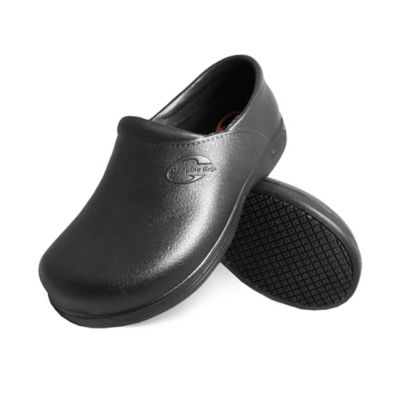
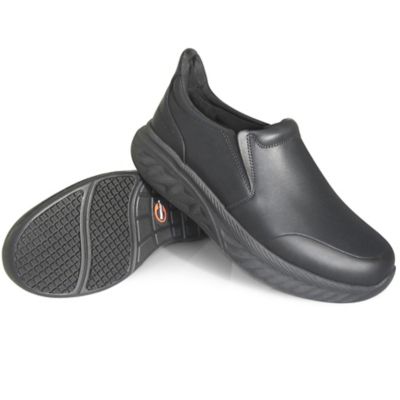
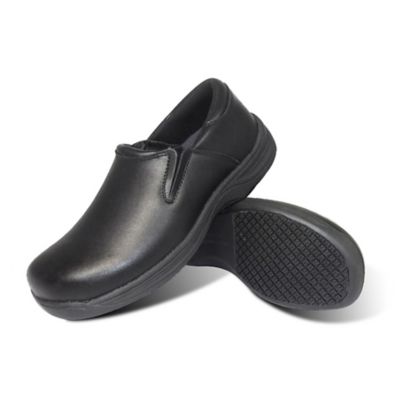
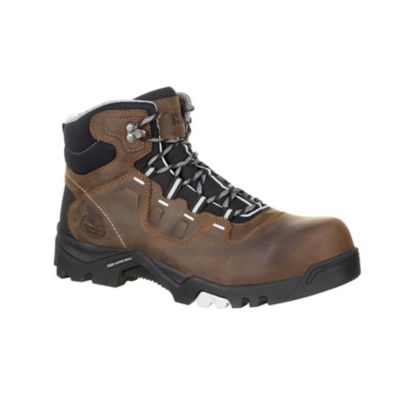
Work conditions shape what men’s slip-on work shoes need to handle. A mechanic crossing a concrete shop floor, a maintenance worker moving between buildings and a farmhand tending equipment may all want an easy pull-on shoe, but their footing and protection needs can be quite different. Outsole construction is worth considering wherever oil, water or fine debris can reach the floor. Slip-resistant footwear is designed to support traction, but no outsole prevents every slip, and performance depends on the surface, contaminants and condition of the tread. A pattern that sheds loose debris may behave differently from one intended for smooth indoor floors. Grip also depends on keeping the bottom of the shoe clear enough for the tread to contact the walking surface. Toe protection is another distinction that should match the task. Safety-toe construction can help address certain impact and compression hazards when it meets the applicable standard, while soft-toe footwear does not provide that same protection. Steel and nonmetallic safety toes differ in construction, so fit and the stated protection rating matter more than assumptions about the material alone. Puncture resistance and electrical hazard protection are separate features; neither comes automatically with a protective toe. Workplace requirements and the shoe’s listed specifications determine whether a style fits the job. Some tasks call for boots or other specialized footwear rather than a lower-cut work shoe. Underfoot comfort matters just as much during ordinary work. Cushioning can ease the feel of hard floors, while a supportive midsole helps keep the foot from feeling unsupported during long stretches on concrete. A flexible forefoot allows a natural bend when walking or crouching, but excessive softness can feel unsteady under a load. Shoe weight can also make a difference over repeated trips from a parts shelf to a service bay. The most useful construction balances cushioning, support and freedom of movement without letting the foot slide around inside. A pair that rubs the heel, pinches the toes or creates pressure across the instep is not made suitable simply by calling it a work shoe.
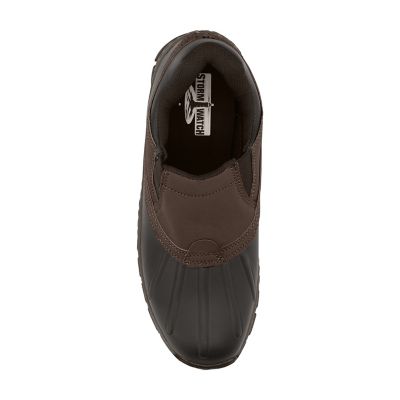
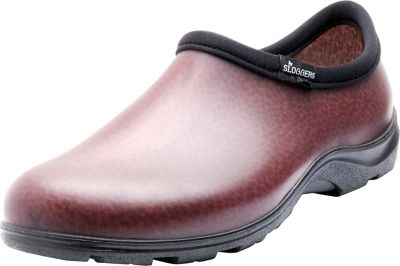
Everyday care helps slip-on work shoes hold up through repeated wear, especially when they spend time around dust, grease, wood shavings or barn debris. Cleaning methods depend on the upper: smooth leather, brushed leather and fabric do not all respond well to the same treatment. Manufacturer care directions help avoid damage from harsh cleaners, excessive moisture or conditioning products that do not suit the material. Loose dirt generally comes off more easily before it works into seams and creases, and the outsole needs attention too. Packed tread can reduce contact with the floor, while embedded stones may affect how the shoe feels underfoot. Footwear that gets wet during a task benefits from drying away from direct heat, which can harm some uppers, adhesives and other components. Removable insoles can be taken out for drying when the care instructions allow it. Rotating between pairs gives each one more time to air out, especially after a long shift. As shoes wear, flattened cushioning, worn tread, separating soles and stretched openings can change comfort and footing even when the uppers still look presentable. Appearance has its place as well. Brown leather often pairs naturally with work jeans and canvas pants, while
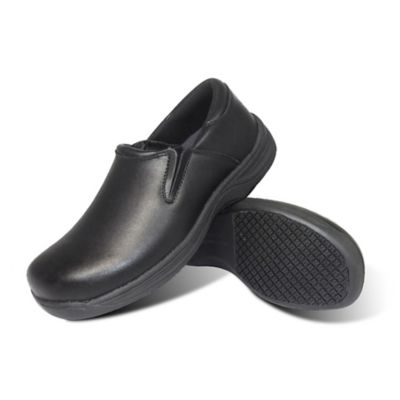
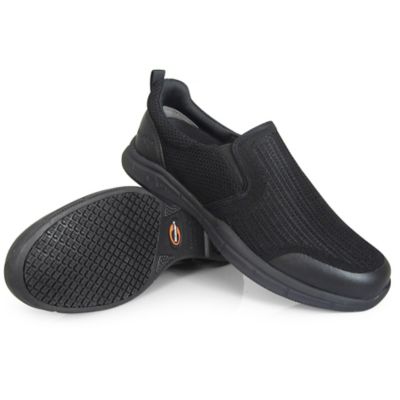
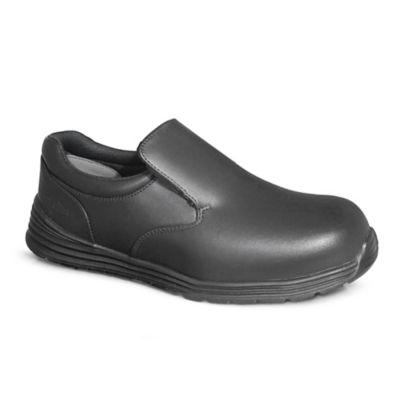
Black Slip On Work Shoes offer a straightforward option for darker workwear or a workplace that calls for black footwear. Color does not determine protection, traction or comfort, so those details still come down to construction and fit. For a birthday or the start of a new job, work shoes can be a thoughtful gift for a dad, brother, partner or friend who spends plenty of time on his feet. Knowing his size, preferred width and workplace requirements makes that choice more personal and practical. Whether the day means repairing a gate, stocking a workshop or making rounds through a facility, the right slip-on work shoes should suit the actual tasks and feel secure from the first step to the last.