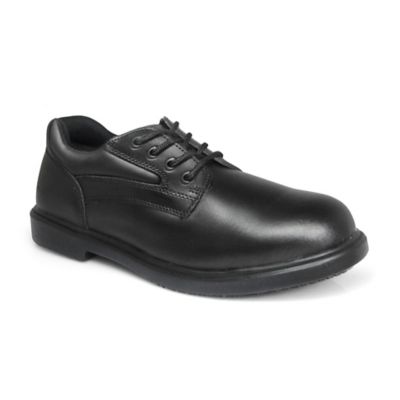
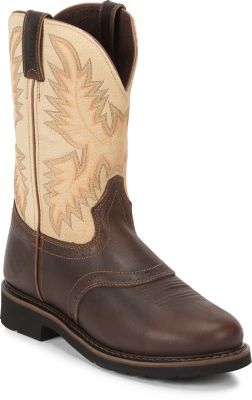
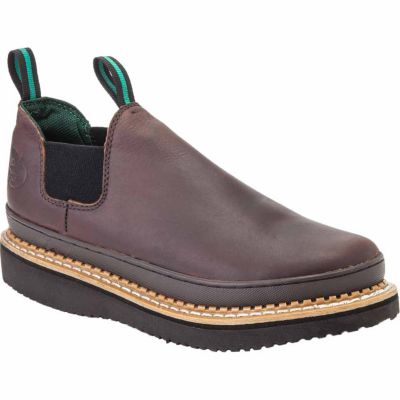
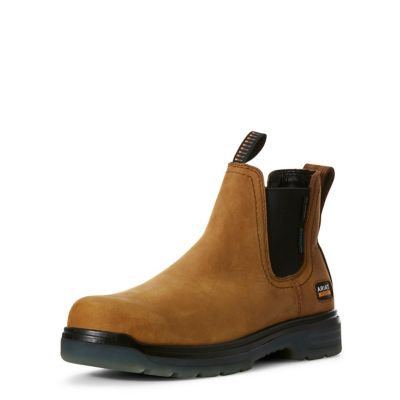
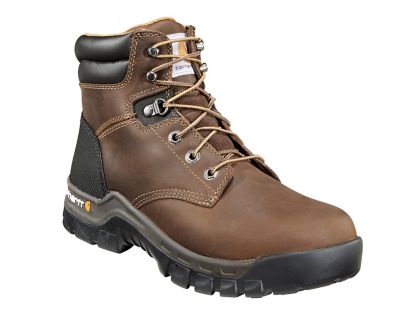
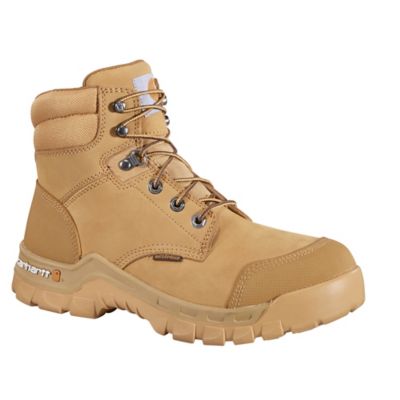
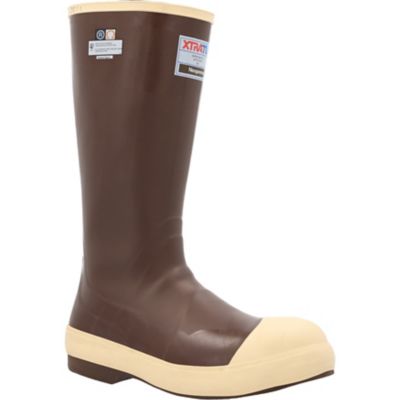
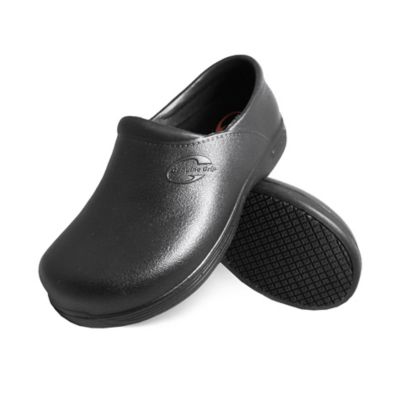
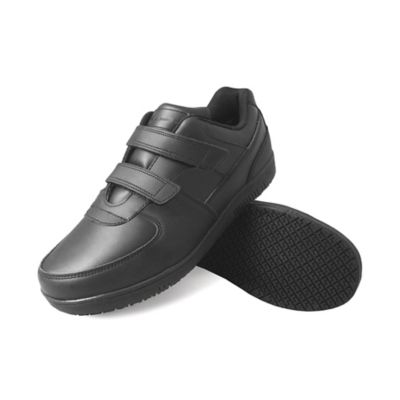
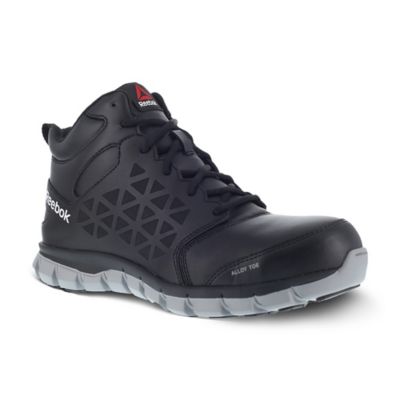
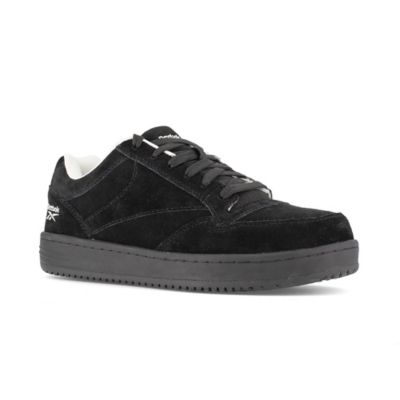
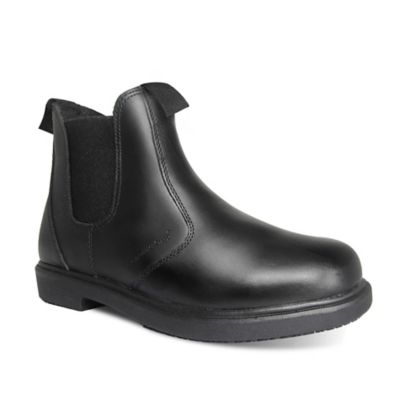
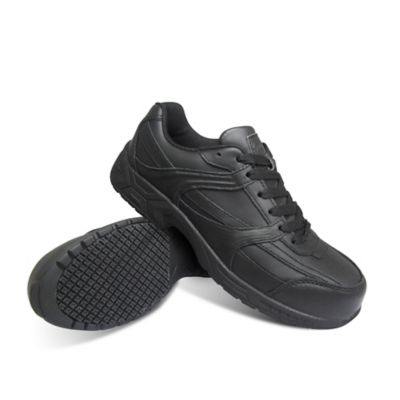
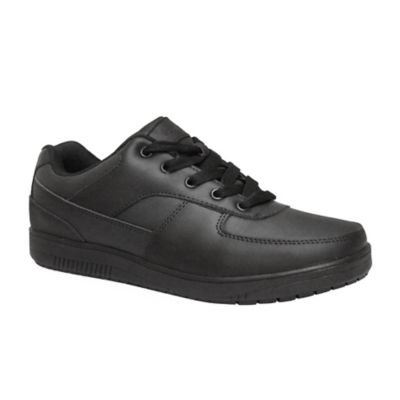
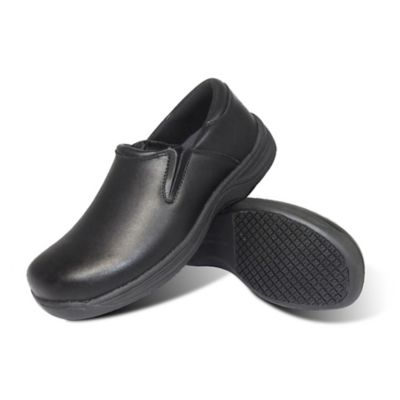
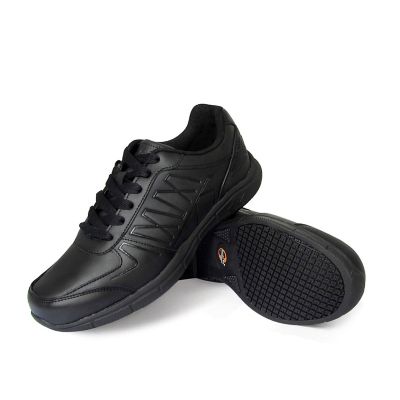
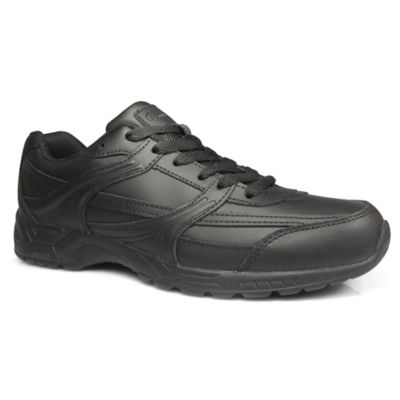
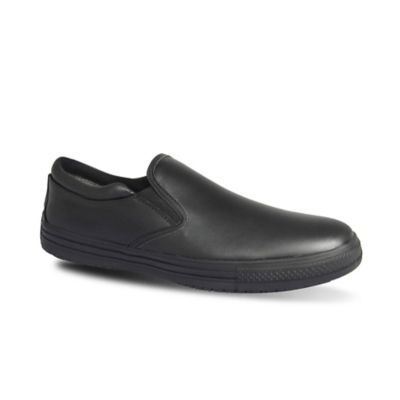
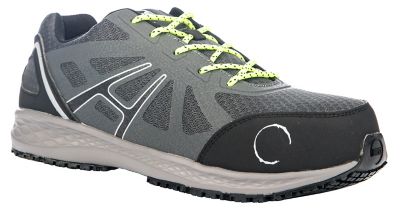
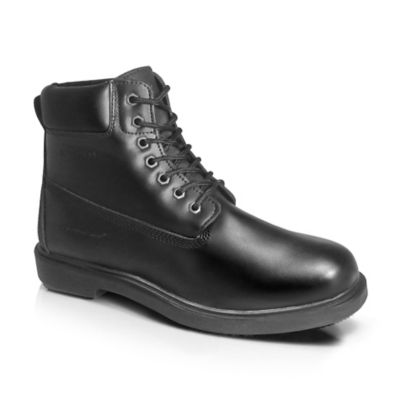
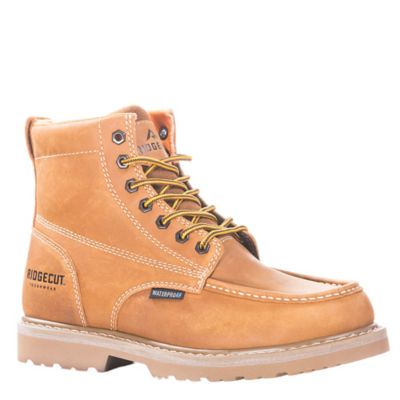
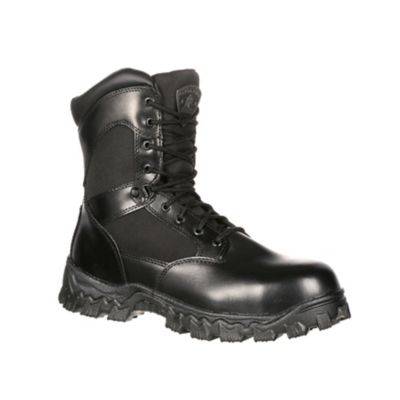
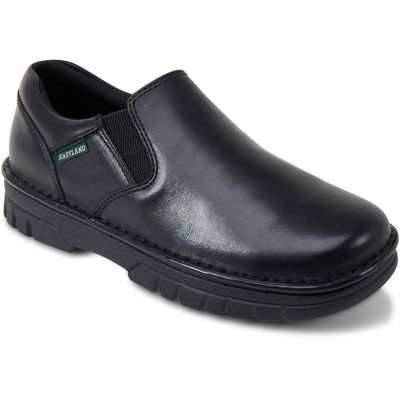
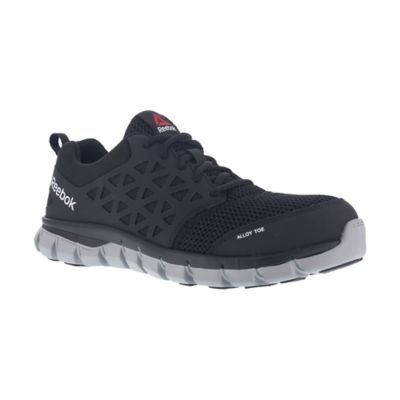
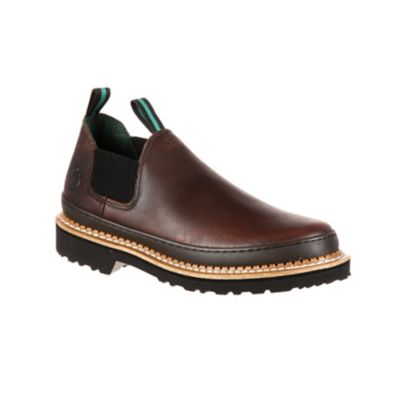
Men’s non slip work shoes earn their place on jobs where staying on your feet means more than making it through a long shift. From stocking a feed room and working a service counter to tending a busy kitchen or walking a warehouse floor, the right footwear brings together traction, support, and a fit that feels good well past lunchtime. Picture a typical workday: a little rain tracked through the doorway, a stretch of smooth concrete, and several hours of walking, lifting, and standing before the last task is done. Those changing conditions make the outsole worth a close look. Slip-resistant work shoes are designed to help improve grip, but no shoe can prevent every slip on every surface. Rubber compounds, tread patterns, floor conditions, and the way a person moves all affect traction. Look for manufacturer information about slip-resistance testing and match the footwear to your workplace’s requirements rather than judging grip by tread depth alone. Deep lugs that handle loose ground aren’t necessarily the best choice for a smooth indoor floor, while a shallower tread needs to stay clear of packed dirt to do its job. For folks who split their time between a shop and a sales floor, an easy-to-clean outsole can be especially practical. During the cooler months, wet leaves and water carried indoors add another reason to pay attention to footing. Slip resistance on a work floor does not automatically mean the same performance on ice or snow, so outdoor conditions may call for different footwear or added traction equipment. A good pair should suit the places you actually spend your day, whether that means dry aisles, damp utility areas, or frequent trips across a covered loading dock. Start with the work environment, then narrow the choices by fit, construction, and any safety features the job requires. That keeps the focus on what matters once the work gets going.
Comfort in men’s slip-resistant work shoes comes from several parts working together, not just a soft footbed. A cushioned insole can take some of the harshness out of a concrete floor, while a supportive midsole and steady heel fit help the shoe feel settled underfoot. Too much room can let the foot slide around; too little can leave toes cramped by the end of a shift. Feet often swell throughout the day, so trying shoes on later in the day with the socks you wear for work gives a more useful picture of the fit. There should be room to move your toes without the heel lifting excessively as you walk. Width matters just as much as length, especially for anyone who has spent a shift loosening laces to make room across the forefoot. If you wear orthotics, check whether the footbed comes out and whether there is enough depth for your insert without crowding the top of your foot. Lace-up designs allow adjustments across the instep, while slip-on styles offer a straightforward option for getting out the door, provided the heel stays secure. Neither style should need a painful break-in period to feel right. Shoe weight is another consideration: a lighter build may feel welcome during constant walking, but the shoe still needs the structure and protection your tasks demand. Breathable uppers can help release heat indoors, while leather or other wipe-clean materials may be easier to care for around dust and splashes. Water-resistant construction can handle some exposure, but it is not the same as waterproof construction; check the stated protection before choosing footwear for regularly wet work. For cooler days, leave enough space for suitable socks without making the fit loose. A shoe that feels fine for a quick walk across the room can feel very different after hours at a workstation, so pay attention to pressure points, arch placement, and flexibility before committing to a full workday.
Workplace protection deserves its own place in the decision alongside comfort and traction. Some men need a safety toe for handling materials or working around rolling equipment, while others can wear a soft toe because their duties do not call for impact or compression protection. Check the employer’s footwear rules and the product’s listed safety ratings rather than assuming that a work-shoe appearance means a particular level of protection. Electrical hazard protection, static-dissipative properties, and puncture resistance serve different purposes and are not interchangeable. Oil exposure is another detail worth sorting out. An oil-resistant outsole refers to how the sole material withstands contact with oil; it does not, by itself, establish traction on an oily floor. If oil resistance is part of your footwear checklist,
Mens Oil Resistant Work Shoes offers another category to consider alongside the slip-resistance information and safety features your job calls for. Once you have the right match, regular care helps keep those shoes ready for work. Clear lodged material from the tread, follow the maker’s cleaning directions, and let damp shoes dry away from direct heat. Check the soles for worn-smooth areas, cracks, or separation, and notice when cushioning no longer feels supportive. A pair can still look presentable up top while the working parts underneath need attention. For someone buying a practical gift, work shoes can be a welcome choice for a man starting a new job, taking on more hours, or replacing a pair that has carried him through plenty of shifts. Get his size, width, workplace requirements, and preferred fit first, and keep an exchange option handy. Whether the day involves helping neighbors at a counter or covering miles of concrete behind the scenes, the best fit is the one that matches the work without becoming another thing to fuss over. Well-chosen men’s non slip work shoes belong in that everyday routine: laced up before the truck starts, comfortable through the afternoon, and ready for the next day’s chores.