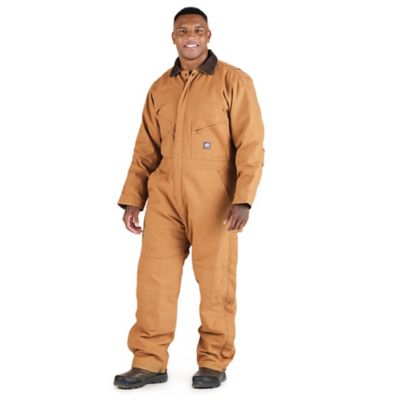
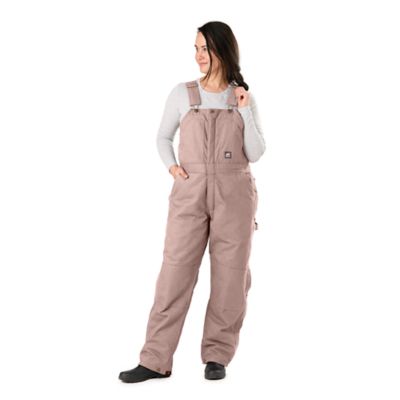
Men's one-piece insulated work coveralls bring coverage and warmth together for the kind of work that keeps going when the fence needs fixing or the livestock needs feeding. A connected jacket-and-pants design covers the waist through bending, reaching and climbing, helping limit the gaps that can open between separate layers. That makes insulated coveralls a practical choice for feeding cattle before daylight, checking water troughs, hauling firewood or working in an unheated equipment shed. The right construction depends on the job and how much moving around it involves. Cotton duck has a firm, substantial feel suited to contact with rough lumber, feed sacks and barn surfaces, while cotton-blend shells can balance that familiar workwear feel with easier movement and care. Fabric weight, weave and finish all affect how a shell handles everyday wear; a heavier fabric is not automatically the best match for someone who spends the day climbing ladders or stepping in and out of a truck. Reinforced knees, sturdy seams and extra fabric at high-wear spots can help coveralls stand up to kneeling on concrete and brushing against rough edges. Inside, synthetic insulation holds warmth, while a smooth lining can make the garment easier to pull over a flannel shirt or sweatshirt. Quilted construction helps keep insulation distributed, though insulation thickness and lining materials vary. Warmth also depends on the layers underneath, the amount of physical effort involved and exposure to wind or moisture. A worker walking fence lines may need a different balance than someone standing beside a gate for long stretches. Water-repellent finishes can help shed light moisture, but they are not the same as waterproof construction. For wet chores, the shell treatment, seams and closures matter just as much as the amount of insulation. The aim is coverage that fits the work without adding more weight or warmth than the task calls for.
Fit makes a big difference in how men's insulated work coveralls feel through a full round of chores. Since the upper and lower sections connect, chest, waist, torso length and inseam all need enough room to work together. A pair that fits while standing still can pull across the shoulders or tighten through the seat when reaching for a latch, squatting beside a trailer hitch or climbing into a tractor cab. Room for a base layer and a midlayer helps, but too much extra fabric can bunch behind the knees, interfere with tools or leave cuffs dragging through mud. Size charts and body measurements offer a better starting point than assuming coveralls will fit exactly like jeans. Tall sizing can be especially helpful when extra torso length is needed, rather than simply choosing a larger waist. Shoulder reach, knee bend and the way the crotch sits all deserve attention when comparing cuts. Pleated backs, shaped sleeves and articulated knees can provide movement without requiring an excessively loose fit. Front closures affect convenience, too. A long zipper makes getting dressed less of a struggle, while a two-way design can make restroom breaks simpler without taking the whole garment off. Leg openings that unzip above the ankle or toward the thigh can ease the job of getting coveralls on over work boots, depending on their design. Storm flaps help cover zipper openings, and adjustable cuffs can reduce drafts while keeping loose ends tucked away. Pockets earn their place when they hold fencing pliers, a pencil, gloves or a small notebook without making every bend uncomfortable. Secure chest pockets help keep small belongings from falling out when leaning forward, while pass-through openings can provide access to pants pockets underneath. For jobs that call for a separate upper layer and bib-style coverage,
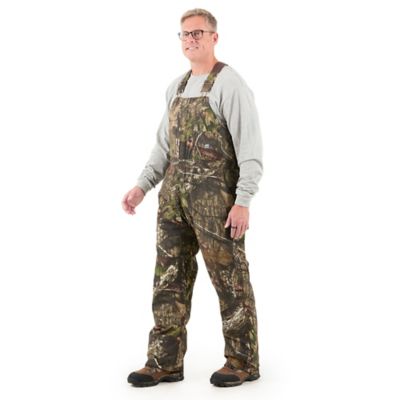
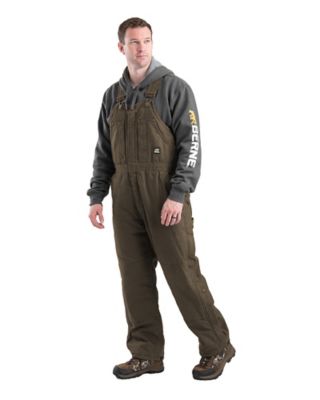
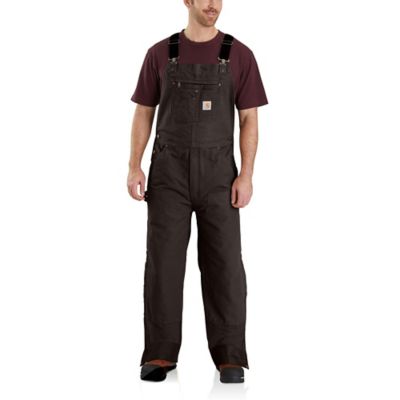
Men's Work Overalls offer another approach to getting dressed for work. One-piece coveralls keep the focus on connected coverage, with fewer separate pieces to manage before heading out to the barn.
Everyday care plays a big part in how insulated coveralls wear over time. Mud at the cuffs, hay caught around closures and grit along a zipper can add up after repeated trips between the barnyard, shop and truck. Brushing away loose dirt and emptying pockets before washing helps keep that mess out of the lining and laundry. The care label should set the washing temperature, detergent choice and drying method, since shells, insulation and water-repellent treatments do not all handle heat or cleaning agents the same way. Excessive dryer heat can affect some fabrics and finishes, and fabric softener may interfere with certain treatments. A heavy insulated garment also needs time to dry all the way through before it goes back on a hook or into storage. Hanging damp coveralls in a tightly packed mudroom can leave the lining holding moisture long after the shell feels dry. Between chores, opening the front and giving the garment room to air out helps it dry more evenly. Small seam openings, worn cuffs and loose fasteners are worth catching early, before a little damage turns into a bigger repair. Grease, fuel and chemical contamination require extra attention according to the garment's instructions and the substance involved; ordinary laundering is not a substitute for proper handling. Standard insulated coveralls should not be treated as protection against flame, electrical hazards or chemicals unless the garment carries the required designation for that work. Around moving equipment, properly fitted cuffs and secured closures matter more than extra pocket space. For farmers, ranch hands, mechanics and property owners, the best match comes down to a familiar routine: how often the work calls for kneeling, how far the walk is between buildings and how much time passes between chances to warm up. As a gift for someone who spends long hours tending animals or keeping equipment running, insulated coveralls make the most sense when their measurements, layering habits and daily tasks are part of the choice. A comfortable fit and job-appropriate construction make them easier to reach for whenever cold-weather work needs doing.