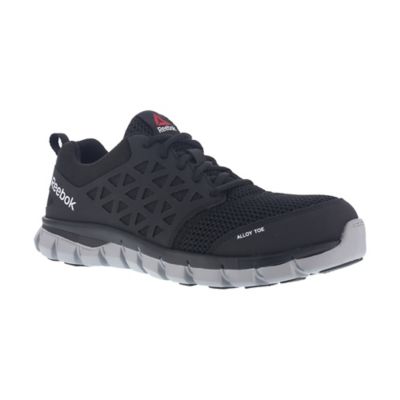
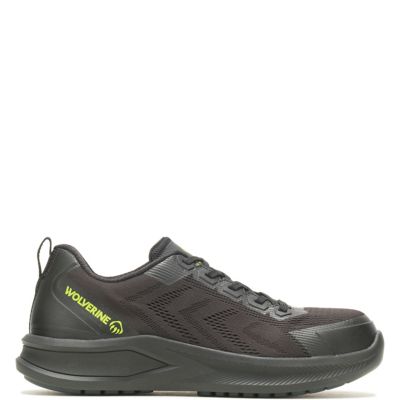
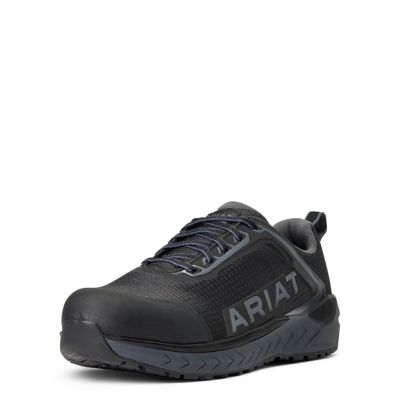
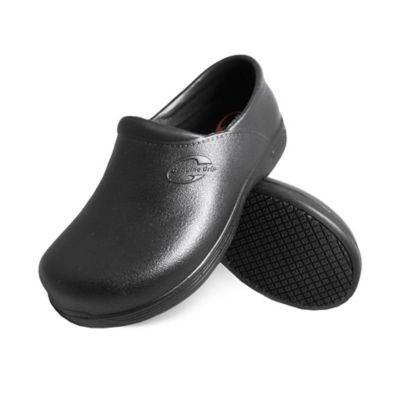
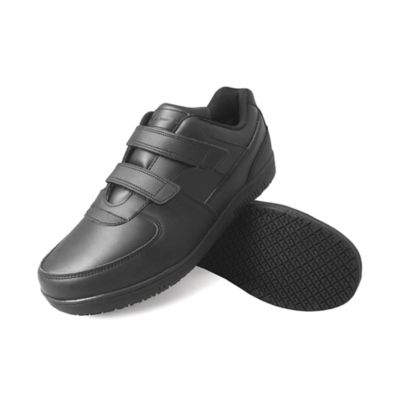
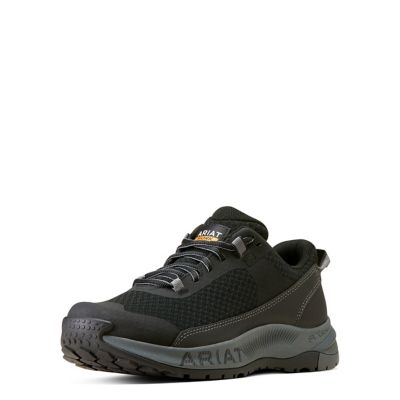
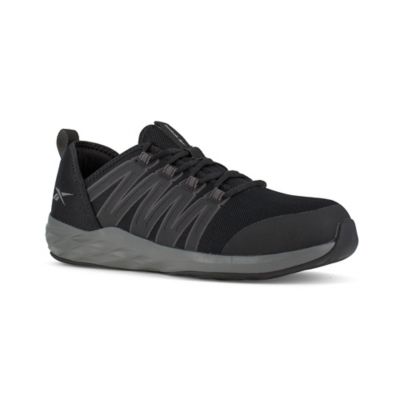
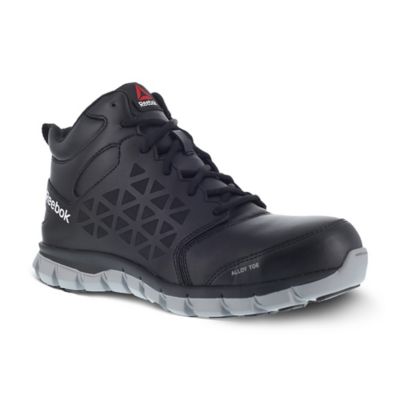
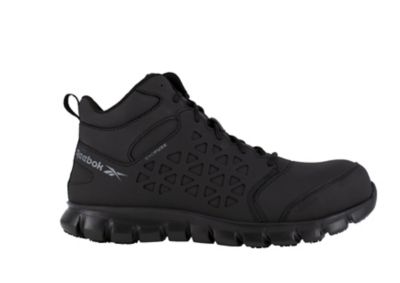
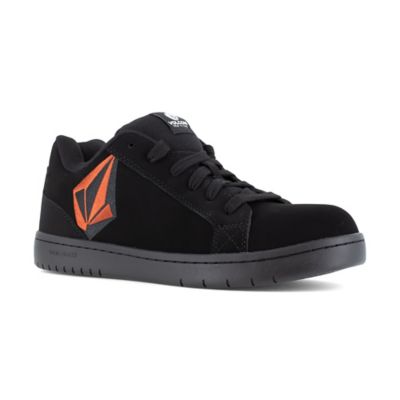
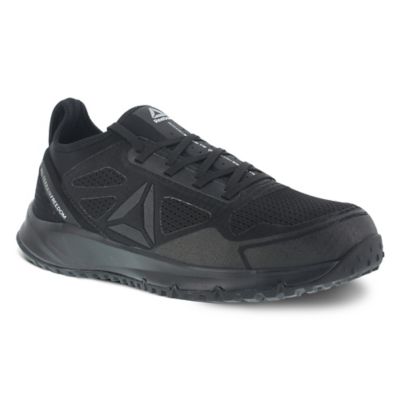
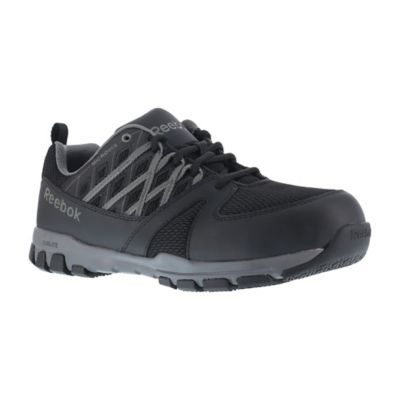
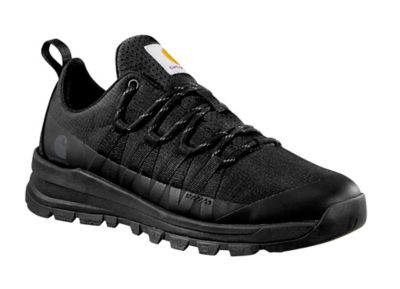
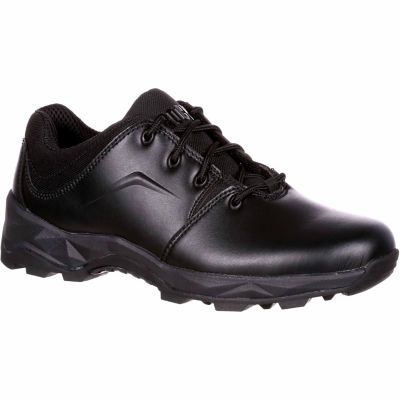
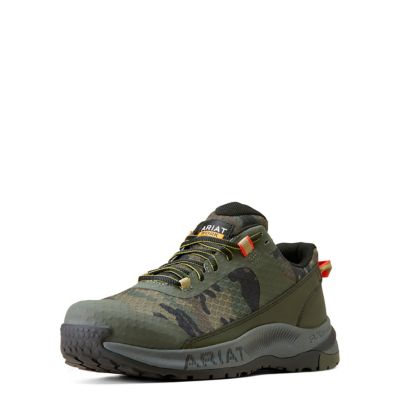
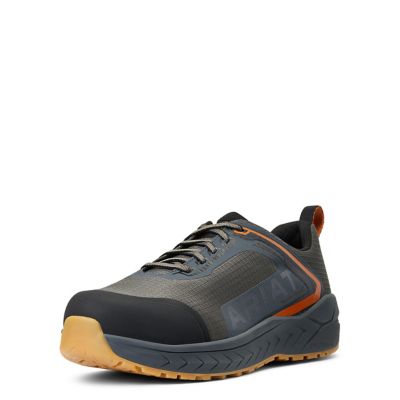
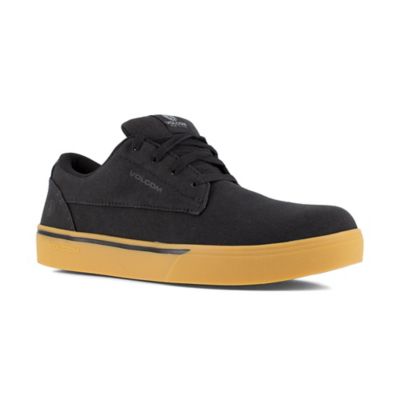
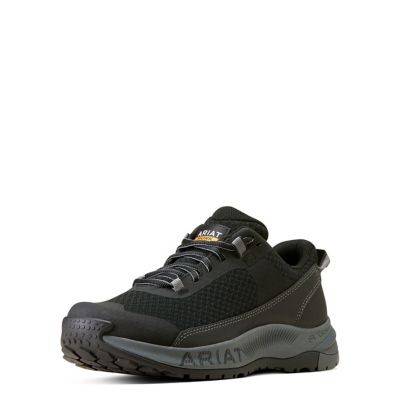
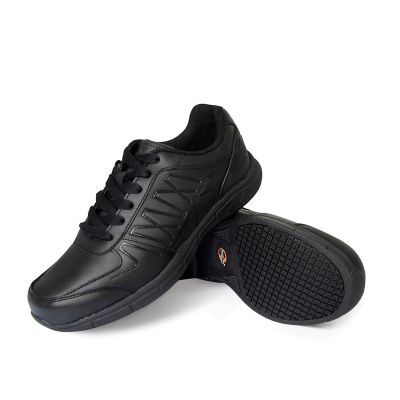
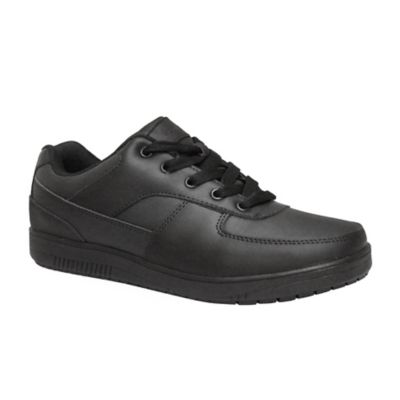
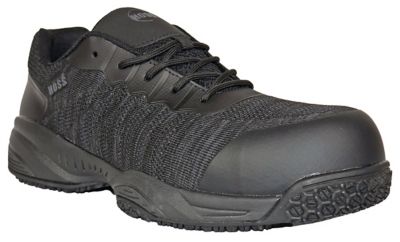
Men’s black non-slip work shoes suit the kind of workday that keeps a fellow moving, whether that means carrying plates through a busy diner, walking warehouse aisles, tending a service counter or making repeated trips between a shop floor and a back room. The black finish fits many workplace dress requirements and pairs easily with work pants, uniform trousers or jeans when the job allows them. It also gives footwear a straightforward look that can carry from an early shift to errands on the way home. Beneath that simple appearance, the outsole does much of the work. Slip-resistant tread is designed to help maintain contact with the floor, while channels in the sole can help move moisture away from the contact area. Rubber compounds and tread patterns differ, so a shoe’s stated traction features matter more than whether its sole simply looks rugged. A deep lug pattern suited to loose ground is not necessarily the best match for smooth tile, and a floor with cooking oil presents different demands than a dry concrete aisle. No shoe makes every surface slip-proof; spills, worn flooring and loose debris still call for attention. Uppers matter, too. Leather can provide a substantial feel and a surface that wipes down readily, while synthetic materials may offer a lighter build or a smoother finish. Fabric and mesh sections can add airflow, though they may need more attention where splashes and grime are part of the shift. For food service, maintenance, retail and light shop work, the right balance often comes down to the surfaces underfoot and the messes encountered along the way. Black footwear may make some marks less noticeable, but it still needs cleaning. A pair that looks presentable at the front counter and feels steady through repeated turns, stops and steps is a practical part of a working outfit, not just a final detail.
Fit becomes especially important when work involves hours on your feet rather than a short walk across the parking lot. A well-fitting work shoe leaves room for toes to move without letting the heel slide around with every step. Too little room across the forefoot can lead to pressure during a long shift, while too much space can make the foot shift inside the shoe when changing direction. Width, toe shape and instep space all affect that balance; two pairs marked with the same size can feel quite different. The socks worn on the job belong in that fit picture, especially when their thickness differs from everyday socks. Lace-up styles allow adjustment across the top of the foot, which can be helpful for getting a snug hold without pinching. Slip-on styles offer a quick start to the day, but the heel and instep still need to hold the foot securely. Cushioning and support serve different purposes. A soft footbed can ease the feel of hard flooring, while a stable midsole helps keep each step from feeling overly squishy or uncertain. A shoe that bends naturally near the ball of the foot may feel more comfortable during frequent walking, and a secure heel can help during turns around shelving or tight kitchen corners. Removable footbeds can be worth noting for anyone who wears an orthotic, provided the shoe has enough room to accommodate it properly. Protective features deserve a separate look. Slip resistance does not automatically mean a shoe has a safety toe, electrical hazard protection or a puncture-resistant layer. Work around falling objects, sharp debris or electrical hazards may call for footwear that meets particular employer requirements. Black color alone also does not establish uniform compliance; some workplaces specify the upper material, closure or toe construction. For a cook, stockroom worker, maintenance hand or anyone moving between several tasks, comfort is most useful when it comes with the protection and fit the actual job requires.
Everyday care helps black non-slip work shoes stay ready for the next shift and makes it easier to spot wear before it becomes a problem. Dust, flour, grease and small bits of debris can collect in outsole grooves, reducing the tread’s contact with the floor. Clearing that buildup with a brush and following the footwear’s cleaning directions helps keep those channels open. The upper needs attention suited to its material: leather may call for a leather-safe cleaner and conditioner, while synthetic or fabric sections can have different care requirements. A quick wipe after a messy shift can keep residue from settling into seams and creases. Drying instructions matter as well, since harsh drying methods can affect adhesives, finishes and the shape of the shoe. Giving footwear time to air out between shifts can help manage moisture inside, and alternating pairs may make that easier for someone working back-to-back days. Wear often shows up first at the heel edge, beneath the ball of the foot or along a crease where the upper flexes. Flattened tread, a separating sole, damaged lining or cushioning that no longer supports the foot are signs that a pair may no longer be suited to the job. Service life depends on the floor surface, walking distance, cleaning routine and demands of the shift, not just how tidy the shoes look from above. The broader
Men's Non Slip Work Shoes category offers another way to compare footwear needs while keeping traction, fit and workplace requirements in focus. For someone choosing a practical gift for a working man, his usual size is only a starting point; preferred width, daily tasks and any required protective features matter just as much. The best match is footwear that feels right through ordinary work: standing at a prep table, crossing a stockroom, bending to reach a lower shelf and heading home after a full shift.