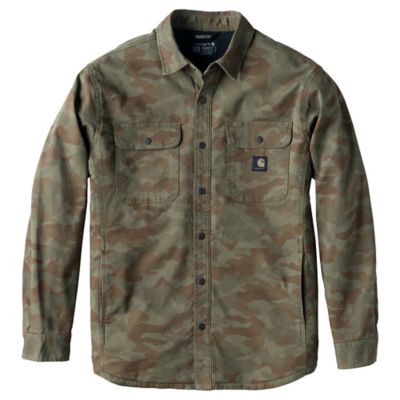
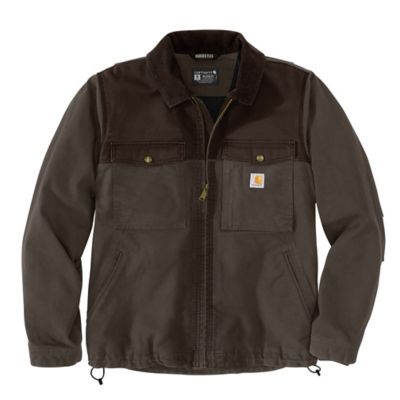
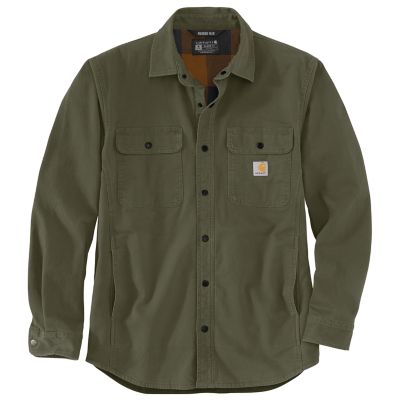
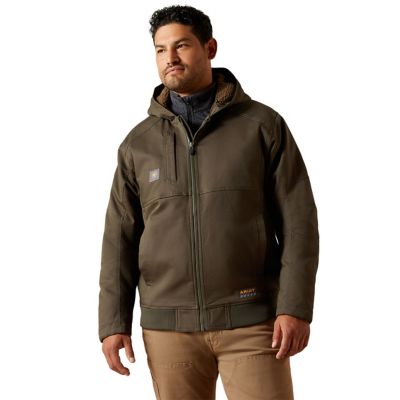
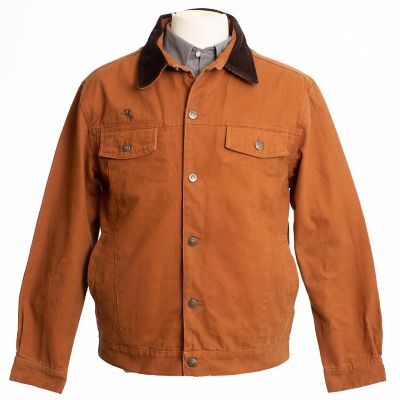
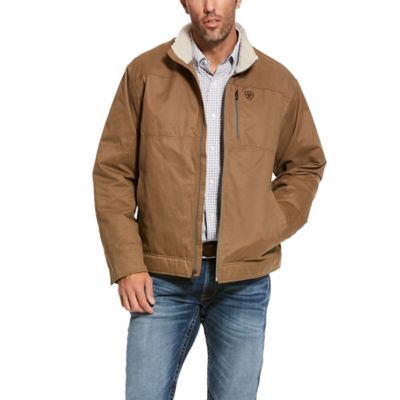
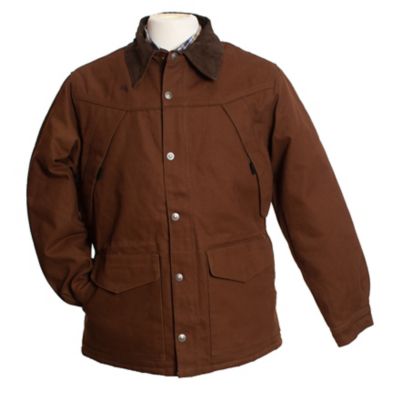
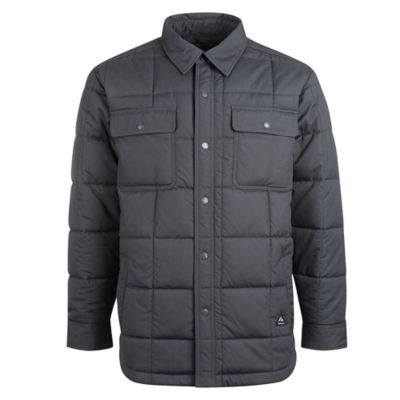
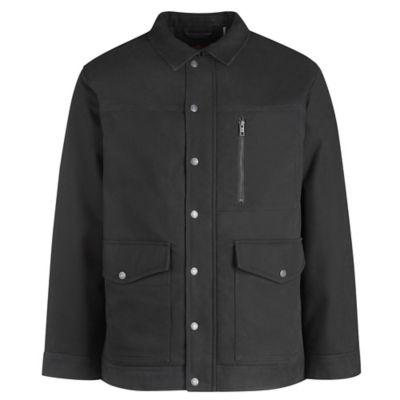
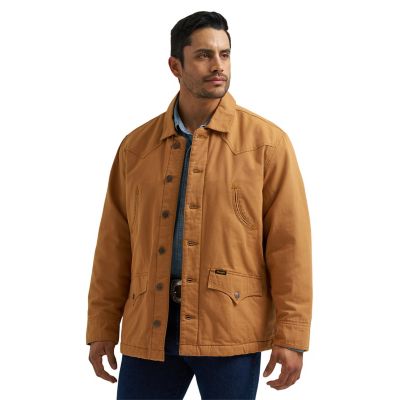
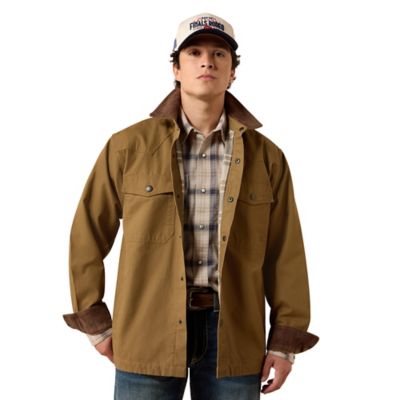
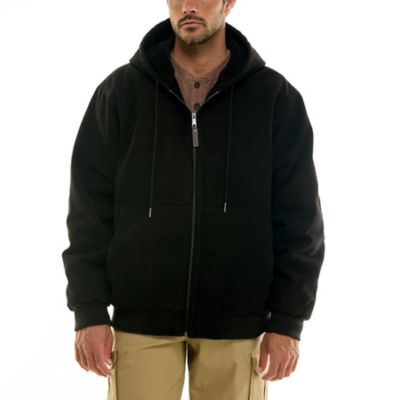
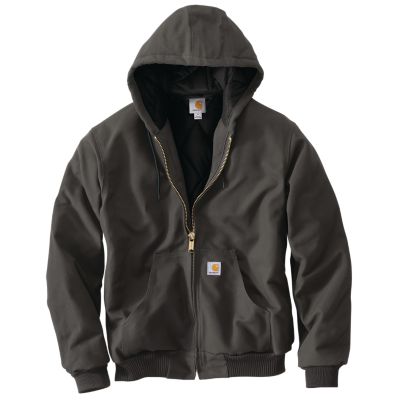
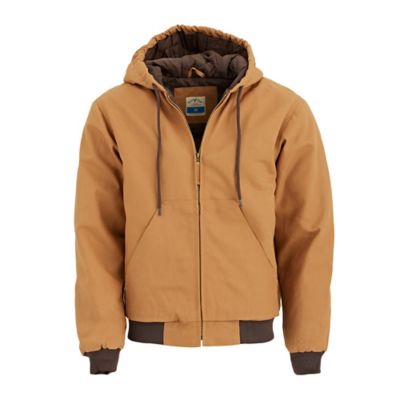
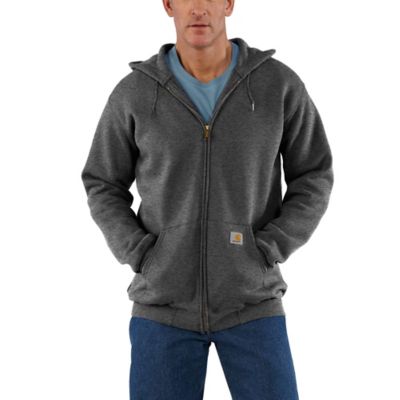
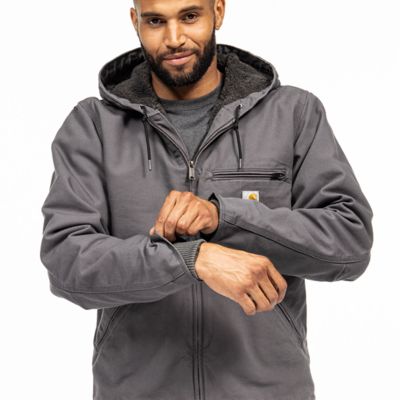
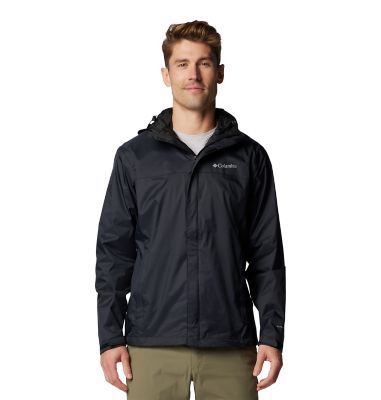
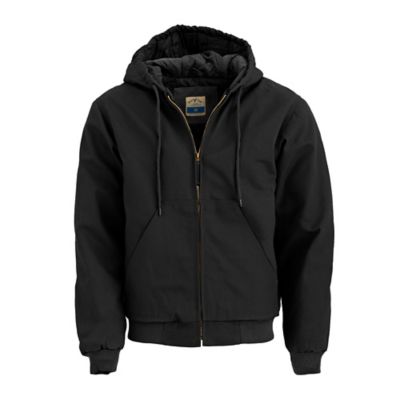
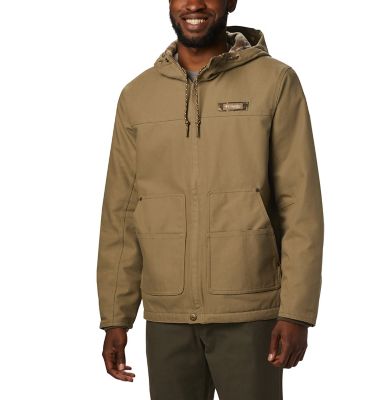
Men’s canvas jackets are work-ready outer layers made from tightly woven fabric, most often cotton or a cotton blend, with a sturdy feel that suits chores and everyday wear. Canvas gets much of its character from its plain-weave construction, which gives the fabric a firm surface without the diagonal pattern found in denim. Cotton duck is a closely woven type of canvas often associated with workwear. Across this category, fabric weight, fiber content, and finishing make a noticeable difference in how a jacket feels and moves. Heavier canvas generally has more heft and structure, while lighter canvas can feel less restrictive for driving, walking the property, or heading into town. Fabric weight alone does not tell the whole story, though; stitching, seam construction, and reinforcement at high-stress areas also affect how well a jacket handles regular wear. Cotton brings a familiar feel and can soften with wear, while blends may add stretch or help the fabric hold its shape. A little stretch can be welcome when reaching across a truck bed or bending to pick up a feed sack, but the jacket’s cut matters just as much as its fiber content. Farmers, ranch hands, tradesmen, and homeowners often look for canvas outerwear because it fits naturally into days that move between physical work and ordinary errands. The same straightforward style works over a work shirt at the barn or a button-down for a trip to town. Different silhouettes serve different routines: a shorter work jacket keeps the hem closer to the waist, while a chore-coat shape offers more length through the body. Traditional collars, hooded designs, zip fronts, and button fronts each give the jacket a different feel. The appeal is practical rather than fussy: a substantial fabric, useful details, and a shape that makes sense for the way a man spends his day.
Fit makes a big difference in how comfortable a men’s canvas jacket feels through a full day of movement. A jacket can look right while standing still yet pull across the shoulders when reaching for a gate latch or stacking lumber. Room through the upper back, shoulders, and elbows helps keep the fabric from fighting every motion. Articulated sleeves, pleated backs, and underarm panels are construction details that may provide extra reach without making the whole jacket oversized. Enough space for the shirts or sweatshirts normally worn underneath matters, too, especially with thicker linings. Unlined canvas offers a simpler construction with less added thickness, while flannel, fleece, blanket-style, and quilted linings change the feel against the body and the amount of room inside. Smooth sleeve linings can make it easier to slip the jacket over another shirt without bunching the fabric at the elbows. Sleeve length deserves attention: cuffs should allow a comfortable grip on a steering wheel or tool handle without covering the hands. Adjustable cuffs and waist tabs can help manage excess fabric, though loose clothing still needs to stay clear of moving machinery. Pocket placement is another detail that becomes important once the work starts. Chest pockets can keep a pencil or folded note close, and roomy lower pockets may hold work gloves between tasks. Secure closures help keep small belongings from slipping out when bending or climbing. Pocket contents should not interfere with a seat belt, harness, or other job equipment. A zipper offers a quick front closure, while snaps and buttons have their own familiar workwear feel. Canvas thickness alone does not establish flame resistance, cut protection, or other safety performance; jobs with protective-clothing requirements call for garments specifically rated for those hazards. For ordinary chores, the best fit is one that leaves room to move without unnecessary loose fabric getting in the way.
Care habits help a canvas jacket stay comfortable and serviceable over time. The care label is the starting point because cotton content, lining materials, dyes, and surface treatments can call for different handling. Some cotton canvas may shrink with washing or high drying heat, which can change sleeve length and reduce the room available for layering. Following the stated washing and drying directions helps protect the fit rather than turning laundry day into a guessing game. Loose dirt can often be brushed away before washing, and a small mark may need only spot cleaning if the label permits it. Waxed canvas needs particular attention: ordinary machine washing, strong cleaners, or heat can affect its finish, so that construction calls for its own care routine. A jacket that feels stiff at first may relax through normal wear; harsh scrubbing or repeated hot washes are not a good substitute for letting the fabric settle in. Checking seams, pocket corners, zipper tracks, and cuff edges can catch small problems before they grow. Emptying pockets before laundering also keeps forgotten screws, pens, and other odds and ends from causing trouble. After a dirty job, letting the jacket dry fully before putting it away helps keep moisture from lingering in the fabric and lining. These everyday habits matter whether the jacket spends most of its time by the back door, in the truck cab, or on a hook in the shop. For someone who likes a button-front layer with more of a shirt feel,
Canvas Shirt Jackets offer a related style worth considering alongside traditional jacket cuts. Canvas outerwear can also make a practical gift for a dad, husband, brother, or friend who spends time tending land, working in the garage, or tackling projects around the house. Matching his usual jacket size, preferred length, and need for lining makes the choice more personal without relying on flashy details. The right canvas jacket earns its place through comfortable movement, useful storage, manageable care, and a straightforward look that fits the workday as easily as the drive home.