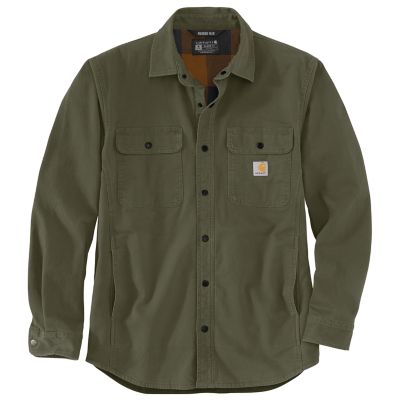
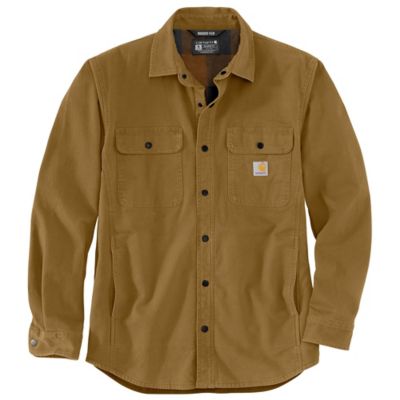
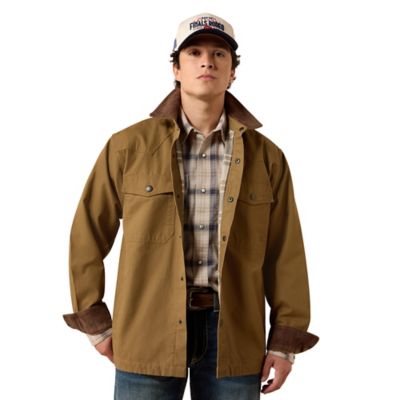
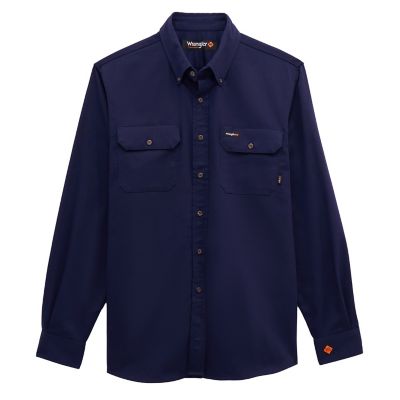
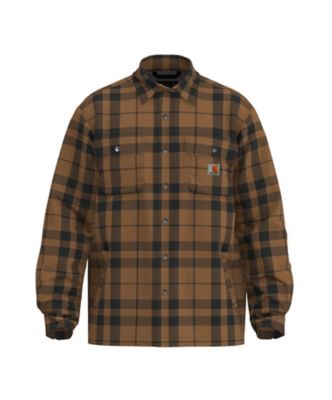
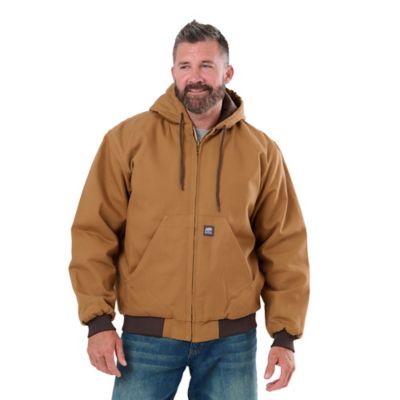
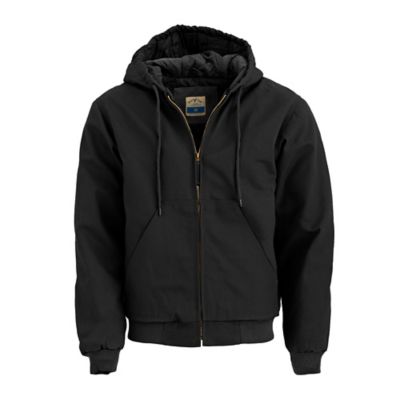
Canvas shirt jackets bring the familiar shape of a button-up shirt together with the substance of a light work jacket. They fit naturally into days that move between the barn, the workshop, the truck and a stop in town, without calling for a complete change of clothes. Canvas is a tightly woven fabric, often made from cotton, with a firm hand and a surface that can stand up to everyday rubbing against tools, benches and fence rails. Fabric weight makes a noticeable difference: lighter canvas tends to drape more easily, while heavier cloth usually feels more structured across the shoulders and sleeves. Neither tells the whole story on its own, since the weave, stitching and finishing all affect how a garment wears. Cotton canvas has a straightforward, familiar feel, and some fabrics become softer with repeated washing and wear. Cotton blends can bring other traits to the mix, such as added flexibility or less wrinkling, depending on their fiber content. A little stretch may make reaching across a workbench easier, though the cut of the shoulders and sleeves matters just as much. Unlined styles keep the construction simple and make the inside seams easy to inspect. Lined versions add another layer between the outer shell and the shirt underneath, with smooth linings generally sliding over sleeves more easily than textured ones. The appeal isn't limited to heavy chores, either. A canvas shirt jacket can look right at home with jeans for a feed-store run or with work pants while tending a garden bed. Its collared neckline, full front opening and shirt-style cuffs give it a familiar look, while the more substantial fabric keeps it from feeling like an ordinary overshirt. Canvas belongs to the broader family of
Men's Shirt Jackets, with its character coming largely from that sturdy woven shell. For someone who likes clothing that feels practical without looking overly technical, that balance is a big part of the draw.
Fit shapes how useful a canvas shirt jacket feels once the day gets moving. Enough room through the chest and upper back lets a T-shirt or other everyday layer sit comfortably underneath, but extra fabric shouldn't bunch around the waist or crowd the arms. Shoulder seams that sit well, sleeves that allow a bent elbow and a hem that stays comfortable while seated all matter when climbing into a pickup or spending time at a workbench. A straight cut can feel easy through the body, while a more shaped cut sits closer without necessarily restricting movement. The size label alone can't settle those differences; garment measurements and the intended fit provide a clearer picture. Length is worth considering, too. A shorter hem may stay out of the way when sitting, while a longer one provides more coverage when reaching. Pocket layout adds another practical layer to the design. Chest pockets can keep a small notebook or pencil close, and lower pockets give hands a place to rest between tasks. Flaps and secure closures help keep small belongings contained, though bulky pocket loads can pull on the fabric and change the fit. Buttons give the front a traditional shirt feel, while snaps can make opening and fastening more straightforward. Cuffs that close neatly help keep sleeves from hanging loose, especially around a bench or when carrying supplies. Reinforced stitching at pocket corners and other stress points can help those areas handle repeated pulling, but even substantial canvas benefits from sensible treatment. Ordinary shirt jackets aren't a substitute for task-specific protective clothing, and loose hems or sleeves need particular attention around moving equipment. Beyond the workday, simple details make these layers easy to pair with familiar clothes. Earth tones, dark shades and straightforward stitching tend to blend into an everyday wardrobe rather than demand a whole outfit built around them. The result can feel just as natural over a plain tee for a casual supper as it does alongside work boots and a pair of well-worn jeans.
Care plays a real part in how canvas shirt jackets feel and hold their shape over time. The care label is the starting point because the outer fabric, lining, trim and closures may need different treatment. Cotton can shrink, and high dryer heat may affect both dimensions and finish, so washing and drying settings deserve a little attention before the first load. A jacket with a special surface treatment may call for a different routine than untreated canvas. Brushing away loose dirt before laundering can keep grit from working deeper into seams, while treating a small stain according to the garment instructions may prevent unnecessary washing of the whole jacket. Closing fasteners before washing can help limit snagging, and giving pockets a quick check keeps screws, nails and other forgotten bits out of the machine. Drying thoroughly before storage helps keep the fabric and lining in good shape. Hanging a shirt jacket with enough support through the shoulders also helps it settle neatly between wears instead of spending its downtime crumpled behind a truck seat. Over time, canvas may develop softer folds and lighter areas at cuffs, seams and other points of contact. That gradual change is part of the fabric's character, though thinning fabric, loose stitching and damaged closures are signs that attention is needed. Small repairs made early can keep a pocket corner or cuff from becoming a bigger problem. These everyday considerations also make a canvas shirt jacket a thoughtful gift for someone who enjoys tending a few acres, working in the garage or keeping busy with projects around the house. The best match comes from knowing how that person dresses: roomy or closer fitting, simple or pocket-heavy, lined or unlined. Familiar measurements are more helpful than guessing from another garment's size alone. With the right fabric, comfortable proportions and details suited to the job, a canvas shirt jacket can become an easy grab from the hook by the door.