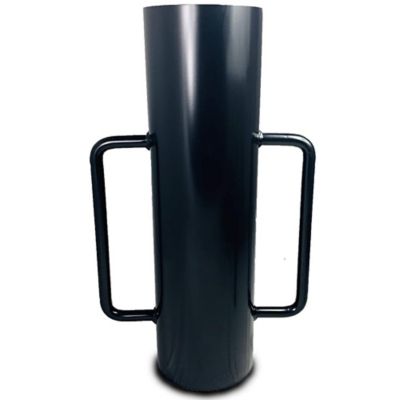
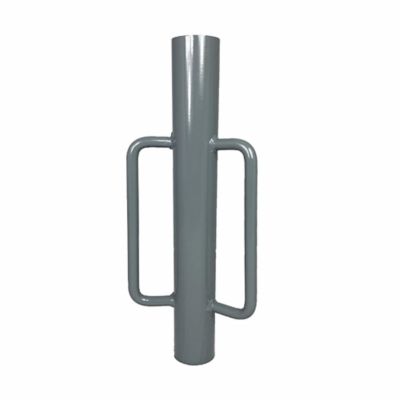
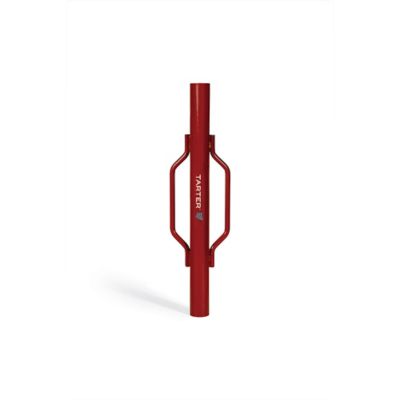
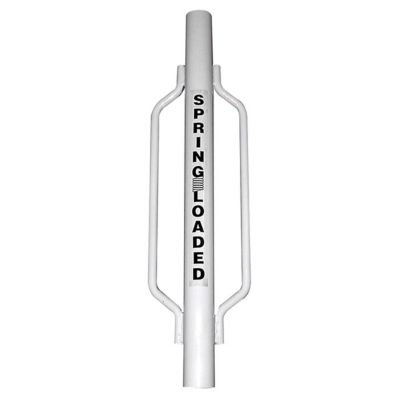
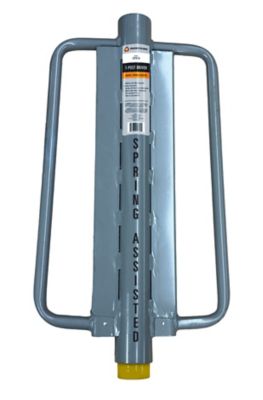
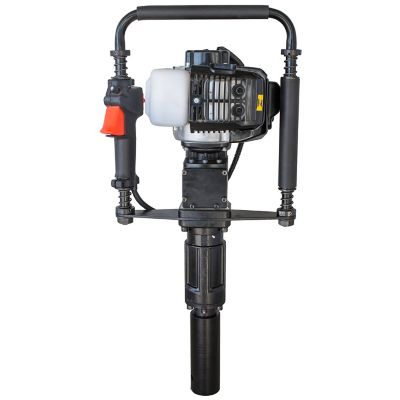
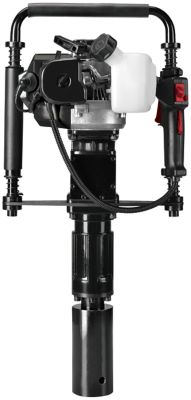
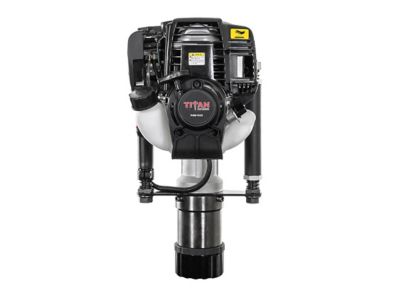
A manual fence post driver is a heavy steel tube with a closed striking end and side handles that fits over a compatible fence post to drive it into the ground. Lifting and lowering the tool delivers repeated blows to the top of the post, with the tube helping keep the striking surface centered. Many designs work with steel T-posts or U-posts, while compatibility with other post shapes and small wooden stakes depends on the driver’s opening and the manufacturer’s specifications. These straightforward tools earn their place around farms, gardens, livestock pens, and rural properties where a short stretch of fence or an occasional repair doesn’t call for powered equipment. A sagging section beside a pasture gate, a new vegetable patch, or a dividing fence across a small paddock can all involve the sort of post work these drivers handle. The enclosed striking head offers a different approach from swinging a sledgehammer at an exposed post top, though keeping the post upright still takes attention. With no engine, battery, air hose, or electrical cord, a manual driver is easy to carry along a fence line and put to work away from buildings. That simplicity is handy when the repair spot sits beyond the barn or across a field where hauling extra equipment would add more work. It also means the operator supplies every lift, so tool weight, post height, ground conditions, and the number of posts all affect how manageable the job feels. A driver that suits a few replacement posts may be tiring over a long run of new fencing. Manual fence post drivers make the most sense when their weight and dimensions match both the person handling the tool and the posts going into the ground. They’re practical fence-building tools, but they don’t replace the planning, corner assemblies, or bracing a complete fence may need.
Steel construction gives a manual post pounder the mass needed to transfer force into a post, but the details of that construction deserve a close look. Tube wall thickness, the striking cap, handle attachment points, and welds all contribute to how the tool stands up to repeated impacts. A painted or powder-coated surface can help protect exposed steel from corrosion, although contact with posts and regular handling can wear through that finish. Smooth handle surfaces and sound welds matter on a tool that gets lifted over and over. Some designs have bare steel handles, while others add grip coverings; either way, handle spacing and the room available for gloved hands affect comfort and control. A heavier driver can deliver more force with each stroke, but that extra mass also has to be lifted each time. A lighter model may be easier to carry between repair spots, yet require more repetitions in firm ground. Overall length matters, too, particularly when the top of a post starts well above the operator’s shoulders. Post fit is just as important as weight. The opening needs enough clearance for the post’s widest cross section, including the flange on a T-post or the channel shape of a U-post. A driver’s outside diameter doesn’t establish that fit; inside dimensions and the stated compatible post types are the useful measurements. For garden projects,
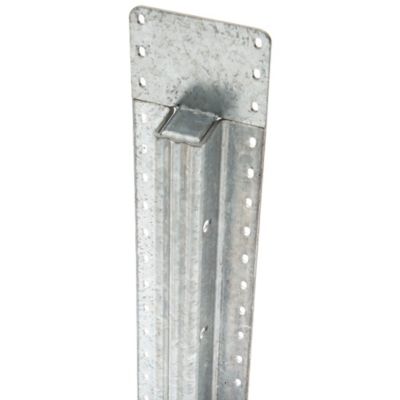
Garden Fence Posts are part of that same fit check, since post shape and dimensions determine whether a particular driver can slide over the top. A snug-looking match is not always a workable one if raised features or attachment hardware interfere with travel. Small wooden stakes call for a driver expressly suited to them, because a tool intended for steel posts may damage wood or fail to fit. Large round wooden posts, substantial gateposts, and structural supports generally involve different installation equipment. Matching the tool to its intended post type helps avoid turning a simple fencing chore into a battle with the wrong equipment.
The work site has a say in performance as well. Ground with buried rock, dense gravel, or compacted layers can stop a post even when the driver and post fit properly. More weight alone won’t solve every obstruction, and repeated pounding against a hard stop can bend the post or damage the tool. A manual driver also isn’t a substitute for a post puller, pry bar, or digging tool. For livestock fencing, the post needs to suit the animal, fence material, spacing, and planned tension; driving it into place is only one part of the finished fence. Garden fencing brings its own demands, from supporting light mesh around raised beds to keeping a straight boundary beside a walking path. Close quarters near existing wire, gates, and buildings make handle clearance and room above the post especially important. Eye protection, work gloves, sturdy footwear, and steady footing belong with the job, along with keeping hands away from the striking area and pinch points. Utility marking through 811 before ground disturbance is another important consideration, and privately installed lines may need separate locating. After the fence work, basic care helps keep a driver ready for the next repair. Soil left inside the tube can interfere with fit, while moisture and packed debris can encourage rust. A clean, dry tool is easier to inspect for a cracked weld, a loose grip, a bent handle, or damage around the striking end. Storage off bare ground, with the tool secured against tipping, helps protect both the equipment and the space around it. Damaged striking surfaces or handle connections call for attention before another job, not another round of hard blows. For livestock owners, acreage caretakers, gardeners, and anyone maintaining a few fence lines, a well-matched manual fence post driver is a straightforward addition to the fencing tools kept close at hand. Its value comes from doing a particular job without much setup: putting compatible posts into suitable ground with a tool that’s simple to carry, inspect, and store.