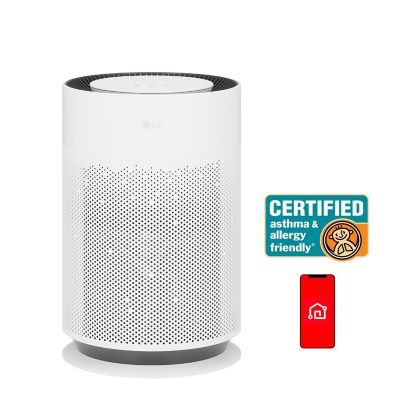
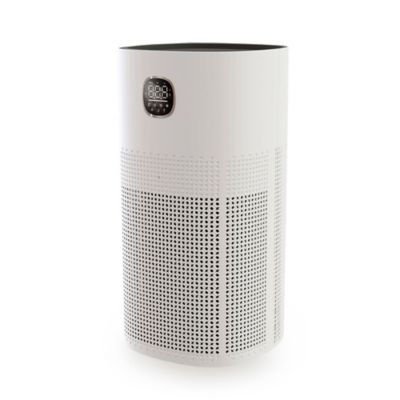
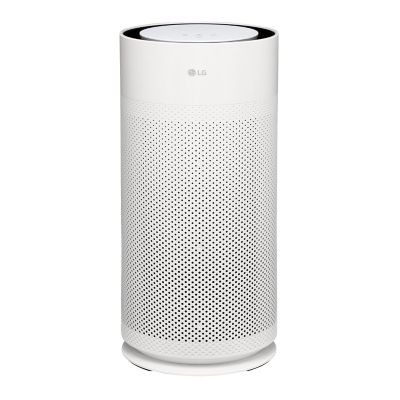
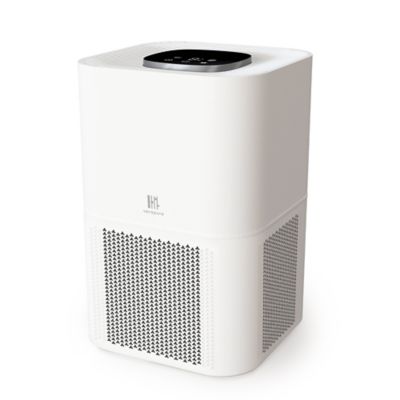
Large-room air purifiers for pet households help reduce airborne pet dander, dust and some odors when their filtration and airflow match the space. A prefilter catches larger floating particles, including some pet hair, while a HEPA filter captures finer particles passing through it. Activated carbon can help reduce certain odor-causing gases, giving it a different job from the particle filter. Together, these features suit the everyday mix of a dog stretched out beside the couch, cats moving between their favorite chairs and dust stirred up by busy paws. Filtration cannot lift fur from a rug or remove every smell, but it can support the cleaning routine in a home shared with animals. Room size matters just as much as filter type. Clean air delivery rate, often shortened to CADR, describes how much filtered air a purifier delivers, typically in cubic feet per minute. A higher CADR generally means faster particle removal in the same space. Coverage figures make more sense when paired with the ceiling height and the number of air changes per hour behind the rating. For example, a 500-square-foot room with an 8-foot ceiling contains 4,000 cubic feet of air; a CADR of about 320 cubic feet per minute provides roughly 4.8 air changes per hour under those conditions. Tall ceilings, open stairways and a living room flowing into a kitchen add air volume beyond a simple floor measurement. A coverage claim based on one air change per hour is not equivalent to one based on nearly five. For homes with several animals, steady airflow through an appropriately sized filter matters more than a large square-footage number by itself. Ratings measured at the highest fan setting also deserve attention, since quieter settings usually move less air. The right balance is enough filtration for the room at a sound level that fits everyday life, whether that means conversation around the table or an evening with the television on.
The filter arrangement makes a difference in how a large-room purifier handles a pet household’s daily workload. A removable prefilter can collect floating fur before it reaches the finer filter media, helping keep that inner layer from loading up as quickly. Some prefilters are washable, while others need vacuuming or replacement according to the manufacturer’s directions. HEPA filters are generally intended for replacement rather than rinsing unless the instructions specifically say otherwise. A well-fitted filter and a cabinet that limits air bypass help keep airflow moving through the media instead of around it. For odor control, the amount and design of the activated carbon matter; a thin carbon-coated sheet does not offer the same gas-holding capacity as a deeper bed of carbon. Even substantial carbon filtration has limits, and litter boxes, damp pet bedding and accidents still need attention at the source. Materials and construction matter around animals, too. A steady base, protected fan openings and a firmly latched filter panel fit a room where a wagging tail can clear a coffee table. Smooth exterior surfaces are easier to wipe after a curious nose leaves its mark, and accessible filter compartments make routine upkeep less of a chore. Physical dimensions deserve a look alongside coverage ratings: a tall cabinet may fit beside a chair, while a wider unit needs more floor space. Air intakes and outlets need the clearance specified for the purifier, without curtains, furniture or a dog bed blocking the path. A tucked-away corner may look tidy but limit circulation. Cord placement also matters wherever puppies chew or pets chase one another through the room. Controls with a lock can help prevent an accidental setting change from a paw or a child’s hand. These practical details shape how comfortably a purifier fits into a home, beyond what its filtration specifications show.
Everyday operation is where a large-room air purifier earns its place in a pet household. Multiple fan speeds give more flexibility than a single setting, especially in a shared living area where quiet conversation and active cleanup happen in the same space. Noise ratings are most helpful when tied to a particular speed, rather than presented as one number for the whole machine. An automatic mode can adjust airflow in response to its sensor, though many particle sensors do not measure pet odors directly or identify every airborne allergen. A low particle reading therefore does not mean a room has no pet smell. Timers, dimmable displays and filter reminders can make operation easier without replacing regular checks of the filter itself. In a home with several shedding animals, a prefilter may collect a visible layer of fuzz well before an estimated replacement date arrives. Filter life varies with runtime, airborne debris and care, so replacement access and the correct filter dimensions are part of the long-term fit. Energy consumption also matters for equipment that may run for extended periods. Continuous circulation at a suitable speed generally offers steadier particle removal than brief operation after the room already feels stuffy. One purifier serves the air that can reach it; closed doors limit circulation between rooms, even when the combined floor area falls within a coverage claim. A separate bedroom or enclosed home office may call for a
Small Room Air Purifier rather than expecting a living-room unit to handle both spaces. For families sharing a broad gathering room with their four-legged crew, the most useful setup combines room-matched airflow, suitable particle and odor filtration, and care that fits the household routine. Regular vacuuming, clean pet bedding and prompt litter-box care handle material a purifier cannot reach, while filtration tackles particles still floating through the air.