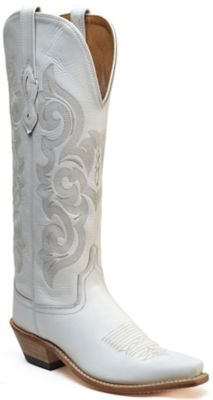
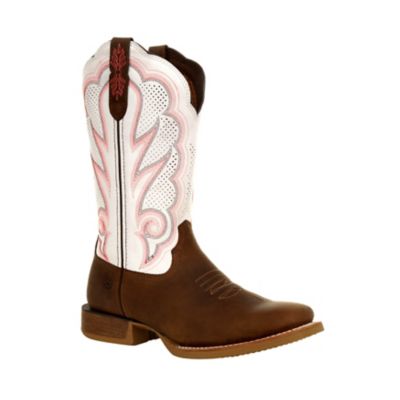
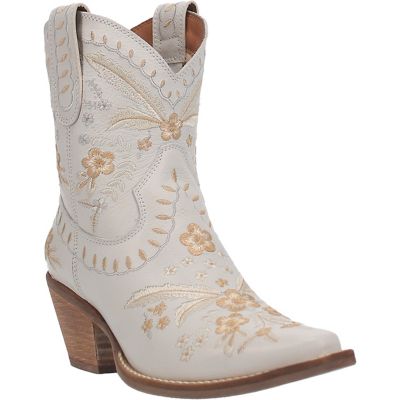
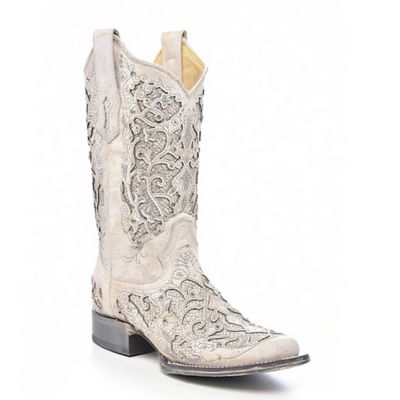
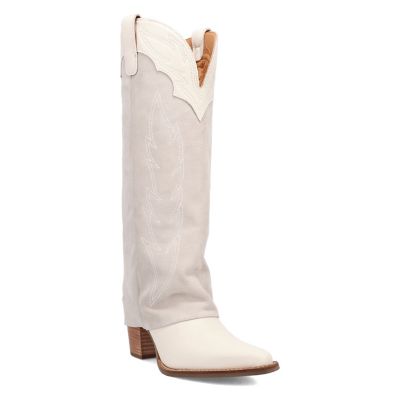
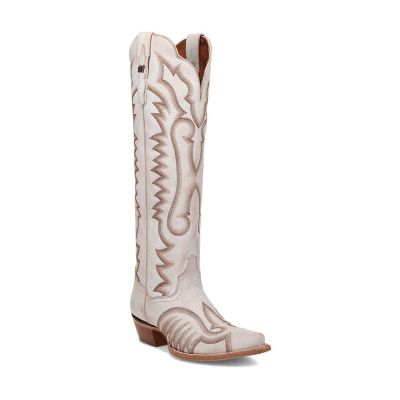
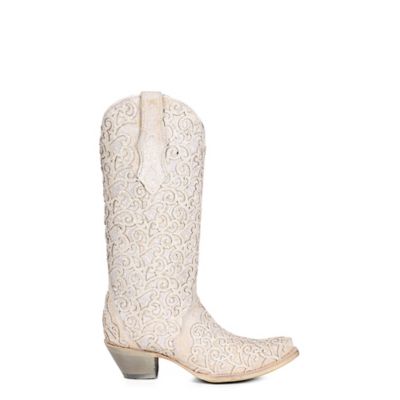
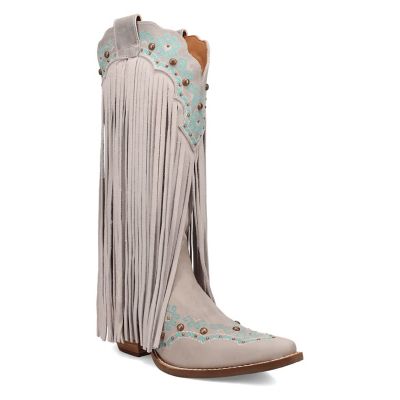
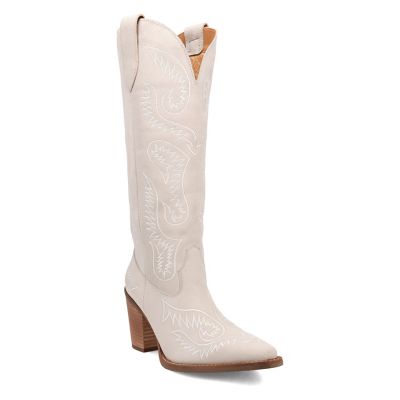
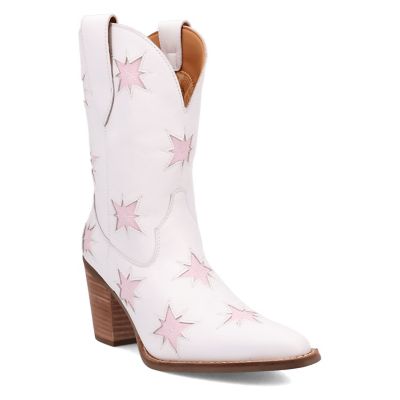
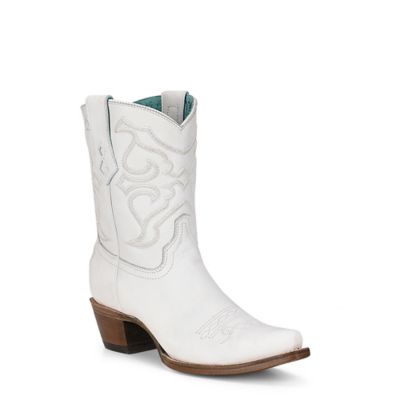
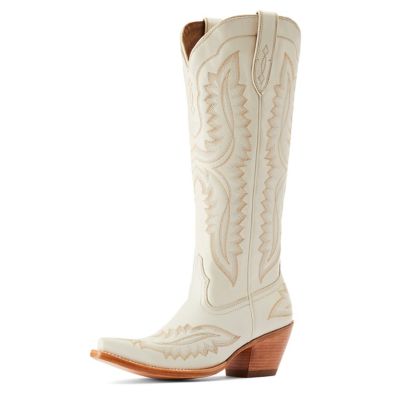
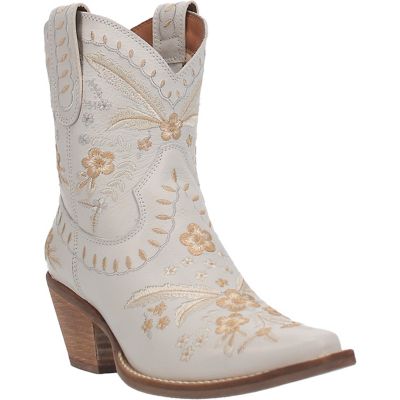
Ladies’ white Western boots bring a bright finish to a familiar country silhouette, with shaped toes, pull-on shafts and heels that look right at home with denim or a dress. Often called white cowgirl boots, they can range from ankle-height styles to taller shafts that reach toward the knee. That height changes the whole look: a shorter shaft leaves more leg showing beneath a dress, while a tall shaft gives stitching and panel details room to stand out. Crisp white has a different feel from ivory, cream or bone, so the shade matters when pairing boots with a wedding dress, matching an outfit for a concert or putting together a favorite jeans-and-shirt combination. Looking at the boots and clothing in the same light helps reveal those differences before an important occasion. Toe shape makes just as much difference. A pointed or snip toe creates a longer, sharper outline, while a rounded or square toe has a broader profile. The shape alone does not determine how much room sits inside, though; the boot’s construction and sizing matter, too. Smooth leather uppers have a classic appearance and may soften with wear, while suede brings a softly textured surface that calls for different cleaning methods. Synthetic uppers have their own feel and care requirements, making the material description worth a close look. Tonal stitching keeps the look quiet, while contrasting embroidery, overlays or cutouts give the shaft more detail. White Western boots fit plenty of plans beyond the dance floor, from a county fair outing to dinner after a rodeo. For a bride, a concertgoer or someone who simply likes a little country character in an everyday outfit, the appeal comes from that mix of familiar boot shape and light color. A plain white pair can let a patterned dress take center stage, while a more detailed shaft can become the focal point with simple denim.
Fit is what turns a good-looking pair of white cowgirl boots into footwear that earns repeat wear. The foot should feel secure across the instep without pinching, and the toes need room to rest naturally rather than press against the end. A little heel movement can occur in a new pull-on Western boot, but substantial slipping, rubbing or forward sliding deserves attention rather than an assumption that breaking them in will fix everything. Leather may relax across pressure points; the boot will not gain meaningful length. Trying boots with the socks planned for regular wear gives a better sense of the fit, especially when comparing a thin dress sock with a thicker boot sock. Both feet deserve a check, since one may be slightly larger than the other. Shaft circumference matters as well as foot size. A tall boot needs enough room around the calf for comfortable movement, and a shorter shaft should not dig into the leg when sitting or walking. Pull tabs can help with entry, while a zipper changes how the boot goes on without necessarily changing the room inside. Underfoot, cushioning, arch support, lining and heel shape all contribute to how a boot feels through an afternoon on your feet. A lower, broader heel may feel steadier for extended standing than a narrow, higher heel, but personal comfort still comes down to the whole fit. Outsole material also helps define the intended use. Leather and rubber soles feel different on a dance floor, a sidewalk or gravel outside a venue, and tread patterns vary. Rubber alone does not establish slip resistance, so any performance claim should come from the boot’s stated features. A white Western appearance also does not establish suitability for riding, barn chores or jobsite work. Those activities call for footwear built for the task, with the appropriate heel, sole and any required safety features. For everyday wear or special occasions, taking a few steps, turning and sitting down can reveal more about comfort than standing still in front of a mirror.
White boots show dust, scuffs and transferred color readily, so regular care helps keep their finish looking fresh. A soft cloth or gentle brush can lift loose dirt before it gets worked into seams and stitching. Smooth leather generally calls for a cleaner intended for that leather finish, followed by a compatible conditioner when the material needs it. Too much conditioner can leave residue or alter the color, which makes a small test on an out-of-sight area worthwhile. Suede needs its own brush and suitable cleaning products rather than the same treatment as smooth leather. Synthetic materials should be cleaned according to their care directions, since leather treatments may not suit them. Harsh household cleaners and bleach can harm finishes, stitching or adhesives, and a white surface does not make those products appropriate. Dark denim can also transfer dye onto a light shaft, especially where the fabric rubs, so checking new jeans before wearing them over white boots can spare some cleanup. Letting boots dry naturally away from direct heat helps protect their shape and materials. Upright storage with gentle shaft support keeps taller pairs from folding sharply, while a little space between wears gives the lining time to air out. These small habits support longer wear without turning boot care into a big chore. When white cowgirl boots are a gift, knowing the recipient’s usual boot size, preferred toe shape and calf fit is more helpful than choosing by appearance alone. A sister who spends an evening dancing may want a different heel and sole feel than a friend planning to wear boots beneath a long dress. For a broader look at related footwear, explore
Ladies Western Shoes. The right white Western boots should suit the person wearing them: comfortable enough for the plans ahead, easy to pair with favorite clothes and made from materials that fit their care routine.