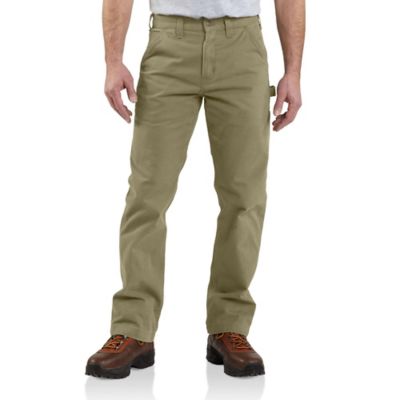
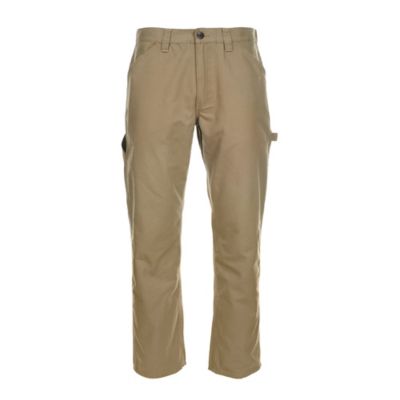
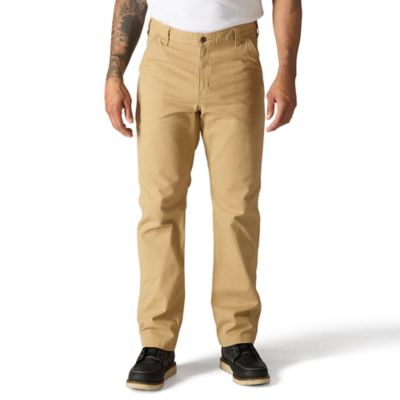
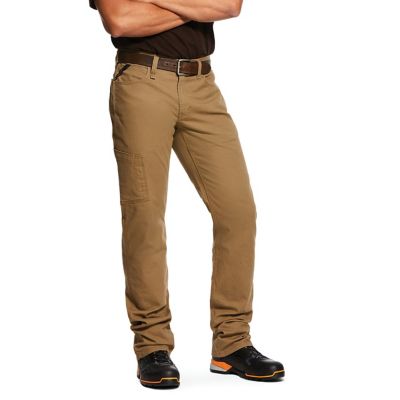
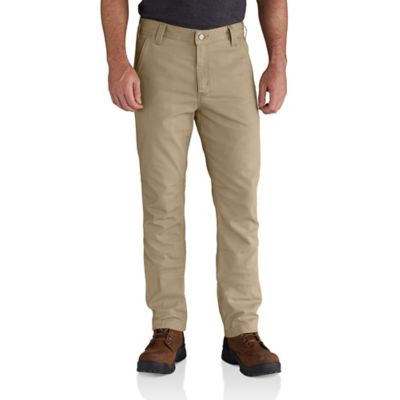
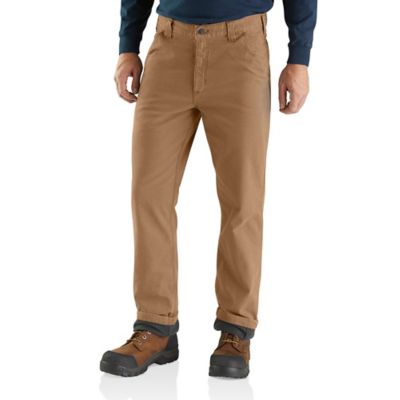
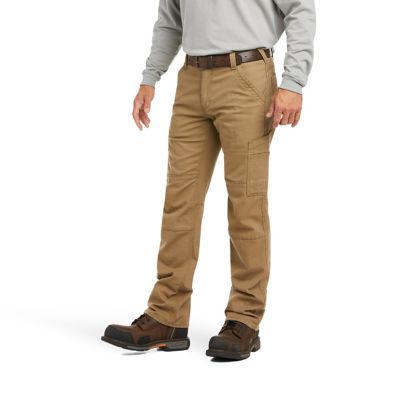
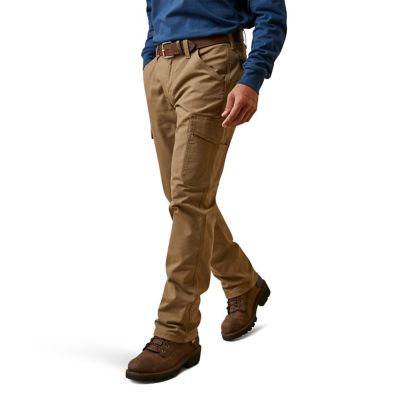
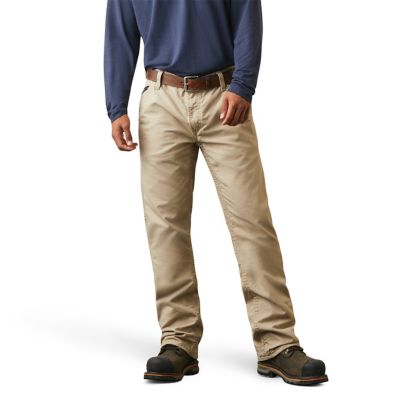
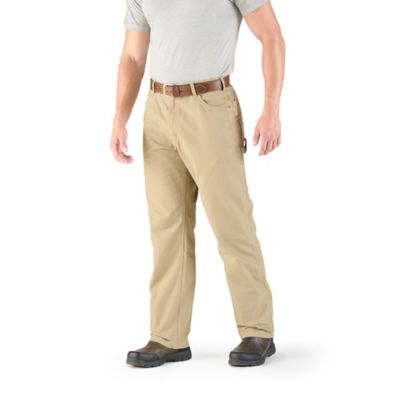
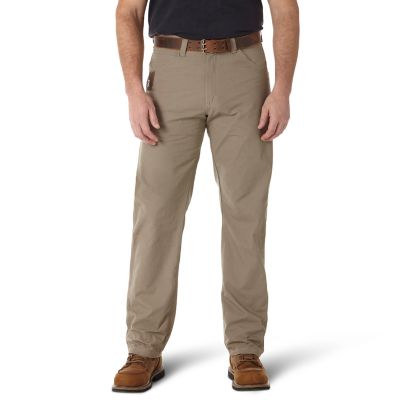
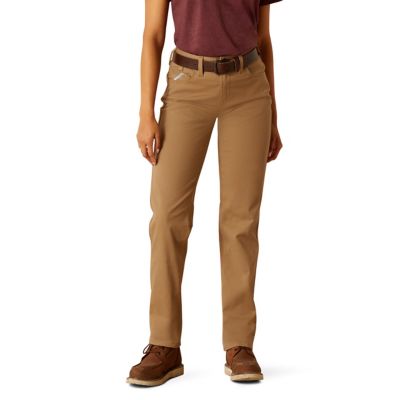
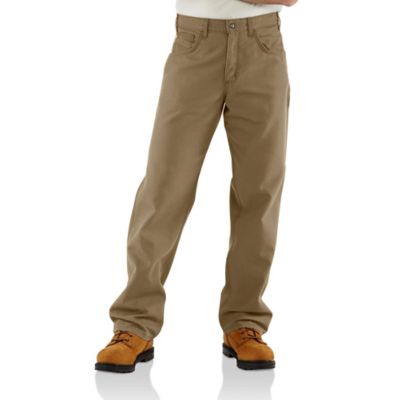
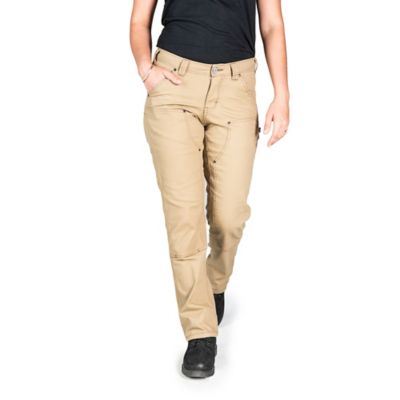
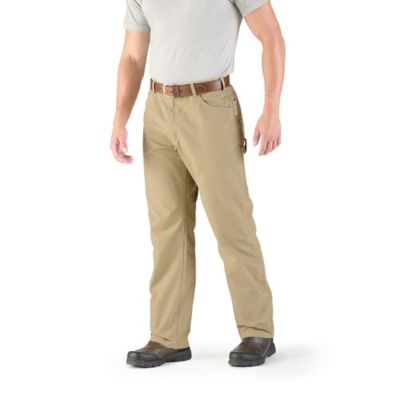
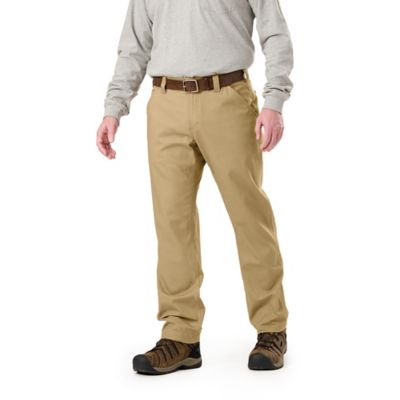
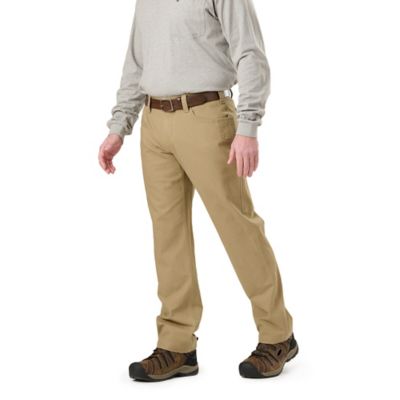
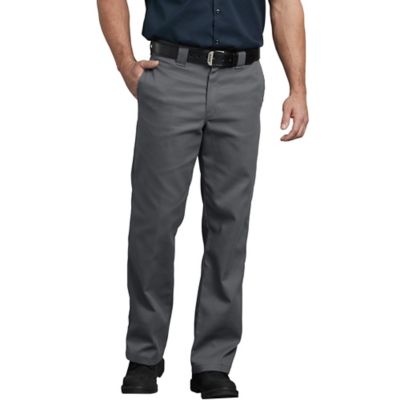
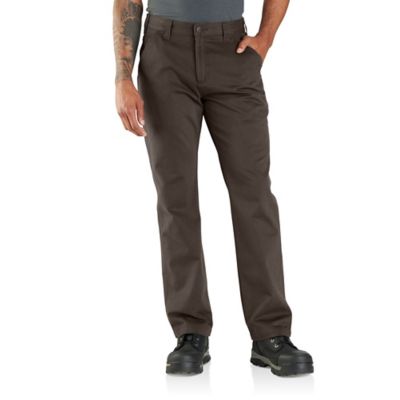
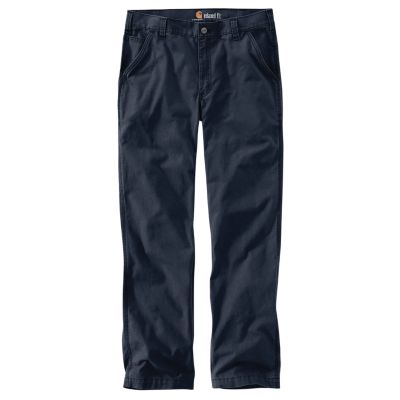
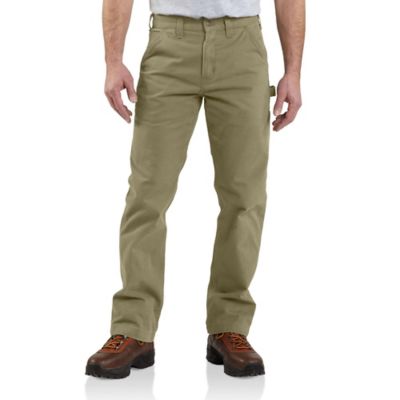
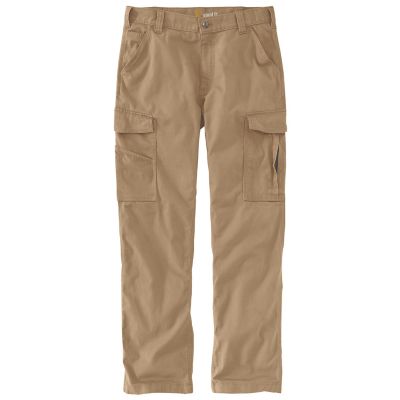
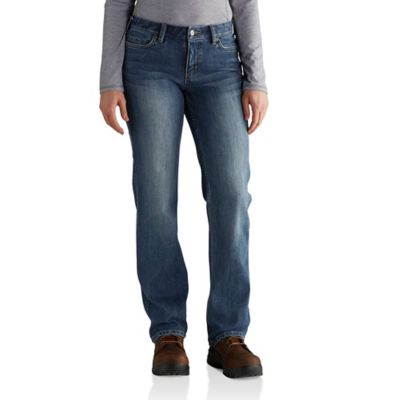
Khaki work pants fit right into days that start with feeding chores and finish with a stop in town. Their tan color pairs easily with flannel shirts, sweatshirts, work jackets, and leather boots, giving them a place in both hands-on work and jobs that call for a tidier appearance. Khaki describes the color rather than a single fabric or construction, so pants in this shade can range from lighter twill to heavier canvas built for repeated contact with rough surfaces. That distinction matters when a day involves climbing into a tractor cab, kneeling beside a gate hinge, or carrying supplies across a gravel lot. Cotton fabrics offer a familiar feel and breathability, while cotton blends may bring other benefits, such as quicker drying or better shape retention, depending on their makeup. A small amount of stretch can make bending and stepping easier without requiring an overly loose fit. Heavier fabric generally provides more substance between skin and rough boards, but fabric weight alone does not tell the whole story. Stitching, pocket attachment, and reinforcement at high-wear spots also affect how pants hold up through regular work. For farmhands, maintenance crews, landscapers, and folks tending a few acres at home, the right balance comes down to the tasks on the schedule. Lightweight pants can feel less cumbersome during active work, while a heavier pair may suit jobs with frequent abrasion. During the cooler months, room for a base layer can be just as useful as a thicker outer fabric, especially when moving between a chilly barn and a heated shop. Tan shades also make an easy match for much of a working wardrobe, though pale khaki can show grease, wet soil, and grass marks. For jobs where a neat appearance matters alongside freedom of movement, khaki offers a straightforward middle ground between casual jeans and dressier trousers. It is a practical color for moving from the property to the parts counter without making the whole outfit feel too formal.
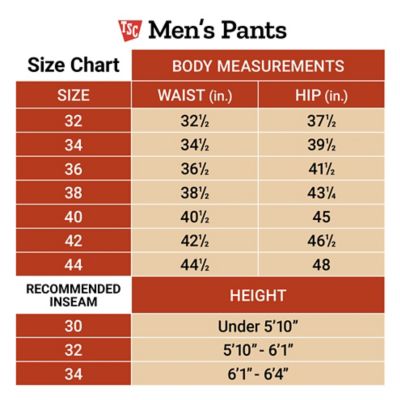
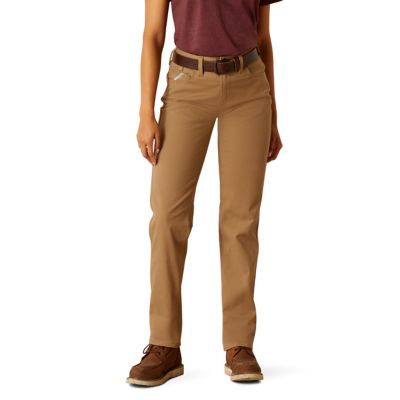
Fit makes a noticeable difference before the first chore is finished. Khaki work pants should allow a comfortable stride and enough room through the seat and thighs for sitting, squatting, and stepping onto equipment. A relaxed cut can give legs more breathing room, while a straighter or closer fit may feel less bulky beneath a longer coat. Neither shape should pull tightly across the hips when seated or leave excess fabric gathering around the ankles. The rise affects where the waistband sits, and a waistband that feels fine standing at a mirror may feel quite different after an hour behind the wheel. Inseam length matters with work footwear, too: hems should clear the ground rather than drag through mud or catch beneath a boot heel. A wider leg opening can fit over some boots more comfortably, while a narrower opening keeps the lower leg more contained. Features such as a gusseted crotch, shaped knees, or stretch panels can add movement where bending puts the most strain on fabric. Reinforced knees may be worthwhile for someone who spends time repairing fence or working close to the ground, although reinforcement does not replace knee protection. Pocket placement deserves equal attention. Deep front pockets can help keep everyday belongings contained, and separate utility pockets can keep a pencil or small tool from crowding the main pocket. A phone pocket is most helpful when its position stays comfortable while seated and keeps the device away from pressure points. Hammer loops and larger side pockets suit some tasks, but extra storage is not always necessary for someone moving between a service desk and a workshop. Men’s and women’s cuts can differ in rise, waist shaping, and room through the hips, making garment measurements more useful than size labels alone. For a deeper earth-tone option,
Women's Brown Work Pants provide another direction for a practical work wardrobe. Khaki remains a versatile choice when lighter tan shades better suit workplace expectations or the shirts and outerwear already hanging by the door.
Everyday care helps khaki work pants keep their fit and stay ready for the next stretch of chores. The garment’s care label takes priority because cotton content, stretch fibers, finishes, and construction can call for different washing and drying methods. Loose dirt is easier to deal with before it spreads through the wash, and fresh stains generally respond better to prompt attention than marks left to settle into the fabric. Grease from a mower repair, clay from a muddy lane, and dust from stacked feed bags each leave a different kind of mess, so a fabric-safe stain treatment matched to the stain is more sensible than scrubbing every spot the same way. Testing a treatment in an out-of-sight area can help prevent an obvious light patch on tan fabric. Empty pockets before laundering, especially after carrying screws, fence clips, or a carpenter’s pencil, and follow label directions for fasteners and temperature settings. Excessive dryer heat can contribute to shrinkage or affect stretch fibers; drying as directed helps preserve the intended fit. Between washes, checking pocket corners, belt loops, hems, and knee areas can reveal small repairs before a loose thread or worn spot becomes a bigger problem. Keeping more than one pair in rotation also gives each pair time to be washed and dried properly instead of rushed back into service. For gifting, khaki work pants make the most sense when the recipient’s measurements, preferred cut, and work routine are known. A pair suited to barn chores may not match the needs of someone working a public-facing maintenance job. Ordinary work pants also should not be mistaken for protective clothing when a workplace requires flame resistance, high visibility, or other safety features. With fabric, fit, and construction matched to the job, khaki work pants earn their place through comfortable movement, useful details, and an appearance that works beyond the fence line.