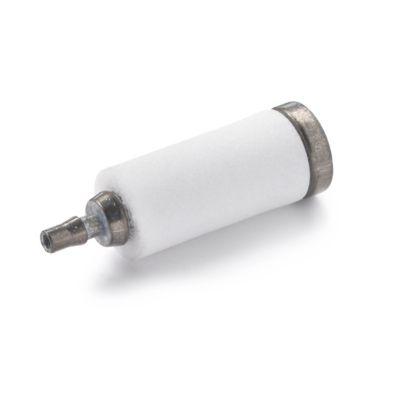
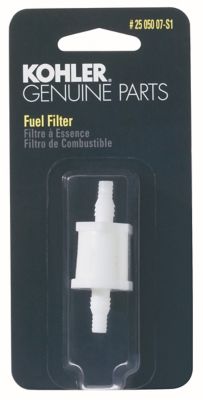
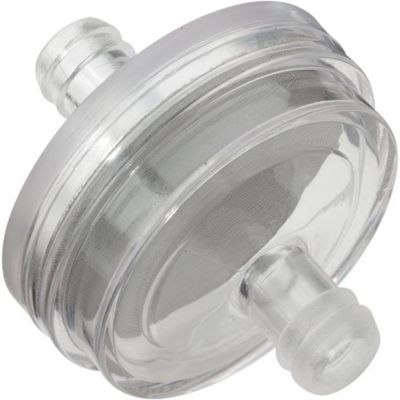
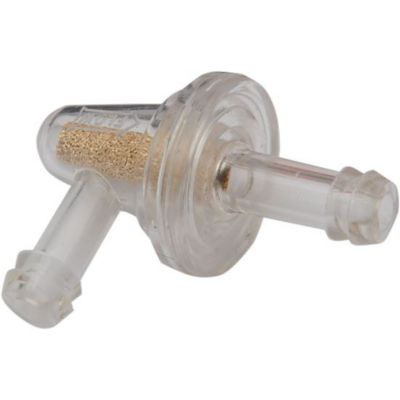
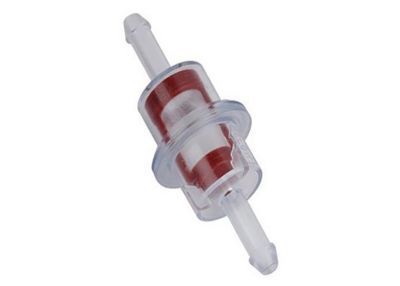
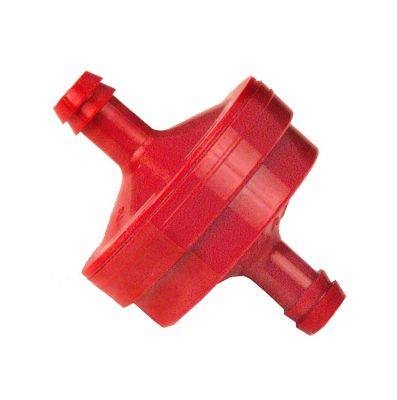
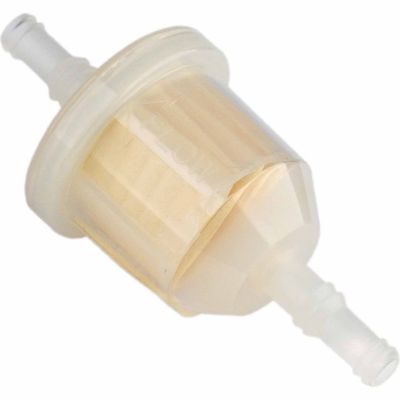
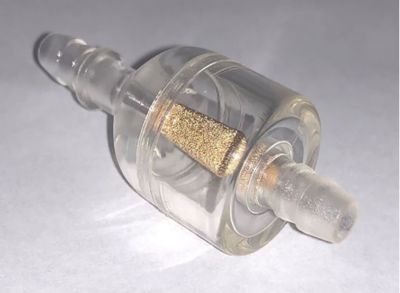
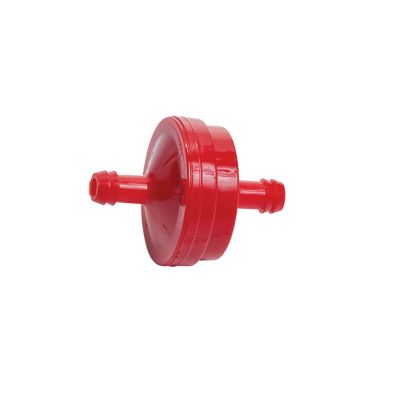
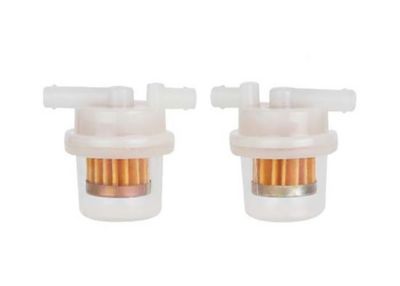
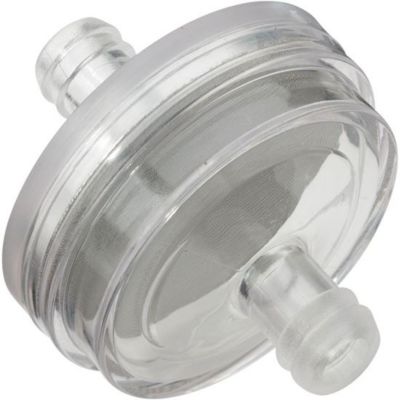
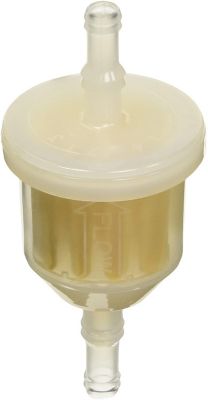
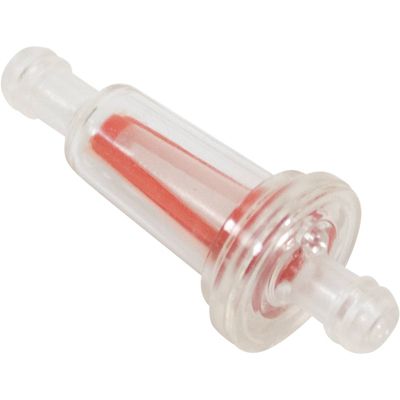
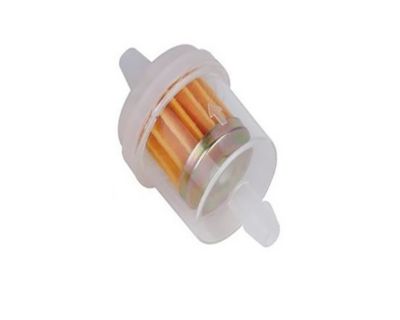
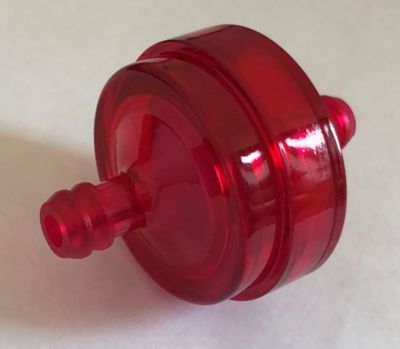
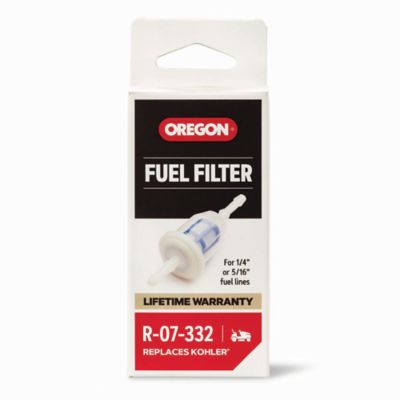
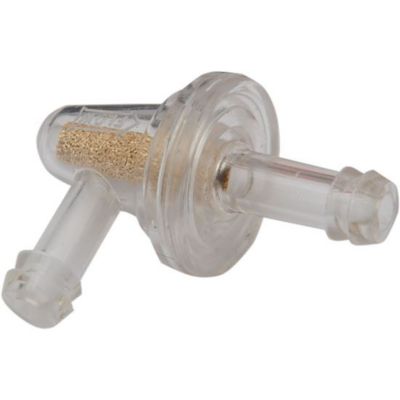
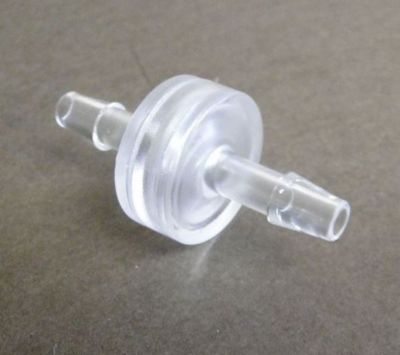
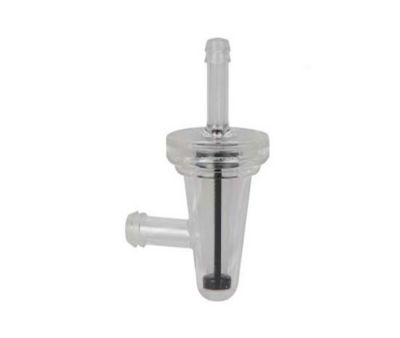
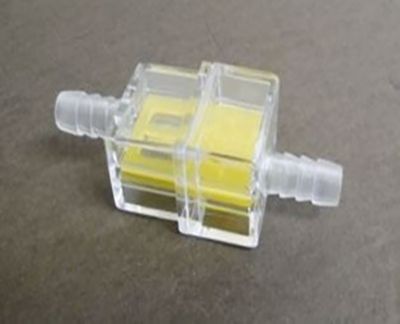
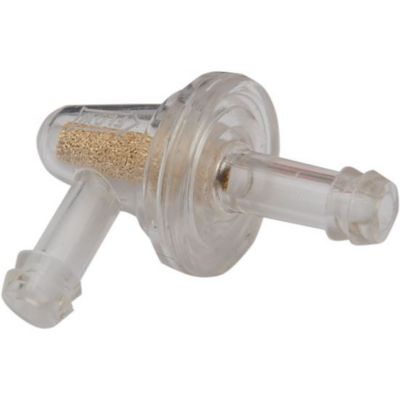
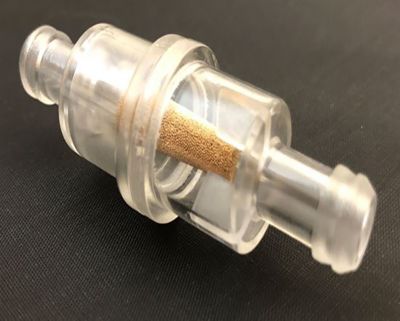
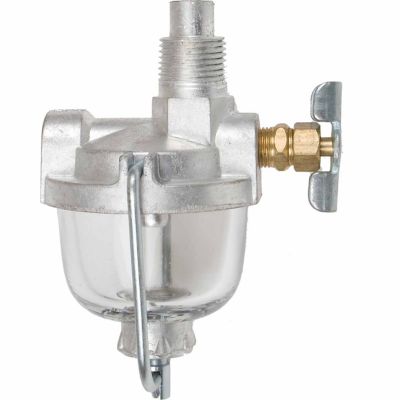
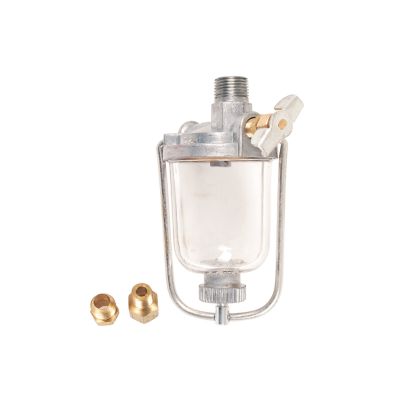
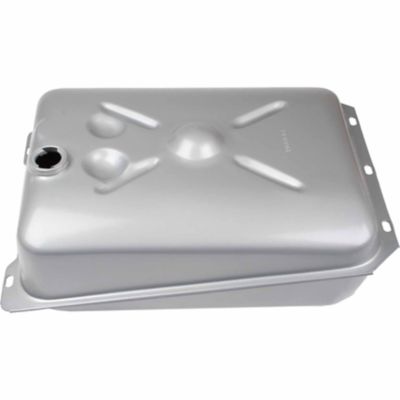
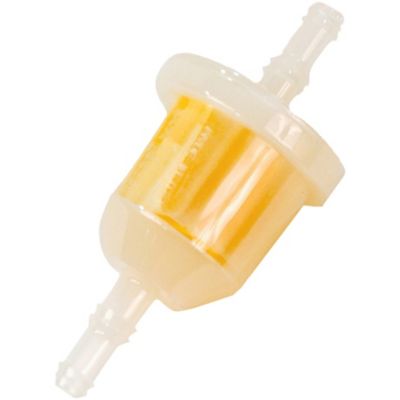
An inline fuel filter fits directly into a fuel line and catches dirt, rust flakes and tank sediment as fuel passes through it. Depending on where it sits in the line, the filter helps protect the fuel pump, carburetor or injectors. Those parts have narrow passages, and it doesn’t take much grit to plug a carburetor jet or interfere with an injector’s spray. Think of the fine reddish specks that can shake loose inside a steel tank when a yard tractor bumps across a rutted lot. A filter keeps that grit from traveling farther down the line. Inside the housing, a pleated paper or synthetic element can catch fine particles, while a mesh screen is often there to stop larger debris. A micron rating refers to particle size, and the filter’s efficiency tells how much debris of that size it can catch. Ratings can run from around 5 microns for fine filtration to 100 microns for coarser screening, but two filters with the same micron rating may not catch the same share of particles. A smaller number isn’t automatically a better match. On a gravity-fed mower, for instance, the tank sits above the carburetor and fuel moves without help from a pump. A filter that creates too much resistance can leave the engine short on fuel even with a full tank. A fuel-injected engine, on the other hand, may call for finer filtration at a specific point in the line to protect the injectors. A standard inline filter catches solid debris. It won’t freshen stale fuel, and removing water takes a filter assembly designed to separate it. Getting the filtration and flow right for the engine matters more than matching the shape of the old housing.
Fit starts with the kind of connection and the size of the line. On systems with a slip-on hose, a barbed fitting is sized to match the hose’s inside diameter, not its outside width. Common sizes include 1/4 inch, 5/16 inch and 3/8 inch. If the equipment calls for a quarter-inch hose barb, the
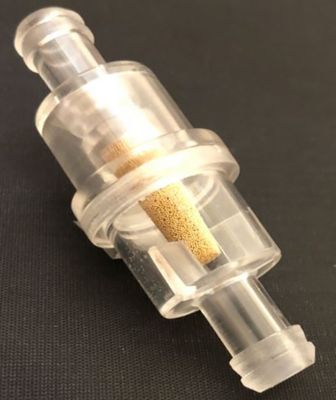
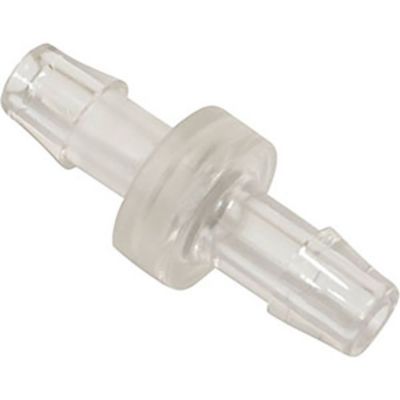
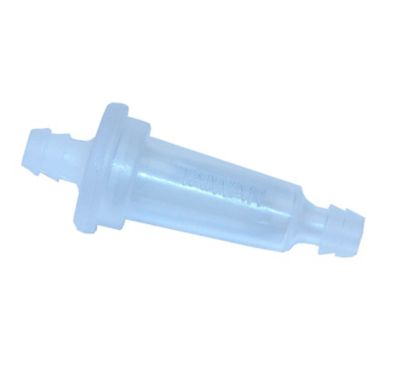
1 4 Inch Fuel Filters page narrows the search by connection size. Threaded and quick-connect lines need matching ends and seals, and fittings that look close aren’t necessarily interchangeable. The filter’s working pressure and flow rating also need to match the equipment specs. A filter meant for a gravity-fed or low-pressure carbureted engine isn’t built for the pressure side of a fuel-injected system. Some fuel-injected systems run at about 60 psi or more, so a housing that looks stout isn’t proof it can take the pressure. Clear or translucent plastic housings on some low-pressure filters make it easy to spot sediment without opening the line. Steel and aluminum housings are common on higher-pressure systems, but the working pressure rating matters more than the material alone. The element, housing and seals all need to suit the fuel running through them, whether that’s gasoline, an ethanol blend or diesel. Size matters beyond the fittings, too. A filter might sit neatly between two hose ends and still be too wide to clear a mower’s side panel. A little room around the housing helps keep the hose from rubbing against sheet metal or making a sharp bend at either fitting. Keeping the filter secure and clear of moving linkages and the exhaust helps protect the housing and connections from wear. If the housing has a flow arrow, it points in the direction the fuel travels. The equipment maker’s specs determine where the filter belongs in the line.
A clogged inline fuel filter can make itself known when the engine needs more fuel than it does at idle. A mower might start fine at the shed and then surge when the blades engage. A utility vehicle might idle without a hitch in the driveway and hesitate partway up a grade. Hard starting, rough idling and stalling can also go along with restricted fuel flow, but a pinched hose, blocked tank vent or weak pump can cause much the same trouble. A clear housing makes it easier to see a layer of grit, though a filter can be restricted without looking dirty from the outside. An air pocket in a clear low-pressure filter doesn’t, by itself, mean the engine is running short on fuel. The equipment maker’s service interval is a better starting point than waiting for a stumble under load. A sealed filter generally gets replaced as a unit, while a serviceable design may have a screen that can be cleaned or an element that can be changed according to the maker’s directions. If a fresh filter collects debris again after only a little run time, it’s worth checking the tank and fuel lines for the source. A filter can catch flakes from a rusty tank, but it won’t stop the tank from shedding more. Cracks in the housing, wet fittings or a fuel smell are reasons to shut the equipment down and check for leaks before putting it back to work. Fuel-injected systems can hold pressure after the engine is off, so the equipment manual’s directions for relieving that pressure matter before the line is opened. Whether the job is keeping a riding mower going, tending to a chore rig or maintaining several pieces of work equipment, a filter that matches the fuel system belongs on the same maintenance list as sound hoses and secure connections.