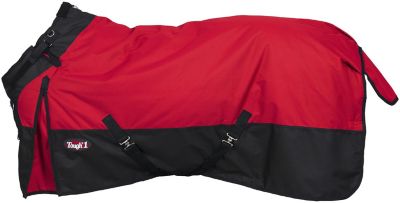
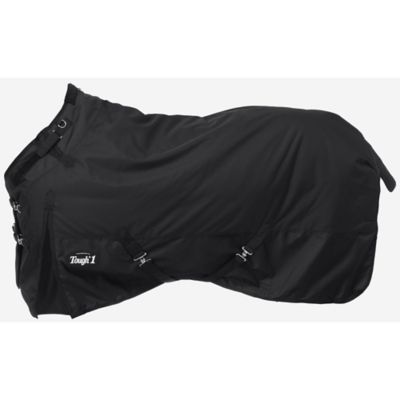
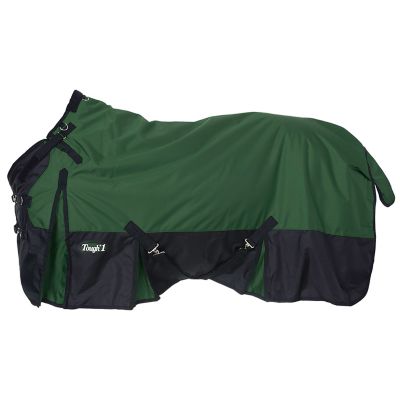
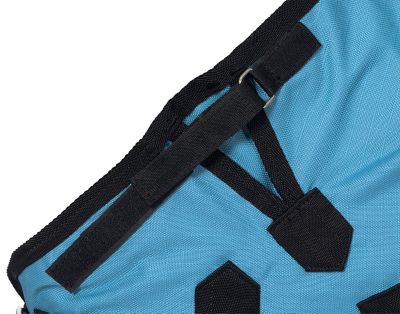
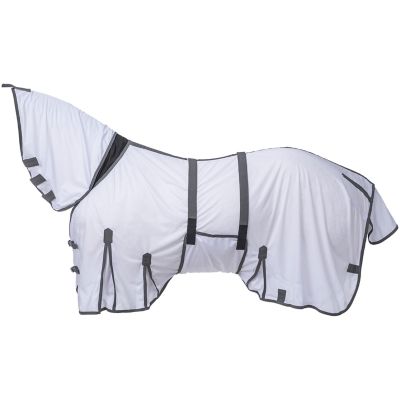
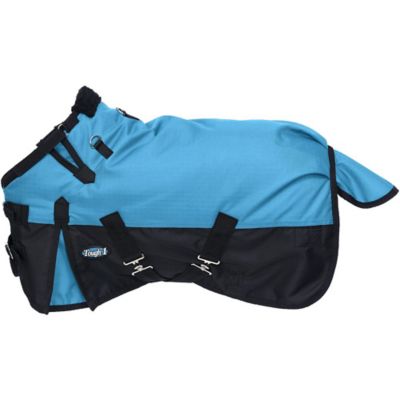
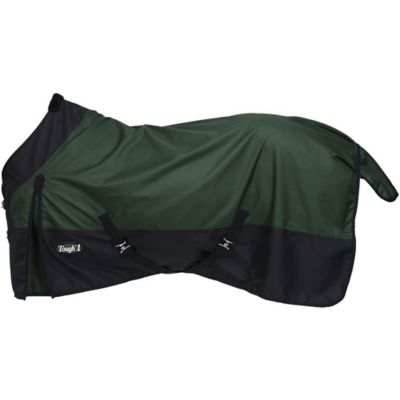
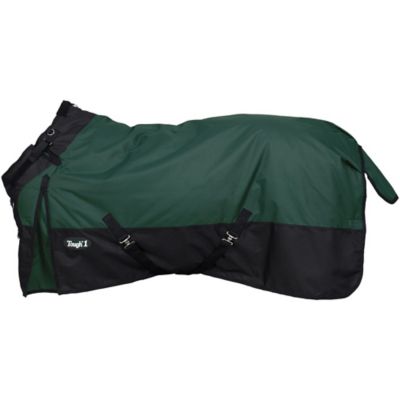
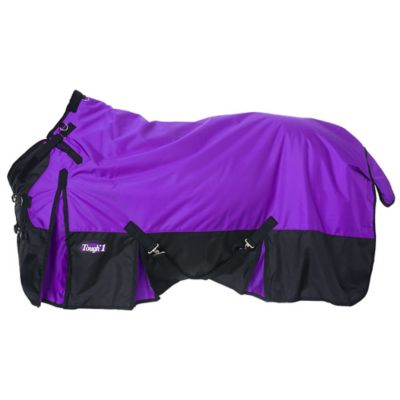
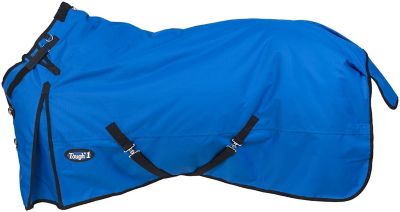
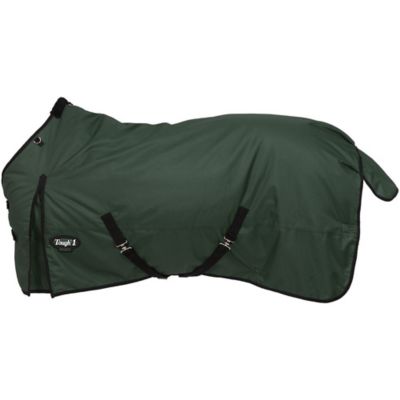
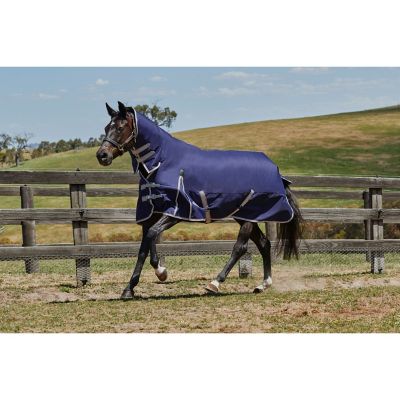
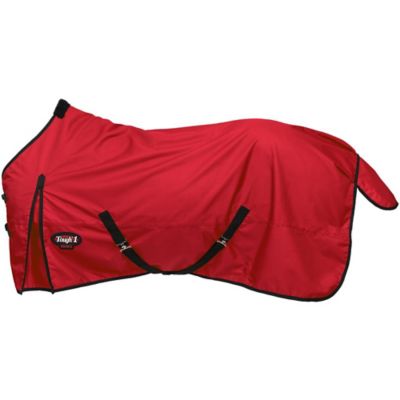
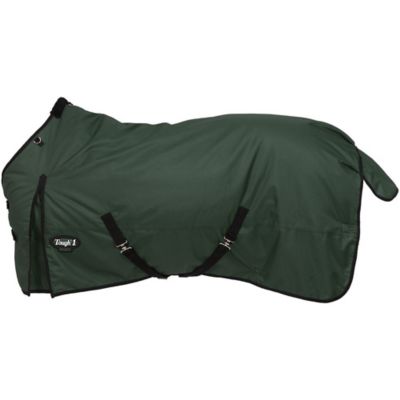
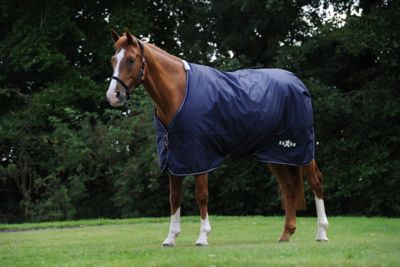
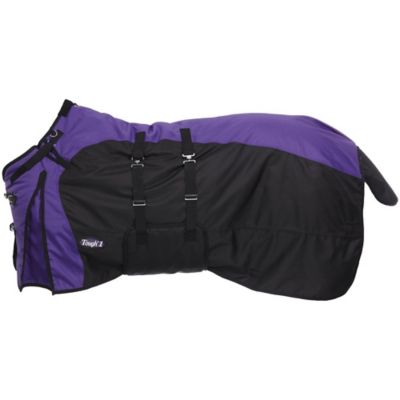
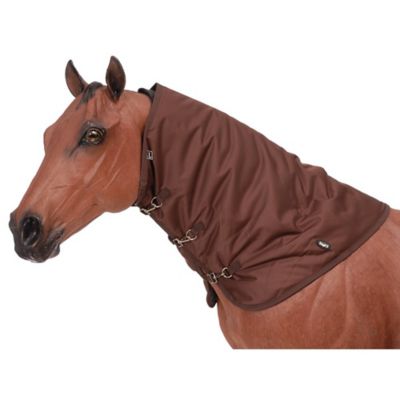
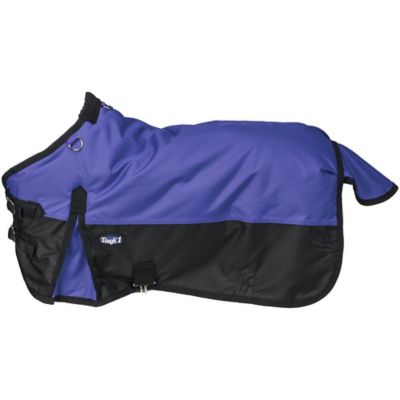
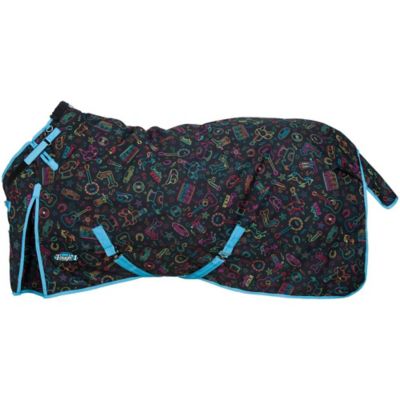
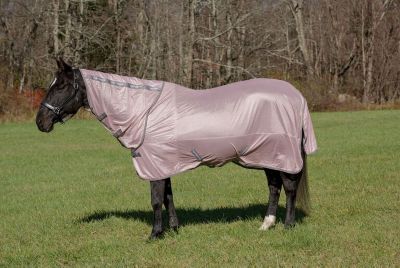
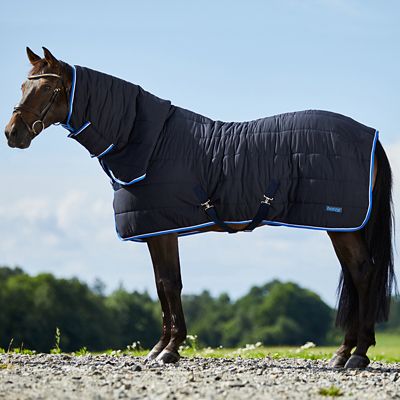
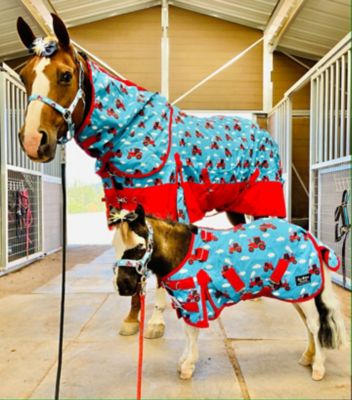
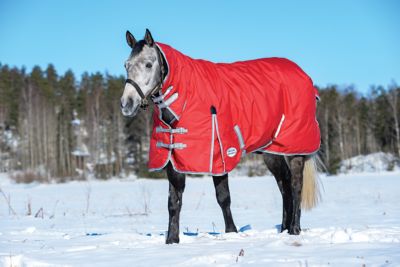
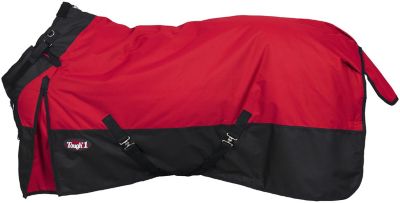
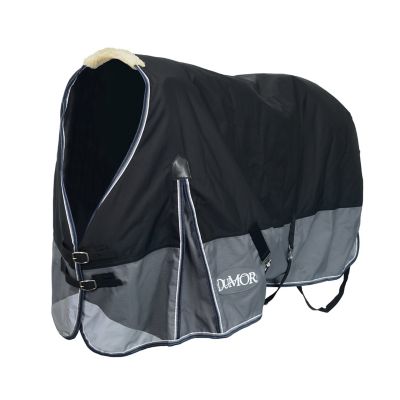
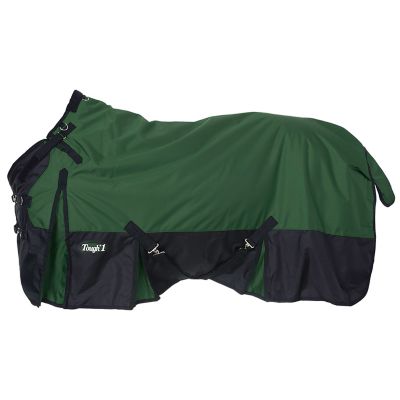
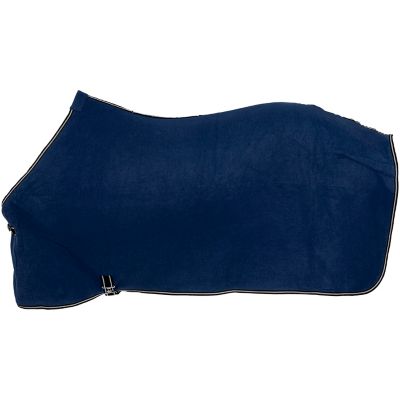
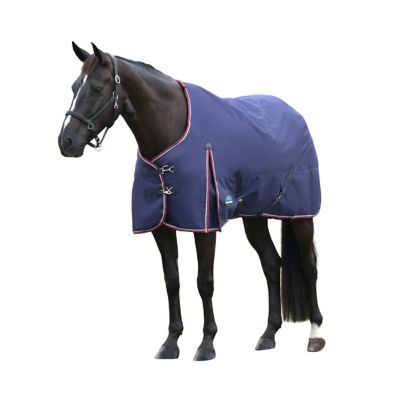
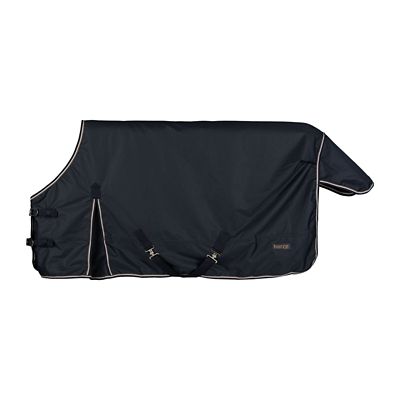
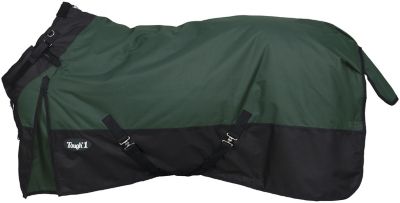
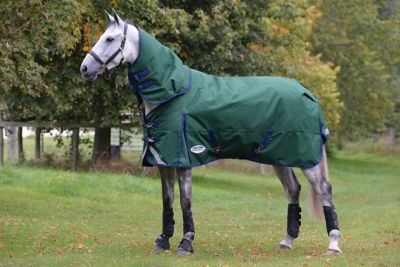
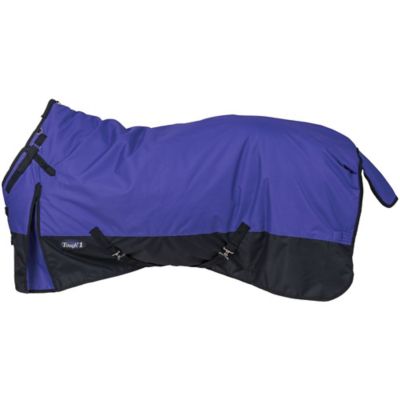
Horse blanket neck covers and combo necks add protection where a standard blanket may leave a horse exposed. The neck, chest and shoulder area can take the brunt of cold wind, driving rain and wet snow, especially when a horse lowers its head to graze or stands with its hindquarters turned toward the weather. A detachable neck cover fastens to compatible blanket loops or D-rings with snaps, straps or hook-and-loop closures, giving you the flexibility to add coverage when conditions call for it and remove it when the day turns mild. A combo neck is sewn directly into the blanket, creating one connected piece that helps close gaps around the withers and upper chest. That full-coverage design can be a good fit for clipped horses, horses with thin winter coats, or animals spending long stretches outside in rough weather. It also means there is one less separate piece to keep track of in the tack room. For lighter rain, wind or fly protection, you may also want to compare
Horse Turnout Sheets for Rain and Wind. The best choice depends on your horse’s coat, daily routine, shelter access and the kind of weather common around your barn.
When choosing a neck cover or combo neck, start with the blanket it will be used with. Detachable covers need compatible attachment points and should sit smoothly against the blanket without pulling at the mane or gaping along the crest. Measure according to the manufacturer’s instructions, since neck shape and blanket sizing can vary from one horse to another. A properly fitted neck piece should allow natural movement for grazing, drinking and turning without sliding backward or pressing into the throat. Watch for rubbing at the mane, withers and shoulders, along with loose areas where rain could run beneath the fabric. A horse that tosses its head, reaches through a feeder or spends time rolling needs secure closures and durable construction. Consider the fill weight, too. A no-fill, or 0g, neck cover offers weather protection without adding much insulation and can work well with a rain sheet or lighter turnout setup. Insulated options, commonly ranging from light 50g fill to heavier 200g or 300g-plus fill, add warmth for colder turnout conditions. Match the neck’s insulation to the blanket and to the horse rather than simply choosing the heaviest option. A naturally woolly horse may need less than a body-clipped senior, while a hard keeper may benefit from a warmer setup. Breathable, waterproof fabric helps keep outside moisture off while allowing heat and sweat to escape, and reinforced closures are helpful for horses that are active, playful or rough on their blankets.
These products are useful for many everyday barn routines, from covering a show horse after a body clip to helping an older horse stay comfortable during a cold spell. A combo neck can simplify turnout when the forecast calls for steady wind, wet footing and low temperatures, since the attached design leaves fewer openings for drafts and precipitation. A detachable cover is handy in changeable weather: add it before a blustery turnout, then take it off for a sunny afternoon or when the horse comes into a warmer stall. Keep an eye on the horse beneath the blanket by checking the skin behind the shoulder and under the chest with your hand. The coat should feel comfortably warm, not damp or sweaty. Remove and dry wet gear before storing it, brush away dirt and hair, and follow the care instructions for washing, waterproofing and drying. A clean, fully dry cover is more comfortable and ready for the next round of weather. Horse blanket neck covers and combo necks can also make a thoughtful gift for a horse owner, barn manager or young rider who is building a practical turnout kit. They are especially useful for someone caring for a clipped horse, boarding in an exposed pasture or preparing for colder conditions. With the right fit, coverage and fill, a neck piece helps keep the horse’s upper body protected while giving the handler a dependable way to adjust turnout gear as the seasons shift.