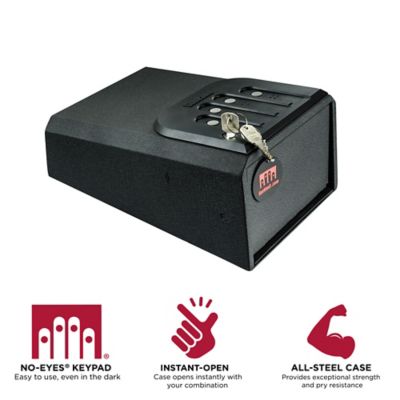
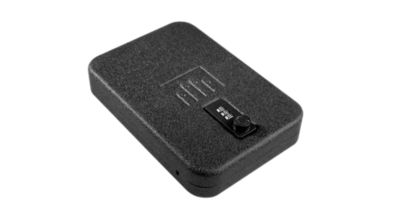
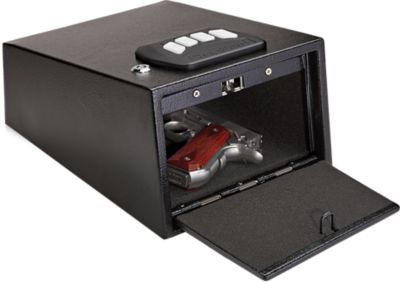
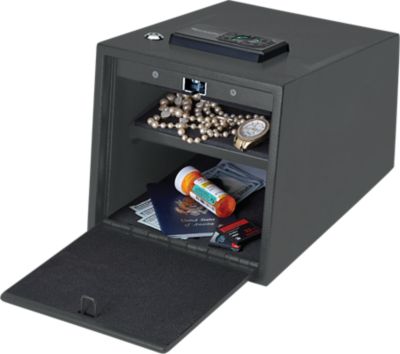
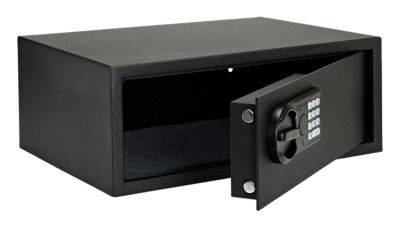
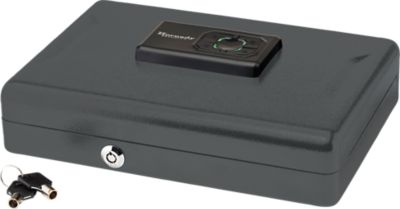
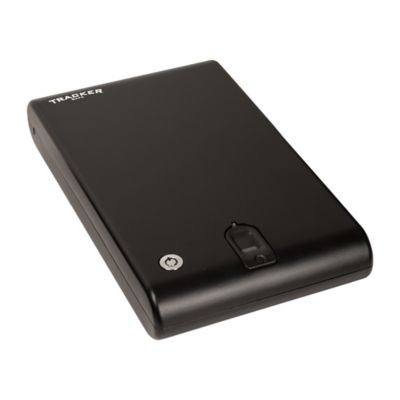
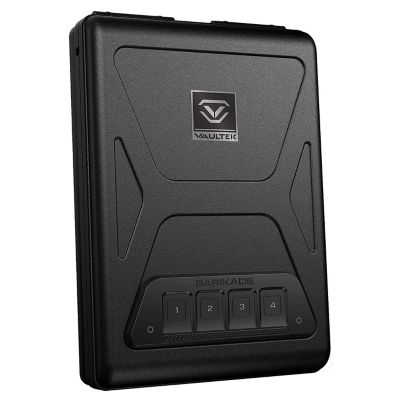
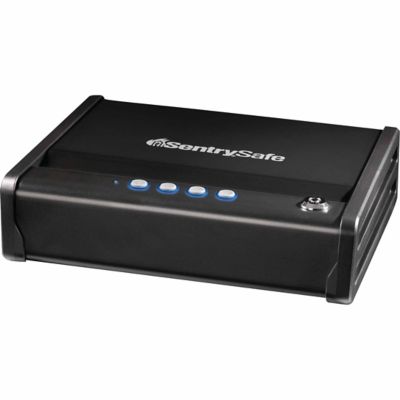
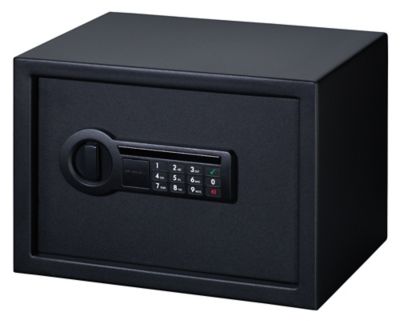
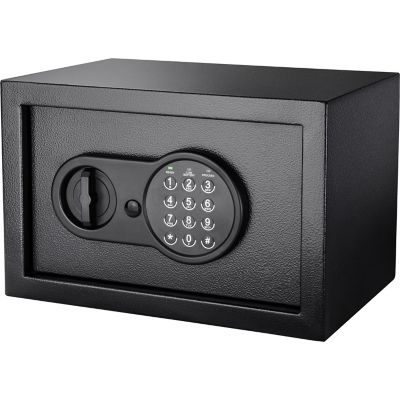
Horizontal gun safes store firearms in a low, lengthwise layout rather than standing them upright in a tall cabinet. That shape can make good use of space beneath a bed, along a closet floor, or in another location where an upright safe would crowd the room. For a farmhouse with shallow closets or a smaller home where every square foot counts, the lower profile offers a practical way to keep firearms locked away without taking over a wall. Some designs open from the top, while others have a front-opening drawer that brings the storage compartment out toward you. The difference matters: a lid needs clearance above the safe, and a drawer needs an open path in front of it. Under-bed gun safes need enough room beneath the bed frame, including any center supports, plus space beside the bed for the compartment to open fully. Measure the narrowest part of the opening, not just the height of the mattress platform. Carpet, bed rails, baseboards, and nearby furniture can all affect the fit. Interior measurements deserve just as much attention as exterior dimensions. A safe that fits neatly beneath furniture may not have the internal length or depth needed for a shotgun, a scoped hunting rifle, or several firearms stored without touching. Locks, drawer slides, padding, and internal dividers take up room, too. Compare the firearm’s overall length, height with its optic attached, and widest points with the actual storage space. Capacity descriptions are a starting point, but firearm shapes and accessories can change how much fits comfortably. A padded liner or fitted cradle can help prevent contact with bare metal, while separate compartments can keep smaller belongings from shifting against a firearm’s finish. Hunters, sport shooters, and firearm owners looking for a lower storage footprint may find this layout well suited to their homes. Its biggest advantage is the shape; responsible storage still depends on the safe’s construction, locking system, installation, and consistent use.
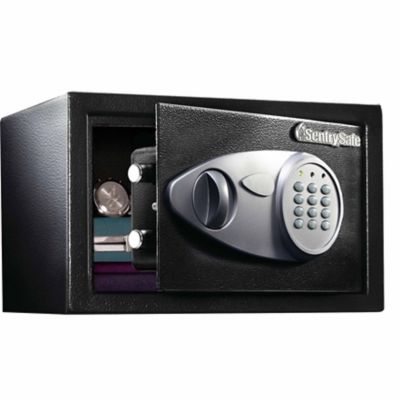
Steel construction is common in horizontal gun safes, but the details behind that steel shell make a difference. Body thickness, lid or door reinforcement, hinge placement, and the way the locking bolts engage all contribute to resistance against forced entry. Where steel gauge is listed, a lower gauge number generally means thicker steel; that number alone does not describe the security of the entire enclosure. Close-fitting seams and protected locking components deserve attention alongside the weight and overall dimensions. A powder-coated or painted exterior helps shield the metal from everyday wear, though scratches and damp conditions can still lead to corrosion. Lock choices commonly include keyed entry, electronic keypads, fingerprint readers, and RFID access, with the exact options varying by design. A keypad avoids the need to carry a key for routine access, while a fingerprint reader or RFID credential offers another way for an authorized adult to open the safe. Electronic features should fit the household, not complicate it. Clear low-battery alerts, understandable controls, and a practical backup-entry method are worth considering, especially for a safe tucked beneath furniture. Cold, dirt, moisture, or changes to a fingerprint can affect some biometric readers, so follow the manufacturer’s enrollment directions and check operation periodically. For a closer look at electronically controlled storage,
Smart Safes is a related category to explore. No entry method takes the place of keeping keys, codes, and access credentials away from children and other unauthorized people. A low-profile enclosure is not automatically fire-resistant or waterproof, either. Many compact designs focus on locked storage and convenient placement rather than insulation against a house fire. Any fire or water protection should come from the stated rating and testing information, not from the safe’s appearance or weight. For household firearm storage, keep firearms unloaded and locked, with ammunition secured separately. Concealment beneath a bed adds discretion, but it does not replace a functioning lock or a sound storage routine.
Installation and upkeep help a horizontal gun safe serve its purpose over the long haul. A compact enclosure can be easier to carry away than a large upright safe, making an approved anchoring method an important consideration. Some designs have mounting holes for attachment to a floor or another suitable structural surface. The right fasteners depend on the safe and the mounting material; wood framing, concrete, and vehicle mounting points call for different approaches. Follow the manufacturer’s directions, confirm that the surface can support the loaded enclosure, and check for wiring, plumbing, or other hidden components before drilling. A safe resting on a loose shelf or thin furniture panel does not gain the same protection as one secured to a suitable structure. For vehicle storage, choose an enclosure specifically intended for that setting and a mounting location that does not interfere with seats, airbags, wiring, or vehicle controls. A home under-bed safe should not be assumed suitable for a truck simply because its dimensions fit. Vehicle storage also brings temperature swings, condensation, and legal requirements that differ by location; check applicable firearm transport and storage laws before traveling. Back at home, cooler weather can bring wet boots, damp coats, and moisture indoors after a day outside. Firearms should be dry and cared for according to their manufacturer’s directions before they go into storage. Keep the safe in a dry location where possible, inspect the interior for condensation, and consider a manufacturer-approved moisture-control option if needed. Check liners for trapped dampness, wipe the exterior with a soft cloth, and keep grit out of drawer tracks and locking components. Lubricate only where and how the manufacturer recommends. Electronic locks need fresh batteries on the specified schedule, with backup keys stored in a separate secure place rather than inside the safe. Leave enough room around the opening to inspect the compartment and operate it without moving a pile of boots or boxes first. With thoughtful placement and regular attention, horizontal firearm storage can fit into everyday rural life while helping keep firearms out of unauthorized hands.