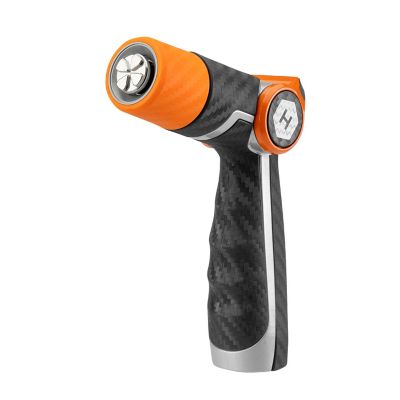
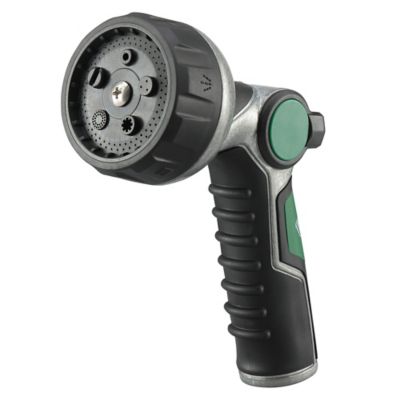
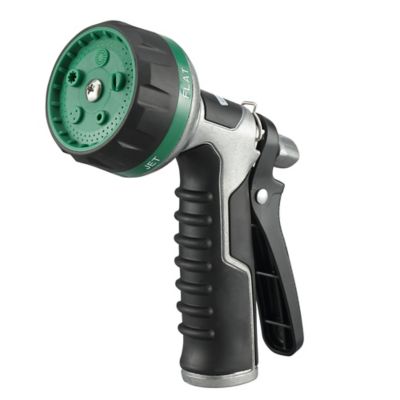
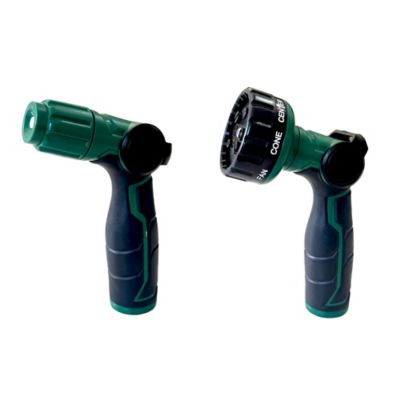
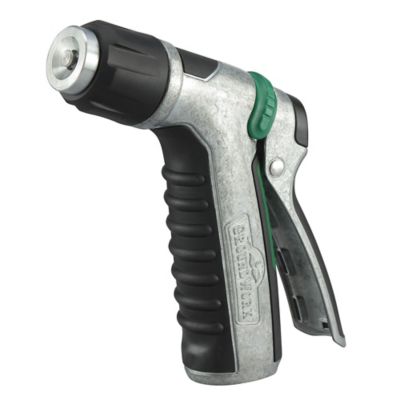
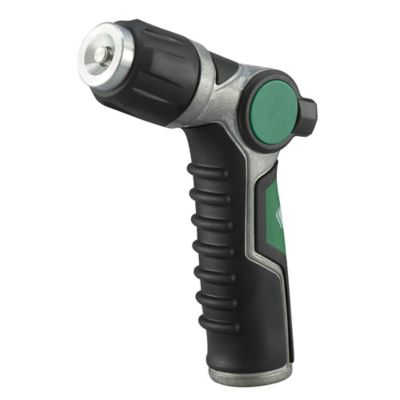
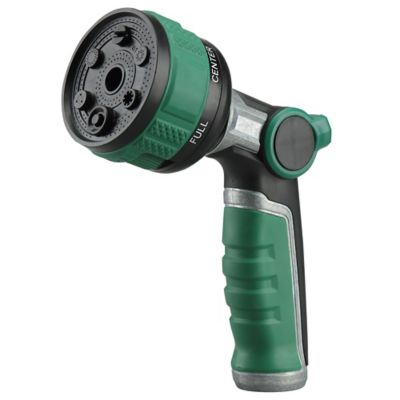
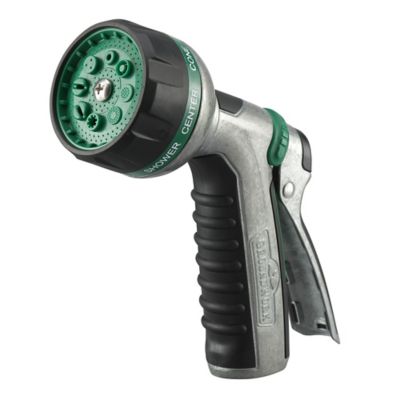
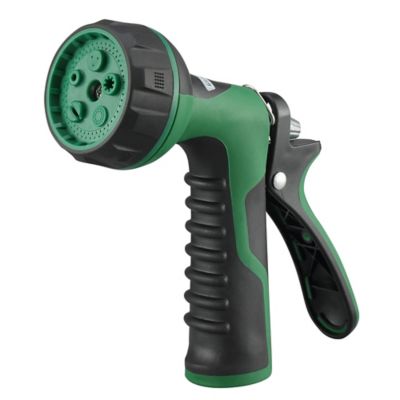
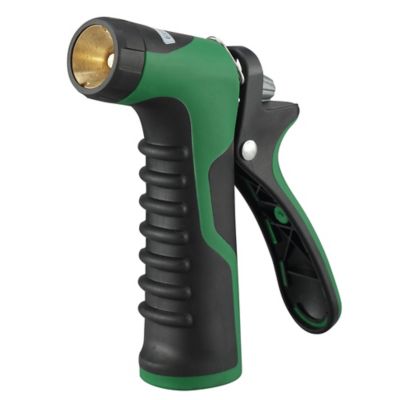
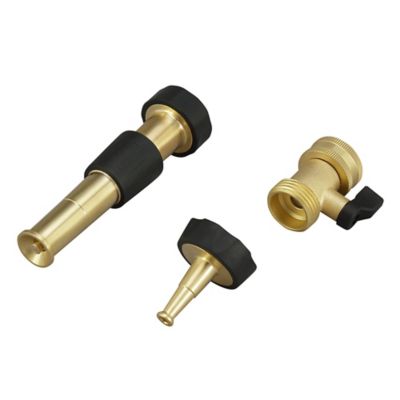
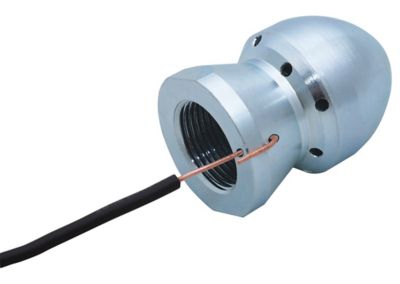
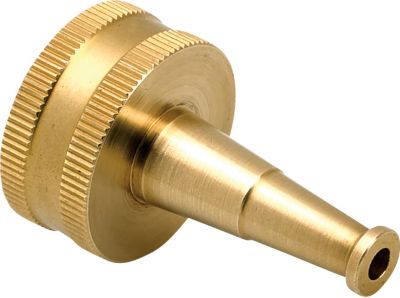
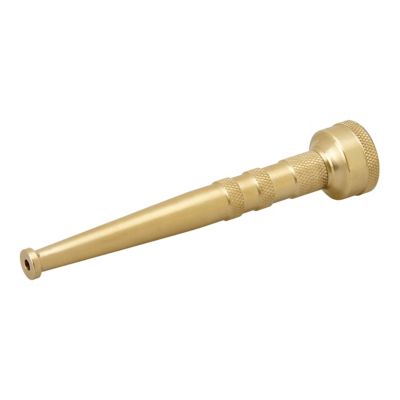
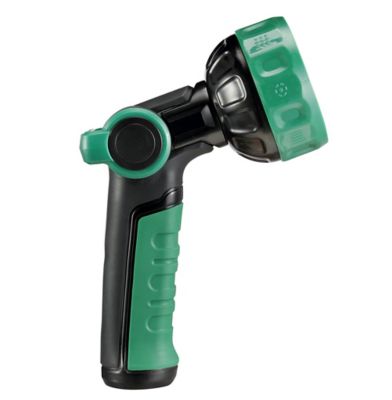
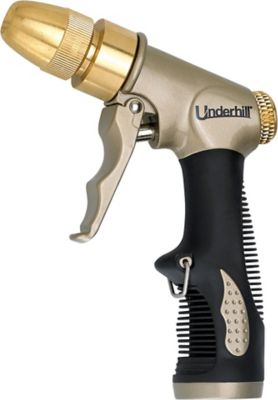
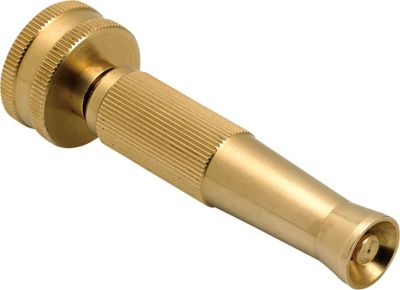
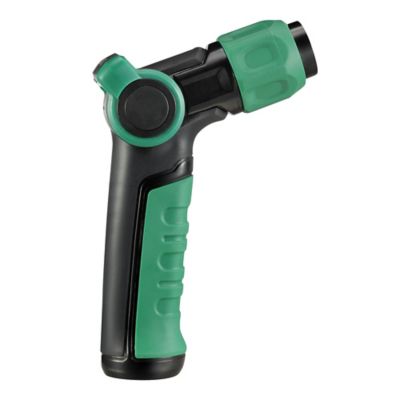
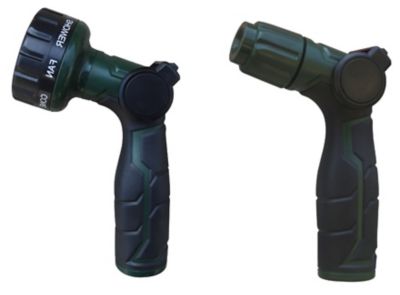
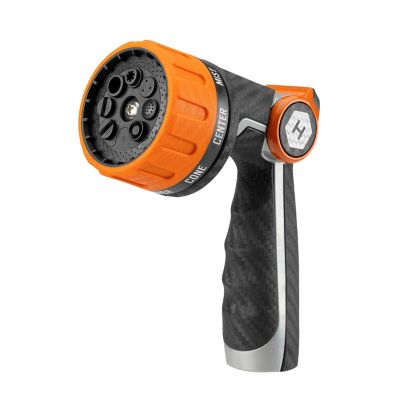
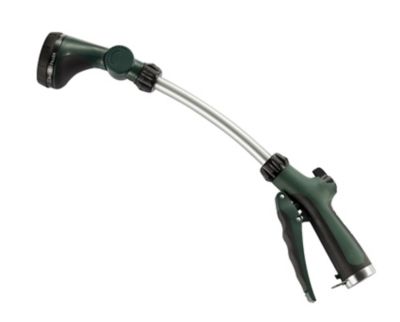
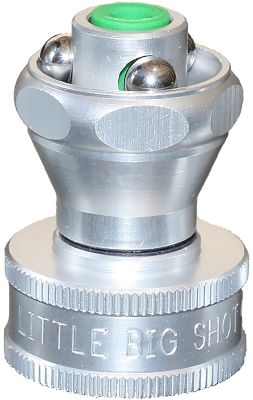
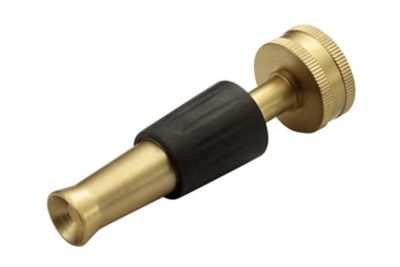
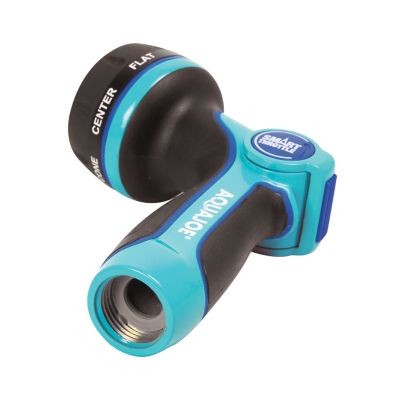
High-pressure garden hose nozzles concentrate the water coming through a standard garden hose into a directed stream for rinsing tools, washing vehicles, clearing loose dirt from walkways, and handling everyday cleanup around a home or small farm. They run on the existing water supply, without a separate motor or pump. A narrow opening focuses the stream, but the nozzle does not increase the pressure supplied by the faucet or turn a garden hose into a pressure washer. Results depend on the water supply, hose diameter and length, connection fit, and spray setting. That distinction matters when comparing a little dust on a wheelbarrow with deeply embedded grime on concrete. A focused jet can knock loose fresh mud and rinse grass clippings from suitable surfaces, while stains, grease, and heavy buildup may call for a brush, an appropriate cleaner, or equipment designed for stronger cleaning. Adjustable twist nozzles commonly move between a narrow stream and a wider spray, making them handy when cleanup shifts from muddy rubber boots to the bed of a utility cart. Multi-pattern nozzles offer separate settings that may include jet, flat, shower, mist, and soaker, depending on the design. A flat spray covers a broader strip when rinsing a driveway, while a shower setting spreads water across a garden bed with less force in any one spot. Tender seedlings, loose potting soil, and delicate blooms need a gentle pattern rather than a concentrated blast. For gardeners, animal owners, and folks who keep a hose near the barn or garage, that range of control can make one nozzle useful for several chores. A defined stream also helps reach into the corners of an empty feed pan or rinse dirt from a shovel blade without soaking everything nearby. The best match is a nozzle whose spray range suits the work, not simply the one with the boldest pressure claim.
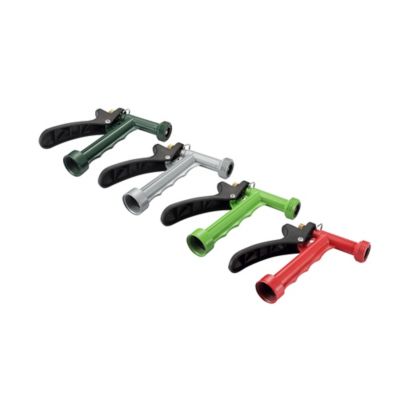
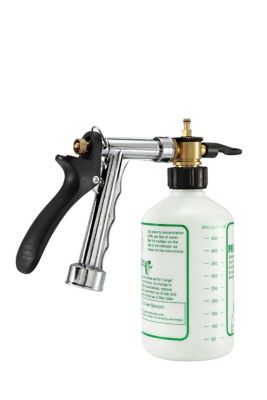
Materials, connections, and handle design all shape how a garden hose nozzle feels in the hand and holds up to regular chores. Brass bodies and fittings have a substantial feel, while aluminum can keep weight down and stainless steel components offer corrosion resistance. Molded polymer bodies are generally lighter, and some designs combine a metal connection with a lighter outer shell. Construction varies, so a metal-looking finish alone does not tell the whole story. Connection material, valve construction, grip coverage, and the protection around the nozzle head are worth considering alongside the body. Rubberized grips give wet hands a more secure hold, though the size and shape of the handle matter just as much. A pistol-grip trigger lets the operator start and stop water at the handle; a thumb-control lever changes flow without requiring a steady squeeze. A twist-style barrel keeps the design straightforward, while a trigger lock can ease hand strain during longer rinsing jobs. Shutoff controls are especially handy when moving between a row of containers and a nearby potting bench, but the faucet remains the place to shut down the supply when work is done. Fit deserves close attention, too. Many U.S. garden hose nozzles connect to a standard 3/4-inch garden hose thread, often identified as GHT. That connection is different from pipe thread and from many pressure washer fittings, even when the openings look similar. A flat hose washer inside the coupling helps seal the joint; damaged or missing washers often lead to drips at the handle. Cross-threading, overtightening, and mismatched fittings can damage a connection rather than improve the seal. Quick-connect adapters can simplify moving between attachments when both sides match, but they add another connection to check for leaks. Hose condition matters as well: kinks, a partly closed faucet, clogged screens, and restrictive fittings can weaken the stream before water ever reaches the nozzle. A longer hose run can also reduce performance, particularly when the supply is already limited.
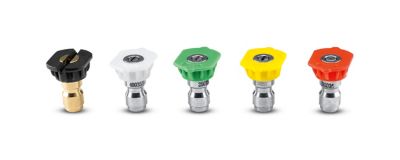
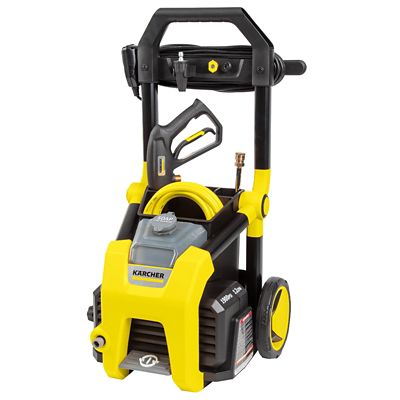
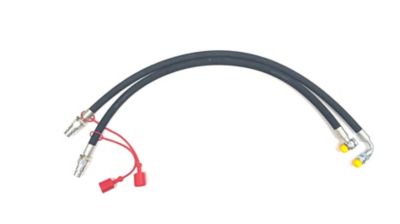
For regular cleanup, a high-pressure hose nozzle works best as part of a sensible setup that matches the force of the spray to the surface. On a vehicle, loosening grit and working from the upper panels downward helps carry dirt away; directing a tight jet at damaged paint, loose trim, seals, or electrical components can cause trouble. Around equipment, follow the cleaning directions and keep water away from places that are not meant to get wet. Never direct a concentrated stream toward people or animals, and keep children clear of active cleaning work. Eye protection is sensible when rinsing gritty tools or muddy wheels, where debris can splash back. There is also a clear difference between garden hose attachments and
Electric Pressure Washer Wands: a pressure washer wand belongs to a powered system and must match that machine’s connection style, pressure rating, and flow requirements. It is not a direct replacement for a hose-end nozzle. For ordinary watering and rinsing, keeping a garden hose nozzle working well usually comes down to small habits. Flushing dirt from the hose before attaching the nozzle helps keep grit out of the valve and spray openings. If the pattern becomes uneven, checking an accessible inlet screen and cleaning it according to the manufacturer’s directions may restore a steadier spray. Avoid forcing metal objects into small openings, which can damage the spray passage. After the job, shut off the faucet, release trapped pressure through the nozzle, and drain the attachment before putting it away. Keeping it off the ground and out of the path of tires helps protect both the handle and the hose connection. For someone who spends plenty of time tending beds, cleaning tools, or keeping a small acreage in order, an easy-to-hold nozzle with well-matched settings can be a practical gift, especially when the connection and controls suit the hose setup already at home.