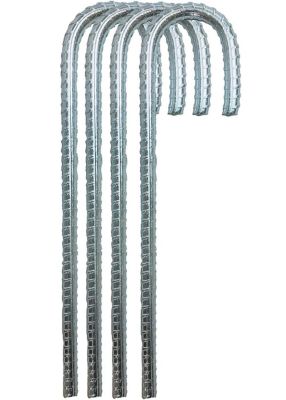
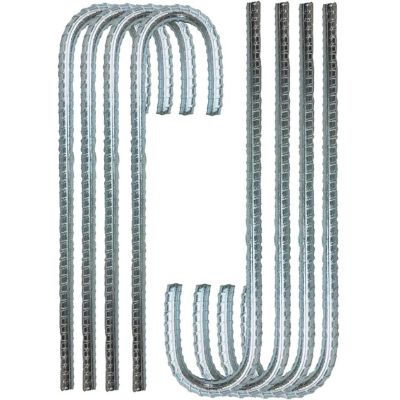
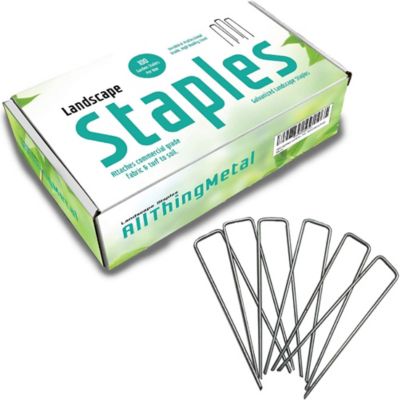
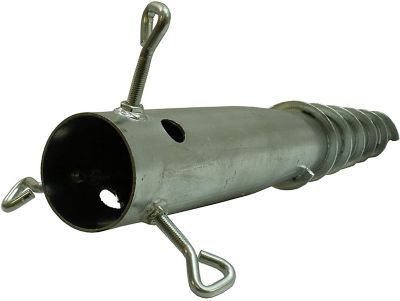
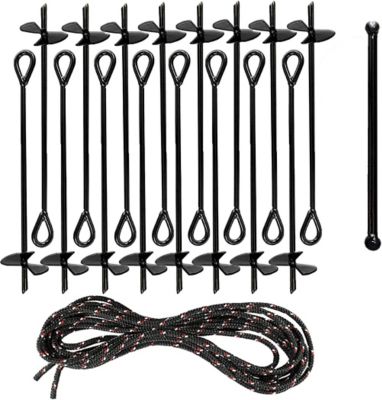
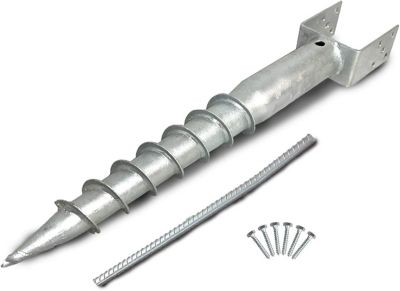
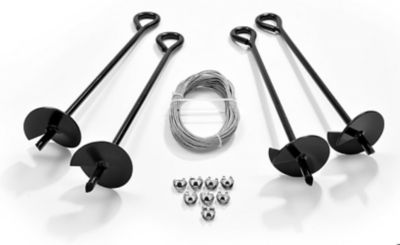
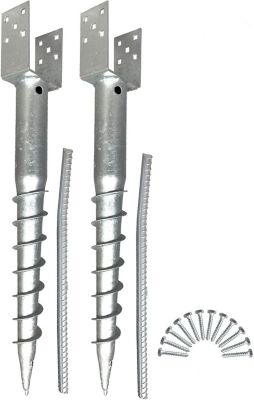
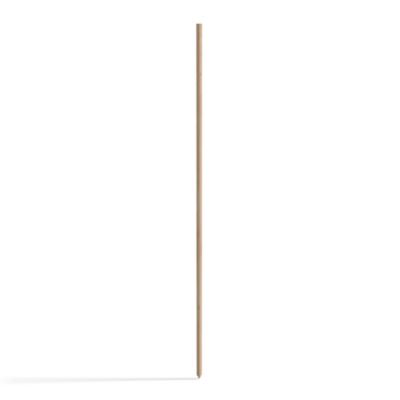
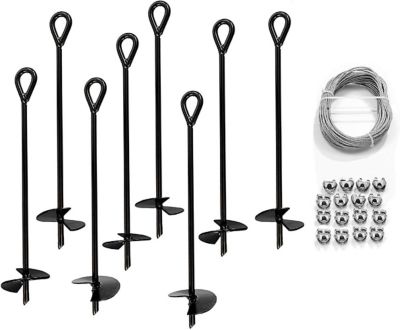
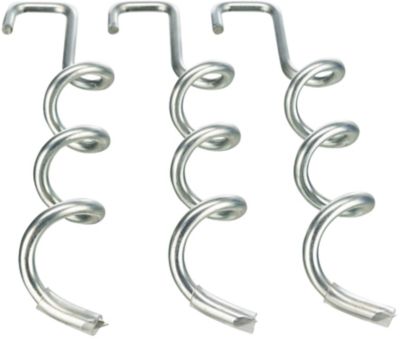
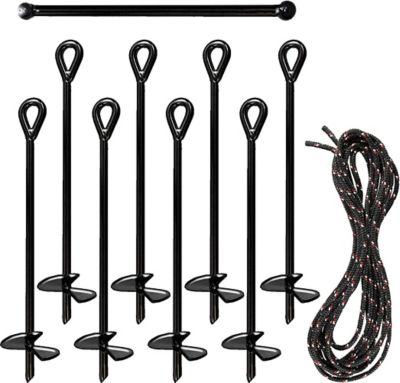
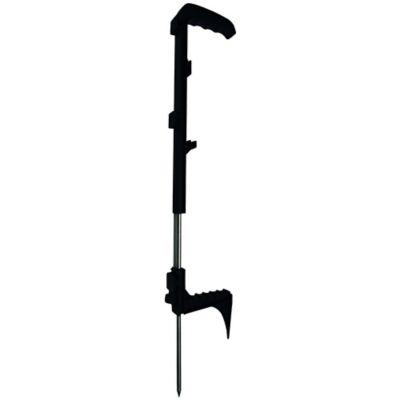
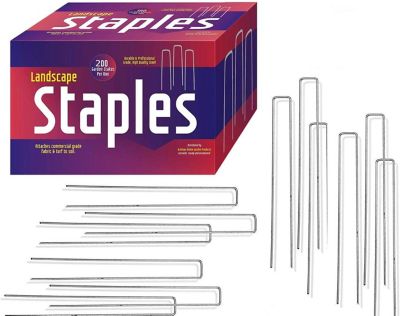
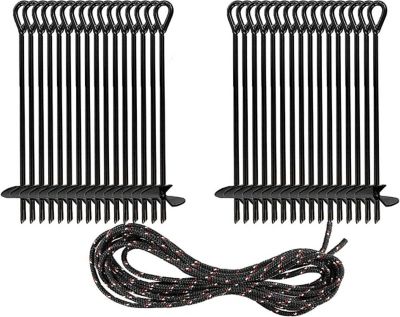
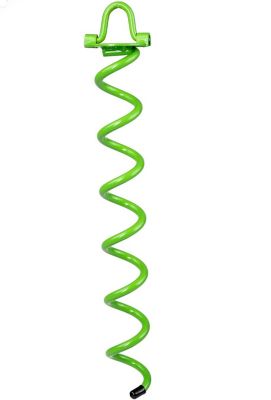
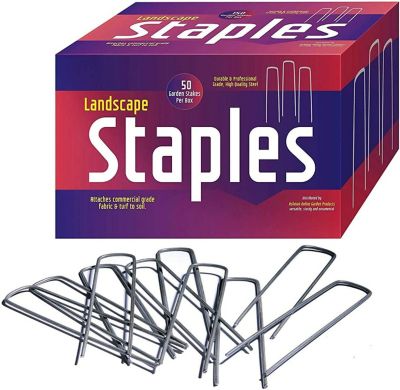
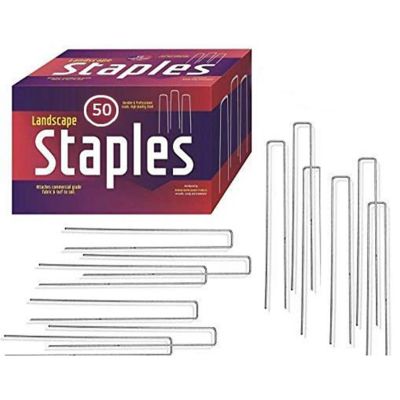
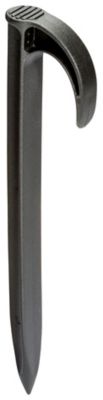
Ground stakes are pins, pegs or rods that go into the soil to hold materials in place, provide an anchoring point or mark a location. They handle plenty of everyday jobs around a garden patch, campsite, yard or acreage, from keeping landscape fabric flat to securing a tarp line or holding the bottom edge of lightweight fence mesh against the ground. The shape matters as much as the length. U-shaped landscape staples have two legs and a connecting crown that sits over fabric, netting, sod or small irrigation lines. Straight stakes offer a simple profile for marking positions or fastening materials through a hole or attachment point. Hooked and looped stakes provide a place for a cord, strap or tie, while screw-in ground anchors have a spiral section that turns into the soil. Heavier steel rods and rebar-style stakes serve different anchoring jobs than small landscape pins, but their suitability depends on the connection, soil and demands of the project. Wooden stakes often serve as visible markers for garden rows, layout lines and work areas rather than anchors for equipment. For someone laying a weed barrier along a gravel path, a low-profile staple keeps the material close to the soil without leaving a tall post in the way. At a campsite, a stake with a suitable head or loop provides an attachment point for a tent line. Along a garden fence, the right pin can help close gaps beneath mesh, though it does not replace the posts and fasteners that support the fence itself. These differences make ground stakes useful to gardeners, campers, homeowners and folks tending larger properties, but they also explain why one shape does not fit every job. A stake meant to pin down fabric is not a substitute for an anchor specified for a play structure, shelter or other equipment. The intended application and the manufacturer's requirements are the starting points for matching the hardware to the task.
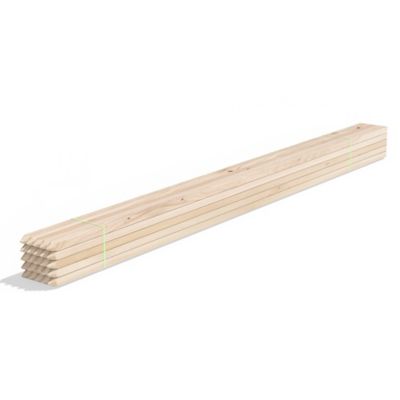
Materials, dimensions and soil conditions all affect how a ground stake performs. Steel provides stiffness for driving and resistance to bending, with rod thickness and construction influencing how much force the stake can handle. Galvanized finishes help protect steel against corrosion, while other protective coatings create a barrier between the metal and its surroundings. Scrapes and worn spots can expose the metal beneath that barrier, especially on stakes that are driven, pulled and repositioned often. Aluminum offers a lighter option for carrying camping gear, though its resistance to bending depends on the shape and thickness. Plastic stakes suit some lighter fastening and marking jobs, with performance varying by design and material. Wood provides an easy-to-see marker that can carry a pencil mark or support a layout string, but ground contact can shorten its service life. Length affects how far a stake reaches into the soil, while width, diameter and profile affect the surface area pressing against it. Loose, sandy soil may offer less resistance to pulling than firmly packed soil; rocky ground can block insertion or push a slender stake off course. A longer stake is not automatically the better fit if it cannot reach its intended depth or leaves an exposed section where someone could trip. The head or crown also needs to match what it holds. A fabric staple should span the material without cutting through it, and an irrigation-line pin should leave the tubing open rather than pinch it shut. A hook, eye or attachment slot needs room for the specified cord or hardware without letting it slip free. For anchoring jobs, holding capacity cannot be judged by appearance alone. Soil conditions, installation depth and the direction of the pull matter, along with any stated limits for the anchor. Matching those details helps distinguish a simple landscape fastener from hardware intended to resist greater loads.
Fit and care matter after the stake is in the ground, too. A staple that sits close to the surface is less likely to catch a boot, rake or mower than one left standing proud of the soil. Exposed rod ends belong away from walking routes, play areas and places where animals might brush against them, with suitable protective caps where the design calls for them. Stakes near a pasture lane or garden gate should not leave sharp edges at hoof or paw level. Before any ground penetration, underground utilities, irrigation tubing and other buried lines need to be located; a short stake is not a reason to assume the area is clear. Around plants, anchoring ground cover and supporting stems are separate jobs.
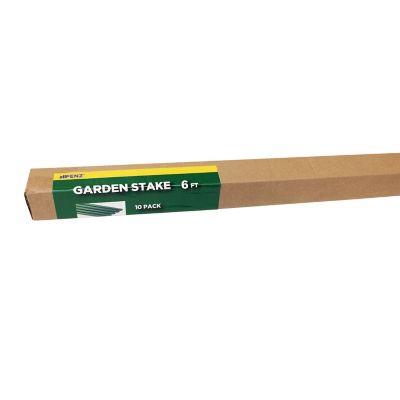
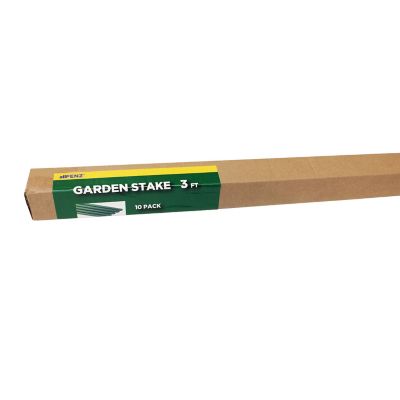
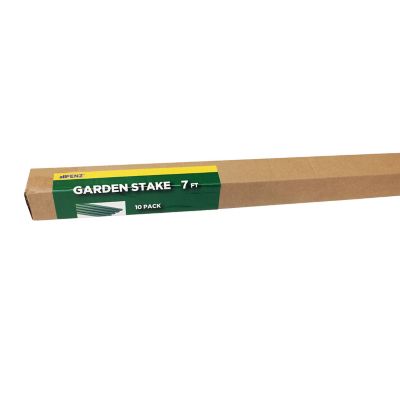
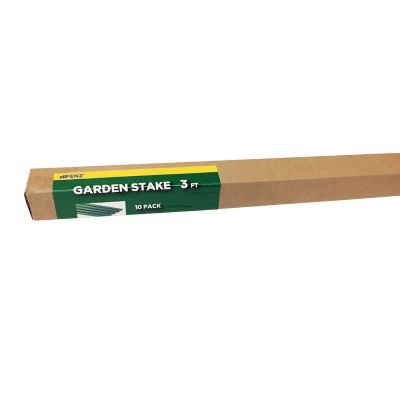
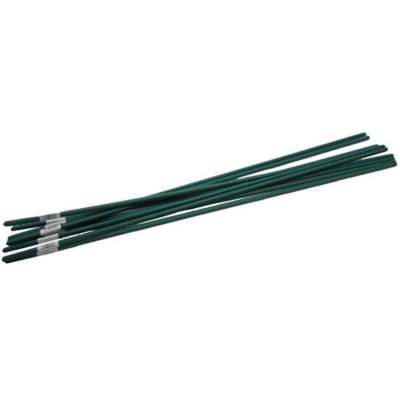
Garden Stakes provide upright support for plants such as tomatoes and climbing flowers, while ground staples keep fabric or netting against the soil. Plant ties should allow room for growth rather than squeeze a stem, and stakes should sit where they will not interfere with routine tending. For ground anchors holding equipment, checks for movement, loosened connections or bent hardware help reveal when the setup needs attention. Stakes securing fabric benefit from occasional inspection as foot traffic, gardening work and shifting material can lift an edge or work a pin loose. Care is straightforward: removing clinging soil makes damage easier to spot, and letting stakes dry before storage helps limit corrosion on exposed metal. Bent rods, split wooden stakes and cracked plastic pieces may no longer perform as intended. Coatings deserve a look as well, particularly around the tip and head where contact is heaviest. Keeping removed stakes together, with points contained and cords untangled, makes the next job easier and keeps sharp hardware out from underfoot. Whether the task is a short stretch of garden mesh or a campsite setup, suitable ground stakes keep the connection between the material and the soil simple, tidy and suited to the work.