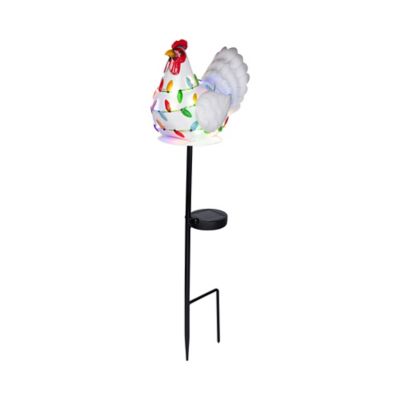
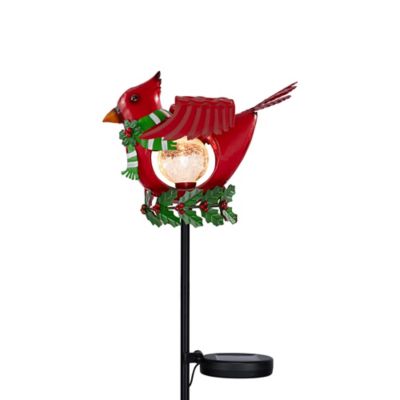
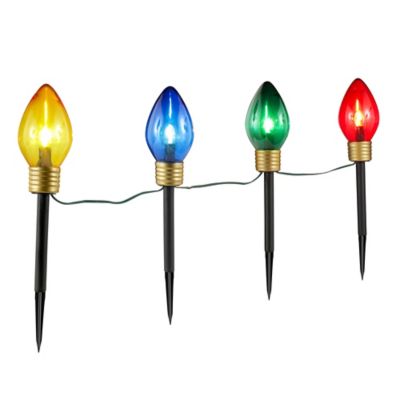
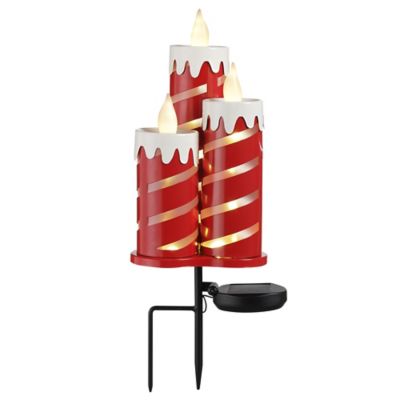
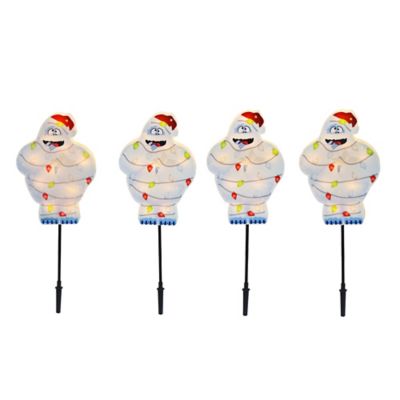
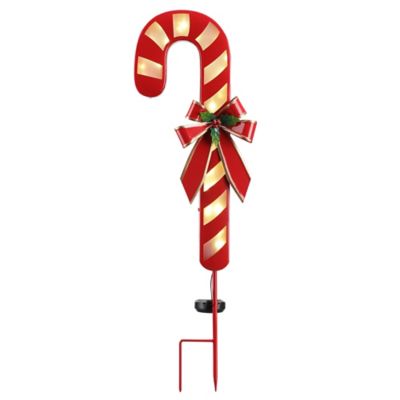
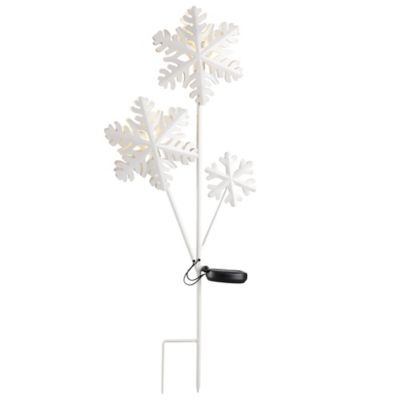
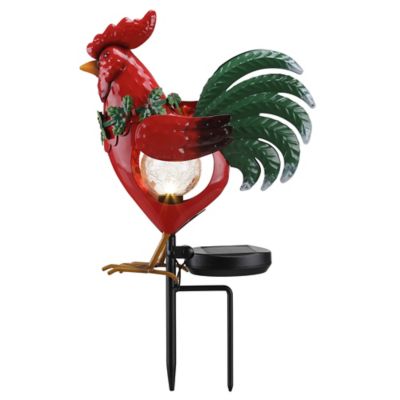
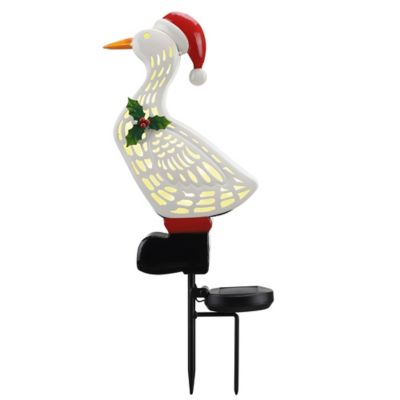
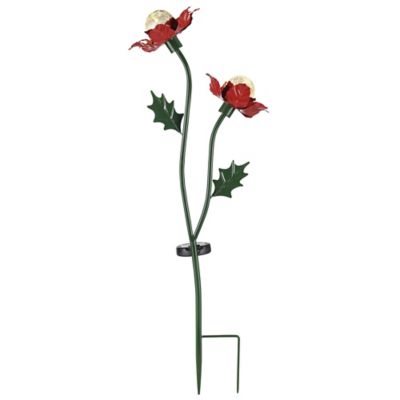
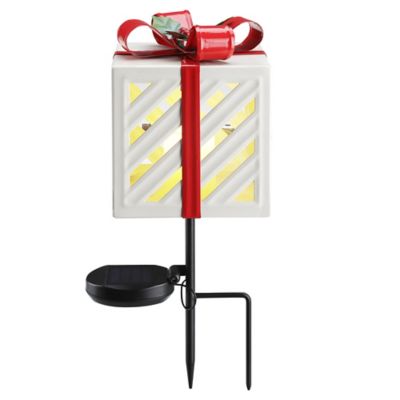
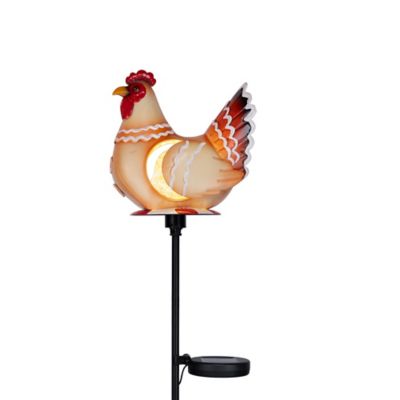
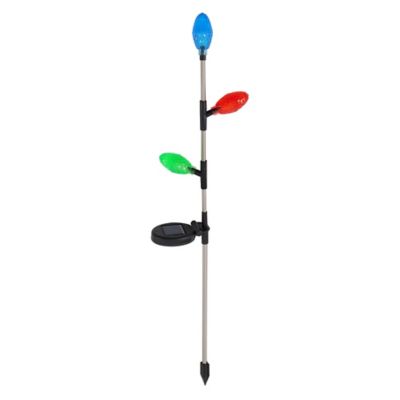
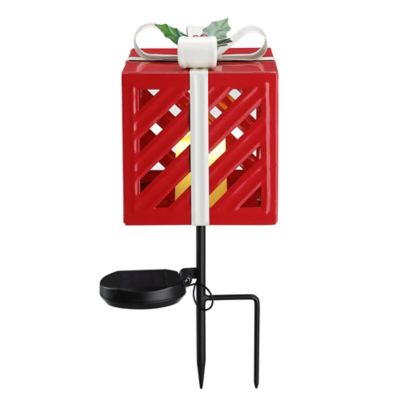
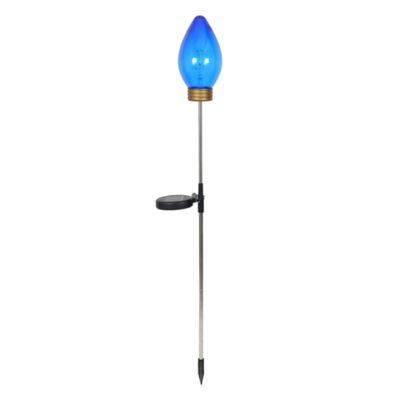
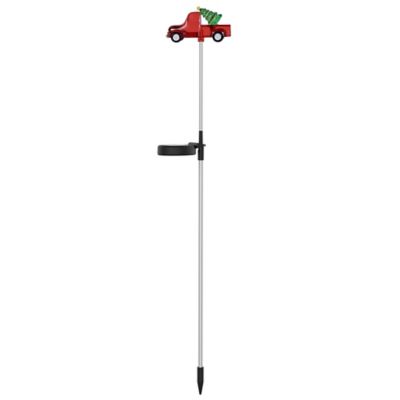
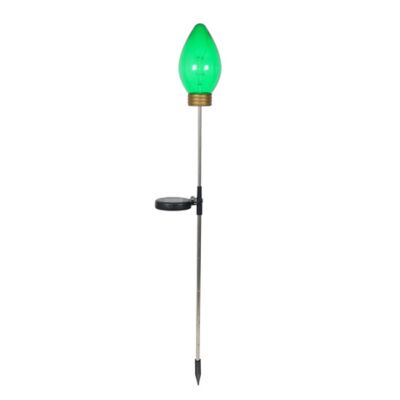
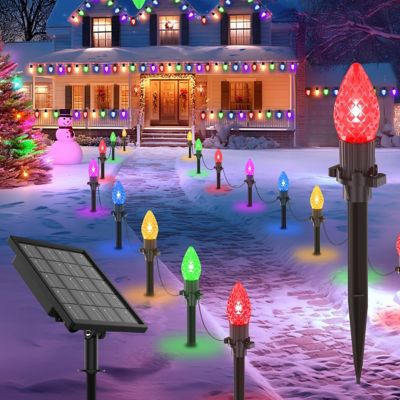
Christmas light stakes help bring a holiday display down to ground level, where a line of bulbs can trace a front walk, frame a flower bed, or brighten the stretch between the porch and the gate. They give light strings a place to sit instead of leaving bulbs scattered across the grass, and they can make a long run look more even from the road. Around a farmhouse, a small-town front yard, or a place with a broad gravel drive, that simple outline can pull the whole Christmas scene together without covering every fence rail and roof edge. The category includes stakes that support separate light strings as well as lighted stakes that become part of the display themselves. That difference matters when matching pieces to lights already tucked away in the shed or planning a fresh layout. Support stakes need clips or openings that suit the bulb socket or wire arrangement; a loose fit can let lights shift, while a tight fit can pinch a cord or put pressure on a socket. Some designs hold larger holiday bulbs, while others suit smaller light strings, so compatibility deserves a close look rather than a guess based on appearance. Stake height also changes the finished look. A low row creates a tidy border close to the lawn, while taller stakes lift the lights where grass, fallen leaves, or a shallow layer of snow might otherwise hide them. Along a curved walkway, closer spacing can help the lights follow the bend without pulling the cord taut. Across a wide yard, a more open arrangement may suit the scale of the space. Consistent spacing and a little slack between attachment points help keep the outline orderly without making the string carry unnecessary strain. The best fit is a layout that leaves room for boots, porch visitors, and everyday chores while keeping the lights clearly outside the walking path.
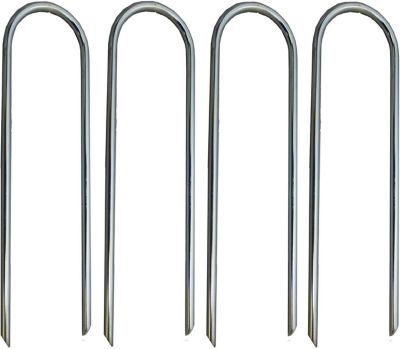
The ground beneath a display matters just as much as the view from the porch. Firm soil can hold a stake steady, but rocky ground, tree roots, and frozen patches can make placement harder. A narrow point may slip into a prepared opening more easily, while a broader shaft can offer more surface contact in softer soil; actual holding strength still depends on the stake design and ground conditions. Plastic stakes are generally light to handle and do not rust, though their tolerance for cold, sunlight, and bending varies by material. Metal stakes can provide a slimmer profile and a firm support, with protective finishes helping limit exposure to moisture. Neither material benefits from being forced into ground that will not give. A stake that bends, cracks, or loses its coating during placement may not hold the light as intended. The shape of the top matters, too: a smooth cradle or properly sized clip should support the intended connection point without scraping insulation or pressing against the bulb. For taller arrangements, the portion below ground needs enough purchase to resist ordinary movement from wind or a bumped cord. Christmas light stakes belong in a layout planned around outdoor electrical safety, not just a pleasing pattern. Light strings, extension cords, and connections need ratings suited to their location, with ground-fault circuit-interrupter protection for outdoor power. Connections should stay clear of puddles and drainage channels, and stakes should never pierce wiring to hold it in place. A driveway border also needs clearance from tires, trailers, snow-removal equipment, and the spot where folks step out of a truck. Near a barn or pasture fence, keeping lights and cords away from livestock helps prevent chewing, snagging, and damage. These practical details leave the display doing its job without getting in the way of feeding time, deliveries, or the trip back from the mailbox.
A good-looking arrangement does not have to be complicated. Warm white lights can give a front walk a soft outline, while a run of colored bulbs brings a familiar Christmas feel to a lawn or entry. Matching stake heights helps a straight border read cleanly, and a repeated pattern can tie together beds on either side of the porch. Light output matters around steps and uneven ground, but holiday lighting should not take the place of lighting intended for safe passage. Glare is worth considering as well, especially where bulbs sit close to a road or shine toward a neighbor’s windows. For lighting beyond the Christmas display,
Garden Stake Lights offer another way to think about paths, planting beds, and outdoor gathering spots, with power sources and placement needs that may differ from holiday light supports. Christmas light stakes can also make a practical gift for someone who enjoys dressing up the yard each year, particularly when the stake style matches that person’s existing light strings. For a family member with a long front walk or a neighbor who takes pride in a crisp lawn outline, fit and ease of handling are more helpful than an elaborate arrangement. After the holiday display comes down, a little care makes the next setup less of a chore. Soil brushed from the shafts, moisture wiped away, and a check for split plastic, bent points, rough edges, or damaged clips can reveal pieces that need attention before storage. Pulling from the stake itself rather than tugging on the light string helps protect both parts. Fully dry stakes stored together in a labeled container are easier to find than loose pieces scattered among tangled cords. Keeping sharp ends covered or contained also protects hands and nearby light strings. With compatible fittings, sensible placement, and straightforward care, these small supports can remain a useful part of the household’s Christmas lighting setup year after year.