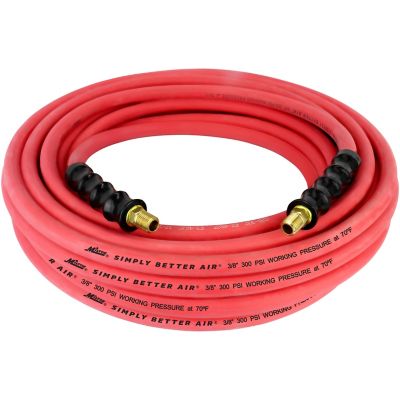
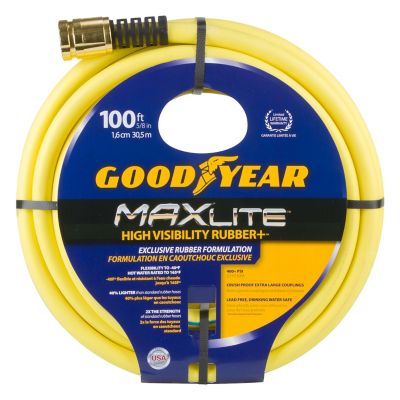
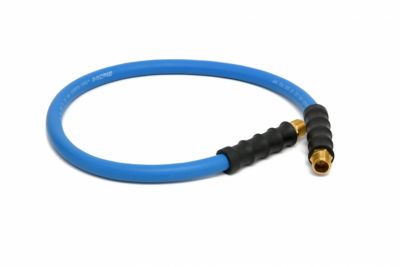
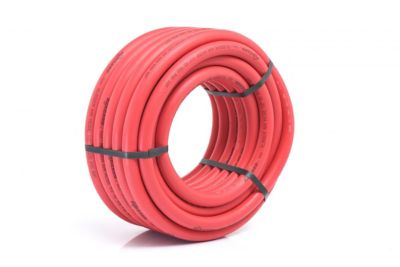
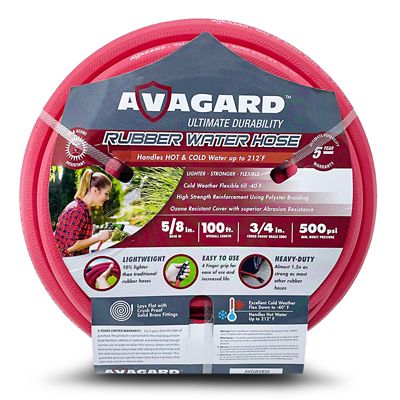
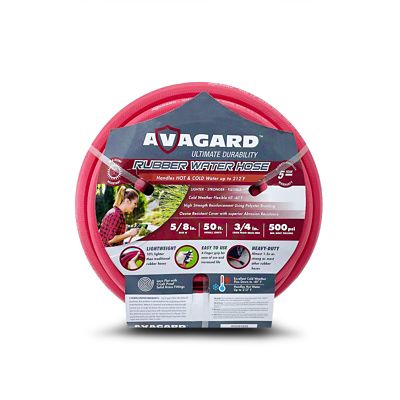
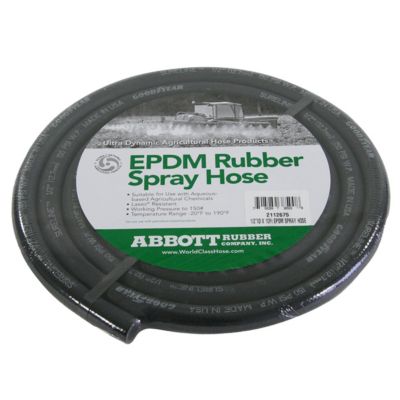
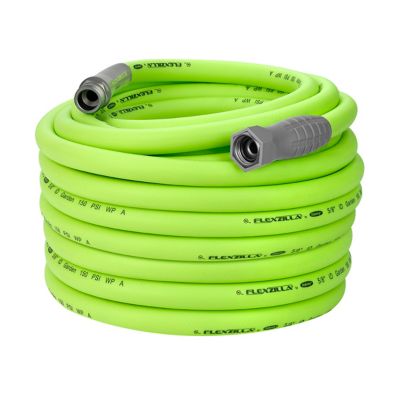
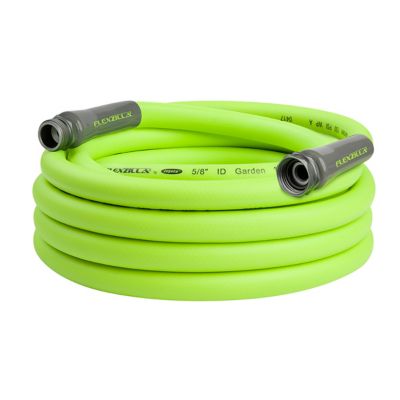
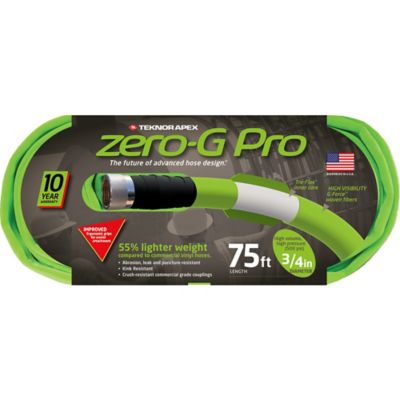
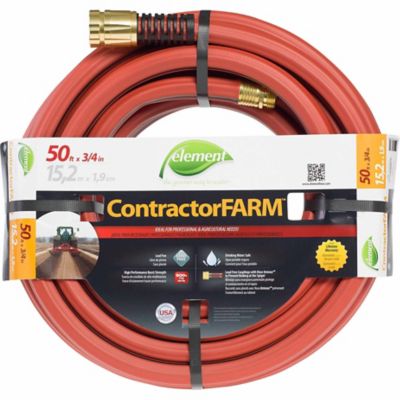
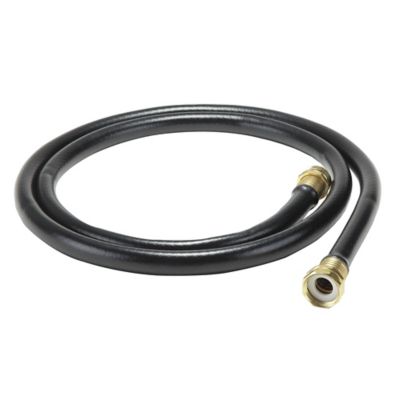
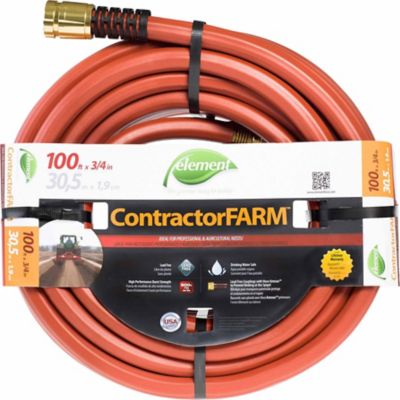
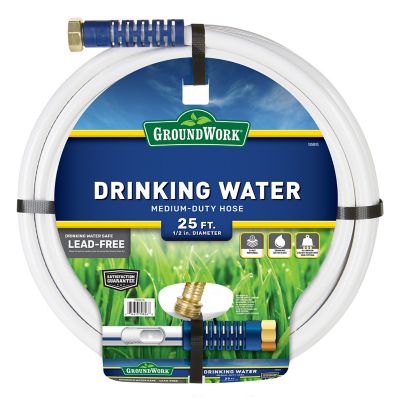
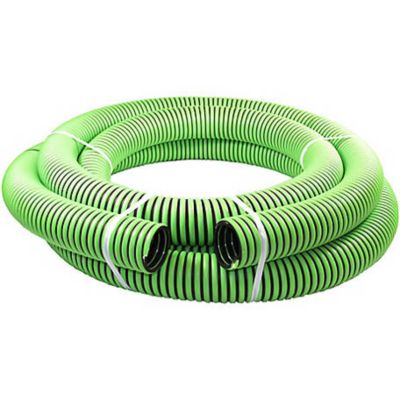
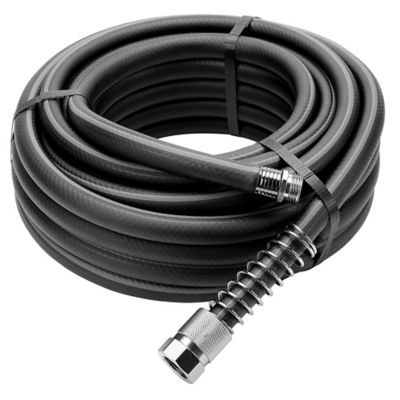
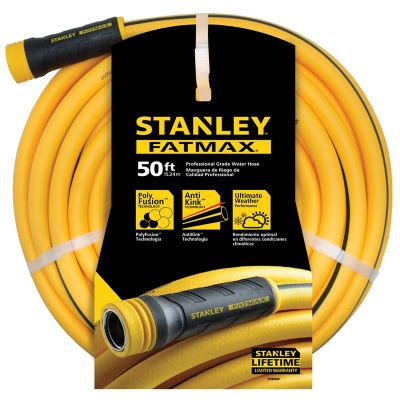
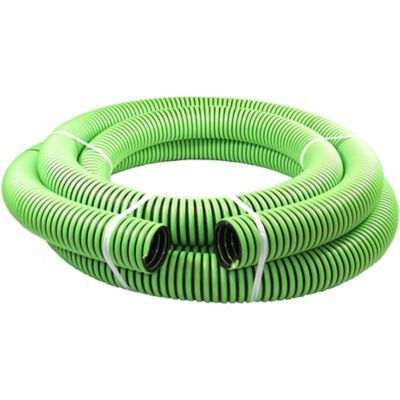
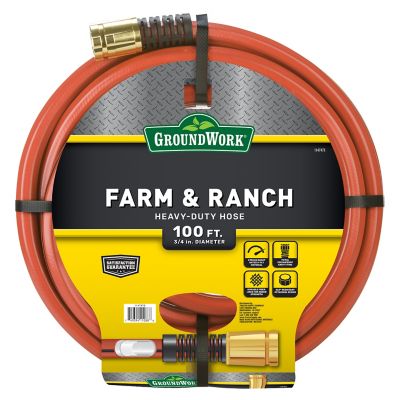
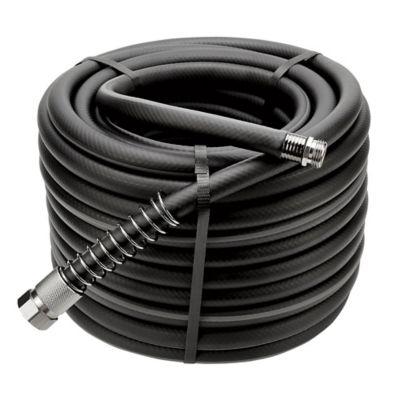
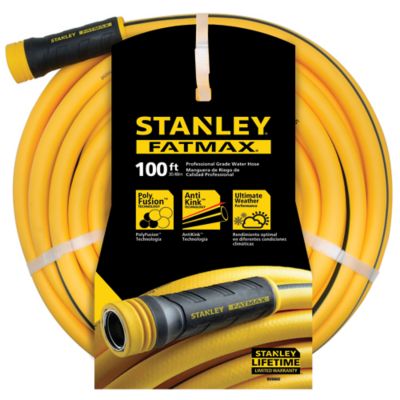
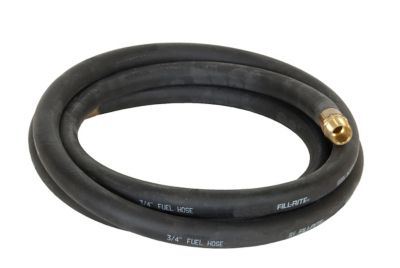
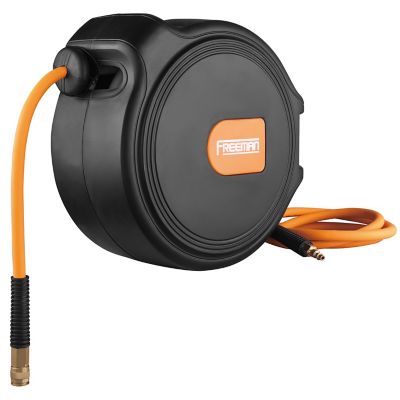
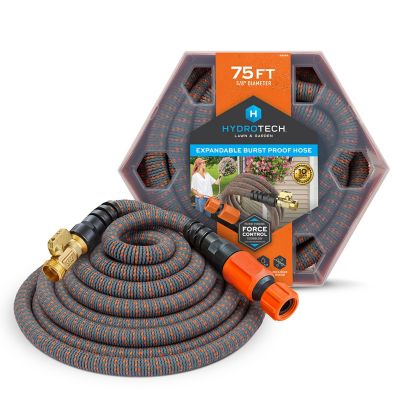
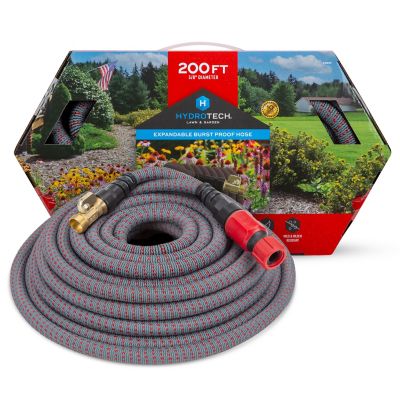
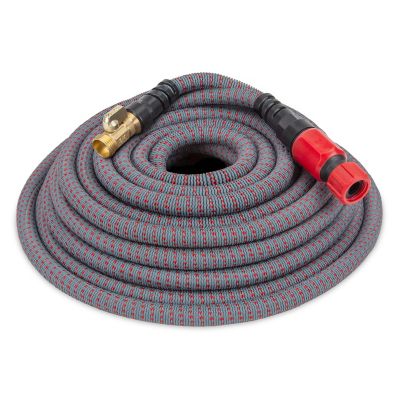
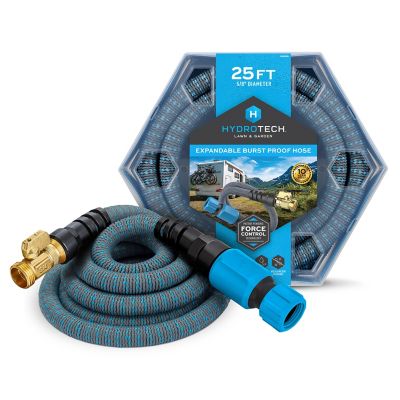
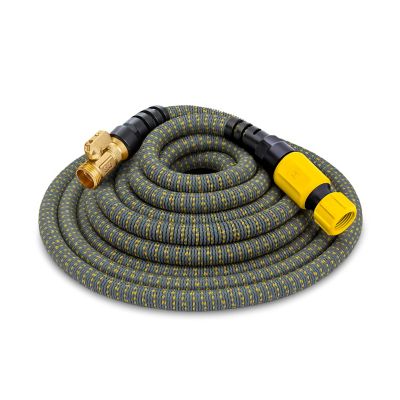
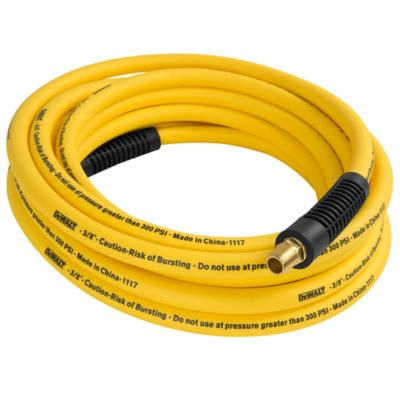
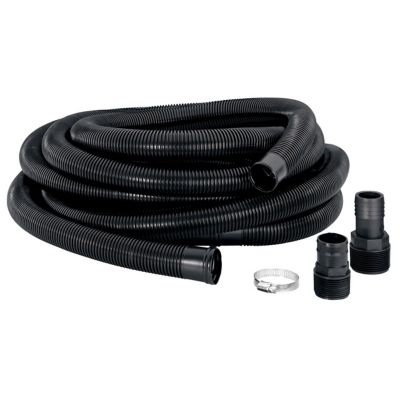
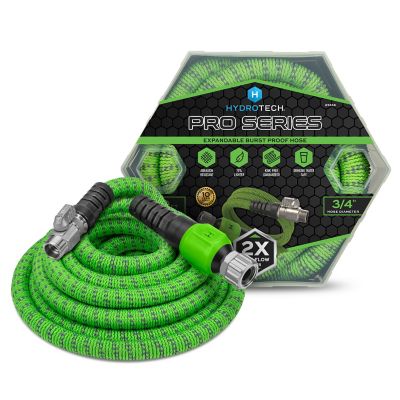
Flexible rubber hoses are bendable tubes that carry water, compressed air, fuel, or other fluids between a supply source and the place they need to go. Their flexibility lets them follow a path around equipment, reach across a shop floor, or make the turn from an outdoor faucet to a watering area without the fixed layout of rigid pipe. Around a farm, home, or workshop, that can mean rinsing mud from a wheelbarrow, supplying air to a pneumatic tool, or connecting a fuel system with hose built specifically for that job. Those applications call for different constructions, so rubber hoses are not interchangeable just because their openings look alike. The inner tube must suit the material passing through it, while the reinforcement and outer cover must handle the working pressure, movement, and surroundings. Rubber compounds also differ. EPDM rubber often suits water service and outdoor exposure, but it generally is not a match for petroleum fuels or oils. Nitrile rubber commonly appears in oil and fuel applications, although the exact fuel blend, concentration, and temperature still need to fall within the hose manufacturer’s specifications. Some hoses combine a rubber inner tube with textile reinforcement and a protective cover; others have more specialized layers for demanding service. The feel of the cover alone cannot tell the whole story. A hose that bends easily in warm weather may behave differently when temperatures drop, and a thick wall does not automatically mean a higher pressure rating. For everyday chores, the useful balance is enough flexibility to move comfortably, enough reinforcement for the task, and a cover suited to contact with the ground or nearby equipment. Homeowners, livestock caretakers, mechanics, and grounds crews may all reach for flexible rubber hoses, but the best fit comes from matching the construction to the actual work rather than choosing by appearance alone. A water connection beside the barn and an air connection beside the workbench may look similar at a glance, yet each needs its own compatible hose and fittings.
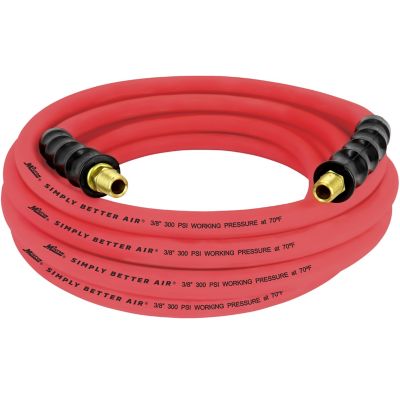
Length, inside diameter, and connection style have a big effect on how a rubber hose performs once the work starts. Inside diameter helps determine how much water or air can move through the hose, while added length contributes to pressure loss and leaves more hose to handle. A run that reaches the far side of a wash area without pulling tight is more practical than one stretched against the faucet, but a long coil underfoot can turn a simple chore into extra wrestling. For compressed air, hose diameter and length should suit the tool’s airflow needs as well as the compressor setup. An impact wrench working on equipment wheels can demand more air than a small blow gun, and a narrow hose or restrictive fitting may limit performance even when the compressor has sufficient capacity. For shop and garage connections,
Flexible Air Hoses are a related option to consider alongside the tool’s operating requirements. Connection details matter just as much as reach: garden hose threads, pipe threads, quick-connect plugs, and barbed fittings serve different purposes, and similar-looking ends may not seal together. The coupling size and profile need to match the mating connection, and the assembled line must stay within the rating of its lowest-rated component. Working pressure, rather than burst pressure, is the limit that matters in normal service; temperature can also affect that rating. Suction service brings another consideration because a hose drawing water from a source must resist collapsing under vacuum. A discharge hose is not automatically suitable for that task. Fuel, chemical, and high-pressure hydraulic applications require hoses and assemblies specifically approved for the substance and operating conditions involved. Drinking-water service likewise calls for a hose identified for potable water, not merely one described as a water hose. These distinctions help keep the choice grounded in the job, whether the hose will spend its days beside a stock tank, along a wash bay, or between shop equipment.
Good handling and storage help a flexible rubber hose keep its shape and stay ready for the next round of chores. Flexibility makes routing easier, but every hose has a limit to how tightly it can bend without restricting flow or stressing its construction. Kink resistance can help with ordinary movement, though it does not make a hose kinkproof. A broad sweep around a corner is easier on the hose than a sharp fold behind a cabinet, and a connection with a little room to move puts less strain on the fitting. The outside diameter, weight, and recommended bend radius also affect whether a hose will fit a reel, pass through a narrow opening, or lie neatly beside equipment. Rubber can feel substantial in the hand, especially in longer lengths, so carrying distance matters for anyone moving between a shed, driveway, and animal care area. A cover rated for abrasion resistance can help where contact with rough surfaces is expected, but dragging a hose across sharp gravel or sheet metal still takes a toll. Routing away from hot exhaust parts, pinch points, vehicle traffic, and walking paths helps protect both the hose and the folks working nearby. During the cooler months, a low-temperature flexibility rating is useful for outdoor work, but it does not prevent water inside the hose from freezing. Water hoses generally benefit from draining and storage according to the manufacturer’s directions when freezing conditions are expected. Long-term exposure to sunlight, heat, oils, or chemicals can affect rubber differently depending on its formulation, making the stated environmental resistance worth checking. Routine care can be straightforward: look over the cover and connections for cracks, blisters, exposed reinforcement, loose ends, or leaks, and take a damaged hose out of service. Shut off the supply and release pressure before disconnecting or inspecting a pressurized line. Coiling without tight twists and keeping fittings out of dirt makes the next hookup less of a hassle. With the right material, sizing, and care, flexible rubber hoses can make recurring watering, cleanup, and equipment tasks easier to manage without fighting the line at every turn.