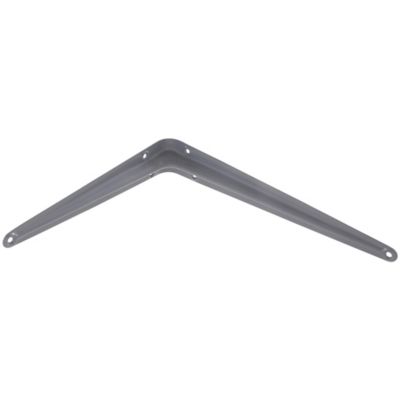
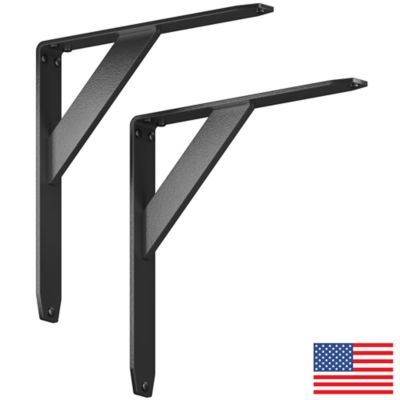
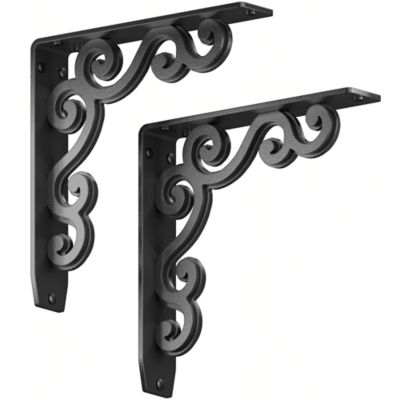
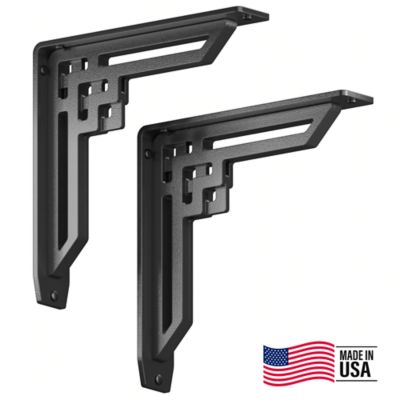
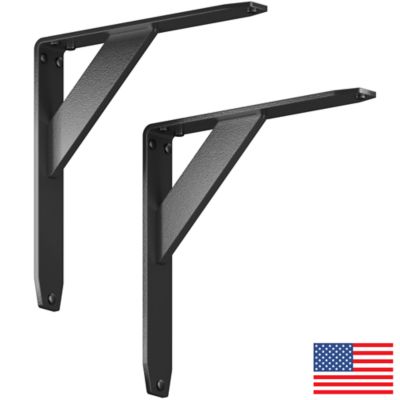
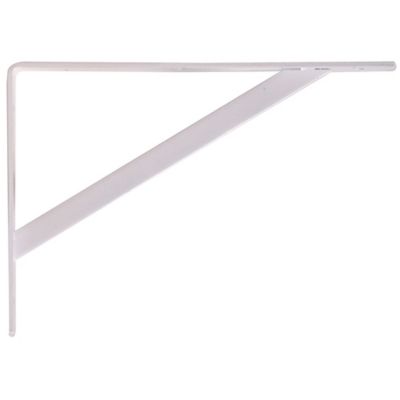
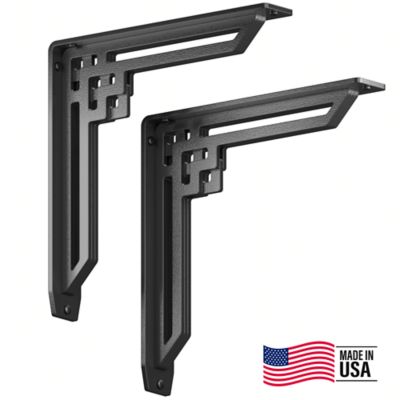
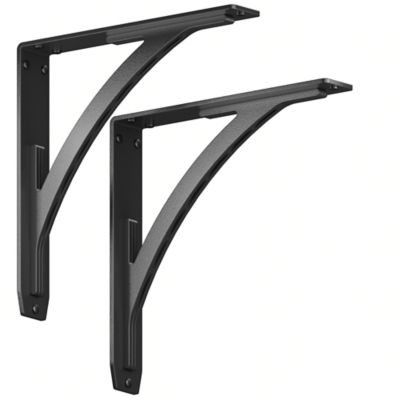
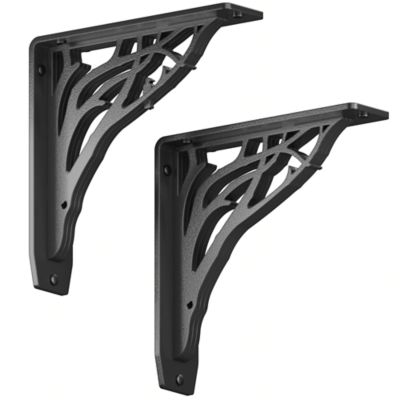
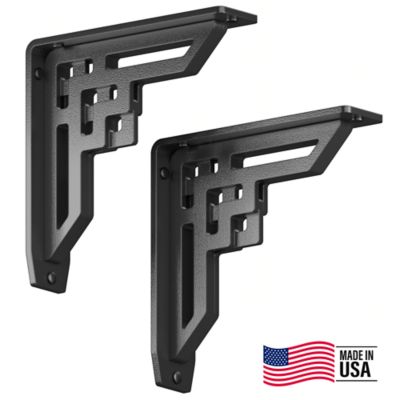
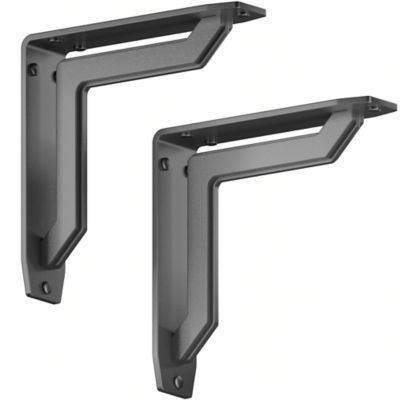
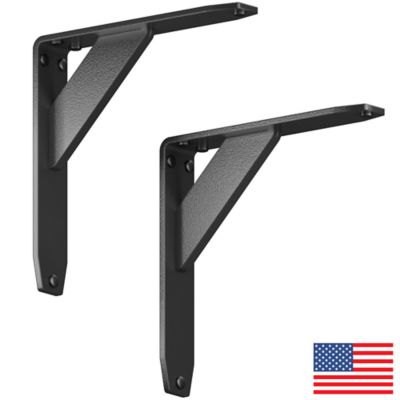
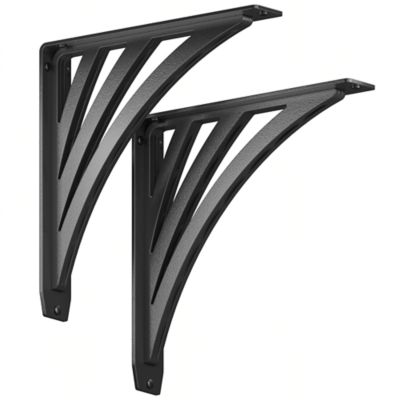
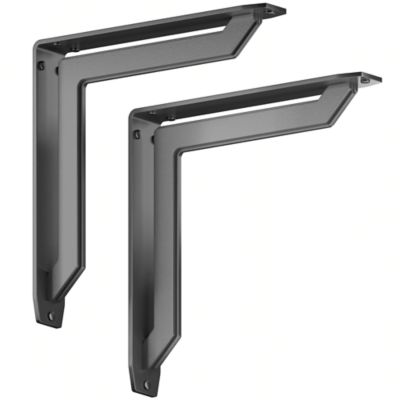
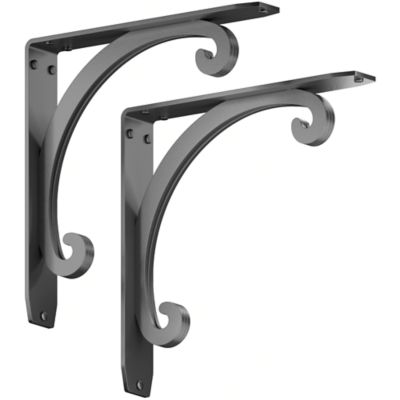
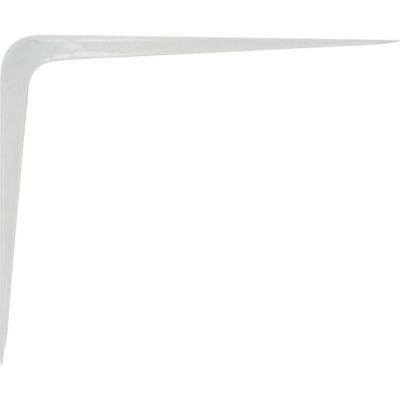
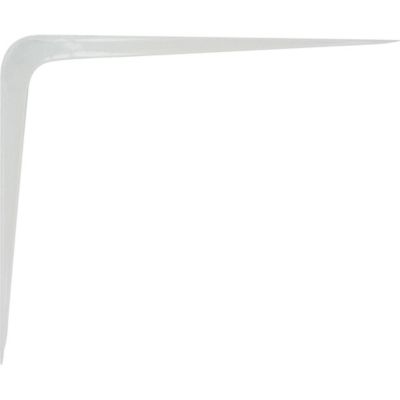
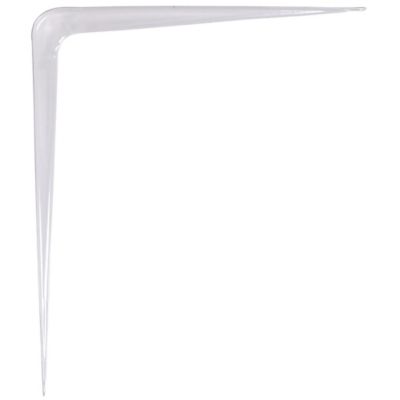
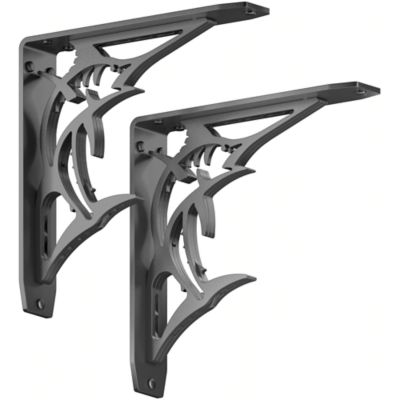
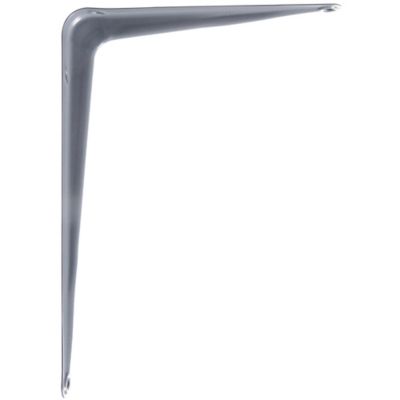
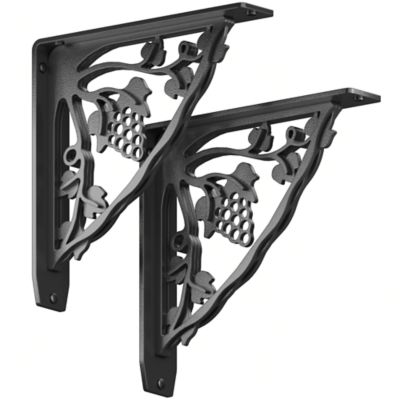
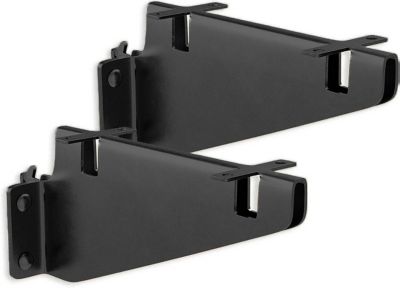
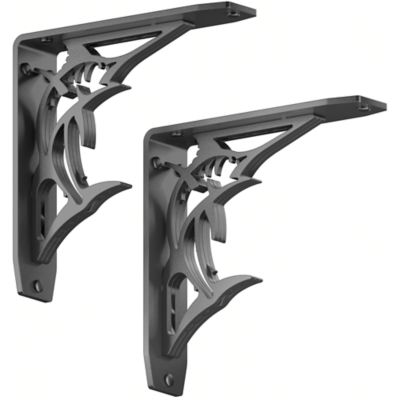
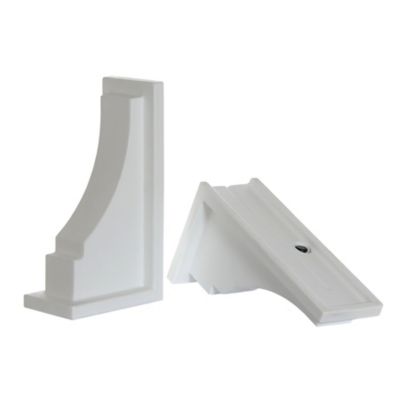
Farmhouse shelf brackets are wall-mounted supports for open shelves, often made from steel, cast iron, or wood. They pair useful storage with the straightforward lines and rustic character that fit a farmhouse kitchen, country pantry, mudroom, or workshop. Metal brackets may have simple L-shaped profiles, angled braces, curved supports, or scrollwork, while wood brackets and corbels bring a warmer, more substantial look beneath a shelf. The right style depends on both the room and the job. A slim black bracket can keep the attention on a row of stoneware bowls, while a broad wood corbel can balance a thick shelf above a sideboard. Steel offers a practical choice for many shelving projects, and cast iron often has a textured surface and a heavier appearance. Wood supports can blend into painted trim or show their grain beside a natural wood shelf, depending on their construction and finish. No single material guarantees a certain weight capacity; the bracket design, mounting points, shelf dimensions, and installation all matter. Farmhouse is a look, not a load rating. That distinction counts when a shelf holds full canisters instead of a few framed photographs. The shelf board also helps set the tone: straight, smoothly finished lumber feels tidy and simple, while wood with visible knots brings more rustic character. Black hardware works easily with iron cabinet pulls and dark light fixtures, and painted wood supports can settle into a room without drawing much attention. Brackets with an open profile leave more wall visible, while solid corbels create a stronger visual anchor. In a narrow breakfast nook or a small kitchen, those differences can change how substantial the shelving feels without changing its footprint. Matching the scale of the support to the shelf keeps the whole arrangement looking intentional rather than top-heavy.
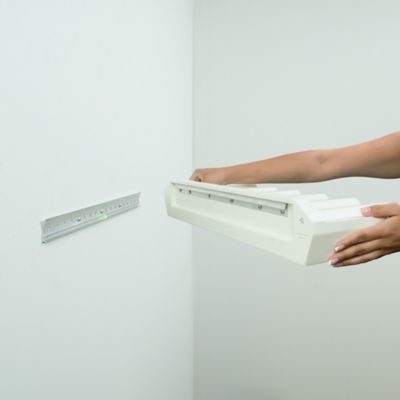
Size and mounting details deserve just as much attention as the finish. Shelf bracket dimensions generally describe the arm beneath the board and the leg against the wall, though measurement conventions can vary. The supporting arm needs to suit the shelf depth within the bracket maker’s stated limits; a short arm beneath a deep board can leave too much unsupported overhang. The wall leg needs enough clear space for its mounting points, especially near backsplashes, trim, outlets, or an adjoining shelf. Braces and curves can also affect what fits underneath. A deep triangular brace might be fine above a workbench but crowd the space over a countertop appliance. Shelf length, board thickness, material, and bracket spacing all influence how well the finished shelf carries its load without sagging. A long board stacked with cookbooks asks more of the whole assembly than a short shelf holding a clock. Weight ratings need to be read in context, including whether a rating applies to one bracket or a pair, how the load is distributed, and what mounting surface and fasteners the manufacturer specifies. Adding brackets does not automatically increase capacity by simple multiplication. Wall construction matters, too: framed walls, solid masonry, and hollow block require different fastening approaches. Where the installation calls for attachment to studs, drywall anchors are not an equivalent substitute. Old plaster, uneven boards, or wall coverings can complicate the fit and may call for advice from a qualified installer. Screw length and head style must suit the bracket holes and the wall assembly, and included hardware may not suit every wall. Shelf attachment matters as well, since a board resting on supports can shift if the design requires it to be secured. For a pantry full of jars or a shelf above a busy work surface, a clearly specified load rating and suitable mounting arrangement are more useful than judging strength by appearance alone.
Care is usually straightforward, but the material and finish set the ground rules. Painted or powder-coated metal generally benefits from gentle cleaning with a soft cloth and prompt drying, following the maker’s care directions. Abrasive pads and harsh cleaners can damage a finish, particularly around edges and screw holes. Bare iron and steel need different care from coated metal, and exposed areas may develop rust when moisture lingers. Near a sink or wash tub, a corrosion-resistant finish and compatible fasteners deserve consideration. Wood brackets can collect dust along carved edges or braces, and their finish affects how well they handle splashes and cleaning. A sealed wood support is not necessarily suitable for constant dampness, so intended-use information still matters. Periodic checks for loose fasteners, movement, cracks, or a sagging board help keep attention on the whole shelf rather than just its visible hardware. A shelf that starts leaning or pulling away from the wall needs its load removed and the cause addressed before it goes back into service. Beyond care, everyday routines can help narrow the style. In a farmhouse kitchen, open shelving keeps everyday plates and mugs within reach; in a pantry, it can make containers easier to see; beside a workbench, it gives small supplies a place off the work surface. Heavier contents generally make more sense on lower shelves where they are easier to handle. Closely spaced shelves may benefit from brackets with less visual weight, while a single broad shelf can carry a bolder support shape. The wider
Shelf Brackets category provides a useful point of comparison when weighing farmhouse styling against other shapes and finishes. A good match brings together the shelf’s depth, the wall’s construction, the expected load, and the room’s character. Whether the setting is a working farmhouse or a home with country touches, the best-looking arrangement is one that fits naturally into daily life and supports what belongs there.