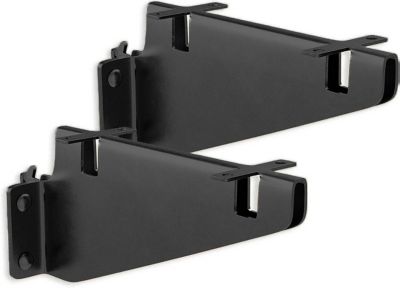
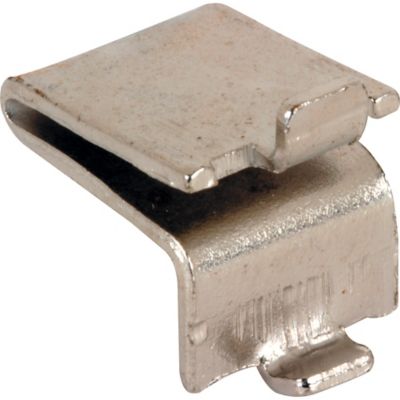
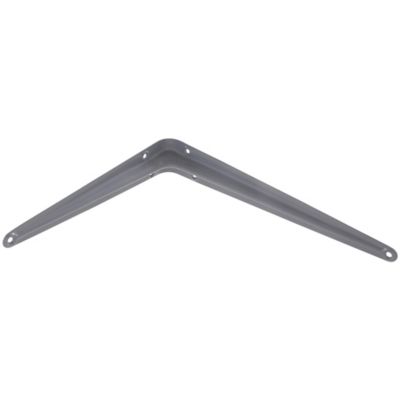
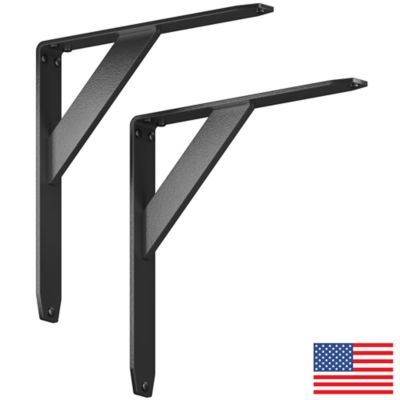
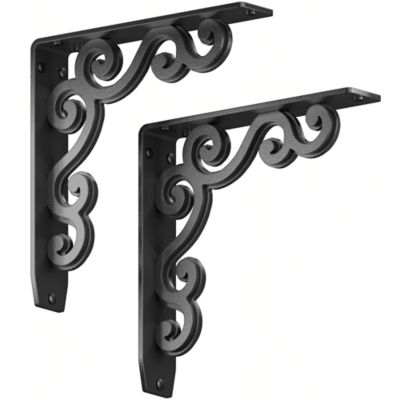
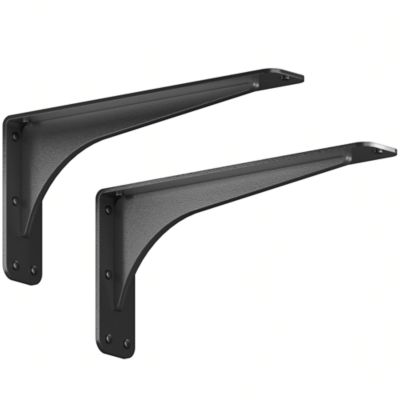
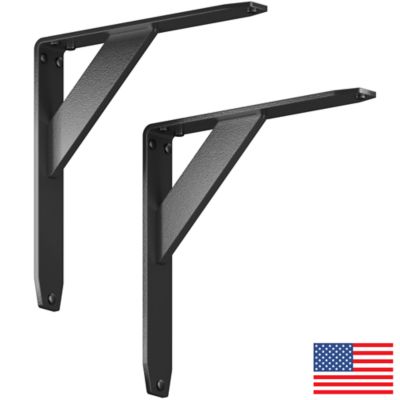
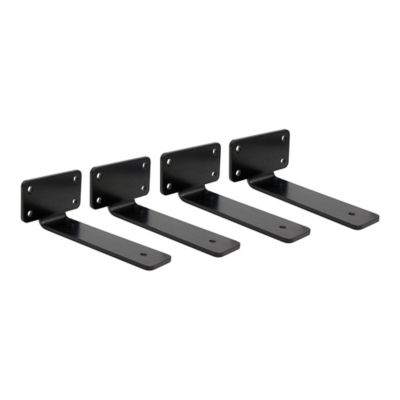
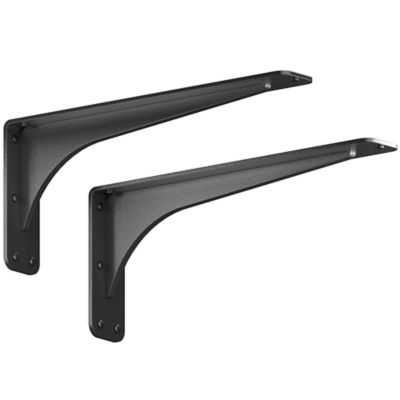
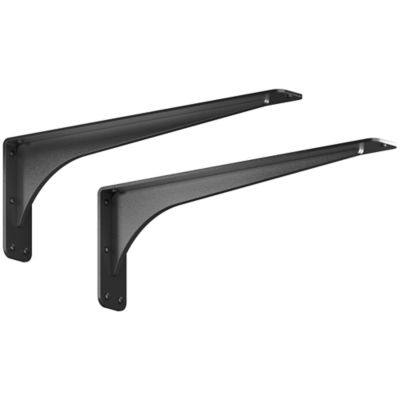
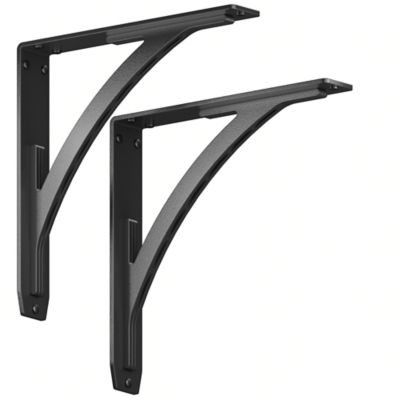
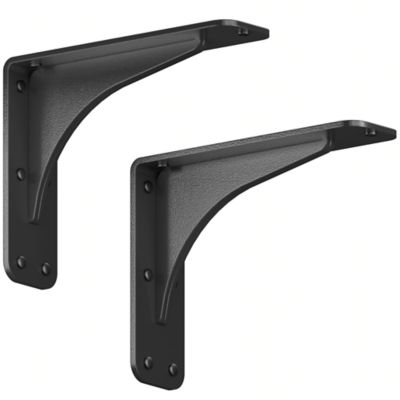
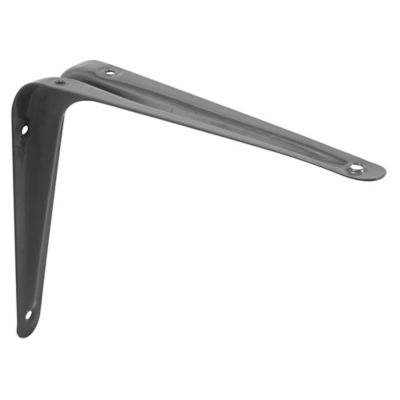
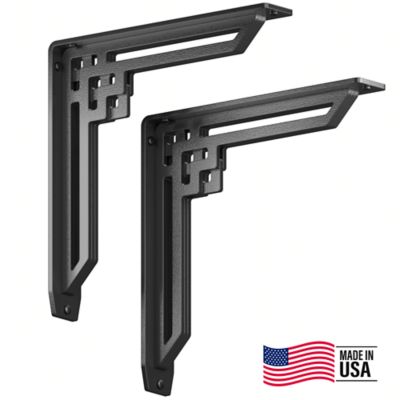
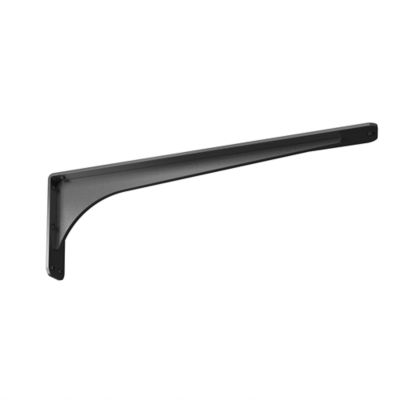
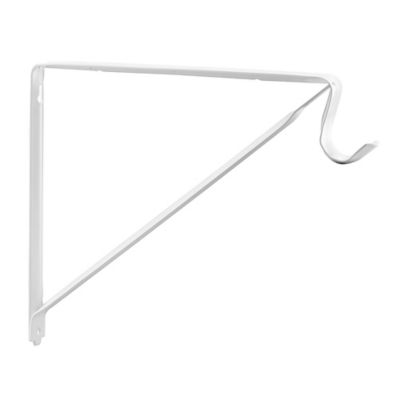
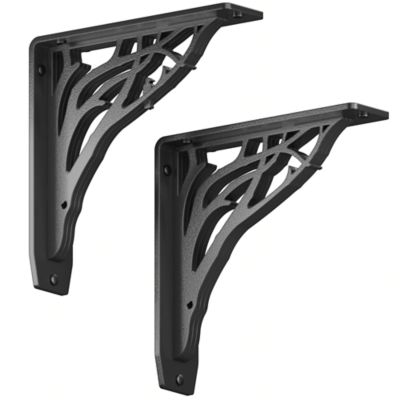
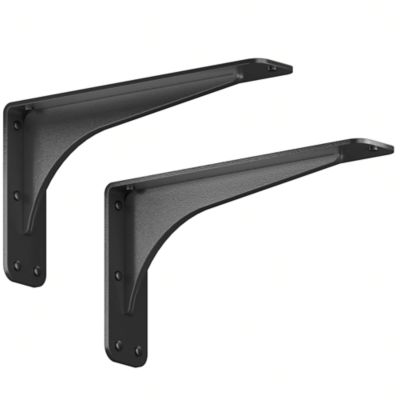
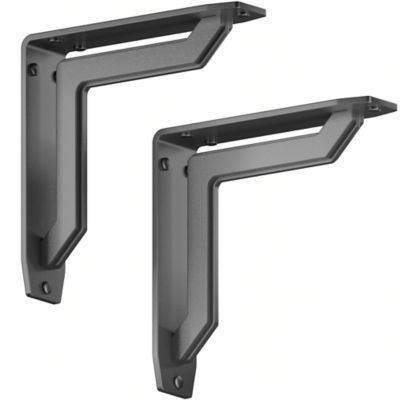
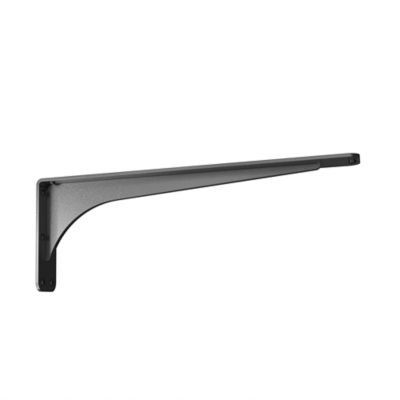
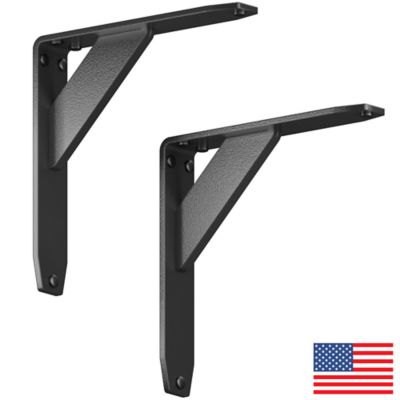
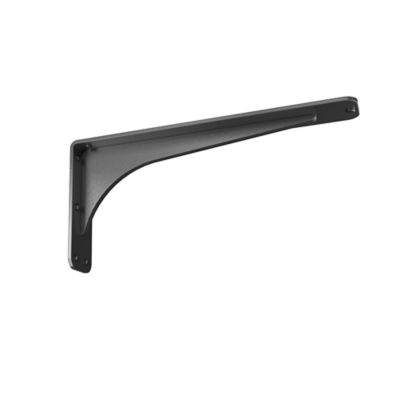
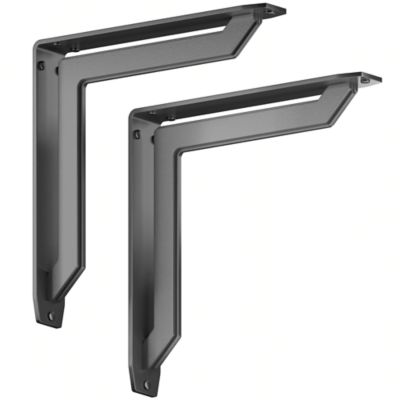
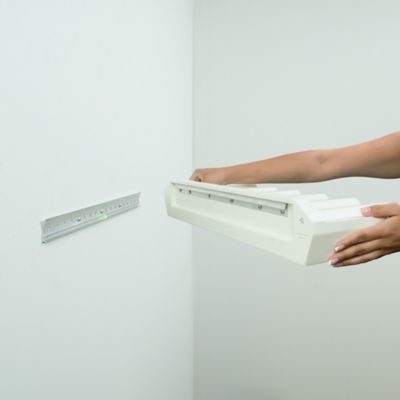
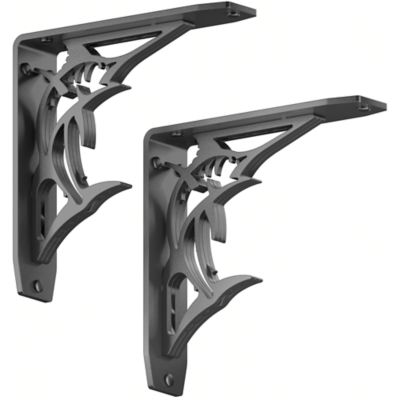
Shelf brackets support shelving boards and transfer their weight, along with the weight of anything on the shelf, to a wall or upright support system. They help turn open wall space into useful storage in a garage, pantry, laundry room, barn workroom or shop, keeping everyday supplies within reach and off the floor. The right style depends on the shelf’s size, the load it will carry and how the space works day to day. L-shaped shelf brackets have a horizontal arm beneath the board and a vertical arm against the wall, making them a straightforward choice for many open shelves. Brackets with diagonal braces add support between those arms, though the brace takes up some room beneath the shelf. Lipped brackets have a raised edge at the front that helps keep a properly fitted board from sliding forward. Adjustable shelf brackets fit compatible wall standards, allowing shelf heights to change as storage needs change. Concealed supports sit inside suitably prepared shelving, leaving less hardware in view, but their fit depends closely on the shelf’s thickness, construction and mounting details. Heavy-duty shelf brackets are intended for more demanding loads, although the stated weight rating matters more than appearance alone. Material and finish also play a part. Steel can provide substantial support in a compact shape, while cast iron often has a thicker profile and more visible detail. Aluminum brings lower weight, with load capacity depending on its design and dimensions. Painted, powder-coated and plated finishes affect both appearance and resistance to surface wear or corrosion. In a damp utility area, the finish and the hardware’s suitability for that environment deserve particular attention. A plain black bracket can blend into a busy workshop, while a lighter finish may sit quietly against a painted pantry wall. Matching the brackets to the job keeps the focus where it belongs: on a shelf that fits the space and carries its intended load.
Shelf depth, board thickness and mounting-hole placement all affect how well shelf brackets fit. The horizontal arm needs enough reach to support the board without leaving more overhang than the manufacturer permits. For many open L-shaped brackets, an arm extending at least two-thirds of the shelf depth is a common starting point, but the specified shelf dimensions for that bracket take priority. Lipped designs need closer attention to the board’s actual front-to-back measurement, since a shelf that is too deep may not sit down between the wall and the lip. Lumber’s nominal size does not always match its finished dimensions, so the board’s measured size is what matters. Thickness counts, too: a thin shelf may flex between supports even when the brackets themselves can carry the load. A long shelf holding books or shop supplies generally needs closer support spacing than a short shelf holding a few lightweight containers. Weight capacity belongs to the complete installation, not just the metal bracket. The shelf material, bracket spacing, wall construction, fasteners and position of the load all influence performance. A rating may apply only to a particular mounting arrangement or a stated number of brackets, so it should not be multiplied without checking the manufacturer’s specifications. Heavy loads also call for particular care with the attachment points. Wood studs, sound blocking or suitable masonry can provide structural support when paired with the proper fasteners; drywall anchors must be rated for the wall material and application rather than treated as interchangeable with stud attachment. Where the desired shelf position does not line up with studs, a properly sized backer board secured across framing may provide a mounting surface. The bracket’s vertical leg, screw-hole spacing and clearance around nearby trim can make a difference in tight spaces. Screws fastening the board to the bracket also need a length that holds securely without breaking through the top. These details help distinguish hardware that merely fits under a board from a support arrangement suited to the whole shelf.
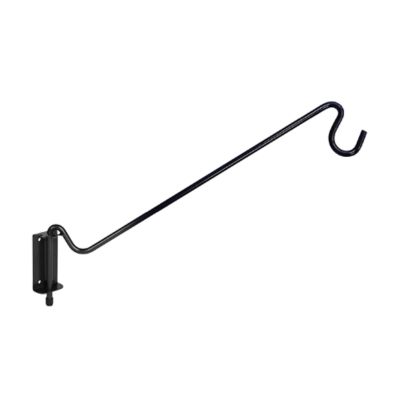
Everyday routines are a good way to judge which shelf bracket features matter most. Above a workbench, open access beneath the shelf leaves room for taller tools and keeps the work surface from feeling boxed in. In a pantry, bracket placement affects whether wide containers can slide into place without catching on a brace. A utility-room shelf may need enough depth for folded towels or cleaning supplies, while a narrow shelf near an entry can provide a landing spot for small essentials without reaching too far into a walkway. Adjustable systems suit spaces where container sizes change, while fixed brackets make sense when the shelf layout is settled. A room that combines shelving with suspended storage may also call for
Hanging Brackets, with each support matched to its own mounting surface and intended load. Across these spaces, the way a shelf is loaded matters as much as the hardware beneath it. Concentrating heavy objects at the front edge places different demands on the supports than spreading weight evenly, and regularly lifting equipment onto a shelf can introduce movement beyond a stationary load. Brackets should not serve as steps, climbing holds or lifting points unless specifically designed and rated for that purpose. Care is usually straightforward, with attention to both the finish and the fasteners. Dust, sawdust and residue can collect where the arm meets the wall, and gentle cleaning according to the finish instructions helps keep those areas clear. Metal hardware benefits from drying after cleaning, while abrasive pads or harsh cleaners can damage some coatings. Chipped finishes, rust, bent arms, loose screws and new gaps at the wall are signs that the installation needs attention before taking on more weight. Periodic checks are especially worthwhile on shelves that see frequent loading and unloading. Well-matched shelf brackets give a board the support it needs while making storage easier to reach, arrange and maintain.